He Xin Chao - Reviews

He Xin Chao
+Add to Custom List
Sort
Add review
... Read More
I need to unpack this whole Xiao Moli situation because it's wildly important and I don't think people talk about it enough. So Ji Zhen learned everything about bedroom intimacy from EROTIC PAINTINGS Xiao Moli gave him, and even the consummation of his marriage relied on an ILLICIT MEDICINE Xiao Moli acquired. What does this say about their dynamic? Ji Zhen clearly trusts Xiao Moli deeply—he bought his freedom, he worries about him being bullied. But there's something almost maternal about this triangle. Xiao Moli is the one who prepared Ji Zhen for Shen Yanqing, who gave him the tools to pursue the man he desired. And then Shen Yanqing FORBIDS him from seeing Xiao Moli after that incident. Which is interesting because it shows Shen Yanqing's possessiveness early on. He doesn't want Ji Zhen connected to anyone else. But he also won't give Ji Zhen emotional intimacy. He'll take what he wants physically but won't offer affection in return. And Ji Zhen? He just accepts it. Three years and he's still trying to steal kisses like it's some grand achievement. The power imbalance is staggering. Shen Yanqing holds all the cards—emotionally, socially, in this relationship. Ji Zhen is desperate, devoted, and completely powerless. I keep wondering if Shen Yanqing even realizes how much he's breaking him.
... Read More
I need to process this. I literally read that scene three times. The first time I was angry. The second time I was conflicted. The third time I was just... crying a little. Because underneath all the power play and punishment and 'who's the master here' posturing, there is two people who are TERRIFIED of losing each other and have no healthy way to express it. Ji Zhen has never been spanked in his life. Not once. He's pampered, spoiled, delicate—even the slightest pinch leaves marks for days. And Shen Yanqing knows this. He KNOWS that this is unprecedented humiliation for him. And yet he does it anyway because he's furious and hurt and jealous and he needs to reassert control. But then—the ENDING. The absolute ENDING. 'Ji Zhen was in so much pain that he was too embarrassed to rub it. He burrowed into Shen Yanqing's arms.' After being punished, after being humiliated, after crying and begging for mercy—he still goes to HIM. Still seeks comfort in the arms of the person who just hurt him. That is the most devastating display of attachment I have ever read. And Shen Yanqing? He strikes Ji Zhen but then 'only then did he stop' when he sees the swollen marks. He extinguishes the candle and lies down WITH him. He doesn't leave him on the floor. He doesn't sleep elsewhere. He stays. The fact that Ji Zhen's first instinct after abuse is to nestle closer isn't romantic—it's tragic. It's the behavior of someone who has learned that love and pain live in the same body. 'I'll drink a cup of poisoned wine on your wedding night'—that line haunts me. It's the most honest thing either of them has said. Ji Zhen would rather die than share Shen Yanqing with anyone. And Shen Yanqing would rather punish him than admit he's scared too.
... Read More
I walked into this thinking Jiang Yunyu was just the angry childhood friend who bullies Ji Zhen. I was wrong. So thoroughly wrong. Let me walk through this because every line hits different now. He beats up a nobleman who called him beautiful. He refuses to let anyone else touch his horse except the stablehand. He threatens to disown his own engagement out of pure spite. These are all signs of someone who is fiercely territorial and deeply insecure, not just a hot-headed brat. But then—the academy moments. When Ji Zhen got a C and the imperial relatives mocked him, Jiang Yunyu scared them off. He was the ONLY one allowed to tease Ji Zhen, the ONLY one who could touch Chi Jin. That's not bullying. That's ownership, yes, but also a weird, twisted form of care. The line that wrecked me was when Jiang Yunyu says, "Of course you're not worthy of me, and you're not worthy of Shen Yanqing either." He's insulting him to his face, and underneath it all, he's saying: you don't deserve the people who actually matter, and I know that because I cared about you first. That's the kind of bitter, protective energy that makes characters unforgettable. Ji Zhen's realization at the end—"I might not have protested if he wanted me"—that's the core tragedy right there. They both wanted each other in their own ways, but pride and miscommunication got in the way. Classic, but executed so well.
... Read More
Okay so this chapter is basically the earthquake that splits the whole story in half. Madam Shen drags out those paintings like she's shopping for a new handbag, completely casual about the fact that she's trying to insert a concubine into her son's marriage. And Ji Zhen—oh man, Ji Zhen. He doesn't fold. He doesn't cry. He just straight-up says no, and then doubles down by telling his mother-in-law to go find concubines for HER husband instead. The irony is so perfectly thrown it should be illegal. What really makes this plot work is the escalation. It doesn't start as a life-or-death moment—it starts with scrolls unrolling, pretty faces on paper, a seemingly routine family discussion. Then it pivots so fast that by the time Ji Zhen says 'unless he dies before me,' the reader is fully caught off guard. The ancestral hall punishment feels both devastating and inevitable, like every Chinese family drama is building toward exactly this kind of confrontation. And then Shen Yanqing comes in and handles it not with a big dramatic speech but with bureaucratic coldness—'the civil service exam is approaching, no time for personal matters.' It's such a smart move by the author because it shows us that Shen Yanqing already made up his mind. He doesn't need to shout. He just files the request under 'not a priority' and walks away. The plot doesn't need fireworks when one well-placed word does the job. That's craft. But here's what keeps me up at night: Madam Shen isn't a villain. She genuinely believes she's saving her son's legacy. The tragedy is that everyone in this room thinks they're the hero of their own story.
... Read More
Let's talk about atmosphere because this author does NOT play when it comes to setting the mood. The very first paragraph has a swallow carrying wet grass in a spring rain and I was immediately transported. You can feel the dampness. You can hear the rain hitting the black tiles. And then BAM — ‘Get out of the way!' shatters the tranquility like a rock through a stained-glass window. That contrast is everything. The visual of Ji Zhen stepping into a puddle and not even caring about his expensive crescent-soled boots? Iconic. He's so wrapped up in his own urgency that the world around him literally doesn't register. But then the study itself — oh man. The dim room, the shadow, the bookcase tall as a man, the candle flickering to life. The author builds this space so carefully that you could get lost in it. I especially loved the detail about the ancient books with patched pages, centuries old, sturdy in his hands. It tells us so much about Shen Yanqing without ever saying “he loves books.” The whole hiding-in-the-bookcase sequence reads like a heist movie but make it emotionally vulnerable. From daylight to dark, waiting, dozing off, the crack of light — it's cinematic in the best way. The moon hanging high, the faint sound of footsteps, the pale hand in black robes that appears and vanishes like a ghost. This world feels lived-in and real, and the study is basically a character in its own right by the end.
... Read More
This section does something I appreciate a lot: it pivots from extreme intimacy to sudden exposure without missing a beat. You go from a private, almost violent moment between two people in a closed space to Ji Zhen stepping into a public restaurant full of people who know his name and his reputation. That contrast is deliberate, and it works. The author uses pacing to control our emotional state. First, we're compressed into a tense, physical space. Then—bam—open street, bright lanterns, bustling crowd. Ji Zhen is performing normalcy here. He tosses silver, he walks confidently, he seems like the carefree young master everyone sees. But then Jiang Yunyu appears, and the performance cracks. What's brilliant about the pacing of that confrontation is that it escalates through dialogue, not action. There's no fighting, no thrown objects—just words getting sharper and sharper until Ji Zhen finally breaks and says what he really feels: "I just like him." That moment of vulnerability lands harder because everything before it was armor. The author builds from superficial banter to genuine pain in about five exchanges. And then the ending—Jiang Yunyu pushing him into a chair and declaring they're strangers—is both abrupt and inevitable. It's a cliffhanger disguised as closure. I wanted to immediately open the next chapter.
... Read More
Can we talk about how the author establishes setting in this section? The transition from the intimate, claustrophobic scene between Shen Yanqing and Ji Zhen straight into the lantern-lit streets of the capital is jarring in the best way. Like the camera just swung wide open. Ziyun Lou—"the most famous eating house in the capital"—is introduced with candlelight, carriages, waiters bowing and scraping. It's a world where status is visible and loud. The Ji family crest on the carriage, the silver tips, the private room being pre-lit with incense—all of this tells us about power without a single exposition dump. And then Jiang Yunyu's horse, Chi Jin. The name alone is poetic. A black horse won from a barbarian, untamable until one person could ride it. That image of Jiang Yunyu vaulting onto that horse in fifteen minutes, making the untamable submit—it's so visually cinematic. I could see this as a film. The jade-green robe, the peacock sash, the kingfisher-feather hairpin on Ji Zhen. Every detail about his outfit screams someone who knows how to dress to be seen. This world feels lived-in because the author trusts us to understand the social hierarchy through behavior and objects rather than lectures. The contrast between the opulent public spaces and the private tension between characters makes the world feel bigger than any single relationship.
... Read More
Underneath all the family drama and confrontational dialogue, this chapter is really about who gets to define love, duty, and belonging in a system built to erase both. The ancestral hall is the central symbol and it's loaded with meaning. It's where the Shen family's male ancestors are remembered, where lineage is tracked, where tradition is enforced. It's a space designed for kneeling—for submission to something older and larger than any individual. Ji Zhen kneeling there is supposed to break him, to make him accept that his love is insufficient, that his identity as a husband is incomplete without producing an heir. But the brilliant subversion is that he kneels and doesn't break. His presence in that space of patriarchal enforcement becomes an act of defiance simply by refusing to apologize for who he is. Then there are the paintings. Portraits of women offered as solutions to a problem that shouldn't exist. They symbolize how women have historically been used as tools—whether as wives or concubines, their value is measured by their utility to the family line. Ji Zhen's genuine appreciation of the art before understanding its purpose is almost ironic—he sees beauty where the system only sees function. It's a small moment but it reveals his entire character. And the soup. Oh, the soup. In a chapter about lineage and duty and ancestral pressure, the image of Ji Zhen stirring abalone soup for Shen Yanqing is quietly revolutionary. It's domestic labor as an act of love in a world that treats love as secondary to duty. The green and white bowl, the soft consistency, the fragrant broth—it's all so specific and tender that it becomes a kind of rebellion. While the ancestral hall demands he renounce his feelings, his hands are busy nourishing the person he loves. What's haunting about this chapter is that it doesn't resolve anything. Ji Zhen is still kneeling. Shen Yanqing hasn't come home yet. The soup is getting cold. But somehow, in that unresolved tension, there's a kind of hope—the kind that comes from two people refusing to let the world define their love for them.
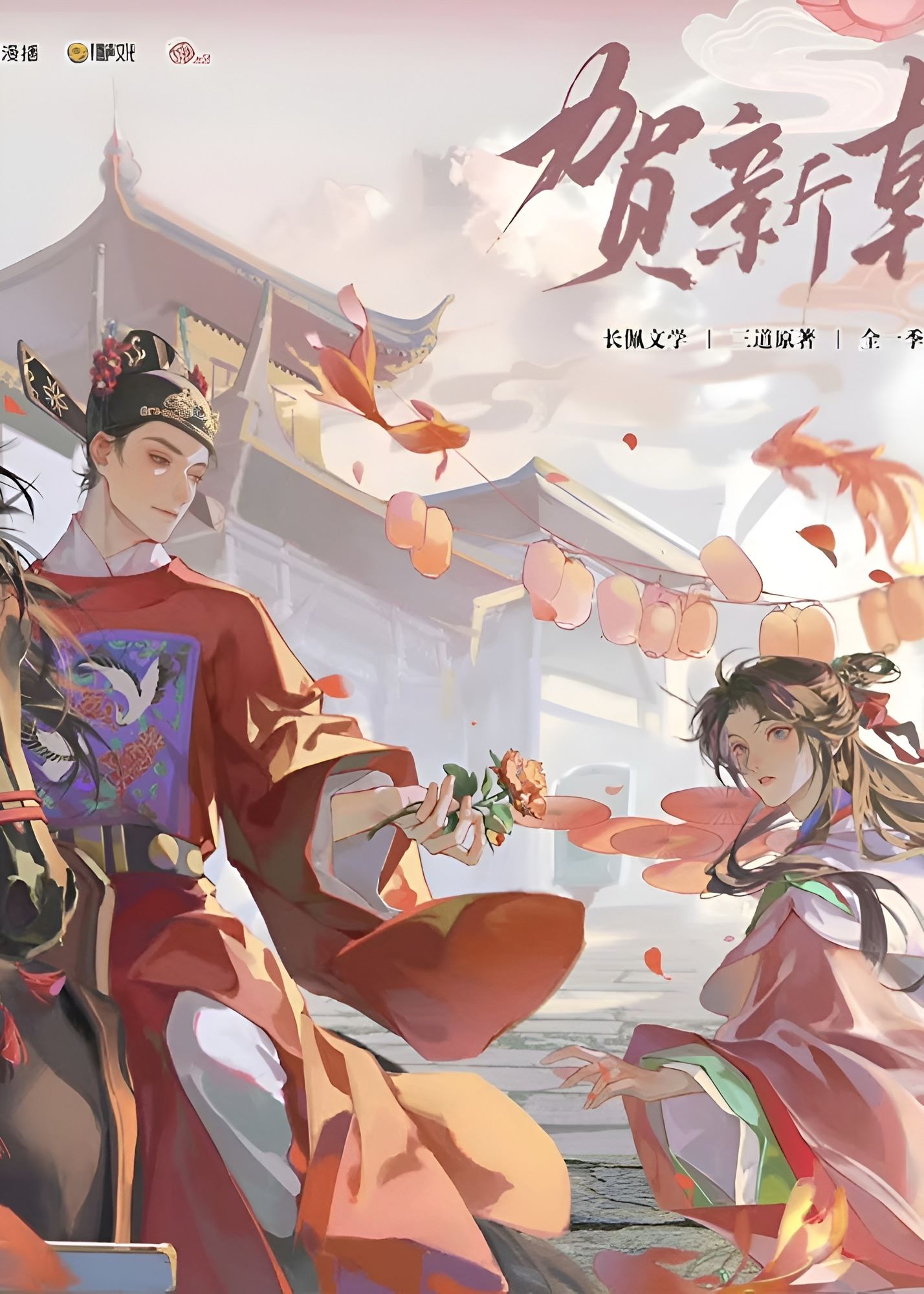
... Read More
Okay so let's be real — there's not a ton of dialogue in this batch and that's precisely why it works. The author knows when to hold back and when to let a single line land like a hammer blow. Take this exchange: “Where is Yi Zhi?” Shen Yanqing's brows furrowed slightly. He didn't bother to say more, and he took Ji Zhen's wrist to lead him toward the door directly. That's it. That's the whole interaction. No explanation, no justification, no “let me walk you through my day.” Just physical guidance and silence. And yet it communicates everything about their relationship. Shen Yanqing doesn't even deign to argue. He doesn't say “there was no one here.” He just takes his hand and moves him. The narrative voice does a lot of heavy lifting too — it's observant without being intrusive, wry without being snarky. Lines like “This cool gaze was like a heavy snowfall, effortlessly extinguishing Ji Zhen's spirit” are the kind of thing that makes you pause and re-read. The author's tone has this beautiful restraint. Even when Ji Zhen is being most dramatic internally, the prose doesn't mock him or over-dramatize. It just watches him with this gentle, almost affectionate distance. And then the final line of the excerpt — “Why is Yi Zhi allowed here, but I'm not?” — that breaks me every time. It's such a raw, childlike question coming from someone who's clearly used to getting his way. The voice shift from imperious to vulnerable in one sentence? Masterful.
... Read More
There's a lot happening beneath the surface of this text that I can't unsee now. Let me start with the horse. Chi Jin isn't just a cool steed—it's a symbol for everything Jiang Yunyu controls and everything he can't. He tamed the untamable, but he couldn't tame Ji Zhen's feelings for someone else. The horse was Won from a barbarian, which adds another layer: it represents conquest, dominance, the kind of power that comes from winning. But Jin cannot hold onto what he wants the way he holds onto a horse. Then there's the veil imagery. Ji Zhen tells Jiang Yunyu, "You'll be the one wearing the veil and marrying me." It's meant as an insult, a gender-reversal jab. But it's also uncomfortably close to truth—because in this arranged marriage scenario, neither of them had real agency. Both were pawns. The veil becomes a symbol of the role forced upon them, whether they wanted it or not. And the engagement itself—that word keeps appearing, heavy and unresolvable. It was arranged before either of them existed. It was broken not because of lack of feeling, but because of pride and timing. The deepest theme here, I think, is about the gap between what people say and what they mean. Jiang Yunyu says "you're not worthy of me" when he means "I can't bear that you chose someone else." Ji Zhen says "I've made up my mind" when he means "I'm hurt and I need you to stop me." The story isn't just about romance; it's about how hard it is to be honest with the people you care about most.
... Read More
Okay so this chapter is literally a masterclass in tension escalation. You've got Ji Zhen already punished—three hours of kneeling, legs numb and sore—and then you have him vulnerable on the bed with his trousers rolled up, and Ji An is massaging his calves, and it's intimate, and then the door opens and SHEN YANQING walks in on THIS exact moment. The timing is so deliberately cruel. Like, the author didn't just throw them in the same room; they constructed this whole scene where Ji Zhen is at his most exposed and the first thing Shen Yanqing sees are red finger marks on his pale legs from someone else's hands. I literally gasped when Yu He looked at Shen Yanqing and thought 'even such a subtle shift signaled unrest in his heart.' That's the author whispering to us: something is about to happen and you better brace yourself. And then the punishment doubling-down is chef's kiss. Ji Zhen was already kneeling in the ancestral hall, and now Shen Yanqing weaponizes the intimacy of the situation—'undressing and staying in the same room with an outside man'—to pile MORE shame on top. The plot structure here is basically a trap snapping shut. Every move Ji Zhen makes, every defiant word he says, it just gives Shen Yanqing more rope. But then Ji Zhen drops the death threat—'I'll drink a cup of poisoned wine on your wedding night'—and the power dynamic flips so fast my head spun. He's not defending himself anymore, he's threatening mutual destruction. And Shen Yanqing's response? Physical discipline. Of course. Because in this world, the only language his jealous rage understands is dominance. The chapter ends with Ji Zhen burrowing into Shen Yanqing's arms despite the spanking, which is both heartbreaking and weirdly romantic in the most toxic way possible. I need a minute.
... Read More
Can we talk about how the author positions these two male leads against each other and it's actually terrifying? Jiang Yunyu and Ji Zhen have seventeen years of shared history—joy and arguments, a bond that apparently ended in this 'bitter parting.' But what's interesting is Jiang Yunyu's behavior in this scene. He's sitting at the center table, dressed in that striking outfit with the coiled snakes, looking every bit the dashing warrior type. When Zhang Zhen mocks Ji Zhen, Jiang Yunyu 'tasted his wine as if he hadn't heard'—and the text specifically says this was 'seemingly condoning his behavior.' That word 'seemingly' is doing heavy lifting here. Is he truly condoning it, or is he choosing not to escalate in a space where Ji Zhen isn't welcome? Then he grabs Ji Zhen's hand and tells him to leave. Protective? Or dismissive? But Shen Yanqing—oh god, Shen Yanqing. This is the real gut punch of the whole passage. Ji Zhen 'was willing to stake his life with a singular courage and a sincere heart, all for a glance from Shen Yanqing.' That's the entire emotional architecture of his character right there. And Shen Yanqing, the man he devoted himself to, looks at him with cold eyes while saying the words of his greatest enemies. The image of their intertwined hands while Shen Yanqing delivers that verdict is almost too much. Physical closeness from Jiang Yunyu but emotional devastation from Shen Yanqing. Two different kinds of betrayal happening simultaneously.

Leave a comment

You must be logged in to leave comments. or
