He Xin Chao - Reviews

He Xin Chao
+Add to Custom List
Sort
Add review
... Read More
The dialogue in this chapter is INSANE. Like, the author writes conversations like they're fencing matches and everyone's bleeding by the end. Let me just highlight a few that wrecked me: Ji Zhen: 'Lord Shen, you don't keep your promises.' — Defiant, petulant, already pushing. He's still angry from kneeling and he needs to take it out on someone. Shen Yanqing: 'As a wife, you're undressing and staying in the same room with an outside man. That's a severe lapse in conduct.' — Note how he uses 'wife' as a weapon. Not 'spouse,' not 'partner'—'wife.' As in, you violated your role. You failed at your JOB. Ji Zhen: 'I won't die, though. If I die, you'll marry someone else, I won't let you get your way.' — THE MOST Ji Zhen LINE EVER. It's threatening and vulnerable and childish and devastating all at once. He can't say 'I love you' so he says 'I'll poison your wedding night.' That is character voice at its finest. Shen Yanqing: 'What if I insist on marrying someone? Can you stop me?' — This is him GOADING. He KNOWS this will hurt Ji Zhen. He's not asking; he's provoking. And the physical description around this dialogue—'one arm around his slim waist and the other pinching his soft cheeks, staring at the reddish corners of Ji Zhen's eyes with a cold expression'—this is violence wrapped in tenderness, which is exactly what their relationship is. And Ji Zhen's response: 'If you dare to marry anyone else, I'll drink a cup of poisoned wine on your wedding night and turn your family's celebration into a funeral…' The ellipsis! The trailing off! It's not a confident threat—it's a desperate one. He's waving a knife he doesn't actually know how to use. The narrative voice itself is also worth praising. It's observant without being clinical, emotional without being purple. 'A scene that was very suggestive'—three words and the author makes us ALL understand exactly what Shen Yanqing walked in on. Efficient. Brutal. Perfect.
... Read More
Let me just say this out loud: Ji An is the unsung hero of this entire chapter and I am OBSESSED with how the author uses him. Think about it. Ji An grew up with Ji Zhen. Their bond is explicitly described as 'unlike any other.' He's the one who knows Ji Zhen's body—washing his feet, massaging his legs, dealing with his ticklishness and laughter. This is intimacy built over years, pure and platonic and deeply familiar. And then Shen Yanqing walks in and what does he do? He doesn't see a loyal attendant. He sees a THREAT. 'Yu He. Yu He came in, understood the signal, and gave Ji An a meaningful look: 'This is the masters' business. Why are you getting involved?'' Ji An HESITATES. He doesn't want to cause more friction. He leaves willingly, saying 'Young Master, I'll go get some water,' which is such a gentle, almost sad exit. He's basically being exiled from his own master's bedroom by a husband who can't stand that someone else gets to touch Ji Zhen like that. And Ji Zhen—oh god, Ji Zhen. First he PROTECTS Ji An ('Ji An is my personal attendant, not yours. Why should he listen to you?') but then he also uses that vulnerability to provoke Shen Yanqing. He KNOWS that showing his bare legs to Ji An would infuriate his husband, and he does it anyway. This is a man who is simultaneously clingy and combative, who tests every boundary because he's terrified of losing control. Shen Yanqing's jealousy isn't just romantic—it's territorial in a way that reveals how deeply he views Ji Zhen as HIS. The finger marks on the calves, the bare legs, the laughter heard through the door—all of it feeds this primal insecurity. But here's what breaks my heart: when Ji Zhen says 'If I die, you'll marry someone else, I won't let you get your way,' that's not manipulation. That's a panicked confession of love disguised as a threat.
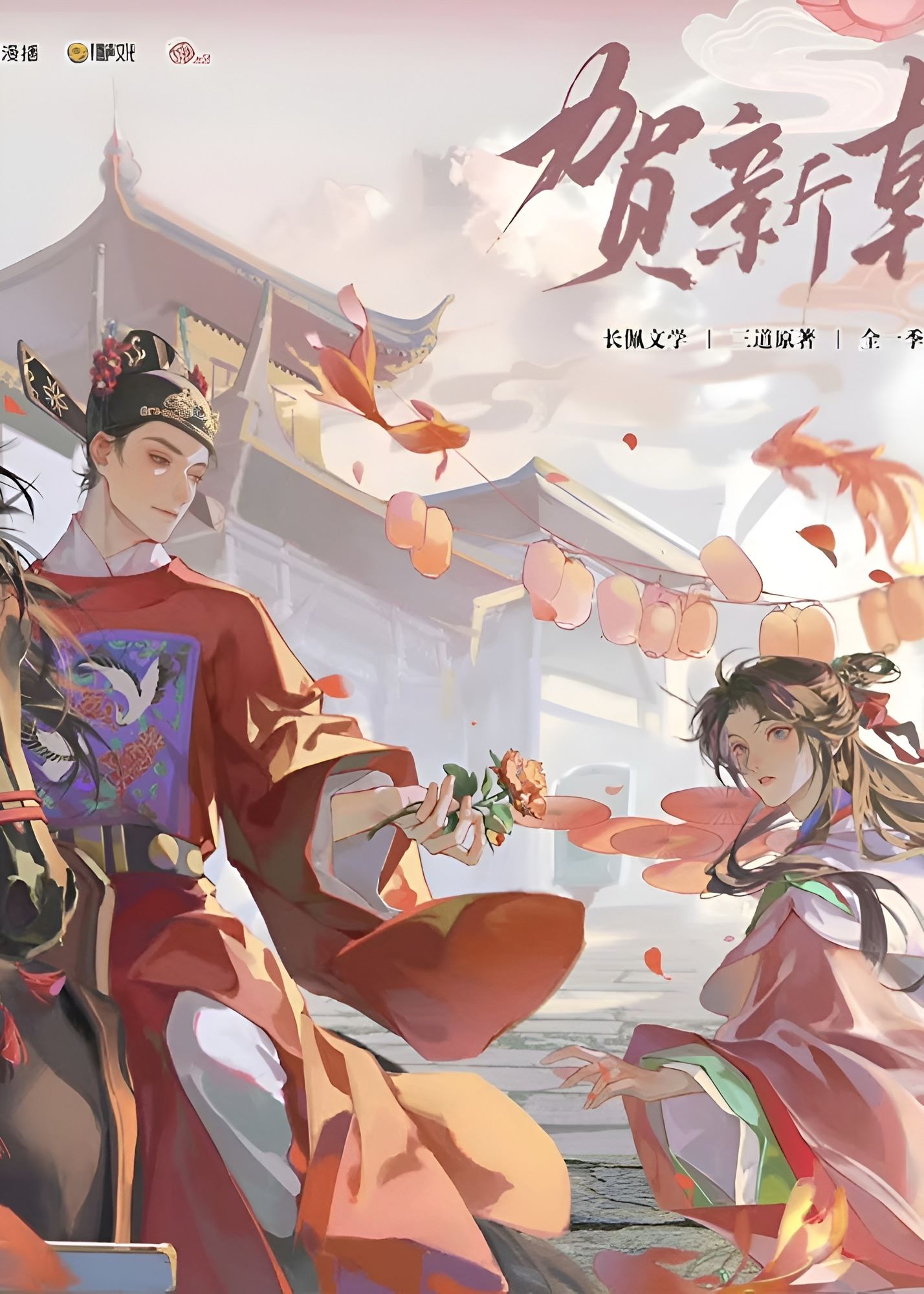
... Read More
Okay so let me just say this: the Ji Zhen / Shen Yanqing dynamic is SO good right now and I need to talk about it. Ji Zhen is this adorable little thing who secretly scratches Shen Yanqing's palm when he's happy and writes 'NO' on his back with his finger when he's scared. Like—come on. That's not subtle at all but honestly I love it because it feels so REAL. He's completely transparent about his feelings and Shen Yanqing KNOWS but just lets it happen. That's basically the definition of comfortable intimacy without either of them having to say anything out loud. Then there's Jiang Yunyu. Oh boy. He sees Ji Zhen scratching Shen Yanqing's palm and his hand 'quietly clenched into a fist.' That one detail says EVERYTHING. Years of history, unspoken feelings, jealousy that he can't express—and now he's watching the person he cared about share tender moments with someone else at a restaurant. The fact that Ji Zhen notices and thinks 'he must be very unhappy' but also 'I really should've known better than to come here' shows how much guilt he carries. This isn't over. And Li Mianhui—THE YOUNG FOX. The way the author describes him is chef's kiss. 'Narrow phoenix-like eyes like those of a fox... a smile that softened his coldness.' But then we get the torture descriptions—boiling water, stripped skin, gouged eyes, tongues hooked. This man is a literal demon and he's SMILING at Ji Zhen like he's fascinating prey. The line 'A clever yet foolish young deer... If he were caught and kept in a cage in his mansion to be tormented for fun, wouldn't he be scared out of his wits?' CHILLED me to the bone. He's already fantasizing about capturing Ji Zhen and I'm not even joking. This man is dangerous on a completely different level from the rude scholars at the table. One wants to debate you to your face. The other wants to put you in a cage and see what makes you scream.
... Read More
There are SO many layers to unpack in these chapters and I need to process them all. Let's start with the most obvious: Shen Yanqing's reinterpretation of classical texts IS the theme of the chapter. He's literally arguing that tradition is not fixed—that 'the words of the sages' have been distorted over a thousand years by people who wanted to use them for their own purposes. 'By the time they reach us today, there may be misunderstandings. It only depends on how people interpret them.' This is about power. Who gets to define truth? Who gets to decide what the ancients meant? The scholars at the restaurant were using texts to attack Ji Zhen's worthiness, but Shen Yanqing flips the script and exposes their bias. The same texts, the same words—but a completely different interpretation that empowers rather than diminishes. Now the animal symbolism. Ji Zhen is repeatedly associated with a deer—'a clever yet foolish young deer.' Gentle, quick to startle, beautiful but vulnerable. And Li Mianhui? A FOX. Sharp features, cunning smile, predatory intelligence. Foxes hunt deer. This is NOT accidental. Li Mianhui's internal monologue confirms it: 'If he were caught and kept in a cage in his mansion to be tormented for fun, wouldn't he be scared out of his wits?' The predator is already imagining the capture. The cage imagery is chilling. There's also the recurring motif of HANDS. Shen Yanqing holds out his palm, Ji Zhen places his hand there, Shen Yanqing clasps his fingers. Jiang Yunyu's hand 'quietly clenched into a fist.' Later, Ji Zhen writes 'NO' on Shen Yanqing's back with his finger. Hands communicate what mouths cannot—affection, fear, anger, refusal. And the carriages. Public spaces where private moments happen. The restaurant, the carriage—both are liminal spaces where the characters drop their masks, even if only for a moment.
... Read More
Let's talk about the way these two love each other, because it's not the soft stuff—it's the ugly, messy, 'I will kneel in an ancestral hall until my legs give out and still won't back down' kind of love. Ji Zhen is the most fascinating character in this passage. Twenty years old, married for nearly three years, and he has absolutely zero interest in playing the role of the submissive spouse. When Madam Shen tries to shame him into accepting a concubine, he fires back with the kind of sharp-tongued comeuppance that only someone who feels completely secure in their relationship can manage. He doesn't negotiate. He doesn't hedge. 'As long as I am here, Shen Yanqing will never take a concubine. This is not up for discussion.' Bold. Reckless. Completely in love. And Shen Yanqing? The man barely appears in this chapter but his presence is everywhere. He's the reason Ji Zhen is kneeling. He's the reason Madam Shen called this meeting. He's the dinner plan Ji Zhen still thinks about despite being punished. Their relationship runs on this weird frequency where they don't need grand declarations—Ji Zhen stewing abalone for Shen Yanqing while sitting in punishment says more than a thousand love letters ever could. What kills me is Yu He's line: 'The Young Madam listens to you the most.' It sounds like an observation but it reads like a confession of devotion. And Shen Yanqing's quiet rubbing of his forehead right after stepping out of his mother's courtyard—that single gesture tells us everything. He's exhausted. He carries all of this alone. But he came back to his wife anyway. 'If he dies before me, I'll keep vigil for him. If I die first, he can marry as many people as he likes.' Unless he was dead, he would never allow Shen Yanqing to be with anyone else. This is the most terrifying and beautiful thing I've read in a romance novel all year.
... Read More
The imagery in this chapter is doing so much heavy lifting and I need to talk about it. It opens with portraits—literally images of women on scroll after scroll, displayed like commodities in a gallery. Madam Shen unrolling them is such a chilling visual. She's not just suggesting a concubine; she's presenting options, like she's curating an exhibition. Some plump, some slender, each with her own unique charm. The fact that Ji Zhen genuinely compliments the paintings before realizing what they're for—that moment of aesthetic appreciation turning into horror is chef's kiss writing. Then we move to the ancestral hall. This place is everything. It's not just a room with tablets—it's the physical manifestation of every expectation, every tradition, every demand that has ever been placed on these two men. The Shen family lineage. The pressure to produce heirs. The ghosts of ancestors watching and judging. Ji Zhen kneeling on that prayer mat from morning to evening isn't just punishment; he's being absorbed into a system that doesn't want him. And yet he stays. Ramrod straight. Not begging. Just… existing in defiance. The contrast between the ancestral hall's cold stone and the warm abalone soup simmering in the kitchen is devastating. One space demands submission. The other whispers care. Shen Yanqing is simultaneously the prisoner and the warden of this house, caught between his parents' expectations and his own heart. And that final image—Ji Zhen stirring the soup in the green and white bowl, the shark fin and abalone stewed to soft consistency, fragrant but not greasy. He's been punished all day, his legs numb and tingling, and his first thought is making sure dinner is perfect for the man he loves. The domestic details are so precise they ache.
... Read More
Okay so let me just... I need a minute because the emotional distance between these two is killing me. Three years married and Shen Yanqing has literally never kissed him back? Not once? And he deliberately dodges every time Ji Zhen tries? That's not just coldness, that's something else. But then in the flashback—oh god, the flashback. The way Shen Yanqing sees him in that crowd, locks eyes, and tosses him a peony like 'you're mine now'—and Ji Zhen catching it like it's a wedding ball. He literally felt joy like he'd been chosen. And then we CUT to present day where he can't even get a kiss? The irony is absolutely brutal. He's reaching inside Ji Zhen's clothes with this intensity, making him lose all sense of himself, but won't meet his lips? What happened between then and now? Because that spring day—'a colorful butterfly had flown into his heart, cracking open its innocent shell'—that was genuine. Pure. And now? Now it's consummated but somehow empty. I keep thinking about how Ji Zhen changed his target after getting rejected. Adam apple, neck, shoulders—like he's willing to settle for anything because even scraps from this man are everything to him. That's not love, that's obsession. Or maybe it IS love and that's the tragedy.
... Read More
What strikes me most about this passage is the sheer amount of tension packed into relatively few words. On the surface, it's a married couple being intimate—but underneath, there's this entire war happening. Ji Zhen wants closeness. Shen Yanqing gives him bodies but denies him lips. That's the central conflict and it's devastating because it's so quiet. There's no yelling, no dramatic confrontation—just this relentless, daily rejection that erodes someone over three years. And the stakes? They're enormous for Ji Zhen. His entire emotional world revolves around this one man. When Shen Yanqing asks 'where did you learn that?' and Ji Zhen stammers, his face 'as red as a charcoal fire'—you can feel how vulnerable he is. He's been caught wanting, caught desiring, caught being honest about his needs. And the backstory hints at even deeper conflicts. Why did Shen Yanqing avoid him for two months after the wedding? What happened? The text doesn't explain, and that mystery makes every interaction feel charged with something unsaid. Every touch from Shen Yanqing could be passion or punishment. Every moment of closeness could be manipulation. The suspense isn't in plot twists—it's in the question of whether Ji Zhen will ever be truly chosen.
... Read More
I need to talk about the bookcase because I'm convinced it's the central symbol of this entire opening arc and possibly the novel. Ji Zhen literally squeezes himself into a confined space to hide, to watch, to be close to someone who won't let him close. The bookcase contains Shen Yanqing's most treasured possessions — ancient books with patched pages, items of genuine value — and yet Ji Zhen can't access any of it without physically imprisoning himself. It's a perfect metaphor for their marriage: Shen Yanqing's inner world is full of things worth discovering, but getting to them requires Ji Zhen to contort himself into impossible shapes. And the crack in the cabinet door? That sliver of light through which he sees only fragments — a pale hand, a patch of black robes — it's exactly how their relationship functions. He gets glimpses, never the full picture. The swallow at the beginning is also doing symbolic work. A returning bird, carrying grass for a nest, disrupted by Ji Zhen's angry entrance. It's almost like the author is saying: there was peace here before you came in, Ji Zhen. Your chaos displaces something beautiful. And then there's the rain throughout — damp air making his eyes watery, the misty air, the wet blade of grass. Rain as emotional amplification, as the external world mirroring his internal state. I'm also not over the “catching a thief, catching an affair” folk wisdom he recalls. It's interesting that he applies this logic to his own husband. The story seems deeply concerned with visibility and invisibility — who gets seen, who gets hidden, who has the power to reveal and who is forced to conceal.
... Read More
Okay, I need to talk about this opening line because it literally made me stop reading for a second. "You are not allowed to marry anyone else, whether it's male or female, or I won't forgive you." That is such a casually devastating thing to say after whatever violence just happened in the previous scene. The way Shen Yanqing says this isn't even dramatic—it's matter-of-fact, like he's stating a basic rule of the universe. And then Ji Zhen's reaction? He just touches the hurt and massages it. The whiplash from "I'm threatening you" to "okay but also let me be gentle" is wild. What's interesting about the plot structure here is that we're getting glimpses of their dynamic through these fragmented moments rather than exposition. The author doesn't tell us why Shen Yanqing is like this—we have to infer it. That's good storytelling. Then we cut to the Jiang Yunyu confrontation, and suddenly the plot has another layer: the broken engagement, the childhood bond, the political undertones. It's not just a romance drama; it's a web of power, family obligation, and personal desire all tangled up. The engagement break itself feels like a major turning point. It's not just "they broke up," it's that Ji Zhen initiated it, which flips the whole power dynamic. I'm already curious what happens next because the author clearly set up a minefield of unresolved tension.
... Read More
What are we even doing here? One chapter and I already feel like I've been through a war. Let's break down the CONFLICT LAYERS because there are SO MANY: Layer 1: Ji Zhen vs. Himself. He's physically suffering—legs still numb from kneeling, sore, painful. He's emotionally raw. And yet he can't help but tease, provoke, push. He's a small beast brandishing its claws. This is self-sabotage as a coping mechanism. Layer 2: Ji Zhen vs. Shen Yanqing. The main conflict, obviously. Who has power? Who yields? Shen Yanqing wants obedience; Ji Zhen wants reassurance. They're speaking entirely different languages and neither will translate. Layer 3: Ji Zhen vs. The Situation. He's married to someone who might take a concubine. He's from a powerful family (the Ji family) but feels powerless in his own marriage. He threatens death because it's the only leverage he thinks he has. Layer 4: Shen Yanqing vs. His Own Jealousy. This is the most interesting one. Yu He notices it—'even such a subtle shift signaled unrest in his heart.' Shen Yanqing pretends icy detachment but his fingers twitch, his mouth tightens, he grabs ankles and pinches cheeks. His body betrays him constantly. He's fighting a war inside himself and taking it out on Ji Zhen. The STAKES keep escalating too. It starts with physical discomfort (kneeling). Then it becomes about honor (disrespect to elders, improper conduct). Then it becomes existential—'If I die, you'll marry someone else.' Death is on the table. Poisoned wine. Funeral instead of wedding. Ji Zhen isn't just being dramatic; he's laying out the logical extreme of his fear. And the SUSPENSE—god, the suspense. Shen Yanqing could have just left. Could have said nothing. Could have handled this like a reasonable person. But he doesn't. He escalates. He grabs. He strikes. And the chapter ends with Ji Zhen in pain but safe in his arms, and I'm sitting here like... what happens next? How do you recover from this? What does forgiveness even look like between two people who communicate through punishment and death threats? I need the next chapter immediately.
... Read More
Okay so I need to sit with this for a minute because the way this chapter sequence unfolds is genuinely ruthless. You have Ji Zhen already emotionally raw—he's just been through this heartbreaking parting with Jiang Yunyu after seventeen years of history together, everyone from his brother to his best friend told him he wasn't good enough for Shen Yanqing, and yet he stubbornly chose this path anyway. He's vulnerable. He's looking for comfort. And then he walks into Ziyun Lou and literally trips over another confrontation. The structural genius here is how the author layers humiliation like an onion. First it's Zhang Zhen, the obvious antagonist—drunk, snarky, throwing around that devastating line about men marrying like women being disgraceful. Easy target. Ji Zhen handles himself pretty well honestly, delivers that speech about mothers and sisters that actually lands. The crowd gets silenced. There's a moment of triumph. Then Jiang Yunyu betrays him—not dramatically but quietly, by choosing silence and then telling him to leave. That cuts deeper than any insult from a stranger ever could. And then—the real knife twist—Shen Yanqing shows up and literally agrees with the people mocking Ji Zhen. Not disagrees. Not stays neutral. Nods. Agrees. That narrative pivot is calculated to devastate. The entire romantic premise of the story (Ji Zhen willing to stake his life for a glance from Shen Yanqing) collapses in one sentence. And the chapter ends mid-sentence with them literally back in their teenage bickering dynamic, which is both painful and brilliant because it suggests this cycle of conflict never really resolved—it just changes shape.

Leave a comment

You must be logged in to leave comments. or
