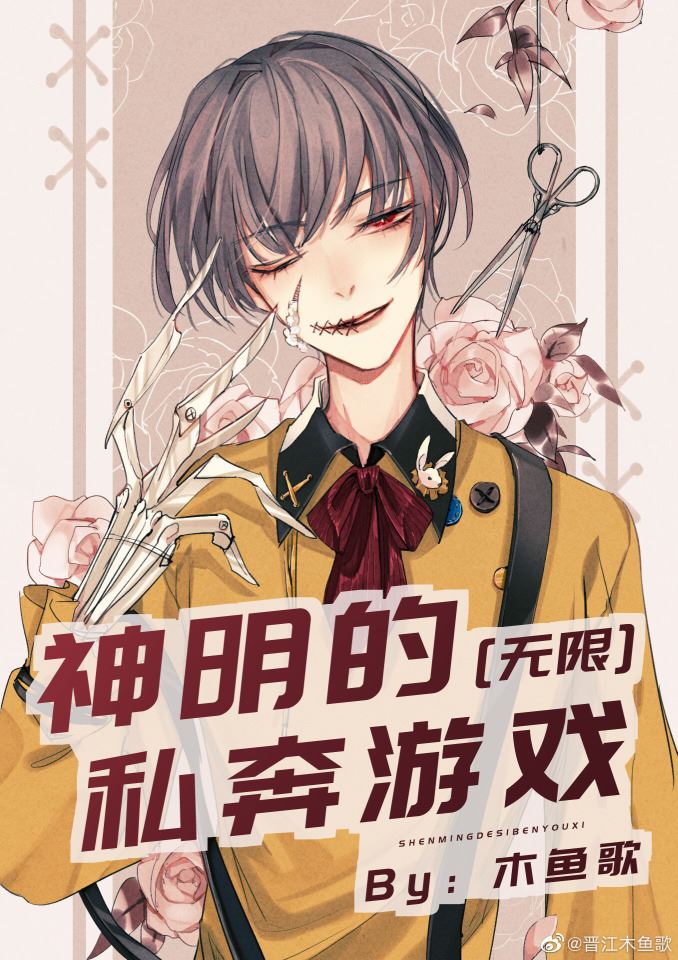
God’s Love Game [unlimited ] - Reviews

God’s Love Game [unlimited ]
+Add to Custom List
Sort
Add review
... Read More
This chapter is a masterclass in controlled escalation. It starts at a simmer — people talking, accusing, suspecting — and then YANK, violence so sudden it rewires the entire dynamic. Everything after the middle-aged man hits the ground is operating on a completely different frequency. The opening exchange between the accusers and Xiangnu's defenders could've dragged. There's enough backstory about capsules and life jackets that a lesser author would've info-dumped for pages. Instead, the conversation crackles because every line advances either the plot or the character dynamics. Nothing is wasted. Even Fenghejia's sluggish response serves dual purpose — she's recovering from whatever she took while also delivering the sharpest counterargument. Then the kill happens and the pacing shifts dramatically. Instead of lingering on gore or drama, the author moves us forward almost immediately. Yu Su escorts Xiangnu out, explains their next move, and we're already transitioning to carriage 4. The world-building reveal about the window repair comes wrapped in dialogue between Lin Cheng and Xiangnu, so we learn crucial plot information without stopping for exposition. "The materials used to patch the windows of the flight attendant are those monsters" — boom, new horror established, new rule understood, move along. But here's what I love most about the structure: the chapter ends on an information bump, not an action cliffhanger. We know the flight attendant is hiding, we know it uses monsters as building material, we know it's waiting to leave the station. The tension isn't about WHAT will happen next but WHEN. That's a different kind of dread, and it's far more effective because it gives us breathing room to absorb the horror before the next wave hits. The transition from carriage 1 to carriage 4 felt seamless too. No jarring chapter breaks, no time skips that confused me. We walk with Yu Su and Xiangnu and arrive where we need to be. This author understands that pacing isn't just about speed — it's about momentum. And this chapter has serious momentum.
... Read More
So the whole setup with the capsule labeled 'Life jacket produced by Cocoon Pupa Workshop' is doing so much narrative heavy lifting here and I love it. Let me trace how this plot point works. First, Xiangnu finds the capsule and is genuinely excited — he thinks it might be an escape item for the silver light clearance mission. Then Yu Su casually dismisses it by saying he's not a monster so he doesn't know the truth. Then Xiangnu opens it himself and finds... a silky white cloak. Not a life jacket at all. Or is it? The mismatch between the label and the actual item is the classic trap signal in these novel scenarios. What really sold me though is the pacing of the reveal. Xiangnu says 'this thing we got too easily, I always feel a little overwhelmed' — that line right there tells you the reader should be suspicious. And then Yu Su literally throws the cloak over him and covers his face with the hood. The power dynamic in that single gesture is wild. Also the notebook throwaway detail matters more than it first appears because Xiangnu literally drops it and then immediately tries to pick it back up at the end, only for Yu Su to physically stop him with his hand on the other end. What's in that notebook? Clearly something both of them want control over.
... Read More
The stakes in this section are doing double duty and it's making me paranoid in the best way. On the surface level, Xiangnu is trying to navigate a dangerous person (Yu Su, who is apparently a MONSTER made from a human) while also figuring out whether Doctor X is friend or foe. Yu Su himself warns him multiple times that Doctor X is bad, but Xiangnu can't just dismiss it because—look at the evidence. Doctor X literally reshaped someone's body against their will and calls it 'giving them a new life.' That's not a warning, that's a confession wrapped in nostalgia. But the REAL tension is internal and it's about trust. Xiangnu doesn't know who to believe. Yu Su told him Doctor X is dangerous. But Doctor X is being genuinely warm and vulnerable with him, calling him 'Nu Nu' affectionately, sharing personal thoughts. And Xiangnu is smart enough to realize that Yu Su's warnings might be genuine—not angry words but "true and pertinent warning" as he puts it himself. So now he's sitting across from the person his monster-boyfriend warns him about, and he's trying to read her like a book while staying carefully neutral. The nightmare sequence raises the physical stakes too—Xiangnu dreams of being bound, branded, unable to move or escape. Whether this is premonition or anxiety projection, it's clear his body registers Yu Su as a threat even when his mind is trying to rationalize it. That dissonance between intellectual attraction and visceral fear is where the chapter lives, and it's UNCOMFORTABLE in exactly the right way.
... Read More
The conflict structure here escalated massively. We started with external conflict—monsters in the dungeon, the president trying to get into their car, Fenghe Lulu outside fighting or confronting something. But then Feng Hejia's revelation about baby soup internalized the horror. It's not just monsters out there; it's about what these monsters were before, what they sacrificed, what they became. And Fenghe Lulu? She's both victim and predator, pregnant woman and monster. The stakes just became incredibly personal because the taskers are realizing they might not know who to trust or even what side they're on. Chen Chengen's practical questions about whether Fenghe Lulu can stop the president feel almost callous now because we know so much more about the tragic backstory. The narrative is building this dread—the reader knows more than the characters in some ways, and that dramatic irony is torture. Will Fenghe Lulu snap? Can they survive what's coming?
... Read More
The dialogue in these chapters operates on two completely different frequencies, and the friction between them is where the tension lives. Doctor X speaks in short, declarative sentences that sound almost rehearsed. 'Your application has been approved.' 'Those who don't cooperate will be killed.' 'Go in.' Each line lands like a scalpel incision—precise, clean, without hesitation. What's remarkable is how her dialogue shifts from mechanical to almost warm when she smiles under her mask. The contrast between her clinical tone and the slight upward curve of her lips creates this deeply uncanny valley effect. She's playing a role, but she's also genuinely enjoying it. Jiang Chao's dialogue tells a completely different story. He starts confident—explaining his theory about parasites and wounds with logical reasoning. But the moment Dr. X looks at him directly, his speech fractures. 'Please, please, now, it's too late!' reads like someone who has lost control of their own mouth. The repetition, the stutter, the collapse into plea-mode—it's not just nervousness, it's the sound of a character realizing his intellectual preparation meant nothing against raw power. The cigarette scene is masterful in its banality. 'Brother Ding, would you like to have a cigarette?' This is the kind of dialogue that feels completely authentic to real human interaction under pressure—someone reaching for normalcy through ritual. The fact that Yu Su responds with silence while the man keeps offering despite the tension says everything about this character's personality: he's either incredibly brave or profoundly oblivious, and the text refuses to confirm which. Then there's the dragon-antler tasker's complaint: 'Doesn't the Inspectorate feel that this is very disrespectful to us?' This is the kind of line that makes me laugh despite myself—someone worrying about etiquette while being forcibly stripped by supernatural investigators. It grounds the horror in something almost bureaucratic, which is honestly more terrifying than any monster could be.
... Read More
The pacing in these chapters is genuinely masterful and I need to unpack why because the author pulls off something really difficult here. You start in what feels like an intimate bedroom scene—soft lighting, ambiguous touches, a conversation about sexual knowledge. It's slow, it's languid, it's basically romance novel pacing at its most indulgent. And then Xiangnu tugs the sleeve and says "let's talk about some serious business" and the entire ground shifts beneath you. What's brilliant is how the author uses that transition smoothly. It doesn't feel jarring because Xiangnu himself initiates the pivot. He's the one who steers from personal stuff to mission logistics, from flirtation to world-building. The Tian Yan Sect explanation, the copy logs, the three extra people in compartment one—this is where the story rewards attentive readers and drops lore bombs. And then the third copy log arrives like a ticking clock. The emotional whiplash is intentional. You go from laughing at Yu Su's scheming to genuinely concerned about a competitive mission where life points are the currency and companions might try to eliminate each other. The chapter ends on a cliffhanger that's both romantic and urgent—Yu Su holding Xiangnu's face, the mission looming, the question of whether Xiangnu can still avoid monsterization. It's a perfect structural spiral: intimacy → revelation → danger → unanswered question. The author knows exactly what they're doing.
... Read More
I am here for Xiangnu's voice because honestly it's the funniest thing about this entire passage and nobody is giving it enough credit. Let me just read you some gems. After sending his emotionally vulnerable paragraph, he tells himself: 'it's okay, Xiangnu, as long as you are not embarrassed, it is another's turn to be embarrassed. Brave people should face everything calmly!' This is not how a normal human talks to themselves. This is the internal monologue of a man who has made peace with chaos and is now weaponizing it. Then when Yu Su doesn't reply immediately: 'Xiangnu pondered for a few seconds, then continued: Mr Yu, what type of pattern did you leave on me? Its temperature has risen a little...' The way he deliberately escalates — sending the vulnerable thing, waiting for silence, then following up with something even MORE intimate about body temperature — is both strategic and hilarious. He's not just flirting; he's conducting a behavioral experiment and taking notes. But the voice truly shines in his private thoughts. After Yu Su says he won't enter the dungeon, Xiangnu's analysis goes: 'Mr Yu still has something to train on.' Not 'he seems busy' or 'I understand.' He literally files this under TRAINING REQUIREMENTS. Then later: 'After his dictatorship, Xiang Nu picked out a second fault, his mouth is too arrogant and his heart is not right.' This man is keeping a SCORECARD on his future partner and I am OBSESSED. The contrast with Yu Su's actual dialogue — two question marks, three ellipses, one sentence that could be interpreted as either rejection or reluctant affection — creates this amazing asymmetry. Xiangnu writes paragraphs; Yu Su writes punctuation. And somehow the silence speaks louder. That's not just good dialogue; that's a deliberate stylistic choice about power dynamics in communication.
... Read More
I need to talk about the atmosphere in these chapters because the author is really going somewhere. The train carriage setting is so claustrophobic—it's not just 'people walking down a corridor,' it's narrow aisles, dense crowds, taskers all heading toward the same point of interest, the air thick with suspicion. And then there's the corpse in carriage 7. Female, lying in the same position, but her hair keeps growing outward, wrapping around people's necks. That image is so vivid I could see it like a film frame. Hair as a weapon—that's not something you see every day in horror fiction. It's delicate and grotesque at the same time. And the fact that the missionaries in that carriage 'had little effect' trying to resist? That tells you everything about the power imbalance. These aren't normal people dealing with a supernatural threat. They're taskers, and even they're getting choked by a woman's growing hair. The sensory details are doing a lot of heavy lifting here. Xiangnu can't see, so his other senses are dialed up—'don't smell any blood' he asks, which means he's assessing danger through smell and sound and proximity. The author uses his blindness as a worldbuilding tool, not just a character trait. You can hear Wang Nan muttering, feel the crowd pressing, sense when someone's body goes stiff. The whole world feels lived-in and dangerous. There's also this bizarre normalcy to it—all these people just casually walking through a horror scenario like they've got time for gossip. That dissonance is what makes the setting feel real. The prison at the end is a dead-end, the mission hall is the only way out. It's a train with no destination except survival.
... Read More
"I don't believe that I am the only one who has this question." This line hits different because it's TRUE. The entire chapter is built on a single question that nobody can ask out loud enough: if Xiangnu found the only life jacket and ran with it, do the rest of them die? The stakes here are so beautifully brutal because they're both immediate and existential. Right now — will someone stop Xiangnu? Later — will the life jacket even work? The author doesn't spoon-feed us answers about what silver light actually does, what the life jacket protects against, or what happens if you fail clearance. Every mystery is a loaded gun and everyone's finger is on the trigger. What made my heart race was Yu Su's decision-making in that moment. He could've talked, negotiated, threatened — instead he chose violence. And not just any violence, cold calculated murder that sent a message. His explanation afterward was surprisingly kind: "Don't be soft to anyone who is malicious to you." Coming from the guy who just ended a life, that line landed like a punch to the gut. Is he protecting Xiangnu or shaping him? Is kindness in this world just another word for being ruthless enough to survive? The middle-aged man wasn't wrong to be suspicious but he was dead wrong to underestimate Yu Su. "It's not that he's not afraid of Yu Su, but he thought that his speculation will make the other missionaries stand against each other" — this moment of overconfidence, thinking he could control the room, is so human. So tragically human. He walked into a trap of his own making and Yu Su didn't even stand up to spring it. I'm also losing my mind over the life jacket subplot. Eighty percent chance Xiangnu has a hidden agenda, says the middle-aged man. But is THAT the agenda? Or is Yu Su the actual hidden variable here? We don't know what happened in the cab. We don't know what Xiangnu saw. And that uncertainty is making every interaction feel like walking on glass.
... Read More
I need to talk about this scene between Xiangnu and Yu Su because oh my god. First of all, Xiangnu asking to go to the bathroom RIGHT WHEN everyone has to sit down and stay put—intentional? YES. And Yu Su catches on immediately. The guy just says 'Intentional?' like he's not even surprised. But then—he helps him anyway. He literally takes off his own cap, revealing his face, in what I'm assuming is a moment of vulnerability or trust exercise, and wipes Xiangnu's hands with his handkerchief because his hands are wet. The man is being serviced while simultaneously being analyzed. "When you used your cane to explore the road before, it touched my shoes so I know you knew someone was sitting there. I also know you are deliberately looking for reasons to approach me. You don't have to do that." This line from Yu Su is EVERYTHING. He's saying: I see what you're doing, I'm not angry about it, but I'm also not going to pretend I don't see it. That's such a specific kind of intimacy—two people who understand each other's games immediately. And Xiangnu's response? He just... keeps going. Twists the door handle himself when Yu Su doesn't open it. Total nonchalance. This dynamic is so rich. One is blind but clearly sharp as a tack, the other is hyper-observant and cold but doesn't shut the door (literally or figuratively) on the interaction. Also can we discuss Fenghe Jia and Fenghe Lulu? Same surname, unknown connection, and the way the whole group reacts differently to each of them tells you everything about social hierarchy in this dying world.
... Read More
This is the part where everything shifts from 'mysterious puzzle' to 'we are in actual danger.' I keep coming back to the villager description. They're not just standing behind doors—they're pressing against them, staring out through arm-sized gaps, gray and dead eyes. And when Xiangnu approaches to ask for shovels, the narrator specifically notes: 'the villager NPCs in this copy were already on the verge of tearing down the human disguise.' TEARING DOWN THE HUMAN DISGUISE. Like, they've been wearing it this whole time and it's starting to fail. The stakes just went from 'solve the mystery' to 'survive the encounter.' And Xiangnu walking toward that alone, while his friends watch from a distance because no one wants to negotiate with something that might turn into a monster—this is peak tension writing. The author makes you feel every second of that approach. Less than two centimeters between Xiangnu's face and the gap, staring into those gray eyes for five full seconds. Five seconds that probably felt like five hours.
... Read More
What is this story really about? On the surface, it's a haunted village mystery. But dig deeper, and you find themes of identity, possession, and the desperate need for wholeness. The talismans aren't just protective charms; they're labels. Two characters on the door, three on the paper—and the extra one is a NAME. Names have power. To know a name is to know a soul. The villagers aren't just haunted; they're incomplete. Their bodies are loose, flimsy, like pockets over nothing. They've lost something essential. And that something might be their name, their identity, their very self. The ghost's offer—"Give me back my body, and I can answer a question"—is a trade of autonomy for knowledge. But can you ever truly get yourself back after it's been taken? The white snake is another symbol. Snakes shed skin; they represent rebirth, transformation, hidden wisdom. This one is white—purity? Death? Silver scales, red eyes—opposites combined. It chooses Xiangnu, wrapping around him like a second skin. Is it protecting him? Claiming him? The mountain itself feels symbolic. West Mountain is where the original talismans were dug up, where secrets are buried. Climbing it isn't just physical; it's an ascent into the unknown, into the layers of this curse. And the old man? He's the "public enemy" of all ghosts and monsters. Why? Maybe because he represents order, suppression, the force that keeps chaos at bay. But chaos always finds a way. This story isn't just about solving a mystery. It's about what it means to be whole, to have a name, to belong. And whether we can ever truly escape what's been taken from us.

Leave a comment

You must be logged in to leave comments. or