God’s Love Game [unlimited ] - Reviews

God’s Love Game [unlimited ]
+Add to Custom List
Sort
Add review
... Read More
The stakes in this story are escalating and I'm here for it. Let's break down what everyone is actually risking: death, obviously, but also social death. Yu Su already figured out that if he forces people to explore dangerous routes, 'he will set himself against everyone.' He has a disability—he can't afford to be the villain. So instead he's playing the longer game, feeding information to people who are already desperate enough to take chances. That's not just strategy, that's survival intelligence. And the risk calculation! Xiangnu doing mental math about quarter versus half probability while standing next to a corpse that wraps people's necks in hair—this is peak 'I will die but first let me do the arithmetic' energy. The conflict isn't just external (corpse, inspections, potentially hostile taskers). There's internal conflict too. Xiangnu admits he 'didn't want to die but was never afraid of death.' That's a specific kind of mindset, and it's terrifying in its own way. When someone's already made peace with dying, they're either the most dangerous person in the room or the most vulnerable. The Wang Nan subplot is interesting tension-wise—he's clearly not allied with Yu Su, he's watching, muttering, making assumptions. That's the kind of conflict that festers. And Feng Hejia's calm observation, Chen Chengen's polite refusal—they're all performing friendliness while keeping their knives sharp. The worst part? We don't even know what happens if you fail the inspection. What if the 4th carriage IS the one they send everyone into? Then Yu Su's little information-broker operation collapses and people die because of him. The suspense is building beautifully and I'm already worried.
... Read More
Oh my god, can we just talk about the absolute delicious tension between these three? I read this chapter at midnight and my heart rate went from zero to a hundred in about five paragraphs. Xiangnu is out here playing 4D chess with Yu Su's feelings while Jiang Chao is standing there like a big, loud, emotionally constipated potted plant. The dynamic is so rich it's almost suffocating. Xiangnu asking, "Mr. Yu, I'm your little puppet, right?" is such a power move wrapped in silk. He knows exactly what buttons to push. And Yu Su? The author only gives us one tiny detail: "his ear tips moved." That's it. That is a whole paragraph of internal screaming. He's blushing so hard his disguise might slip. Meanwhile, Jiang Chao is complaining about flirting in public, but let's be real—he's just mad he's not the one being played with. His internal monologue about being used and then discarded later is so painfully honest. He's trying to rationalize using the Ghost Taoist, telling himself it's fine because Xiangnu is the one dating Yu Su, not him. But his eyes keep drifting. There's this moment where he looks at the "beautiful young man" and his heart skips a beat, not from attraction, but from unease. He's sensing the danger, the manipulative current under the surface. I loved how Yu Su finally responds, covering his flushed ears and saying, "you calling me master always gives me a very strange feeling." It's so Yu Su—confused, flustered, but leaning into it anyway. The chapter ends with that sweet, broken thought from the author note: "No enlightenment, no enlightenment, no enlightenment." It's clear Yu Su is starting to understand something, even if he won't admit it. And Jiang Chao? He's just trying to survive the emotional landmine field these two have created. I am so here for this triangle. It's not straight or gay, it's just pure, chaotic, codependent energy. I need to know what happens when Xiangnu's little game goes wrong.
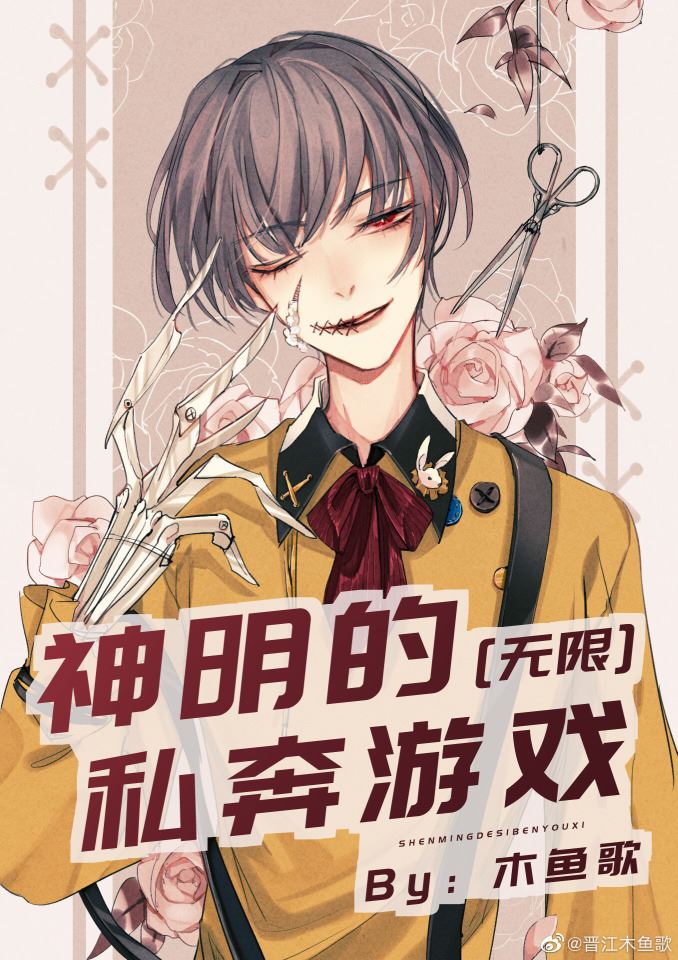
... Read More
I need to talk about Yu Su and Xiangnu because oh my god the dynamics here are just so deliciously messed up. Xiangnu literally has these conflicting feelings—respects Yu Su, likes him, but also genuinely fears what he is. And that is the most honest character moment ever. Like, he says it straight out: his favor towards Yu Su is greater than his fear, but after the two were balanced, there was no such thing that could make Xiangnu abandon those fears caused by different races and strength levels. That is not someone who is blindly infatuated; that is someone doing a cost-benefit analysis of their own survival. And then Yu Su shows up with the whole creepy chat thing—the avatar with an exclamation mark in a triangle, the nickname displaying as question marks, 'Baby, I'm right outside your door, open the door for me.' This is genuinely unsettling but also kind of revealing? Because Yu Su isn't even hiding it. He says directly: 'We agreed... if you hide from me and reject me, I will be very angry. You can't escape.' That's not a subtle person. But here's what I found interesting—Xiangnu still decides he should take advantage of this copy to think about how to restore his relationship and control Yu Su's manic state. He's not just terrified; he's strategizing. That's either incredibly brave or incredibly naive, and I love that the text doesn't tell us which one it is. The power dynamic here is whiplash-inducing. Yu Su has all the power—he can enter dungeons, walk through walls, physically grab people—but Xiangnu keeps making choices anyway. He chooses to write back slowly. He chooses to say 'you let me answer slowly.' He's negotiating boundaries with someone who has already demonstrated zero respect for boundaries. Isn't that just... something?
... Read More
So let's talk about Xiangnu and Mr. Yu because honestly this is the best relationship dynamic in the whole chapter and I need to process it. Here's this guy going into a corpse-infested mountain, surrounded by undead villagers, and his priority is literally telling his white snake companion to get out of his hands so he can dig a hole. And the snake just refuses. It's petty. It's funny. It's surprisingly sweet. Remember how earlier Xiangnu had done something to provoke this—probably told the snake to leave his hand or pushed it away—and now the snake is actively retaliating by refusing to budge? That's not just comic relief, that's actual character work. Mr. Yu has agency. He's not a tool. He's a grudge-holding pet who absolutely knows how to press Xiangnu's buttons. And then the moment where the snake casually crawls into the skull Xiangnu is holding and nests there without Xiangnu even noticing? That's either terrifying or adorable depending on how you look at it, and I think that's the point. These taskers are walking around with undead remains in their hands and their snake companions burrowing into them, and they're treating it like normal. That says something about their bond with each other—they're so comfortable that supernatural weirdness doesn't register as weird anymore. Then there's the master. The old man. 'Xishan is a place where corpses are transformed. Disciples, don't go to Xishan.' Is he warning them? Is he orchestrating something? The way he sneered and didn't ask further questions before they left suggests he already knows what's waiting for them there. And the disciples don't know whether his words are true or not but they feel heavy-hearted anyway. That's excellent character writing—him maintaining control through silence and implication rather than exposition. What I love is that nobody here has simple motivations. Xiangnu is calm and analytical but clearly carries some weight. The master is menacing but possibly protective. The snake is selfish and petty. And the villagers—don't get me started on them. But more on that later.
... Read More
I appreciate how the author renders this space without over-explaining it. We know it's a cab — which seems to be some kind of special compartment or vehicle within this larger mission world. There's a closet, there's ground they're searching on their knees, and there's a 30-minute time limit that governs everything they do. The setting feels lived-in rather than just a backdrop. The capsule itself is described with tactile detail — the seam, the fingernail digging back and forth to pry it open, the way the cloak slides out 'silky and supple.' Those sensory choices make the scene pop. But what really makes this environment feel threatening is what's implied rather than stated. The 'flight attendant' who patrols and leaves the cab periodically. The other taskers who already searched the No. 1 compartment thoroughly. Chen Chengen specifically mentioned as being careful. The sphinx that's powerful enough not to need escape items but presumably still dangerous. The silver light clearance mission that's hanging over everything like a timer. None of this is explained in detail but every detail contributes to a world that feels systemic and governed by rules the characters are still figuring out. And the closet as a discovery space — mundane furniture becoming a source of both hope and suspicion — is a nice touch.
... Read More
The stakes in this chapter escalated so fast I barely had time to process. Xiangnu walks in thinking he's investigating a dungeon quest, and suddenly he's been invited to a monster banquet where the main course might literally be him—or at least his companion. The moment Doctor X offered him that honey liquid and the monsters immediately scrambled, eyes full of 'greed and desire,' the danger went from theoretical to visceral. These aren't polite guests at a social event. They're predators who just spotted weakness. And Xiangnu's response? He points at Yu Su. 'I choose Mr. Yu, and I want him to taste the honey with me!' Is this bravery or panic-induced recklessness? Because putting your friend in the spotlight when a room full of monsters is watching is either the most loyal thing ever or the most dangerous. The tension never drops—not when the worm is still alive and shaking, not when Doctor X tears its skin open with her bare hands, not when half the honey gets spilled and monsters throw themselves on the floor to lick it up. I was holding my breath through the entire passage. What happens when this banquet ends? What does Doctor X actually want from Xiangnu beyond 'participating in the festivities'? The questions are piling up and I have a very strong feeling none of them have safe answers.
... Read More
The pacing in these chapters is genuinely masterful. You start with this investigative scene—Yu Su explaining what happened, Chen Chengen suspicious, Xiangnu curious—and then Feng Hejia drops this massive lore dump about the two main storylines of the Beauty Club dungeon. It's structured like an onion, peeling back layer after layer. First we learn about the surface-level monsters (beautiful skin, plastic surgery vibes), then the hidden darker line (baby soup, pregnant victims), and then the personal connection (Fenghe Lulu might be linked to it). Each revelation raises the stakes and deepens the mystery rather than resolving it. And the chapter ends mid-tension—still don't know what happened in car 4, still don't know if Fenghe Lulu can fight the president. That's classic cliffhanger structure that makes you immediately want to read the next batch.
... Read More
Can we just PAUSE and appreciate the absolute emotional whiplash in this chapter? One minute you've got Xiangnu being adorably shy, blushing white cheeks turning pink, making these subtle invitations that are equal parts vulnerable and bold. And the NEXT moment, after the bathroom door closes, he's standing there alone realizing he can literally SMELL decay on Yu Su. That transition from warmth to primal terror is BRUTAL. "An extremely icy cold feeling swept over Xiangnu's whole body. He was sure he smelled the smell of decay." This is the kind of detail that haunts me. It's not just that Yu Su might be dangerous—it's that Xiangnu has been standing this close to something DEAD and didn't even know it until now. And yet, get this, Xiangnu had just invited Yu Su to help him in the bathroom. He was still leaning into that warmth, that fragile trust. That's such a painfully human thing to do, isn't it? To reach toward someone even when part of you is screaming that they're not safe. And then there's Wang Nan, lurking outside, watching all of this unfold with his weird little smile. "Sure enough good looks are dominant everywhere, whether they are men or women doesn't matter." Is he jealous? Creeped out? Fascinated? The text doesn't say, but there's this uncomfortable energy around him that makes you wonder what he's actually thinking versus what he's showing. Meanwhile Chen chengen is just genuinely worried about the people in car no.7, and Fenghe jia is trying to be the voice of reason even though she's clearly unsettled. Everyone is processing this differently, and that's what makes the emotional texture of this scene so rich.
... Read More
I will admit something shocking: I did not skip the Xiangnu explanation section. I read it. I followed it. And honestly? It works because it's not just exposition — it's character. The author could have handed us a clean summary: "Xiangnu figured out the pattern." Instead we get the full derivation, the 142857 cyclic number breakdown, the multiplication tables, the tail digits. It's long. It's dense. And it's absolutely the right call because this is Xiangnu's love language — he expresses care through solving problems out loud. More importantly, the pacing around this scene is masterful. The group just learned a rule that should make them feel empowered, and the narrative immediately undercuts it: "Finding out the rules of random inspection will only make the taskers feel more nervous, and let them understand how short their time is." That pivot from hope to dread is why this chapter haunts me. The author gives us a satisfying puzzle solution, lets us feel smart for a moment, then reminds us that knowing the rules doesn't help you survive them. The tension doesn't release — it compresses. Then right after that heavy moment comes the Yu Su ear-touching scene, which is both comic relief and emotional landmine. The whiplash is intentional. The pacing here is like a rollercoaster that only goes down.
... Read More
I can't stop thinking about the symbolism packed into this short stretch. First, the 'Silver City' alias for the central hall. That's huge. It implies the organization that recruits them isn't benevolent; it's ghost-associated, or perhaps it's a cold, metallic place of transaction rather than care. Then there's the setting itself: the 'Furnace Apartment.' Painted all black. Grey-white slits for windows. Protruding edges. It looks like a wound in the darkness. A furnace implies heat, burning, processing—maybe this is where they process souls? Or maybe the taskers are the fuel? And those railings… 'dilapidated and rusty,' ready to shatter into powder. They're supposed to be safety barriers, but they're structurally unsound. Just like the alliance between these taskers. The fifth-floor balcony filled with people who look normal but don't act normal—that's the theme of deceptive appearances. The 'landlord' warned Li Yue before, saying it was unoccupied, but it wasn't. Lies hide in plain sight. The story keeps asking: who is human here? The ghosts are on the balcony, but the taskers are the ones being squeezed and dried like fruit. Maybe the real horror isn't the supernatural, but the system that sends people into these 'copy worlds' to seal ghosts, essentially treating them as expendable components in a dark machine.
... Read More
This batch is a masterclass in layered plotting. On the surface, we have a mission-based narrative—Xiangnu needs to get to the third floor, Doctor X has set up restrictions, and Yu Su offers a solution involving a painted puppet double. But the real plot twist isn't the disguise scheme itself; it's what happens when we cut away from that setup to see Yu Su's cuffs. The author drops this image almost casually: “A few tentacle-like things were emerging from Yu Su's wide cuff.” And just like that, the entire scene reframes. We thought we were watching a clever infiltration plot, but we're actually watching something far more unsettling. The puppet plan, which seemed like a practical workaround, now feels like it might be part of something darker—something tied to Yu Su's true nature. The structural brilliance here is how the author uses misdirection. For pages, the narrative lulls us into thinking this is about strategy and deception, then pivots hard into body horror territory without warning. That pivot is what makes the plot feel alive rather than manufactured. The tension comes not from whether the mission succeeds, but from the dawning realization that Yu Su himself might be the real mystery.
... Read More
There's so much going on beneath the surface of this mystery. The parasite isn't just a monster; it's a metaphor for control, for having your agency stripped away while your body moves on its own. The middle-aged man is a literal puppet, his movements manipulated by an external force. And then we have Xiangnu treating Yu Su like a puppet, using the master-servant dynamic to orchestrate protection. It's a mirror. Jiang Chao sees himself as a tool to be used by the Ghost Taoist, but also as someone who can use others in return. The stone pillars surrounding the corpse symbolize isolation, confinement, the barriers we build when we're afraid. They're not central; they're peripheral, hiding in plain sight. The golden invitations to the fourth floor represent privilege and safety, but also exclusion and danger. You can only enter if you have the key, but the key might not save you. The recurring motif of blindness and sight is interesting too. Xiangnu sees the truth in the wound, Jiang Chao struggles to speak clearly, Yu Su watches silently. Perception is everything in this world. Who sees the parasite? Who is immune? The chapter asks uncomfortable questions about consent and control. Xiangnu asks Yu Su to protect him, but is it really a choice, or is it manipulation? Jiang Chao agrees to go to the Ghost Taoist, but is he acting out of free will or desperation? The ending with the inspector following him suggests that freedom is an illusion. We're all being guided, watched, controlled by forces we can't see. The horror isn't just the gore; it's the realization that our autonomy might be a lie.

Leave a comment

You must be logged in to leave comments. or
