Fierce chirp~chirp! - Reviews

Fierce chirp~chirp!
+Add to Custom List
Sort
Add review
... Read More
The stakes in this passage operate on multiple levels, and what's remarkable is how the author shifts between them without losing momentum. On the surface, there's a physical stakes: a small creature is falling from the sky, and someone needs to catch it before it hits the ground. This is immediate, visceral, and easy to care about — your heart literally races as the text describes Qiu Qiu's wings softening and him beginning to descend. But beneath that surface conflict are deeper tensions. Qiu Qiu has spent his life being told to sit still, to be obedient, to not worry anyone. The entire story of his character has been defined by what he cannot do — cannot run, cannot play, cannot fly far. And here he is, doing the one thing he was never supposed to attempt. The conflict isn't just about survival; it's about agency. Will he remain the passive observer, or will he risk everything to participate in his own life? Then there's the interpersonal conflict with the subdragon. Jin Lin catches Qiu Qiu but then throws him — an action that reads as cruelty until you realize it's somehow part of the rescue. The confusion this creates in everyone watching mirrors the confusion we feel as readers. Is the dragon helping or hurting? The ambiguity maintains tension even after the immediate physical danger passes. And underneath all of this is the family dynamic — the parents watching helplessly, the brothers racing with mats, Qiu Yiming's fury at being powerless. These aren't background details; they're essential to understanding what's at stake. This isn't just about one falling creature. It's about a family realizing how fragile their world is, how quickly safety can turn to panic, and how love expresses itself most clearly in moments of crisis.
... Read More
The pacing in these chapters is a masterclass in comedic escalation and structural variety. Chapter 167 essentially operates like a sitcom pilot. It opens with social media chaos—Qiu Yiming bombarding his friend circle with candy photos, the group chat reacting, the slow realization that something has changed. The rhythm here is fast and frantic, matching the energy of someone who has clearly been refreshing their feed obsessively. Short paragraphs, quick dialogue exchanges, emoji reactions that feel authentic to how people actually text. You skim this part and your pulse goes up. Then we hit the asterisk and the scene shifts entirely. We're suddenly in the prince's estate, the tone drops to something more formal and theatrical, and the pacing slows to let the absurdity of the situation breathe. Two competing admissions directors are having a thinly veiled argument in front of a guardian who is just sitting there going "uh… well…" The comedy comes from the contrast between the gravitas these adults are bringing and the fact that they're essentially fighting over a child. The structure alternates between these two modes—chaotic modern digital life and almost Shakespearean institutional drama—and the transition between them feels natural rather than jarring. The little brother appearing at the end serves as both acomedic button and an emotional anchor, pulling everything back to the human (well, beast) center of the story. The chapter endings also do interesting work. The author drops hints—the red hair revelation, the promise about homework, the fact that a palm-sized child just walked into a room full of powerful adults—and each one creates a micro-cliffhanger that makes you want to keep going.
... Read More
The dialogue in these chapters is remarkable because of what it avoids almost as much as what it includes. Let me start with Qiu Jingyu—Big Brother. His lines are sparse, almost spare. 'What are you hiding for?' 'It's still pretty.' 'Do you want to become a beast like that?' 'Then you are.' Four sentences, maybe five if you count the full promise. But each one lands with the weight of someone who doesn't waste words because he doesn't need to. His voice is calm, almost indifferent on the surface, but that final 'no one will dare to say that you are not' cracks something open. It's the kind of line that sounds arrogant but is actually tenderness disguised as confidence. Qiu Qiu's dialogue, meanwhile, is barely dialogue at all. 'Chirp!' 'Chirp, no looking...' These are sounds, not words. And that's the point—he's trying to communicate but can't find the language for his anxiety. When he finally says 'Of course. Everyone is a beast, so I should be a beast too,' it's so simple it aches. That's not a complex argument; that's a child repeating a mantra to convince himself. Qiu Yiming is the comic relief and the emotional wildcard. His internal monologue ('ahhh ah ah!') is ridiculous and perfectly calibrated—we laugh, then immediately feel guilty for laughing because the underlying emotion is genuine tenderness. And Leiman, the servant, exists mostly as a voice of polite concern, the grounded counterpoint to everyone else's intensity. 'Master, I think maybe we can find some animal cubs...' He's always suggesting, always managing, never fully understanding. The narrative voice itself is worth noting—it floats between close third-person intimacy (inside Qiu Qiu's fears, inside Qiu Yiming's contradictions) and slightly more detached observation. This shift isn't accidental; it mirrors how we experience family: sometimes we're inside someone's head, sometimes we're watching them from across the room, never quite sure whose perspective is 'correct.' The dialogue doesn't just reveal character; it performs the emotional distance and closeness between people who love each other but can't quite reach each other.
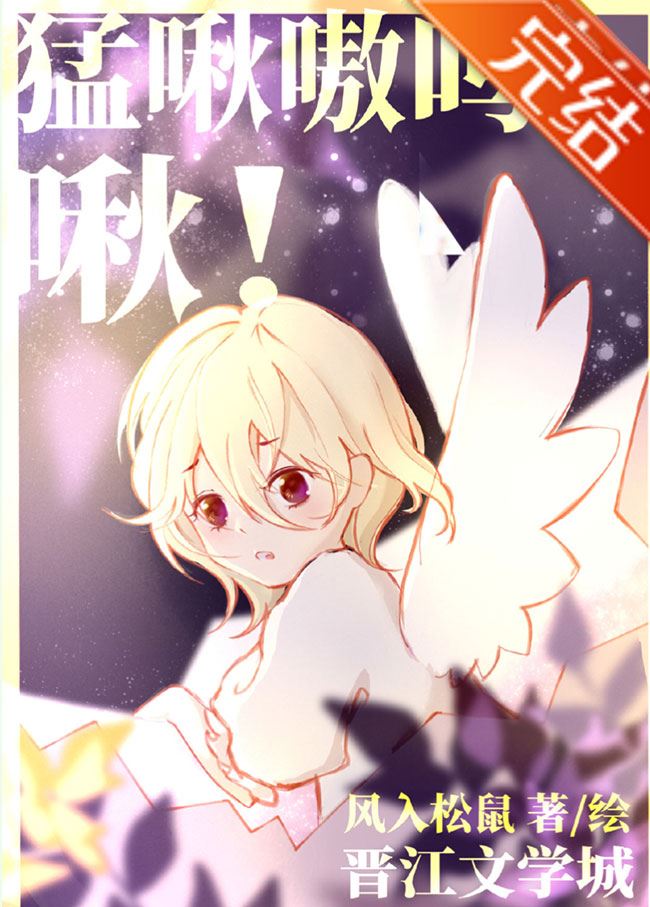
... Read More
So Qiu Qiu wakes up as a palm-sized angel creature and I am SCREAMING. The whole premise of this chapter hinges on this transformation, and honestly? It works. The setup with the system's automated underage protection algorithm kicking in right as he changes — that's such a clever way to handle what could've been a ridiculous reveal. Instead of just poof he's human now, there's this whole bureaucratic system managing it. The pacing here is also spot-on. First you get the sensory description of him transforming, then the chaotic morning rush where Qiu Chongshan bursts in with a broken steak, then the slow realization by everyone that their young master is now... a tiny thing. The comedic timing of everyone gathering to stop him from eating the weird food only to find he's GONE and then discovering him curled up with the dragon tail — that's peak storytelling. The only question I have is: what was the blood incident from last night? Because Qiu Qiu mentions quarreling with A Lin over it, and it's clearly something significant, but we only get breadcrumbs. That tease at the end where Jin Lin wakes up and sees those lavender eyes staring right at him felt like the chapter was holding its breath.
... Read More
The comment section in this book is legitimately one of the best things ever written. Like, the author could have just told us "everyone was excited about the kindergarten" in one sentence and moved on. Instead we get FULL bullet comment threads with usernames, emojis translated into text brackets like [Terrified Face] and [Scarred Cool Face Smile], and a whole escalating joke about space pirates. [Hahahaha, brother, how do you have the face?? You look like you haven't killed someone in at least five minutes!!] This line alone made me snort out loud. The sarcasm, the specificity, the sheer commitment to the bit—this is internet culture done RIGHT in fiction. And it's not just flavor text either. The comments actively drive the scene forward. The Space Pirate No. 1 sign-up starts a chain reaction that floods the comments, which then spills over into the Elf Forest where the elves are watching on a giant screen together, having their own reactions. The voices in these comments are all distinct too. You've got the desperate applicant, the mocking onlooker, the self-proclaimed pirate, the concerned random—that's four separate personalities in like six lines. Cole's dialogue with Qiu Jingyu is also great for contrast. Short, nervous, fragmented: "Ha? N-no, I wouldn't dare…" vs Qiu Jingyu's calm, deliberate cadence. They sound like completely different people talking to each other, not two characters reading from the same script. I'm saying this as someone who usually skims dialogue: the writing style in this book genuinely makes me WANT to read every single exchange. The author knows how to let characters breathe through their words.
... Read More
Can we talk about how good the narrator's voice is in this passage? It's this third-person limited that slips into pure chaos whenever the system chimes in, and the contrast is comedy gold. You get these calm descriptive lines like 'The furry fur was extremely smooth and glossy, much shorter than his second brother's golden lion mane, but it carried a warmth' and then BOOM—【…Damn it, kid, your brother is sucking you! He's treating you like a kitten!!】in brackets like someone yelling from the back of a theater. The system has zero chill and I respect it. Meanwhile Qiu Qiu's dialogue is this perfect mix of earnestness and squeakiness. 'Brother, if... if you don't get up, second brother won't let the small kitchen make your breakfast'—he's trying SO hard to sound threatening and it's adorable. And the narration captures his voice shift when he thinks 'Was this a period of mental energy fluctuation?' versus when he's just personally offended and says 'Brother! I... I'm angry...' The author lets each character's internal voice be distinct without needing to label it. Qiu Yiming's panic reads completely different from Qiu Qiu's patient exasperation even though we only hear Yiming indirectly through his actions.
... Read More
There's this recurring image of Qiu Qiu being fragile — thin, sickly, delicate feathers that the system describes as "soft, milky golden" — and it keeps coming back throughout the text like a motif. He's treated like porcelain, like something that will break if handled wrong. But then you have the DRAGON BLOOD, which is the exact opposite: concentrated power, violence captured in liquid form, something you literally cut from a living creature. The irony is that these two opposites are what connect the boys. Qiu Qiu offers candy — humble, sweet, basically worthless in interstellar terms — and Torrance offers dragon blood, which is priceless but also... something you can't exactly give casually. Yet that's exactly what happens. "Wouldn't it be great if you came to play with me first after you transformed? Will you also go to the junior department of the First Academy? Then we can still be classmates!" This line hits harder than it should. It's about connection across form — will I still be your friend when I'm not a bird anymore? Will the subdragon A Lin also transform? There's this underlying anxiety about whether friendship survives physical change, whether identity is tied to form. And the system's reaction — treating Torrance as a predator circling prey — adds this dark undertone to what seems like innocent childhood friendship. Is it really that innocent? The text won't commit either way, and that ambiguity is where the real theme lives.
... Read More
On the surface this is a cozy chapter about everyone adoring a cute cub. But read the last lines carefully: [Ding—Complete Daily Background* Task: Beast's Dominance, Beast Prestige +50] [Ding—Villain Prestige Event Detected: Beast Prestige +50, Expected Task Reward: Horror Legend Halo] The system itself is confused: [When did you become a horror legend?] Everything changes in these last few lines. This adorable golden fluffball that everyone wants to keep in a flower basket is apparently accumulating VILLAIN PRESTIGE. It's becoming a HORROR LEGEND. The Dragons see it as pure innocence; the system flags it as something else entirely. And Abraham said it doesn't belong to this world. What is this thing? Is it truly innocent, or is it playing the long game? The contrast between the warm, domestic scenes and this cold system notification at the end is genuinely unsettling. The stakes just went from 'will the cub be okay' to 'what exactly is the cub and what is it becoming?' I need to know what happens next and I am not calm about it.
... Read More
'A roar of a thunder-like beast came to his face.' That's the opening line of the scene where everything goes sideways and I'm never recovering from the comedic timing. The author has this incredible ability to shift from domestic warmth to absolute chaos in a single paragraph. You've got floor-to-ceiling windows, servants opening doors, these grand halls—and then a GIANT TIGER comes barreling through them with a dragon cub in its mouth. The sensory details are so vivid: the black and white fur shining in sunlight, the indescribably mysterious atmosphere of the pure black tail, the trembling ground when the beast paws. But what really sold me was the perspective shift when we suddenly get Jin Lin's internal experience—the weightless flight, the noisy voices, the chaos. It transforms the entire scene from 'funny family comedy' to 'oh this poor kid has no idea what's happening to him.' And that golden eye contact moment? Chef's kiss. One sentence and the whole tone changes. 'For Jin Lin, it has been a long time since he felt such a chaotic and offensive situation.' Everything about this scene construction is deliberate and effective.
... Read More
I need to talk about this family dynamic because it is genuinely one of the funniest things I have read in a long time. The image of Qiu Yiming literally having his tail wag uncontrollably while squatting on his baby brother's wrist, and then Qiu Chongshan slapping him without thinking and nearly sending the baby flying into the void — that is not a family, that is a bomb defusal team operating under extreme pressure. But what I actually find myself coming back to is Qiu Jingyu. The eldest brother. The Speaker of the Parliament. He is sitting there flipping through an admission guide, completely composed, casually threatening to deduct compensation from his brother's personal account after Qiu Yiming collapsed a combat training room last time. Who talks like that? Who discusses "oh by the way you owe the school 5 million credits" the same way someone would discuss the weather? And yet Qiu Yiming respects him. You can feel it. He gets smug and defiant but he also knows when his brother has drawn a line. That is the most interesting part of their relationship — it is not warm in a traditional sense, but it is solid. There is trust underneath all the snark and financial threats. The system's reveal about the original plot adds a whole new layer though. The second brother isn't just going to cause trouble during his surge period — in the original story, he accidentally killed the young son of an important official. A child. And Qiu Jingyu would have had to personally sign the judgment order. That is some dark, devastating family trauma right there. I am genuinely worried now.
... Read More
Okay so this whole chapter is basically built around one of those delicious dramatic irony moments where the reader knows something the character doesn't and it just *itches* until the reveal hits. Let me unpack this because the plot weaving here is actually really smart. On the surface, we have a seemingly simple scene: Qiu Qiu trying to get snacks for the grandfather in the lounge, his little dragon pet 'Ah Lin' acting weird, and an old man who seems deeply unsettled by the creature. But the author layers this with SO much information without it feeling like an info-dump. First, we get that hook about the Second Young Master being obsessed with his brother — which immediately sets up a parallel. Then we see Heber's internal monologue slowly clicking into place: 'Dragon God above, I am guilty, Your Majesty!!' Oh my god the timing of that realization is perfect. The way the author handles the reveal is what I love most. We already knew from earlier chapters that this is a dragon, right? But watching Heber piece it together in real time while simultaneously trying to play it cool and serve snacks to Qiu Qiu — that's comedy gold. The line 'This is normal. His Majesty has always been like this. After all, he is the king of their dragon clan... Wait, what do you mean by your Ah Lin???' gave me actual laughter. The ellipsis trailing into shock is chef's kiss. Also, the subplot about the Second Young Master's obsession with his brother? That's clearly a thread that's been building and it ties into the larger story structure. The author isn't just giving us cute moments — they're weaving multiple narrative threads together. The 'horrific incident' Heber mentions he encountered in hundreds of thousands of years also hints at backstory that I'm dying to learn more about. Every chapter seems to drop little breadcrumbs about the larger world and its history, and I'm here for it.
... Read More
I need to talk about how this one scene does SO MUCH with its setting. You've got this lounge at Ring Star Harbor, and it's basically functioning as a crossroads where every major character converges — the dad arriving dramatically, Heber getting roasted, Qiu Qiu caught in the middle, Ah Lin silently observing from the sidelines. The visual of Qiu Qiu sitting "precariously on his father's palm" while fluttering his wings is such a specific, cinematic image. I could literally see this shot in a drama adaptation. And then there's the detail about the "new dishes" Qiu Chongshan learned — it grounds this giant-space-fantasy world in the most domestic, relatable detail. A dad who cooks for his kid even when he's worried about kidnappers. The worldbuilding whispers through the background too — references to the StarNet, kidnappings via "small pink sack filled with candy," dragon clans spanning tens of thousands of years. None of it is front and center, but it makes the world feel lived-in and real. The system notification popping up like a game UI element inside the narrative is also a bold stylistic choice that I'm still processing.

Leave a comment

You must be logged in to leave comments. or
