Fake Husband - Reviews

Fake Husband
+Add to Custom List
Sort
Add review
... Read More
I need to talk about the carriage-to-boat sequence because holy hell. The tension is so thick you could cut it with a knife. Think about it — Woo-hye is poisoned, can't move freely, tied up, and these guys are chatting casually while transporting her like she's cargo. But then comes the coachman, and everything shifts. She literally narrates her own death scenario in her head: 'Is this really where my life ends? At the hands of someone so utterly worthless?' That line alone is devastating. She's not just in danger — she's trapped, powerless, and the author makes you feel every second of that helplessness. What saved the scene for me was the near-miss. She grabs a dagger, slashes at his neck, kicks him into the water — she almost pulls it off! Her desperation reads so raw. Then he climbs back aboard, draws his blade, and starts calling her a slur. 'Alien-'. The scene cuts right there before he finishes, and BAM — arrow to the head. That timing is chef's kiss. Suspense held until the absolute last possible moment. And the stakes are layered. On the surface, she's trying not to get killed or assaulted. But underneath, there's her entire revenge arc at risk. 'I haven't even ruined a single thing of Seol Mi-hee's!' That thought right before the arrow hits — she's mourning her unfinished mission, not just her own life. That's when you know the character is solid. It's never just about survival; it's about purpose. And honestly, the fact that she went from almost dead to waking up back in her room is still giving me questions. Who carried her back? Why is everything so quiet? Seol Mi-hee doesn't get away with this and we just move on?
... Read More
I need to talk about San-gyeong for a minute because this chapter absolutely wrecks him in the best possible way. We get this devastating moment where his composure cracks and the narrative doesn't flinch. His veins bulge, his eyes burst, he's muttering curses — and then he swallows a handful of pills and we're supposed to believe he's fine? He's not fine. None of this is fine. But what hits me hardest isn't the physical deterioration — it's the psychological violence of the setup. The emperor knows about San-gyeong's parents. Knows how they met, how they deceived each other, how they died. And still, still, he deploys his adopted son into the exact same scenario with a beautiful woman he's supposed to share a bed with. The text says it plainly: "Even he...deceived each other, and eventually died." That's not just backstory. That's a warning that the emperor chose to ignore. San-gyeong is being sent to repeat history, and the antidote to his condition is...wedding consummation. The man is literally being forced into a sexual situation as a matter of state survival, and he detests it. He calls it vulgar. He feels sick thinking about it. And then Woo-hye is sitting in her room, also trapped, also performing, also hiding the fact that she can see. Two people playing roles for each other, both convinced the other might be an enemy, both too lonely to admit they'd rather be honest. Their dynamic isn't built on romance yet — it's built on mutual suspicion and shared desperation. Which makes it infinitely more interesting than any fluffy CP setup I've read this year.
... Read More
Okay so let me just say first—Cheong-un appearing right when Seok Cheol-won was about to lay hands on Hyang-eum? Classic. Not that he'd ever admit it was planned, but come on, the guy walks in with that blank expression and just throws a stone like it was nothing. Meanwhile I was over here thinking the whole Seok Cheol-won situation had been simmering for months and finally we got a confrontation. But honestly, what actually kept me hooked this batch wasn't even the physical conflict—it was the information dump Gayu gives Woo-hye while she's getting acupuncture. Kidnappers traced to a trafficking group, magistrate tied to the Seol family, the man in black (Cheong-un) bringing six subordinates plus himself, and then—the Sixth Prince is coming to Doha tomorrow WITH Dan Gyu-yeong. Like, of course Seol Mi-hee wouldn't send her second daughter to Doha for no reason. That's not a coincidence, that's a piece on the board being moved. And the portrait thing? That's actually really clever plotting because it connects Woo-hye's personal story to the larger political picture. Someone in the Emperor's faction is using her image to shame the nobility into frugality, which means her wedding isn't just a personal milestone—it's a political event that everyone wants to manipulate. The way the author woven together fashion trends, factional politics, and personal revenge all in one conversation scene is… chef's kiss. Also side note: the bit about Woo-hye paying for her own medicine with her own money for the first time? Small moment but it ties back to her entire arc from helpless victim to someone who can actually afford to settle debts on her own terms.
... Read More
The structure of these chapters is honestly masterful in how it controls breath. You open with violence — immediate, brutal, efficient. Seok Cheol-won charges, gets taken down in three beats. No drawn-out duel, no monologue. Punch stomach, punch back, shoulder grip, warning. Done. The reader exhales. Then immediately pivot to something completely different — a liquor shop tour. Three workers with numbered names, one who's drunk on the job, another who won't serve tea, and the whole thing is a front that's failing so beautifully it could be comedy. The pacing drops from fight scene to... is this guy going to open a business or what? And it works because the tension from the fight hasn't fully released yet. You're still riding that adrenaline while also laughing at Chilho being too enthusiastic. But watch what happens next — they get back to the house, they're walking together, she's thinking about his arm, about how strong he is, about how she doesn't want to get used to this... and then the wedding dress is torn. All of it. Every thread of calm that had been slowly weaving itself between them gets ripped apart in one sentence: "There's been a disaster. The wedding dress is torn!" And the chapter just stops. Not with resolution. Not with the punishment being carried out. It stops on Nanny Gye screaming "Are you saying you're going to punish my—" and cuts. No period. Just trailing off into whatever comes next. That's three act changes in roughly 20000 characters and none of them feel rushed or padded. The shop scene could've been ten paragraphs and instead it gets the space to breathe, to let us meet these side characters, to let the Woo-hye-San-gyeong dynamic develop through something as mundane as pottery recommendations. That's confidence. That's knowing the pacing isn't just about speed — it's about giving each moment exactly the oxygen it needs.
... Read More
There's a layer of irony running through this entire chapter that I can't stop thinking about. Woo-hye pretends to be blind — it's her survival strategy, her armor, her way of controlling how the world perceives her. But she can see. She makes eye contact with the man in black. She notices Samho leaving with a martial artist. She reads people the way a predator reads prey. Meanwhile, San-gyeong is the one who literally cannot see clearly — his vision is compromised by the elixir, his body failing him, his instincts turning violent. He's surrounded by beautiful women and forced into intimate situations, yet he can barely look at his own reflection. The Twenty-Four Flower Dream is described as blooming red spots on his back, and the name alone is loaded. Flowers that bloom too beautifully, too dangerously. The elixir gives him power — incredible regeneration, monstrous strength, enhanced reflexes — but it's slowly killing him. It's the same pattern as Woo-hye's blindness: a disability that becomes a weapon, a secret that becomes strength, a curse that becomes survival. And then there's the marriage itself. Not just the physical arrangements — the wagons, the bridal chamber, the red cloths — but the metaphorical weight of it. A false husband. A pretended blindness. Two people performing roles for each other while the real stakes are hidden beneath. The text mentions that failure to consummate is grounds for divorce under strict law, and that the emperor himself assumed San-gyeong would eventually give in. Marriage as performance. Marriage as political tool. Marriage as the only antidote available to a poisoned man. The most haunting image isn't the poisoning or the kidnapping or even the flower spots on San-gyeong's back. It's Woo-hye, standing alone at her window, trying to find a branch that might not be there anymore. Three steps forward. Five steps to the left. Then the bed. That's not just a description of her room — it's a description of her life. Measuring distances in the dark, navigating by memory and hope, always coming back to the same empty space.
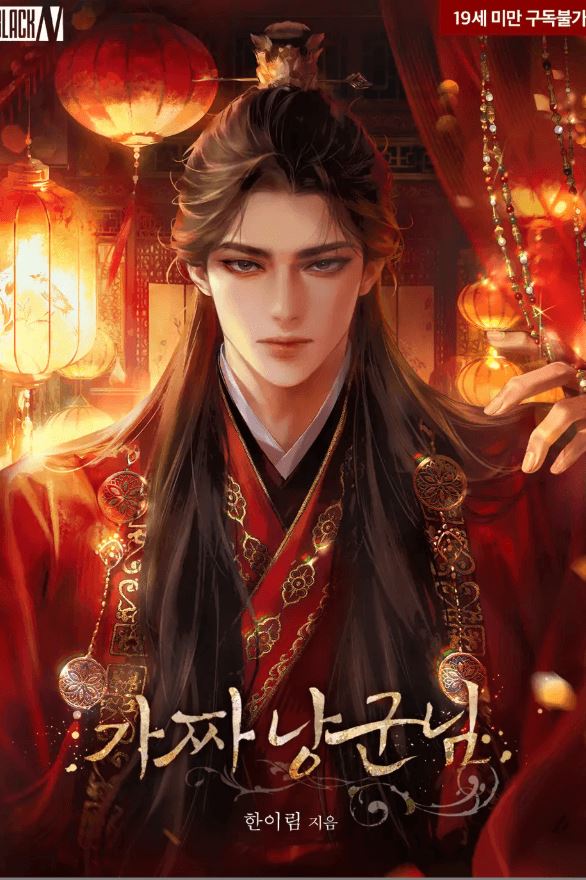
... Read More
Okay so let's talk about the absolute state of Yoon San-gyeong right now because I have opinions. On the surface, this man is ice. He's the God of War. He commands elite covert operatives. He can peel off his face like a banana and not even flinch. He assesses Woo-hye clinically: 'She is a woman with many secrets. Don't let your guard down.' Very professional. Very cold. Very... let me check... absolutely NOT how someone acts when they've just wiped a bead of sweat from a woman's cheek without realizing they're doing it. That scene. THAT SCENE. She's touching the peach blossom with this innocent, childlike joy and he just—reaches out. Wipes her cheek. And then immediately regrets it so hard he clenches his hand and holds his breath. The man who doesn't let his guard down for ANYONE is losing control over a woman he's supposed to be manipulating as part of a mission. And the Joo-hyuk mention! When Iho brings up her brother and San-gyeong's hand STOPS for just a moment—just a fraction of a second—before resuming? That's not nothing. That's a crack in the armor. Joo-hyuk was one of the few people San-gyeong trusted deeply. He's saving Woo-hye not purely out of mission parameters but because of who her brother was to him. And he's wrapping it in duty because apparently feeling things is too much to admit out loud. But here's what really gets me—Woo-hye is NOT the helpless blind woman everyone assumes she is. San-gyeong notices this. He sees how her eyes looked on that pleasure boat: 'like black flames. Eyes that held a fire so intense that anyone foolish enough to reach out would surely be reduced to ashes.' He witnesses her stabbing a man with such ferocity that his own soldiers call her ruthless—and he CORRECTS them, saying she's not ruthless, she's MAD. There's a difference. One is calculated cruelty; the other is something far more dangerous and unpredictable. Meanwhile Iho is over here chirping about how breathtaking both of them are and hoping love will melt the master's icy heart like it's a rom-com and not a spy thriller. The contrast between his naive optimism and the actual gravity of their situation is both funny and kind of heartbreaking. The dynamic between San-gyeong and his subordinates also reveals so much. They give him military salutes, not servant bows. He's their commander first, their lord second. But Iho's internal monologue about 'someone with my looks clearly doesn't fit the role of a lowly servant' while his superior is risking everything on an emotional minefield? That humor is doing heavy lifting to keep the tone from crushing us entirely.
... Read More
Okay so here's the thing about this chapter — I'm genuinely confused, which is exactly what the author wants you to be. Woo-hye wakes up and learns she was kidnapped, but the official story is that she wandered off unconscious near Pungwoo-gak. And everyone — even Hyang-eum — seems to accept this narrative. Whoever saved her deliberately covered up what happened. This is brilliant plot construction because we're not just following Woo-hye's investigation; we're experiencing the same information gap she is. The kidnapping is confirmed ("she had probably been loaded onto the ferry"), but then erased from public record. That's a huge deal in this world — if Pungwoo-gak (her own establishment!) doesn't know about it, something serious is going on. The Cheong-un connection is the masterstroke here. Rationally, he has zero reason to help her. In fact, her rescue works in his favor — if she's seen as "chastity-lost," her noble status becomes meaningless and he can treat her however he wants. But he helped anyway. And then he found her, took her to the doctor, paid for treatment, and now this whole mysterious "man in black" situation. I'm also loving the subplot about the portrait being "quite famous in Akyang." Seol Mi-hee sent a court painter to paint Woo-hye's portrait last year for a marriage proposal, and apparently it's been circulating around? Who else has seen it? Why is it famous? This feels like it's going to connect to something bigger — possibly the identity theft or impersonation arc we've been hearing whispers about. And the ritual alcohol business? Woo-hye thinks she can pick it up cheap when it fails, but she's already noted that "this man wasn't easily fooled, or just plain stupid" — and she can't tell which. Classic unreliable narrator moment where she underestimates him.
... Read More
The stakes in this chapter are layered like an onion, and I'm here for it. On the surface: Woo-hye was kidnapped, possibly loaded onto a ferry, possibly violated ("I almost lost my chastity"), and the whole thing has been covered up. If this gets out, her noble status means nothing. She'll be treated as common trash, and Cheong-un — the man rumored to be a scoundrel — will have every "right" to mistreat her because, in this world, a chaste-less noblewoman deserves nothing better. But underneath that: WHO is behind the kidnapping? Pungwoo-gak (her own organization) doesn't know about it. That means someone powerful has successfully concealed this from her inner circle. And someone also deliberately saved her — the "man in black" — but won't reveal themselves. Are they ally or enemy? Cheong-un's involvement raises the stakes even higher. He's supposedly aligned with Seol Mi-hee, who was part of the conspiracy against Woo-hye. But he helped her anyway. Is he playing both sides? Is he the man in black's accomplice? Or is he genuinely trying to help while maintaining his cover? The ritual alcohol business is another stake — Woo-hye wants to buy it cheap when it fails, but she can't tell if he's smart enough to prevent the failure. Every assumption she makes about him might be wrong, and in this world, wrong assumptions get you killed. And the wedding — the abandoned ceremony with no parents or siblings present. What happens when they're forced to marry? What does Seol Mi-hee stand to lose? What happens if Woo-hye discovers the truth about the kidnapping and realizes Cheong-un knew more than he's letting on? The tension here isn't just about what happened — it's about what WILL happen when all these hidden agendas collide.
... Read More
"I only need more warmth. It's still not nearly enough." — this sentence wrecked me. Three short lines and I'm sitting here processing. Woo-hye has built an empire. She runs Pungwoo-gak, she helps the people in Doha, she's become the most praised woman in Akyang, she has servants who worry about her health and an uncle she calls with genuine affection. By every external measure, she has everything. And yet her heart feels hollow. The text describes it as a hunger that would never be satisfied. That's not romantic longing — that's existential loneliness. And then Cheong-un appears. The man in black saves her life. Cheong-un shows up immediately after. And her first instinct isn't gratitude or relief — it's calculation. She's been hurt too many times to trust easily. But underneath the calculation, there's this tiny thread of hope: What if he's really an ally? How could she accept that? The scene where she tries to find the peach blossom again is devastating in its simplicity. She can't see it, obviously — she's blind — but she wants to touch it the way she touched it that morning. Maybe it was a small comfort, a sensory anchor in a dark world. And now it's gone, and she reaches and reaches and finds nothing, and her fever rises because she's frustrated and cold and exhausted. She doesn't throw a tantrum or cry out. She just...leans against the window and stares into space. Three steps forward. Five steps to the left. Then the bed. This is a woman who has learned to survive without expecting anything from anyone. And the very idea that someone might actually want to help her — that someone might be on her side — terrifies her more than any assassination attempt ever could.
... Read More
This chapter is a masterclass in pacing. Let me walk through why it works so well. It opens with a revelation: "So it had been a whole day since the kidnapping." Instant stakes. We know something terrible happened, and we're catching up. Then Hyang-eum delivers the first bomb: Cheong-un saved her. Not just found her — carried her to the doctor, paid for treatment. Woo-hye's internal reaction: "She didn't know why, but the fact that she had been kidnapped had effectively been erased." Boom. Information reset. Now we're questioning everything. The chapter then moves to preparation — getting ready, Hyang-eum describing Cheong-un's intimidating presence, Madam Gye's cruel commentary. These scenes serve double duty: they build tension for the meeting while simultaneously revealing character through dialogue. Madam Gye wants to mock Woo-hye but ends up humiliated. Cheong-un protects her without her even asking. When they actually meet, the pacing slows perfectly. The conversation is sparse — short exchanges, meaningful silences, servants coughing to prompt speech. This isn't drag; it's deliberate. The author wants us to feel every pause, every unspoken calculation. Then the reveals start coming faster: the portrait is famous in Akyang, the servants have numbered names, Cheong-un is planning to sell ritual alcohol (which she knows will fail in three months). Each piece of information reframes our understanding of him. The chapter ends on that beautiful line: "Truly… how fascinating." She's no longer just investigating him — she's intrigued. The power dynamic has shifted from suspicion to curiosity, and that's the perfect note to end on.
... Read More
Okay I need to talk about the fried meat scene because this is the kind of detail that made me sit with my phone for five minutes just staring at the ceiling. Woo-hye goes to Mokcheon for acupuncture—painful, brutal, days of it—and what does she do? She buys fried meat on the way there because it smelled good and she wants to share it with him. Not because she feels obligated. Not because anyone told her to. Because she genuinely wanted to do something nice for the man who's been trying to restore her sight day after day after day. And then Cheong-un walks in sniffing the air like a stray cat and she immediately offers him some too. Not a grand gesture, not a dramatic confession of feelings—just 'there's plenty, no way Uncle Mok could eat it all by himself.' The casualness of it is everything. She's comfortable enough with both of these men to just… exist around them without performing. That's intimacy built over years, not weeks. But then—then—the Seok Cheol-won scene happened and my stomach dropped. The guy literally says 'you have to get pregnant first, what could they do then?' and I felt actual rage. Not fictional rage, like, I needed to put the book down and walk around the room. The way Woo-hye's face went cold, the way she tried to shield Hyang-eum instead of cowering herself—that strength comes from somewhere real. And Cheong-un's stone. That was the most romantic thing he's ever done and he didn't even know she was watching. Just a stone, thrown casually, like protecting her is as automatic as breathing.
... Read More
The sensory details in this chapter are doing heavy lifting. Let me start with the opening scene at Yeonmowon — the house has been thoroughly checked, there's a small hole in the wall only a child could fit through, the neighbors have all been brought over to Seol Mi-hee's side. The author doesn't just tell us this is a spy-infested area; they make us feel the claustrophobia of it. Every wall has ears. Every neighbor is a potential informant. And Woo-hye, the blind woman, has been living in this cage for seven years. Then there's the medical examination scene with Mokcheon. I love how the author treats DokCheon almost like a character in his own right — gruff, practical, his professional demeanor cracking when he realizes the severity of the poisoning. "There are signs of poisoning. Did you eat or drink something wrong?" — and then the escalation when he understands it was a paralytic. The medical kit opening, the subtle furrowing of the brow, the sigh of relief when the treatment is done. It's clinical but human. But the scene that stays with me is the wedding preparation sequence. Nanny Gye's voice, Gilsan's rare appearance, the loud chaos of servants arguing about where to set up the bridal chamber. "This place is dangerous for Miss Woo-hye!" — and somehow, through all that noise and urgency, the wedding wagons are arriving full of luxury. The contrast between the shabby provisions from the Dan family and the lavish goods from Cheong-un's side tells you everything about power dynamics without a single line of exposition. The peon tree outside Woo-hye's window — it's mentioned in passing but it's doing symbolic work. It's something she can't fully access, something beautiful just beyond her reach. The fact that it disappears when she looks for it mirrors her entire situation: the things she wants most keep slipping through her fingers.

Leave a comment

You must be logged in to leave comments. or
