Fake Husband - Reviews

Fake Husband
+Add to Custom List
Sort
Add review
... Read More
Okay I need to be honest — I did not expect a flower to make me genuinely emotional but here we are. The contrast between the poisoning scene and the aftermath in Yeonmowon is *everything*. She wakes up completely blind again, her body wrecked, and the narration dives headfirst into this brutal description of what darkness feels like to her: 'The darkness clung to her body with a density heavier than being submerged in water — perhaps even heavier than sinking in oil.' I physically felt that. The suffocation, the isolation, the paranoia creeping in that even the people she loves might be deceiving her. 'Even the words of the people she loved — deep inside she began to doubt them.' That's not just physical suffering, that's trauma speaking. But then — the peach blossom. She reaches for it desperately, almost violently, 'a silent, desperate struggle.' And something touches her cheek. 'It was a texture as soft as silk.' Whether it was a falling petal or someone else's hand brushing her face, the text deliberately leaves it ambiguous. And she asks 'Who is it? Hyang-eum?' Silence. She never finds out. That ambiguity is what kills me. Was it a ghost of hope? A subtle gesture from someone who was watching over her? Or just a petal? The text doesn't confirm any of it, and I've re-read that passage five times trying to decide. What I love most is how she recovers. She was sobbing, wanting to die, and then a single flower grounds her. 'Moments ago, she'd felt like she was in hell — and now the touch of a single petal was enough to make her smile.' That's not flimsy writing — that's human. We're not meant to be unbreakable, we're meant to find tiny things that keep us going. And the sugar treat Hyang-eum slips into her mouth afterward? Also devastating in its own way. Small kindnesses between them, the unspoken understanding. Hyang-eum probably stayed up brewing medicine all night and Woo-hye pretended she didn't notice. That's the kind of detail that makes me want to protect these characters with my life.
... Read More
What the hell has this novel gotten into and why can I not stop reading Let me map out the stakes because they are MULTIPLE LAYERS deep and every single character is standing on a wire above an ocean. Layer one: The overt mission. San-gyeong is undercover as Cheong-un to lure out Pungwoo, head of the wealthiest power group in Doha. If he fails, the emperor's intelligence operation collapses, and presumably San-gyeong's head rolls. Simple enough. Layer two: The bait. They've locked up the REAL Cheong-un and plan to release him with false information that Woo-hye orchestrated his suffering. This is psychological warfare designed to make her turn on someone who already thinks she's blind and helpless. The cruelty of it is staggering—using genuine trauma as a weapon. Layer three: Pungwoo's connection to Woo-hye. A witness testified that she was his 'longtime lover.' There's no hard evidence, but the inconsistencies in her past are too sophisticated to be accidental. Someone carefully erased her history. And San-gyeong suspects she's not as blind as she claims—possibly pretending to deceive Seol Mi-hee specifically. Layer four: The emotional landmine. San-gyeong keeps telling himself she's dangerous, that she's mad, that she's an opponent. But he also shot an arrow without hesitation to save her. He pulled down that flower branch. He wiped her cheek. The man who plans to plunge her into crisis is the same man who couldn't walk away from a woman touching a flower. The most tense scene for me wasn't an action sequence—it was that moment on the boat where Woo-hye nearly seemed able to SEE. 'Her eyes had looked like black flames.' If she can see even partially, and she's been pretending this whole time, then every interaction between her and San-gyeong has been a double blind. She thinks he's just some nobleman; he thinks she's a deceptive target. What happens when one of them finds out the truth first? And the household itself is crawling with Seol Mi-hee's spies. Every conversation San-gyeong has in this house could be intercepted. He's operating in hostile territory with minimal replacement staff, and the real Cheong-un is their only playable card—which means every move they make with that card brings them closer to exposure. The stakes keep escalating and the author never lets up. Just when you think you understand the board, another piece moves and everything changes. I have never been more terrified for these characters and more glued to my seat at the same time.
... Read More
I need to talk about the osmanthus. Not the plot. Not the mission. Not the reveal about San-gyeong's true identity. The fucking SCENT. Woo-hye catches this brief whiff of sweet osmanthus as she's leaving the reception room, and it's described in these almost unbearable terms: 'It was such a fleeting moment that she found herself strangely longing for it.' Just that. One paragraph. And yet it stays with me like a ghost. Why? Because it's the first time we see ANY vulnerability in her. All day she's been navigating this bizarre negotiation about wedding guests and spending money, playing the obedient bride-to-be while internally calculating how debt could actually benefit her. She's sharp, she's strategic, she's surviving. And then a smell passes by and for one split second she's just a woman longing for something she can't name. 'I think Cheong-un is handsome?' she asks her maid. And the maid says no, he just has a 'good presence,' and Woo-hye immediately concludes he can't be the man in black. But what if she already KNOWS? What if that scent triggered something deeper than logic? Then there's San-gyeong's side of this invisible thread. He watches her touch that peach blossom and something in him RESPONDS before his mind can catch up. He wipes her cheek without thinking. He holds his breath when he realizes. This man who has spent his life controlling every movement, every expression, every breath—couldn't control what his HAND did. The tragedy is that neither of them knows what the other actually is. She's wondering if the man in black is her husband. He's wondering if her blindness is real. They're both performing, both hiding, and yet these tiny unguarded moments keep slipping through. A scent. A touched flower. A shared look on a boat that he can't stop replaying in his memory. And the worst part? He's literally planning to destroy her life as part of his mission. 'Plunge Dan Woo-hye into a real crisis.' Those are his words. He's going to unleash the fake Cheong-un upon her, watch her fall apart, and all while he's been caught wiping sweat from her face like some lovesick teenager. I'm not okay. The tension between duty and desire is being written with such precision it hurts. Every polite exchange, every measured glance, every controlled breath between them is loaded with everything they can't say. And the author keeps finding these tiny cracks where something real almost slips through. That osmanthus scent is going to haunt my dreams.
... Read More
Okay let's talk about the actual stakes in this chapter because they keep escalating and I am NOT okay. On the surface: Woo-hye's getting her sight back, she's running a successful business, she's getting married. Sounds nice, right? Wrong. Because under every happy moment there's a threat waiting to pounce. The kidnapping wasn't random. The magistrate is connected to the Seol family. Cheong-un has six trained subordinates—which means someone with resources and martial capability is operating in the shadows, and we don't fully know who yet. The Sixth Prince is arriving tomorrow, and Dan Gyu-yeong is with him. Dan Gyu-yeong is Seol Mi-hee's daughter. Seol Mi-hee is the woman who poisoned Woo-hye. And she's sending her own child into Woo-hye's territory. That's not a visit. That's a spearhead. And then there's Seok Cheol-won, who just proved he's willing to physically assault a woman and her servant because he feels entitled to Woo-hye's body. He's free, he's back in Doha, and he's unhinged. The fact that Cheong-un had to throw a stone to stop him tells you everything about how close Woo-hye was to actual danger. The stakes have moved past 'will she get revenge' to 'will she survive the people who want her dead or married to the wrong person or both.' And the wedding—that's supposed to be her triumph—and every faction in the Empire is converging on it like vultures. I'm not sleeping tonight.
... Read More
Can we talk about how San-gyeong keeps offering his arm and Woo-hye keeps choosing it? Like, first he holds it out after kicking Seok Cheol-won's ass, and she takes it. Then later, walking back, she actively takes HIS arm instead of Hyang-eum's. That's not just habit forming — that's a deliberate choice. She's choosing him. And the way the narration treats it, like a confession... I felt that. The most interesting bit though is Hyang-eum. Remember when she was strongly opposed to this marriage? Now she's helping San-gyeong move liquor jars, and when he asks if Woo-hye has eaten, she almost snitches but catches herself. I swear the author doesn't even need to say much — Hyang-eum just stands there shaking her head and the entire emotional shift is visible. And San-gyeong notices it too, right? He sees her pout, he sees them trading little protective looks, and he just... files it away. But here's what gets me — San-gyeong beating Seok Cheol-won wasn't just heroic. It was surgical. He deliberately avoided breaking bones. He controlled his strength so precisely he could've killed the guy but chose pain instead. And then he's clenching his fist behind his back because the medicine is wearing off and he lost his composure for a split second. This man cannot do anything without calculating three layers ahead. And the ending with Choeul — try it on, tear it, get caught. Woo-hye didn't even have to do anything. She just left the dress outside and waited. That's not clever plotting. That's predatory patience. "I knew it. I thought that if I left the dress outside, Choeul would try it on." Said like she's discussing the weather.
... Read More
Okay, let's talk about the plot mechanics here because this chapter is doing SO MUCH with so little page time. The kidnapping plotline is layered in a way that actually respects the reader's intelligence. Woo-hye was poisoned with paralytic venom — not just any poison, but one that leaves no visible mark on the surface — which means Seol Mi-hee isn't just trying to embarrass her, she's trying to erase her. But here's the twist: the real villain in this section isn't even Seol Mi-hee. It's the situation San-gyeong is trapped in. He's playing the role of a false husband to someone he's genuinely protective of, under orders from an emperor who knows exactly what kind of man San-gyeong is and is exploiting that knowledge. The emperor literally used San-gyeong's own biology against him — forcing him into a mission where his cover requires intimate proximity to Woo-hye. And San-gyeong's body? It's betraying him on every level. The Twenty-Four Flower Dream elixir is adding more plot threads than I can unpack in one go, but the core tension is clear: everyone is playing a role, everyone has secrets, and the moment anyone slips up, the whole thing collapses. The parallel structure of two kidnapping attempts — one physical (Woo-hye's abduction), one institutional (the forced marriage) — creates this relentless sense that there's no safe space for either of them. Yeonmowon is supposed to be their sanctuary but it's surrounded by Seol Mi-hee's network. The portrait spreading through Akyang is like a slow-motion detonation — it's not explosive yet, but once it reaches certain ears, everything changes. I love how the author uses the wedding preparations as both comedic relief and mounting dread. Those wagons arriving filled with luxury goods while San-gyeong is losing control of his own body? That's dramatic irony at its finest.
... Read More
I need to talk about the moment Woo-hye hears Cheong-un's voice. Just one sentence from the author: "A voice, cool and sharp as a blade, replied. 'I am Cheong-un.'" And her reaction? "The moment she heard his voice, a shiver ran down her spine. It was as if she had been caught unawares by a sudden, icy wind." She physically rubs the back of her neck, her fine hairs stand on end. Her hearing has become more sensitive since losing her sight, but she's never experienced anything like this before. This is the kind of writing that makes you stop and re-read. The author isn't just telling us she's attracted to him — they're making us feel the physical impact of his presence through her body. And then the whole meeting scene — she's blind, vulnerable, recently kidnapped, and yet she's composed. "Woo-hye just gave the woman a beaming smile. 'You're right, madam. If only I could see, it would be wonderful.'" She hits Madam Gye exactly where it hurts — by agreeing with the insult so perfectly that the insolent maid has no recourse. That's not just clever; that's survival instinct. But underneath all that composure, she's terrified. "Yes, I suspect you, sir," she admits, her voice "calm but slightly trembling." She's playing the pitiful, frightened woman — and she's so convincing that no one would doubt her. But internally, she's running calculations: Who saved me? Why? What do they want? The romantic tension here is delicious because it's built entirely through sound and implication. We don't see their faces — she can't see his. We only hear his voice, feel her reactions, sense the power dynamics shifting. When he asks "Are you saying that what happened yesterday wasn't a coincidence?" — he understands her perfectly, sees through her performance, and meets her on equal ground. She smiles inwardly: "Truly… how fascinating." This isn't love at first sight. This is recognition. Two sharp minds seeing each other clearly.
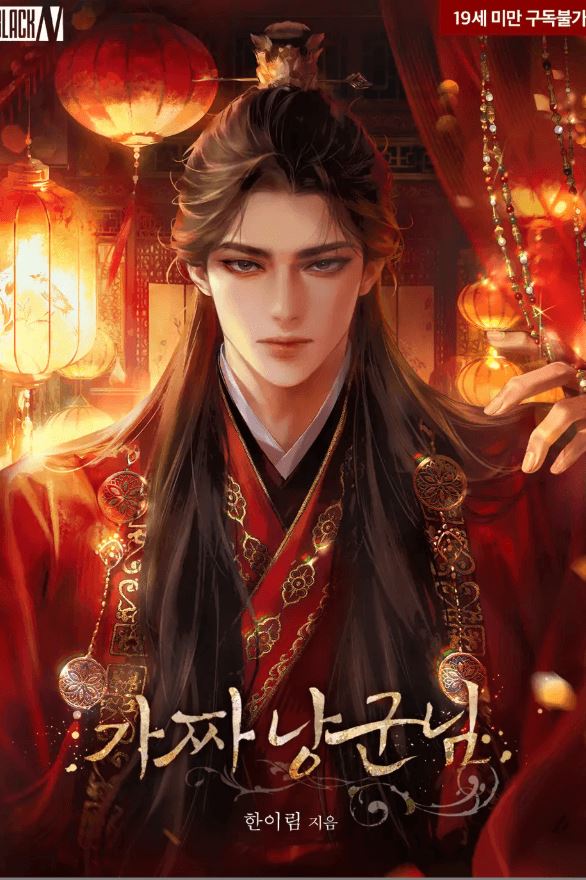
... Read More
Let me unpack something the author planted right in the middle of a business conversation and honestly I think most readers missed it. The portrait. Woo-hye's portrait—simple wooden hairpin, roughly tied hair, practical clothes, soft green dress—became a fashion sensation in Akyang because it represented the exact opposite of everything the nobility stood for. And someone in the Emperor's faction deliberately spread it to shame the extravagance of Empress Ryu's supporters. A single image, used as a political weapon. Green. Not gold, not crimson, not the flashy colours of ostentatious wealth—but soft green. The colour of new growth, of medicine, of healing. The colour of the tea leaves Woo-hye loved studying. Of the herbs in the storeroom. Of the dress she wore when she was still learning to see again. And what's the symbolic weight of her losing and regaining her sight? She was blinded by poison—Seol Mi-hee's handiwork, of course—but her healing comes through bitter medicine, painful needles, and the patience of someone who believes in her when she can't believe in herself. Mokcheon literally puts needles in her hands while holding conversations about fried meat. Healing isn't glamorous. It's uncomfortable, repetitive, and often thankless. The fact that her wedding dress will probably be terrible because the Dan family sent something cheap? That's the Empire's hypocrisy in miniature—everyone performative about virtue while the people who actually do the work get nothing.
... Read More
This scene is drowning in red and it's not accidental. I think about it constantly. The wedding dress is bright red. The cloths hanging from the entrance are red. The lanterns are red. And San-gyeong says, almost offhand, "Red is actually my favourite colour." Right after Woo-hye says it must look auspicious. Right before the dress gets torn to shreds by the woman who wanted to wear it. Red as celebration. Red as desire. Red as something that gets destroyed before it can be used. That's not subtle worldbuilding — that's the author hitting you over the head with symbolism and pretending not to notice. But the physical spaces are equally telling. The liquor shop is deliberately unremarkable — small, one table, clearly a front, failing on purpose. San-gyeong's operations are everywhere and nowhere. He moves through Doha like he owns the shadows of it. Meanwhile the Dan household is decorated for a wedding with more care than anyone expected — Iho put so much into it that even the atmosphere feels different. Joyous. Anticipatory. And then Choeul destroys the dress in a tantrum that reveals everything: she's jealous, desperate, and completely unpredictable. What's fascinating is how sensory the writing gets when it matters. The soft clear sound of Woo-hye's hair ornaments brushing against each other. The muffled hoofbeats fading into distance. Chilho's face flushed from drinking. Hyang-eum's grip strength described through the image of someone trying to escape a collar grab. These aren't decorations — they're the texture that makes the world feel occupied rather than constructed. And then there's the darkness. "The darkness began to lift. Light seeped into the pitch-black world." This is Woo-hye experiencing something — sight returning, colour flooding back — and San-gyeong is just standing there watching her with curiosity like he's seen this before. The contrast between his clinical observation and her sensory overwhelming is one of the most quietly intimate moments in the entire text.
... Read More
I need to take a moment for Uncle Mok because frankly he deserves an award or at least a very generous pension. Think about it: Woo-hye came to him at her absolute rock bottom—blinded, poisoned, filled with rage—and instead of treating her like a problem, he treated her like a person. When she threw a tantrum and made a mess of the storeroom, he didn't get angry. He was RELIEVED. 'That must have been when this place started to feel like a playroom.' That line broke me a little. He recognized her crying and lashing out as a sign she was still alive, still fighting, still capable of feeling something other than numb hatred. And now look at them. She brings him fried meat. She insists on paying him. She asks him to come to her wedding. There's this whole warmth between them that isn't familial in a boring way—it's earned. He's been her anchor through every brutal treatment, every failed lesson, every moment she wanted to give up. But what really got me this time was the Seok Cheol-won interaction. The way Hyang-eum stepped in without hesitation, the way Woo-hye immediately pulled her into protection—these two have a history. Hyang-eum got slapped by Seok Cheol-won before and still chose to stand up again. And Woo-hye? She's learned to shield others the way she once needed shielding. That's character growth you can actually see. Also: Cheong-un's reaction to seeing Seok Cheol-won threatening Woo-hye. He didn't say anything dramatic. Just 'Get lost.' Cold, low, and absolute. The man doesn't do speeches, he does actions. And I'm here for it.
... Read More
Let me just say this: Cheong-un is the most interesting character to emerge in this entire passage, and we barely get to know him. The rumors paint him as a scoundrel — failed businessman, living off an allowance, engaged to Seol Mi-hee who is apparently plotting against Woo-hye. But his actions contradict everything. He found an unconscious noblewoman on the street, carried her to a doctor (Doctor Maeng, who "charges high fees and only treats those who could afford it"), and paid for her treatment. When Madam Gye tries to mock Woo-hye, Cheong-un cuts her off with one line: "If you've finished your business, leave." That's not the behavior of a crude man — that's protective. But here's what really gets me: the scene where he dismisses Madam Gye. He essentially saves Woo-hye from having to endure her insults, and then later when she tries to thank him, he doesn't take credit. "It was nothing." Short. Blunt. Not cold, but straightforward. He's not performing kindness — he just does it. And the voice. Oh my god, the voice. "A voice, cool and sharp as a blade." When he speaks, it gives her physical reactions — "fine hairs standing on end." This isn't just attraction; this is someone whose presence commands absolute attention. Even Madam Gye notices: "Master Cheong-un has such a wonderful voice, doesn't he, my lady?" But the servants — Iho and Samho. Named after numbers. Like they're not quite people. One is cheerful and playful, the other stern and silent. And one of them might be the "man in black" from the kidnapping. The dynamics here are fascinating: Cheong-un clearly trusts them enough to have them close, but the numbered names suggest they might be more than typical retainers. Woo-hye's relationship with him is going to be the core of this story, and I'm obsessed. She keeps trying to categorize him — is he helping because he recognizes her portrait? Because he's working with the kidnappers? Because he's secretly noble? Every answer she reaches gets pulled away from her.
... Read More
The atmosphere in this chapter is absolutely thick. Let me paint you the scene: Woo-hye, blind and recovering from poisonous needles, is being dressed by her maid Hyang-eum. The lighting, the textures, the smell of tea — everything is filtered through her heightened senses because she can't see. And the tea. "The cheap smell of tea hung thickly in the air." That detail alone tells us so much about Cheong-un's character — he's not pretending to be something he's not. He drinks cheap tea, lives simply, but carries himself with "a kind of dignity that made you feel you couldn't treat him lightly." Hyang-eum hates feeling that way — "it hurts my pride" — which says everything about the social hierarchy in this world. The portrait subplot is such a smart worldbuilding touch. Seol Mi-hee sent a court painter to paint Woo-hye's portrait for a marriage proposal, and apparently it became so famous that Cheong-un recognized her from it. This tells us: (1) Woo-hye's beauty is legendary even before her fall from grace, (2) noble families are constantly plotting marriages as political tools, (3) portraits circulate among the elite like social currency. And Pungwoo-gak — her own establishment, apparently — is where she collapsed near. The fact that it occupies "a large building in the heart of a busy district" suggests it's a major establishment, likely a pleasure house or entertainment venue (the name itself hints at this). That she's connected to it secretly (only her closest associates know she's the real owner) adds another layer to her hidden identity. The reception room scene — Madam Gye's presence, the curt greetings, the way she brings up Cheong-un's appearance to mock Woo-hye's blindness — all of this creates a world where appearance is everything and disability is weaponized. But then Cheong-un shuts it all down with two words: "Leave."

Leave a comment

You must be logged in to leave comments. or
