Embracing Lies, Embracing You - Reviews

Embracing Lies, Embracing You
+Add to Custom List
Sort
Add review
... Read More
This section moves like a TV series that knows exactly when to cut to commercial. Airport scene—tight, efficient, gives us character dynamics and plot setup in about four exchanges. Then the Zeng Zhanhao surgery call drops like a small bomb and we're immediately back on the road to the company. No pause. Just move. The meeting scene is where the pacing breathes. Zeng Yu explaining why a three-star restaurant can't feature just one recommended wine is funny, humanizing, and it lets us see the professional world without stopping the narrative. The offshore trip promise, the dinner invitation—these are reward beats that keep you engaged. Then CRASH. Yuan Lei's place. A completely different tone, a completely different speed. One phone call and we're dropped into chaos. The transition is so abrupt it feels like the author is deliberately yanking the reader between worlds—corporate calm and domestic hurricane. I genuinely did a double-take when I realized what was happening on the other end of that call. And the chapter ends on the most perfect cliffhanger possible: Aren't you going to kneel and call them 'Mom and Dad'... and then nothing. The sentence is cut off mid-dialogue. I had to scroll. I immediately scrolled. This is how you make someone open the next chapter at 2 AM. The only beat that felt slightly rushed was the Feixuan Restaurant explanation—Zeng Yu's guess that the owner just liked the price and quality feels a little too convenient. But maybe that's intentional, setting up a mystery for later.
... Read More
The dialogue in this chapter is SO natural it hurt. Like, I could actually hear these voices in my head and they all sound completely different. Yuan Lei is the MVP of direct dialogue - "That's even worse. One-sided." "You're hopeless, too far gone. Fine, do whatever you want." She doesn't mince words and her impatience with Jiang Nan's silence is both funny and frustrating in the best way. She's the friend every person with a crush needs. Jiang Nan's dialogue is softer, more measured - "Auntie, you don't need to explain. I trust Zeng Yu. Relationships are between two people, and I have faith in him." This sounds like someone who is both genuinely confident in her relationship AND secretly terrified it won't last. The subtext is EVERYWHERE. Zeng Yu's lines are brief but telling - "Great acting" whispered like a secret, "Take it. If you don't take good care of her, I'll beat you when I get back" to Wang Zheng. He's protective, practical, emotionally reserved but not cold. The generational voices are distinct too. Fu Yu's "If young people don't work hard, when will they?" feels like actual Chinese parent-speak. Zeng Zhanhao's "Nobody's perfect. Having some flaws is a good thing" has that weary but warm father energy. And Han Jiayi and Jiang Ziliu's phone conversation - "You need to come back soon. If you don't, your daughter will be stolen away." / "To me, it's not certain yet." - this is parental banter at its finest. One panics, the other plays devil's advocate. The author clearly understands how different people speak based on personality, age, and relationship context. No dialogue feels generic or interchangeable.
... Read More
Okay so let me just say—when Zeng Yu shows up and finds Wang Zheng passed out on those steps with two burly guys lurking around, I was already hooked. But then the guy turns out to be the SECOND UNCLE? And not just any second uncle—this is a man rolling up in a MAYBACH while Zeng Yu is over there thinking his best BMW X3 is the pinnacle of luxury living. The class contrast hit me so hard I actually laughed out loud. The plot thread about Wang Zheng's family having been wealthy before falling from grace, the uncle disappearing abroad, the memorial tablet in China—all of this comes together in one scene and it's devastating. Zeng Yu telling the uncle that Wang Zheng sends him his location when he's too drunk to get home? That small detail changed everything. It told the uncle more than any words could. And then—cut to Zeng Yu HANGING UP ON XIAO XIAO. That tiny plot beat where he finally cuts contact after months of her deflecting about his parents? The structural symmetry is beautiful. One friendship deepens through wealth and loyalty; another relationship reveals its hollowness through evasion. The narrative is threading these parallel stories so quietly but the tension between them is everything.
... Read More
I have to address the pacing here because the author just pulled off something really clever. Xiao Xiao's entire backstory — eight years of financial exploitation, the brothers education, the parents beating her, the demand for 300,000 yuan — comes through as a single WeChat message. Not a flashback sequence, not a dramatic confrontation scene, just text on a screen that Zeng Yu reads in silence. And it works because the medium matches the emotion. Xiao Xiao couldn't say this face to face. She sent it because typing it felt safer than speaking it. The format IS the feeling. Then the chapter pivots immediately into Zeng Yu calling Jiang Nan to confess, which creates this nice structural rhythm: crisis → confession → resolution → new crisis (Xiao Xiao's family still squatting in her apartment). The author knows exactly when to slow down and when to keep moving. The lunch scene where Zeng Yu explains everything to Jiang Nan could have dragged, but it's compressed into a few exchanges over takeout and lands with efficiency. The chapter ends on a hinge — Xiao Xiao saying she wants to sever ties, Jiang Nan pushing back gently about whether she's sure, and that devastating final beat about the passenger seat. It doesn't resolve anything but it makes you desperate for the next chapter. Classic structure: establish the problem, deepen it, leave the character at a crossroads. And that last line? "That seat used to be hers, but she had ruined it herself." The pacing snaps shut like a trap door.
... Read More
The restaurant setting is doing so much heavy lifting here and I need to talk about it. We're on the 28th floor, window table, river view below. Jiang Nan specifically requests it—"I specifically asked for this table. Not bad, right?" There's this pride in her voice, like she's showing off her world to him. But then you cut to Zeng Yu's internal monologue and it's immediately: this is too expensive, I have no income, she hasn't even told me if I'm getting a salary. That contrast is everything. It paints two different worlds colliding at the same table. She's comfortable in Western food culture—her posture shows it, she orders expertly, she's clearly done this before. He's stiff at first, learns quickly (respect), but then blurts out that the chef should just cut everything up and give him chopsticks. The honesty of it made me laugh out loud. You can see him trying to maintain this mature, steady facade he's been building at work, and it's cracking at dinner because he's genuinely overwhelmed by the setting even as he tries to play along. The elevator scene is another winner atmospheric moment. Six men cram in, the proximity creates this electric tension, and then the door opens and he practically flees. "Nothing, just felt a bit stuffy." LIES. We all know what happened in that elevator. The physical space forces intimacy he's not ready for, and his escape to the door is so human and relatable. And the mother's phone call at the end cuts through all this carefully built atmosphere like a knife. One minute he's navigating fine dining with a girl he's clearly into, the next he's being told about some colleague's daughter heading his way. The whiplash is intentional and brutal.
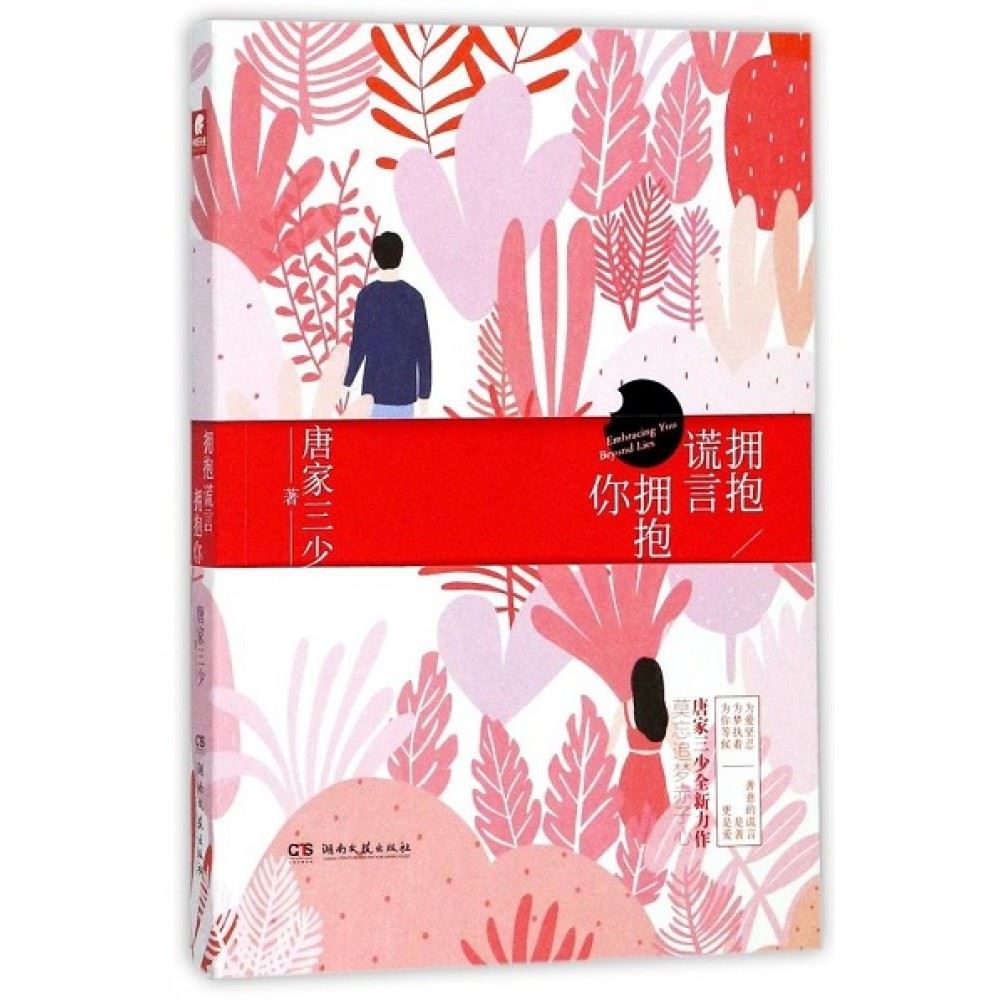
... Read More
Let's talk about the elephant in the room: Han Liren is furious, and Zeng Yu just walked into his building with a bottle of green tea and a smile. The stakes here are layered in a way the text never explicitly states but every character seems to intuitively understand. On the surface, Zeng Yu is there to discuss the supermarket situation — stock on shelves, coordination with Hongda Company, delivery teams. Business stuff. But underneath that is the reality that Han Liren is Jiang Nan's uncle, Han Jiayi's brother, and his current mood could affect the entire family dynamic AND the business relationship simultaneously. When the receptionist whispers "after your last meeting, our boss was in a foul mood for days," it's delivered almost casually — but the weight of that line is enormous. Days of bad mood. Unspecified reason. And Zeng Yu, with his year of sales experience, immediately understands that whatever happened wasn't just a business disagreement. It was personal. What makes this sequence so tense is that Zeng Yu knows he can't just ask directly. He has to work the room. Charm the receptionist. Get her name — "Li Ying" — and her phone number like it's no big deal. But it IS a big deal. He's gathering intelligence on hostile territory while maintaining the appearance of a humble employee who's just trying to do his job. Meanwhile, Jiang Nan is back at the office, completely unaware that the person she trusts most is navigating a minefield. That dramatic irony creates this low-grade anxiety that follows you through every scene. Every time Zeng Yu smiles at her or suggests something thoughtful, we know there's this other thread pulling at the edges — Han Liren's anger, the family politics, the precariousness of it all. The author hasn't told us what went wrong between Zeng Yu and Han Liren, and that not-knowing is exactly what keeps you turning pages.
... Read More
Let me just... can we talk about Yuan Lei? The woman walks in with two bottles of Maotai, her father is literally throwing things at Wang Chengfu with a rolling pin, and she's standing there like "well done"—completely unbothered while pregnancy news is served cold turkey. If you kill him, our child won't even have a father before it's born—she says this almost casually, patting her stomach. And then the closer: the baby will have my last name, Yuan. Her father goes from murderous to speechless in one beat. That's not a response, that's a full system crash. And Wang Chengfu? The guy is taking rolling pin hits and not dodging. He dare not dodge. Meanwhile he's still expected to kneel and call them Mom and Dad, according to the cut-off line. I need to know what happens next. But here's what actually got me—the Jiang Nan and Zeng Yu dynamic. They bounce off each other effortlessly. She teases him about the lottery ticket, he deflects with modesty, she calls him out on it. Then she pivots immediately to scheduling dinner and a movie, treating her personal life with the same logistical efficiency she applies to business. When she calls Yuan Lei and gets that cacophony in the background, she doesn't panic—she just tells Zeng Yu what happened and they speculate together. These people have built a ecosystem of trust and it's satisfying to watch. Also Jiang Ziliu getting misty-eyed watching his daughter drive away? The man doesn't show emotion but he rubs his eyes like a kid. And Han Jiayi's bitter little comment—Do you think she's ever treated her own parents this well?—lands like a knife. Because yeah, that stings.
... Read More
I need to talk about Jiang Nan because this girl broke my heart in like five scenes and I am not even exaggerating. She is putting in SO much effort—she chooses the restaurant, she handles his parents, she covers for him when his mom asks why he is distracted, she even pretends not to notice his obvious stress about Xiao Xiao. And what does she get? Him walking away from her at night while she drives home alone to a bar to cry over beer with her friend. The scene where she finally lets it all out at Blue Charm Bar with Yuan Lei is everything. She says "I don't know when it started" and then goes on this whole rambling about how he showed up when she was scared and took punches for her and then she saw him again at graduation and he changed his number and she could not get him out of her head. THAT IS SO RELATABLE. Falling for someone without really knowing why—it happens all the time. "Do you need a reason to like someone?" There is no answer. What makes it hurt more is that Zeng Yu DOES care about her. I can tell. He is just... trapped. Trapped between his past with Xiao Xiao and whatever this is growing between him and Jiang Nan. And Jiang Nan knows it. She says "if he can't resolve it, I'll let go" but then immediately adds "but I won't give up without a fight." That is the tragic part—she is willing to fight for him even though he is still fighting himself. Who wins when one person is already halfway out the door?
... Read More
I keep coming back to the Wang brothers' conversation and honestly I think this might be the most important scene I haven't fully processed yet. Two brothers, same upbringing, same family business, and they looked at the exact same crisis and made opposite choices—and neither one thinks the other is wrong, exactly. That's what kills me. Wang Chengfu says: the business was failing, I tried to persuade you to downsize, you cared more about the workers than survival, so I left. He frames it as logic. Wang Chenghan hears it as abandonment. And then Wang Chengfu fires back: why can't I take the same risks for wealth? I made it, didn't I? You were the one who stayed and got stuck. Neither is the villain here. That's what makes this so exhausting to read. They genuinely love each other—they're drinking together, Wang Chenghan is worried about his brother's safety—but they operate on completely different value systems. One sees loyalty to people as the highest good. The other sees taking risks and winning as the only proof that you mattered. And then Wang Zheng interrupts and says he's going back. Not to fight with his brother. Not to reconcile. Just... going back to deal with something personal. His dad is safe with them. He's not worried. Go ahead, don't leave any regrets. Meanwhile Zeng Yu's relationship with Jiang Nan has this insane undercurrent where they're literally reconnecting through text messages while she's driving, and he writes 'to hold your hand and grow old together' and she doesn't even reply. She just keeps driving. And I keep wondering if that silence is the most honest thing either of them has said to each other.
... Read More
Let me just say—this author knows how to pace a scene like nobody's business. The opening line drops us right into a negotiation that could have been dry as dust, and within paragraphs we're already invested in whether Zeng Yu will cooperate or walk away. What's clever is the structure. We start with the business conflict (will Jiang Nan get distribution rights?), then pivot to the personal conflict (is she rich or not?), then land on the emotional conflict (she's grieving, he's heartbroken). Each beat builds on the last without any authorial intrusion. The transitions are invisible. The chapter also does something really smart with information delivery. Instead of exposition dumps about Hongda or the Sophie brand disaster, we learn about Han Jie's failure through Jiang Nan's phone call with her uncle. It's organic—she's calling to check on him, and we naturally absorb the family backstory. Same with her mother: the Sophie brand request comes through playful banter, not a monologue. The pacing shift after Zeng Yu leaves is particularly effective. We go from the high-energy negotiation scene to quiet, solitary moments—him standing across the street watching her take a taxi, then returning to his cramped apartment, looking at his computer, debating whether to delete his proposal. The contrast between public performance and private unraveling gives the chapter a rhythm that feels almost cinematic. And that ending? He's about to go buy cigarettes despite having quit for someone else, and the text cuts off mid-sentence. The deliberate incompleteness mirrors his own unresolved state. Brilliant structural choice that leaves the reader hanging exactly where the protagonist is.
... Read More
Okay so I need to talk about the weirdest moment in these first four chapters because it just wouldn't leave my head. Zeng Yu walks into a horror movie feeling already on edge—sleepless nights, pale face, running from his own life—and then BAM, this ghostly white face stares at him and he actually screams. Not a little yelp, a full-on scared scream. And it turns out to be just some random woman in a theatrical mask laughing at him. But here's the thing: that scene isn't just comic relief. It mirrors everything about Zeng Yu right now. He's walking through life feeling like he's barely holding it together, and even a fake mask can rattle him this bad. It's brilliant subtle storytelling. The author doesn't explain it outright but you feel it. And then the plot pivots—he leaves the theater, goes to job hunt, gets politely rejected, and then gets dumped by his girlfriend all within these few chapters. The structure is deliberately bumpy, mirroring his unstable life. Nothing flows smoothly for him right now. That's the plot moving, not just events happening randomly. It all connects.
... Read More
What I find terrifying about this section isn't any single conflict—it's the compounding stakes. Everything is happening at once, and no character gets a moment to catch their breath. On the surface, there's Zeng Yu vs. Xiao Xiao: should he let her back in? But the real conflict is deeper—can someone who betrayed trust once ever truly be trusted again, even when they claim to have changed? And is Zeng Yu running from Xiao Xiao, or running toward the version of himself he wants to become? Then Wang Zheng's conflict hits different. His family is rising. His father and uncle apparently have plans. Ye Xiyan might not be "good enough" anymore by their standards. This isn't just about a breakup—it's about class mobility corrupting loyalty, about whether love survives when the power dynamic shifts. Wang Zheng admitting that just thinking about leaving Ye Xiyan made him anxious? That's not weakness. That's the first warning sign that he's already losing himself. And Jiang Nan? Her stakes are quieter but just as real. She's caring for her injured uncle, building a business relationship with Zeng Yu's family, representing wine brands to Michelin restaurants—all while harboring feelings for a man who literally cannot figure out how to respond to her warmth. She's playing chess while everyone else is playing checkers. The external conflict is the uncle's return, the family's reassertion of control, the Ukrainian assistant who clearly exists to remind us that money changes the people around Wang Zheng. But the internal conflict—the question of who these characters will become when circumstances change—is where the real tension lives. Xiao Xiao checked into a hotel, not her apartment. She's strategizing. She knows Zeng Yu is co-running a company with Jiang Nan now. She's not giving up; she's recalibrating. The suspense isn't whether she'll try again—it's whether her next move will finally break through, or finally convince Zeng Yu to burn every bridge.

Leave a comment

You must be logged in to leave comments. or
