Embracing Lies, Embracing You - Reviews

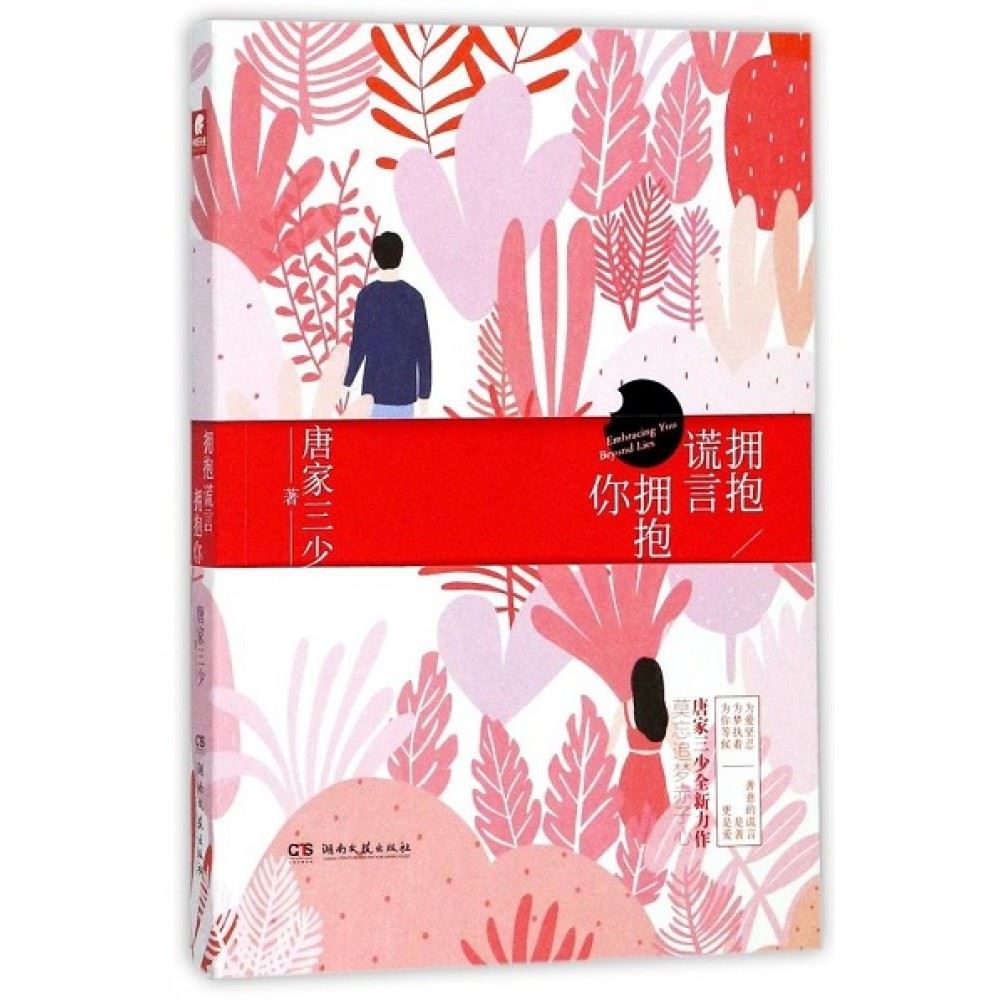
Embracing Lies, Embracing You
+Add to Custom List
Sort
Add review
... Read More
The setting work in these chapters is deceptively simple but every location does exactly what it needs to do. Let's start with Zeng Yu's place — the kitchen and balcony are connected, closing the door turns it into a steamer. Tiny detail but it tells us everything about his living situation: functional, cramped, lived-in. And then the fact that he spends nearly an hour cleaning before Jiang Nan arrives? That's not just set dressing. That's character through environment. He cares about how his space looks when she's there. The residential area where A Ying lives is described as small and messy upstairs, which is why Xiao Xiao suggests meeting outside. But the real location that haunts me is the car itself — specifically the passenger seat. Every time Zeng Yu drives, that seat exists as a piece of staging that carries emotional weight. It used to belong to Xiao Xiao. Now Jiang Nan sits there. And when they arrive at Xiao Xiao's building, she sees it and her heart aches. The coffee shop scene is perfect because it's nowhere-specific — generic, public, safe. Three people who need something private to discuss settling into a place designed for strangers. It mirrors their situation exactly: they're performing normalcy in a public space while dealing with something deeply personal. The author never over-describes any of these locations, which makes them feel real rather than cinematic. This world breathes.
... Read More
I need to start with the very first scene because I am not okay. Wang Zheng sitting in front of a computer, sobbing uncontrollably, watching his mother's final video message. She struggled to finish her sentence, raised her hand, waved at the camera, and said: "So, goodbye, my son. When you visit me next time, don't forget to bring your wife." Don't forget to bring your wife. Don't forget. Like she knew. Like somehow she KNEW he'd be watching this alone. The fact that she hid her terminal illness from everyone and bore the pain alone, and her last thought was of him—this is the kind of mother-child bond that makes you question whether you're doing enough for your own parents right now. I had to put the book down and just sit there. Then Leng Qing comes in and tells him about his father. About how she was a naive girl deceived into believing in love, how she tried to drown herself in a river, and how his father happened to pass by and save her. "He's the only person who's ever made me feel safe. But unfortunately, he doesn't accept me." She flushed slightly saying that. Can you imagine carrying that kind of quiet, unrequited devotion for years? Decades? And never making it anyone's problem except her own? Meanwhile, across town, Jiang Nan is holding Fu Yu's hand in a hospital corridor, pretending to be calm while inside she's probably just as terrified. "Auntie, just call me Jiang Nan. 'Xiao Jiang' sounds so distant." This tiny moment of wanting to be closer, to be seen as family rather than a distant acquaintance—it's so small and so devastating. Every emotional thread in these chapters is pulling in a different direction but they're all tugging at the same heartstring. Love. Loss. Regret. Hope. The author doesn't shout about these emotions—they let them breathe through quiet moments and the words land so much harder because of it.
... Read More
That ending. That absolute ending. 'Do you believe in fate?' followed by an incomplete response. I've been thinking about this for hours. The novel keeps coming back to this tension between fate and choice—Wang Chengfu leaving Yuan Lei was presumably a choice, but maybe it was fate that brought him back. Jiang Nan choosing a slow art film was a choice, but was it fate that she ended up falling asleep next to Zeng Yu? Even the father's reluctant acceptance feels like destiny wearing a disguise. And the symbolism of the incomplete sentence—cutting off mid-word, right when fate is being discussed—is just devastatingly clever. It's like the story itself is saying: we never get the full answer, we never know if it's fate or choice, and maybe that uncertainty is the whole point. There's also this recurring motif of things being unwrapped or revealed—diamonds from boxes, wine from bottles, the truth from years of silence. Yuan Lei's father saying 'jade is better than diamonds' feels symbolic too, like old values versus new wealth, tradition versus modernity, and how none of that really matters when it comes to what the heart wants. The novel seems to be asking: what do we control, and what controls us?
... Read More
The dialogue in this section is WHY I keep coming back to this book. Let me just quotе a few things that absolutely wrecked me: "Yezi, you didn't like me smoking. I promised you I'd quit, but now it doesn't matter anymore." Four sentences. Four devastating statements packed into what sounds like casual self-talk. He's not even talking to anyone — he's talking to HIMSELF, to a memory, to a ghost. The way the author uses internal monologue as dialogue is so efficient. We don't need exposition because the subtext DOES the exposition. Then there's A Hong being the voice of reason: "You two... just keep hurting each other." Simple. Brutal. Accurate. Sometimes the friend character exists solely to say what the reader is already thinking, and A Hong is PERFECT for this role. She's not romantic. She's not dramatic. She's just tired of watching these two be stupid. The nurse's line is comedy relief done RIGHT: "To stitch the wound, we need to administer anesthesia, and that requires payment. But if you keep holding her hand, who's going to pay?" In a scene this heavy, this line lands perfectly. It's human. It's bureaucratic. It's real. And Wang Zheng's refusal of anesthesia: "I've done wrong, and I need to face the consequences. Otherwise, I can't face the woman I love." This is the kind of line that becomes a bookmark quote. That's not melodrama — that's a character whose entire moral compass has aligned in one moment. The narrator's voice throughout is also noteworthy. It's restrained, observational, never overselling the emotion. When Wang Zheng collapses, the narration doesn't scream "HE WAS DEVASTATED" — it just shows us he collapsed. Let the reader feel it. This author trusts their writing. No purple prose, no over-explaining. The silence between dialogue is where the real story lives.
... Read More
The scene transitions in this chunk are actually really well done. You go from a casual neighborhood barbecue restaurant with Wang Zheng ordering food and a case of beer to this flashy nightclub called Empire Club. The contrast between those two spaces tells you everything about the characters' social worlds. At the BBQ, the atmosphere is created by three young women who are good at keeping things lively, but Zeng Yu is completely detached — quietly eating, checking his phone, giving one-word responses. Wang Zheng toasts Ye Xiyan wishing her "eternal youth and wealth" and her smile literally freezes. That single moment says so much about the underlying tension in their relationship. Then you get Wang Zheng's whole monologue about high-end store salespeople and nouveau riche quirks — it's funny but also reveals how he sees the world through this lens of class and money. The nightclub scene is where everything gets visually interesting. Three women standing idly while Zeng Yu chats with another woman catches Wang Zheng and Ye Xiyan's attention instantly. They exchange a knowing glance. And then the elevator scene — the most claustrophobic moment in the whole chapter. Xiao Xiao beside a middle-aged man, the whispered conversation, the man leaving saying "I'll go ahead; catch up." It's like the camera zooms in and you're suddenly trapped in that metal box with all this unspoken history and awkwardness. Zeng Yu stepping out and searching for Wang Zheng's room while Xiao Xiao calls after him? The spatial choreography of this chapter is surprisingly sharp for a web novel.
... Read More
I literally had to stop reading when Yuan Lei said: "You should visit the job market yourself. Every company prefers experienced candidates. Nowadays, young people have many distractions. You hire and train them, and they jump ship." This woman is so grounded and it drives me wild in the best way. She's looking at the same job market that Jiang Nan is apparently untouched by, and she's telling her exactly what she needs to hear. But here's the thing that wrecked me — Yuan Lei knows Jiang Nan won't fully accept it right away. She says it calmly, reasonably, but the narration tells us: "Yuan Lei didn't say anything but secretly smiled wryly, realizing that Jiang Nan trusted Zeng Yu more than herself." Oof. That single line does SO much work. It's not jealousy, not really — it's bittersweet recognition. Yuan Lei sees that whatever Zeng Yu says, Jiang Nan will weigh it heavier than her own best friend's advice. And yet, Yuan Lei doesn't push back harder. She accepts it. That's not weakness; that's a different kind of strength. Then there's Zeng Yu's relationship with both of them, which is fascinating because it's different with each. With Jiang Nan, he's considerate to the point of self-effacement — wiping desks, mopping floors, suggesting she look more capable in front of employees. With Yuan Lei, he maintains polite distance: "I don't have a close relationship with her." But the moment he's alone with Jiang Nan, the warmth comes through. "You really do think about me" — Jiang Nan's own words, said with eyes "nearly disappearing into slits." This girl is genuinely falling for someone who pays attention. And Han Jiayi? Watching her from the sidelines like a queen mother evaluating a potential consort, totally unaware that her daughter has already chosen someone who operates on an entirely different wavelength. The tension there is delicious.
... Read More
Okay, can we just talk about how the Sophie Winery transfer storyline is quietly setting up this massive chessboard? On the surface it's about Jiang Nan getting her foot in the door with a distribution company, but the real juice is in how everyone is maneuvering behind the scenes. Jiang Ziliu saying "Let her give it a try" while secretly having already transferred ownership to her name? That's not just support—that's a calculated move. He's letting her run her own thing while keeping the safety net there, knowing full well even if she fails, she gains experience worth more than money. Meanwhile Han Liren gets schooled so elegantly in that phone call—"She only wants to manage citywide distribution, not the whole winery"—and suddenly you realize the entire Jiang family machine is watching, judging, and positioning. Then cut to the Assistant Sun negotiation where Jiang Nan drops a slightly coquettish tone to wrangle a deferred payment, and you get this brilliant twist: the guy ordering the ride says "let's take the subway" while literally calling a driver. The humor lands perfectly and the plot tightness is satisfying—every scene connects to something bigger.
... Read More
I have to talk about how Jiang Nan approaches Zeng Yu—not as some charitable boss helping a poor employee, but more like she's trying to mold him into her equal while pretending it's all natural. When she hands him those clothes and lies about where they came from ("My dad got them at a conference"—really?), I can tell she's struggling with something. She doesn't know how to bridge this class gap without making him feel small, so she wraps it in generosity. But here's what got me: Zeng Yu sees right through it. He asks "How much? I'll pay you back later." He's not going to let her charity sit heavy on his pride. That moment when he changes into her "gift" clothes but she tells him not to wear them because they clash? It's awkward as hell, but it's also genuine. They're both trying to figure out what this partnership means. Is she his sponsor? Is he her project? Or—what if they're just two people who need each other and don't know how to say it yet?
... Read More
Okay so this section absolutely DESTROYED me. The plot orchestration here is... I don't even know how to process it. Let me try. Wang Zheng is searching for Yezi like a man possessed. He finds her old address, gets turned away, and then what does he do? He sits by the road, lights a cigarette (he quit for her! And now he's smoking because 'it doesn't matter anymore'), and posts something on Weibo that read: 'When I finally understood what love is, she had already left me.' That line hit me like a truck. Literally, because a truck then hits him. But here's where the author plays with us like a cat with a mouse. Wang Zheng hears 'she didn't make it' and his world ends. He stumbles to the morgue. He kneels. He is GONE. And then—spoiler alert for emotional damage—he finds out the girl who died was Xiao Qing, Yezi's FRIEND. Not Yezi. YE ZI IS ALIVE. The irony is so thick you could cut it with a knife. Both of them end up in the same hospital, both injured, both thinking they lost the other. And A Hong, bless her, is just watching this train wreck happen and goes: 'What's with these two? Even accidents happen at the same time.' Which is honestly the funniest line in the entire chapter and also the most heartbreaking. The reunion scene in the morgue/hospital hallway—where Yezi walks in fresh from treatment, sees Wang Zheng kneeling in a pool of his own blood, and says 'You're such a fool' while crying—that's the kind of moment that makes you put the book down and just stare at the ceiling for twenty minutes. Now I'm genuinely worried about their future. These two have serious communication problems. She ran away. He chased her then got himself nearly killed. But somehow... I think they'll end up together. They always do. That hug at the end where he whispers 'don't move, let me hold you properly' — that's not a man letting go. That's a man anchoring himself. Also, side note: 14 stitches and he didn't make a sound? The woman I love better than my own life apparently thinks I'm worth more anesthesia money. I need a minute.
... Read More
Let me just say this—I nearly dropped my phone when I read the part where Wang Zheng opens that paper bag for Ye Xiyan and it's a genuine limited edition Hermès. And her immediate reaction? 'The knock-offs are out already?' DAMN. The dramatic irony here is absolutely suffocating. He's sitting there thinking he's done something incredibly thoughtful, bringing her something expensive because he cares, and she's literally assuming it's fake. But the real plot twist isn't even the bag—it's what happens RIGHT AFTER he tells her about calling Zeng Yu that night. He thinks he's confiding in her, like bros being real with each other. But watch how the narration frames this: 'Wang Zheng thought he had explained everything, not realizing he had made a huge mistake.' OF COURSE he didn't realize. He's so blind to her sensitivity. And then the worst part—she decides she'll quit her nightclub job but won't even GET PAID for it. She'd rather lose money than risk him finding out. What kind of relationship is this?? The company subplot is interesting too—Zeng Yu promoting Li Geng on the spot shows he's all about efficiency, and Jiang Nan casually calling her uncle Han Liren to find a cashier by Monday reveals how connected her family is. Three different storylines converging and none of them resolved. I NEED to know what happens next.
... Read More
Let me just say this upfront: the most tense moment in this entire batch happens in the first five paragraphs and it involves absolutely no one in danger. Zeng Yu stands up, announces that performance-based pay starts next Monday, and adjourns the meeting. One week. That's the deadline he's setting—not just for his sales team, but symbolically for himself. He's drawing a line in the sand and saying: after seven days, there's no going back. No more safety net. No more experimenting. But the real stakes aren't in the office. They're in the spaces between scenes. Xiao Xiao can't go back to her old life. Jiang Nan can barely function. Wang Zheng has discovered that the woman he trusted is gone without explanation. Zeng Yu is about to open his door to the man he once considered his brother-in-law, and the last line of the batch—"How can you be like this? Do you even know the truth?"—suggests that everything we thought we knew about these relationships is about to be upended. The suspense here isn't built on cliffhangers or action. It's built on the reader's growing dread that everyone in this story is running out of time to fix whatever is broken. Wang Zheng needs answers. Xiao Xiao needs resolution. Jiang Nan needs rest. Zeng Yu needs... what, exactly? To be forgiven? To be understood? The batch doesn't tell us, and that's what makes the final image—Wang Zheng scratching his head, unable to even articulate his own mistake—so unsettling. Every character is standing on the edge of something, and none of them know which direction they're falling.
... Read More
The pacing in these chapters is surprisingly tight for what could have been a much slower business drama. Let me break down why it works. It starts domestically — boiling water, making coffee, discussing company names. This is the calm before the storm, and it's essential because it gives us a reason to care about the characters BEFORE they enter the high-stakes negotiation. If the author had opened directly in the conference room, Zeng Yu would just be 'some guy negotiating' and Jiang Nan would be 'some rich girl helping him.' Instead, we see them as actual people — awkward, planning, dreaming. The domestic opening makes the boardroom scene hit harder. Then the negotiation itself moves at a breakneck pace. Five minutes. Four minutes left. The back-and-forth about the deposit — three million, two million, walk out. It's over in what feels like five minutes of reading time, which mirrors the actual meeting duration. This is smart structural compression. The author doesn't waste words on filler conversation; every line advances the power dynamic. But then — and this is where the pacing really shines — instead of letting us rest after the 'victory,' the story immediately pivots to Han Liren's office and then to a midnight phone call to Jiang Nan's father. The tempo accelerates even as the stakes escalate. We go from 'they got the deal' to 'oh wait, the real family drama is just starting.' The chapter ending on a cliffhanger ('Sophie's failure is on Han Jie. I'm sorry. But Nan Nan...') is textbook but effective. It's not a cheap trick — the preceding scenes have earned it by establishing that Han Liren has his own agendas, his own son to consider, and his own complicated relationship with Jiang Nan's family. If I had one critique, it's that the transition between Zeng Yu's apartment and the Hongda conference room is almost too clean. A little more friction or time-passage would have made it feel even more real. But honestly, the momentum carries it.

Leave a comment

You must be logged in to leave comments. or
