Embracing Lies, Embracing You - Reviews

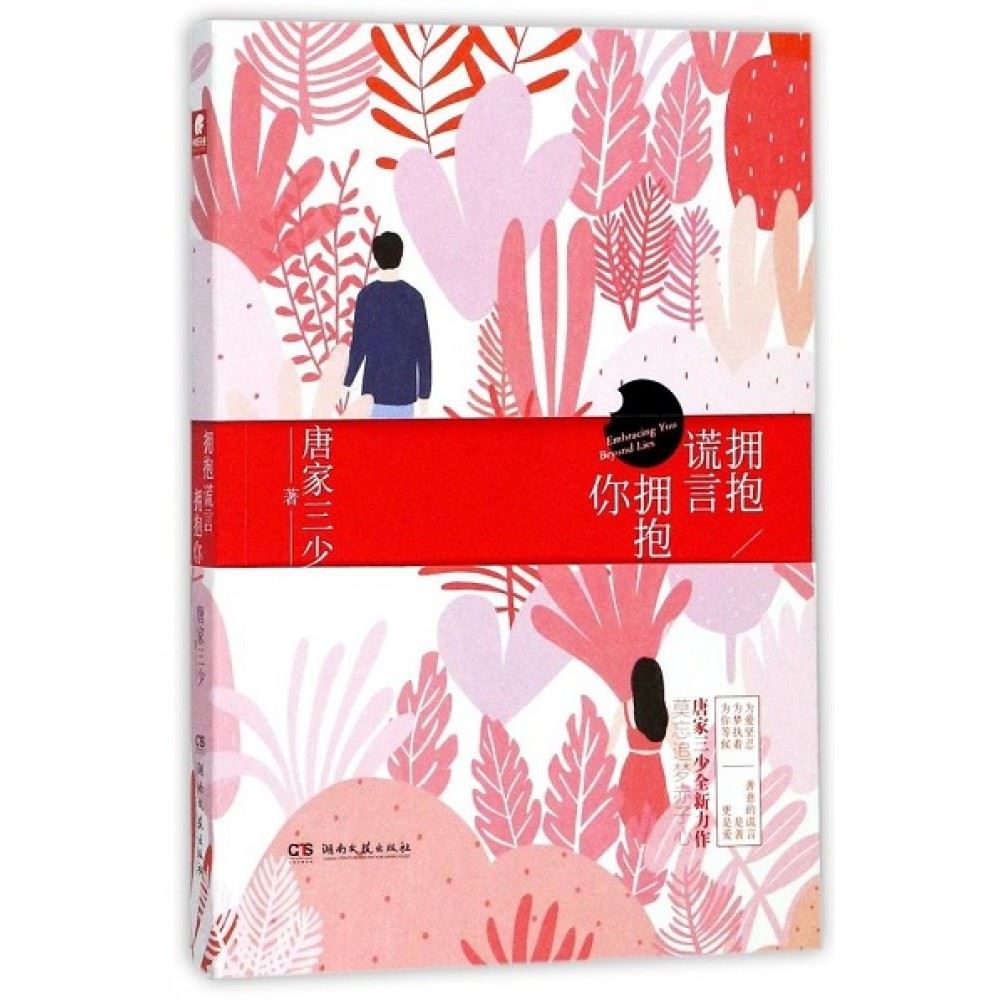
Embracing Lies, Embracing You
+Add to Custom List
Sort
Add review
... Read More
"To hold your hand and grow old together." That's what Zeng Yu typed. Four words in English, translated or not, that carry the weight of an entire relationship. And Jiang Nan saw it while driving and did not reply. I've read this exchange three times now and every time I get stuck on that silence. It's not rejection. It's not acceptance either. It's something messier—maybe she doesn't know what to say, maybe she's overwhelmed, maybe she's driving and can't look at her phone and this is the only space she has between his words and her response. Or maybe, just maybe, she's afraid that if she replies, it becomes real. Because look at what's happening to her in this same chapter. She's exhausted to the point of falling asleep at her desk. She's visiting a hospitalized family member every evening. She helped Xiao Xiao—the girl who's literally her ex-boyfriend's ex—find a lawyer and a place to stay. She's doing all of this while apparently not eating or sleeping properly. And Zeng Yu sends her a message about growing old together. The cruelty of timing here is almost literary. She is drowning in responsibilities and he is offering her forever. I understand why she can't reply. How do you reply to forever when you're barely surviving today? And then Yuan Lei swoops in, snatches her phone, sees the message, and immediately starts laughing about how sweet it is. The contrast between Yuan Lei's unburdened joy and Jiang Nan's silence is devastating. One woman is about to get married and can't stop celebrating. The other can't respond to a text about love because she's too tired to feel anything.
... Read More
This passage could have been five hundred words of pure exposition about the Sophie winery business deal. Instead the author chose to spend most of the chapter on grocery shopping and cooking. At first I thought, is this dragging? But then I realized — the slowness IS the point. The pacing here operates on two levels simultaneously. On the surface, everything is deliberately unhurried. Walking to the supermarket, finding the produce section, browsing snacks, the tedious climb up stairs with rice on the shoulder. These moments of mundane activity create a rhythm that feels authentic to real life. But beneath that surface calm, the author is carefully planting seeds for future conflict and emotional development. Each small beat serves double duty: - The ice cream moment establishes intimacy (she offers him food she's already eaten from) - Zeng Yu's cooking competence establishes his value beyond just business partnership - Yuan Lei's observation about the sweat establishes her growing interest - The missing kitchen AC establishes an ongoing environmental detail that will matter later The chapter ends on what seems like a cliffhanger — 'Just then, Jiang Nan's...' — cutting off mid-action. Classic hook technique. I immediately wanted to know what happened next. The structure also mirrors the relationship arc: slow approach, comfortable familiarity, sudden moments of emotional clarity (Jiang Nan's realization about the sweaty kitchen), then a cut that propels you forward. It's a complete mini-narrative within the larger story.
... Read More
Okay so let me just talk about Jiang Nan for a sec because this girl is fascinating. She agrees to be Zeng Yu's fake girlfriend and then what does she do? She doesn't half-ass it at all. She calls in hospital favors, makes sure his dad gets proper care, picks up his mom's handbag without being asked, puts on makeup even though she doesn't normally wear any. And the line that wrecked me: "This is etiquette. How can I meet your parents without makeup?" She was nervous. NERVOUS. About pretending to be someone's girlfriend. Like she wasn't overthinking the whole thing into oblivion. And Zeng Yu's dad? The man who wanted a love marriage but ended up with duty? That backstory hit hard. "Zeng Zhanhao had dreamed of Zhao Yazhi as his ideal woman." Meanwhile his wife is already setting up blind dates for their son before the day is out. These parents operate on completely different wavelengths and it's both sad and hilarious. Also the Ying Su situation is so awkward. Zeng Yu is literally introducing his "girlfriend" and his mom has a secret agenda girl standing right there. I can't breathe.
... Read More
"I hate tragedies, I really do—hate them with a passion." Said the author right before writing the most devastating sequence in the book. Can we just talk about the scene where Zeng Yu goes to that cinema alone and watches a movie he doesn't even register? One audience member. The screen light reflecting off his stern face. Tears streaming down. He doesn't care about the plot, he doesn't care about anything. That is the most honest depiction of grief I've ever encountered in fiction. But what kills me most is the message itself. Let me just read a part of it again: "Every second we spent together will become the most beautiful memories, sustaining me in the future." She's saying goodbye but she's also preserving everything they had. She's trying to make his pain mean something. And Zeng Yu—he just sits there, thumb heavier than a thousand pounds, unable to press call. The fact that he can't even make the gesture of reaching out, can't even hear her voice one more time, says everything about the finality of what just happened. Then the three years question. "If you can't wait three years, I won't hold it against you." She's giving him an exit. She's letting him go. And he chooses to stay anyway. "I trust you. I can wait." Three years. For someone whose heart just got shattered, choosing faith over self-protection—that is the most intimate kind of love there is. And Wang Zheng and Yiyan's subplot running parallel in the background, dealing with their own troubles while Zeng Yu falls apart... the emotional architecture of this book is so carefully built. Every relationship matters. Every heartbreak counts.
... Read More
"If you like him, why don't you tell him? What's this supposed to be?" - Yuan Lei asking this question felt like the entire novel screaming at Jiang Nan through her best friend's mouth. I'm genuinely invested in Jiang Nan's emotional journey here. She just got over whatever happened with Xiao Xiao, right? Or wait - did Zeng Yu break up with Xiao Xiao? The text says "He just broke up with Xiao Xiao" and Jiang Nan is afraid that if she confesses now, he'll still have feelings for her. This is giving major "I'm not good enough yet" vibes and it's making me want to shake both of them. But here's what's actually heartbreaking - Jiang Nan isn't even confessing to Zeng Yu, she's performing for his PARENTS. She's being the perfect daughter-in-law while secretly hoping that maybe, just maybe, this performance will make him see her differently. That's so sad and so relatable. "A smile bloomed on Jiang Nan's lips as she turned to look out the window." - this line. Just this one line. After Zeng Yu says thank you and calls her better than expected, she smiles and looks away. She's happy but she's also hiding it. She can't let him see how much his words affect her. And Ying Su - she's developed feelings too, isn't she? She's polite and grateful but the fact that she chose to skip the family dinner to treat Wang Zheng and Ye Xiyan instead of spending time with Zeng Yu and his parents feels like she's creating space. She knows something is happening between them and she's stepping back. Or is she? Maybe she's planning her next move.
... Read More
I need to talk about the scene where Wang Zheng is driving his freshly released father home and he says 'Did you suffer much in there?' I literally had to pause the book. This is a man who was abandoned by half his family, who watched his world crumble, who lost his mother to a lie—and his first instinct isn't to yell or accuse, it's to ask if his father was okay. The father's response is so layered: he says he wasn't mistreated but then immediately pivots to 'you must have suffered so much out there.' That's a parent's reflex, right? Even after prison, even after everything, the first thing you want to do is protect your child from your pain. And then Wang Zheng opens up about how he learned the difference between empty luxury and real fulfillment. You can hear him growing up in real time across these conversations. Zeng Yu being the only one who stayed—that detail hit me hard. It's the quiet contrast between people who loved him for his money versus people who loved him for him. But what broke me was the mother's video. She lied for a year so he wouldn't see her deteriorate. She chose his memory of her over the truth. 'I don't want to die in a hospital bed and leave behind a horrible image.' That is devastating and beautiful in the most cruel way possible. She prioritized his ability to remember her fondly over his right to know. I keep thinking about whether that was selfish or selfless. Both? Neither? Just human?
... Read More
The dialogue in this batch is deceptively simple and I want to talk about why it works so well. Take Zeng Yu's line to Wang Zheng: "I live right across the hall. Do you think I don't know if someone's in your place? Ye Zi's already gone, hasn't she? And you still want a last drink? I should kick you instead." Three sentences. Colloquial, sharp, almost dismissive. But packed with everything. He's saying: I've been watching you suffer. I know what happened. And I'm not ready to comfort you for it. The rhythm is staccato—statement, rhetorical question, accusation, threat. It sounds like someone who has rehearsed this confrontation in their head a hundred times and is finally allowing himself to perform it. Then Wang Zheng's response, fragmented and raw: "The biggest mistake I've made in my life is thinking that as long as I didn't say..." He can't even finish the sentence. The ellipsis isn't a stylistic choice by the author; it's Wang Zheng's voice breaking in real time. He's trying to articulate regret but the words won't cooperate because he doesn't fully understand his own mistake yet. And the best dialogue moment, the one that made me laugh out loud despite everything: Yuan Lei grabbing Jiang Nan's phone and saying "What are you looking at? How dare you ignore me?" followed by losing her mind over Zeng Yu's romantic text. The contrast between her theatrical outrage and the genuine tenderness she's reading is pure comedic relief, and it's earned because the chapter has been so emotionally dense. The author's voice never draws attention to itself. It gets out of the way and lets the characters speak. That's craft.
... Read More
Okay, this chapter is basically a philosophy lecture disguised as a dramatic confrontation and I am HERE for it. Xiao Xiao's line 'Love doesn't pay the bills. Life can go on without love, but not without money' is the thematic core of this entire novel, I'm sure of it. But what's fascinating is how the author immediately subverts it by showing us Jiang Nan. Here's a woman who HAS money, has status, has this entire world of privilege at her fingertips—and she's the one linking Zeng Yu's arm with genuine concern. Meanwhile Xiao Xiao, who chose money over love, is left outside shrinking and bitter. The author isn't saying money is bad. They're asking a much more interesting question: WHAT KIND OF MONEY? Xiao Xiao's choice was transactional—she picked someone for their resources and abandoned Zeng Yu for being insufficient. Jiang Nan's choice seems different. She's wealthy by birth, yes, but her actions suggest she values something beyond transactions. She appeared out of nowhere to protect someone she cares about. That's not a business arrangement. Then there's the symbolism of drinking. Zeng Yu says 'from now on, I'm only drinking water'—a complete reversal from his earlier behavior. Water is clear, honest, sober. Alcohol was his escape, his numbing agent. The fact that he's choosing sobriety after this encounter feels deeply symbolic. He's done running from his feelings. The friendship between Zeng Yu and Wang Zheng also carries thematic weight. They've both used alcohol to cope, both lost people they cared about, both ended up sitting in the same room healing side by side. Their bond represents a different kind of wealth—one that money can't buy, one that Xiao Xiao's choice cost her. And the song at the end—'A Life of Love'—is it ironic? Is it hopeful? Or is it just what a tired man chooses when he wants something beautiful without having to fight for it?
... Read More
Okay so this batch is doing something really clever with parallel storytelling and I need to talk about it because the structure here is not an accident. On one thread you have Zeng Yu running his sales operation, cold and efficient—dividing territories, printing client lists, setting up performance-based pay by Monday. It reads like a slice-of-life business chapter, right? But then you have Wang Zheng staring at an empty apartment, realizing Ye Xiyan is gone, and you have Xiao Xiao sitting outside a lawyer's office crying because she can't go back to her ex-boyfriend's world. Three completely separate arcs running in parallel, all leading toward the same moment: Zeng Yu opening his door to find Wang Zheng standing there. The way the narrative cross-cuts between these is what keeps me hooked. The market division scene feels dry on the surface, but it's actually doing heavy lifting—we're learning that Zeng Yu is rebuilding his life through work, that he's competent and in control. Meanwhile Jiang Nan is falling asleep at her desk from exhaustion, juggling cases and hospital visits. The pacing is deliberately uneven, and that's the point. The tension isn't in action sequences; it's in the quiet moments where everything is falling apart around these characters but they're just... going to work anyway. The ending of this batch lands like a punch because Wang Zheng's line—"Even if you're going to kill me, shouldn't you at least offer me a last drink?"—collapses three chapters of buildup into one grotesque joke. He's been abandoned, his brother is across town with a new wife and a different life philosophy, and his first instinct is to ask Zeng Yu for a drink. That's not a plot twist; it's character revelation disguised as plot.
... Read More
Okay so the plot here is doing something really interesting—everything looks like it's going perfectly, and that's exactly when I get suspicious. The business deal gets signed, Jiang Nan is ecstatic, Zeng Yu is pleased, and Han Liren just sits there looking blank. The narrator even drops this line: "Everything went so smoothly that it was almost unbelievable." Unbelievable, folks. That's your author winking at you, telling you something's off. Then immediately after the high of the signing, we get the office reveal and it's all Yuan Lei's doing—arranged behind Zeng Yu's back, no consultation, and suddenly he's the one sitting in the open office while she gets her own room with finance and legal. It's a masterclass in how to shift the power dynamic without a single confrontation. Zeng Yu says "I'm fine with that" but the narration makes it crystal clear he isn't. This isn't just set dressing—it's the inciting incident for whatever conflict comes next. And let's talk about the karaoke scene framing this whole thing. It opens with Zeng Yu singing that song about love being rare in a chaotic world, and Ye Xiyan wiping away a tear. Three paragraphs later we're signing business contracts. The author is weaving romance and entrepreneurship together as parallel storylines, and honestly? It works. The deal being "too smooth" sets up the reader to be on edge every time something nice happens. That's solid plot construction.
... Read More
I need to talk about Wang Zheng and Ye Xi Yan because my heart cannot handle them being this tragic together. Let's start with Yezi. She LEFT him. Not because she doesn't love him — clearly she does, because she's crying in that taxi and she immediately calls A Hong to check if she told Wang Zheng her address — but because she's terrified of the future. 'Who could guarantee that one day in the future, the Wang family wouldn't bring up her past?' That single sentence explains SO MUCH about her character. She's not running FROM him. She's running BECAUSE she cares too much to let him face potential humiliation alongside her. That's not weakness. That's twisted, self-sacrificing love. And Wang Zheng? Oh man. He doesn't just look for her. He finds the building. He stands outside. He SMOKES (breaking his promise to quit, because what's the point anymore?). He posts that devastating Weibo. He saves a mother and child from a truck. He runs to the hospital BAREFOOT almost — he doesn't even process his own injuries until A Hong drags him. The moment at the hospital when he refuses anesthesia: 'I've done wrong, and I need to face the consequences. Otherwise, I can't face the woman I love.' THAT is a man who has finally understood everything. Fourteen stitches. No sound. Not because he's tough — because pain is the only thing he feels that's REAL right now. And Yezi's reaction to seeing him kneeling there — blood pooling, tear-stained, broken — she doesn't run. She walks over. She puts her hand on his head. She says 'You're such a fool' and cries. That's not rejection. That's surrender. What destroys me is that NEITHER of them can just... talk. They keep doing this dance where love = sacrifice = distance = pain. If they had just communicated even once, none of this would've happened. But that's also what makes their connection feel so achingly real. These are two people who would literally die for each other but can't seem to live for each other. A Hong's line 'You two... just keep hurting each other' should be the theme song for this entire relationship.
... Read More
What keeps me awake at night after reading these chapters isn't some villain or external threat—it's the quiet, gnawing fear that this happiness is fragile. Look at the stakes: Jiang Nan could lose her job if she doesn't nail this delivery. Zeng Yu's company could fail if he doesn't review Li Geng's report. Their relationship could shatter if the truth comes out about whatever deception Jiang Nan is hiding. These aren't life-or-death stakes in the traditional sense, but they feel just as urgent because they're real. The author understands that for young people building lives from nothing, the stakes are economic, social, emotional—all at once. When Zeng Yu says, “We should save where we can,” about the air conditioning, he's not being cheap; he's making a survival calculation that will determine whether they eat well this month or scrape by. And Jiang Nan's response—her nose tingling, her heart aching—is recognition that she's falling in love with a man who'd rather suffer silently than burden her. That's the real conflict here: two people trying to protect each other from pain, accidentally inflicting it instead. But the most tense moment isn't any of that. It's the ending, when Wang Zheng learns Ye Xi Yan's story in that remote mountain village. Her parents sold her marriage to fund her brother's wedding. She fled, gave up the college entrance exam, sent remittances for years. Over 200,000 yuan. That subplot isn't just world-building; it's a mirror held up to Jiang Nan's situation. Both women are carrying secret burdens, both are sacrificing for family, both are hiding truths from the men they love. And the author drops this revelation right as we're watching Jiang Nan wake up to find Zeng Yu asleep at his desk, creating a parallel tension that hums beneath every quiet scene. The stakes aren't just about whether these two will survive the city—they're about whether love can survive the weight of everything we hide.

Leave a comment

You must be logged in to leave comments. or