Embracing Lies, Embracing You - Reviews

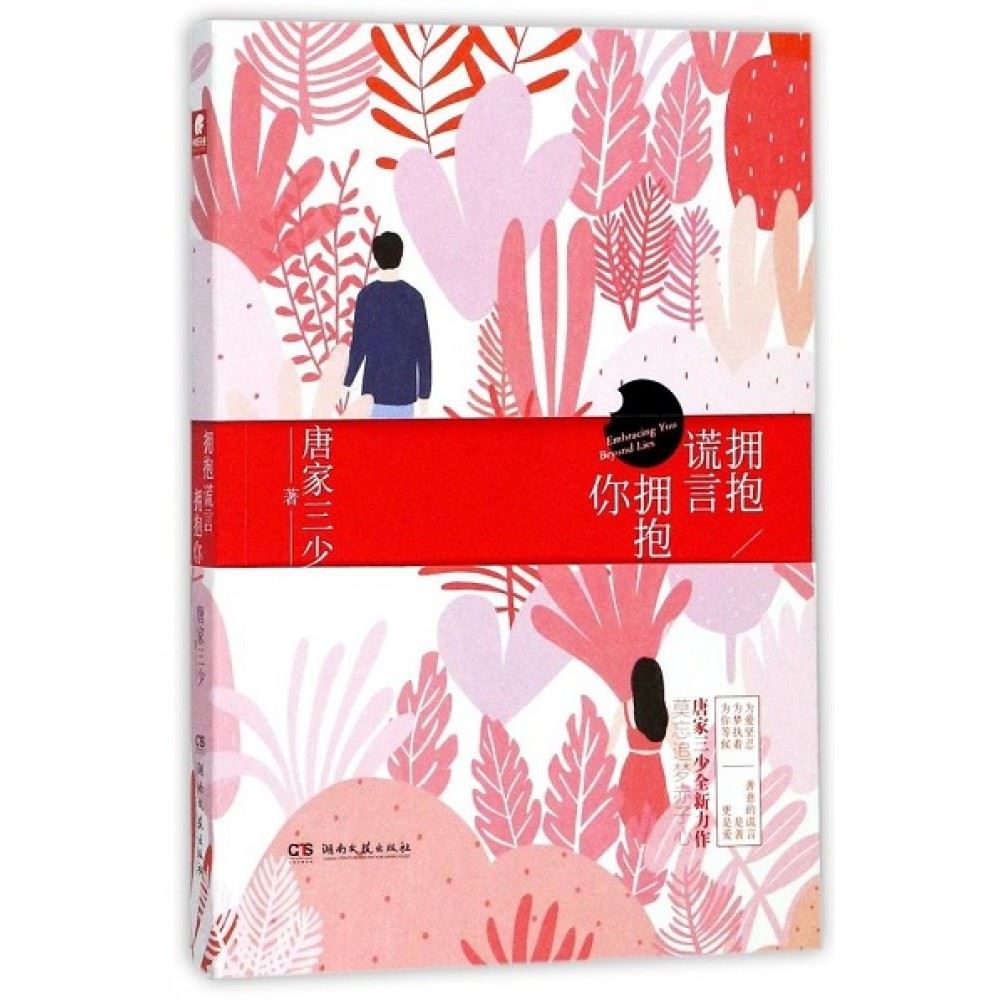
Embracing Lies, Embracing You
+Add to Custom List
Sort
Add review
... Read More
"Why didn't you mention this to Yuan Lei?" Jiang Nan asked curiously. Zeng Yu shook his head, "I don't have a close relationship with her, and she's also a shareholder. If I start questioning her decisions, how will we get along in the future? Some things are better said through you; it'll be easier for her to accept that way. Plus, it makes you look more capable as the boss." "You really do think about me," Jiang Nan smiled so brightly her eyes nearly disappeared into slits. I need everyone to understand: this is the kind of moment that makes you put the book down and just sit with it for a minute. Not because it's dramatic or flashy, but because it's so quietly devastating how much Zeng Yu considers Jiang Nan's position in every single interaction. He's not just being nice — he's actively strategizing to make her look good, to protect her authority, to navigate around people who might undermine her without her even knowing it. And the steamed bun detail — Zeng Yu standing by the water dispenser, eating breakfast, still at the office at this ungodly hour — it's such an ordinary image that somehow makes everything else more powerful. He's not some polished CEO type pretending to work hard; he's just genuinely there, showing up, doing the work, thinking about her. Jiang Nan's reaction — eyes nearly gone, smiling so brightly — that's not manufactured romance. That's a person who has spent her whole life being taken care of by others and is now encountering someone who takes care of her by seeing her clearly. The contrast with her mother Han Jiayi's pragmatic concern about "character" and "lifestyle habits" makes this feel even more tender. Her mother is worried about class compatibility; Jiang Nan is just... happy. Radically, simply happy that someone notices. This relationship has such gentle momentum. No grand declarations, just these small accumulating moments of genuine consideration.
... Read More
I want to appreciate the structural genius happening in these chapters because this author is NOT playing around. Let's break down the pacing: we open with Wang Zheng at Yezi's old home — quiet, slow, desperate. The scene lingers on the landlord woman's annoyance, Yezi's absence, Wang Zheng's rejection. It's suffocating in its slowness. You can FEEL his disappointment. Then we CUT to Yezi's perspective — the taxi ride, the crying, the internal monologue about self-respect and the Wang family. This parallel editing is MASTERFUL. We see both sides of the breakup simultaneously, which makes the reader FEEL what neither character fully understands: they're both hurting, both loving, both making terrible decisions for the 'right' reasons. The cigarette scene by the road — slow, meditative, almost poetic. The song from the shop ('I finally lost you, in the crowd...') is like the universe itself whispering along. Then BAM. Truck. Life-threatening injury. Immediate shift from melancholy to chaos. Then the hospital sequence is where the pacing goes absolutely ballistic. Wang Zheng arrives bleeding. He asks about the accident victim. Hears 'she didn't make it.' World ends. Morgue. Kneeling. A Hong arrives. Yezi arrives. The convergence of all these characters in one space — it's like a dramatic earthquake. The final scene in the emergency room, with the doctor joking about payment and Wang Zheng refusing anesthesia — the tension releases but only slightly. It's a controlled explosion. Every beat is calculated. No filler. No wasted moments. The author trusts the reader to feel the weight of silence between lines. This is why I stay up until 3 AM reading. The pacing doesn't just keep you turning pages — it makes you FORGET to turn pages because you're too busy processing what just happened.
... Read More
I need to talk about Yuan Lei and Zeng Yu's interaction because honestly it's the funniest and most revealing relationship beat in this entire chapter. Yuan Lei opens with 'Zeng Yu, Jiang Nan is a flower, and you're just a pile of cow dung. You're lucky to have her.' I literally laughed out loud. This woman does not play. But here's the thing that surprised me — Zeng Yu doesn't get defensive or angry. He just says 'Should I propose we break up?' like he's genuinely considering it as a joke. That's not insecurity, that's confidence. And then he apologizes to Yuan Lei first: 'It was wrong of me to overreact.' He KNOWS he overreacted before. This is a man who has reflected on his behavior. Later, he tells Jiang Nan directly 'You should trust that I can handle the situation.' He's not angry, he's firm. He draws a boundary without attacking. That's emotional maturity I don't see in a lot of male leads in this genre. Meanwhile, Jiang Nan's dynamic with her mother Han Jiayi is equally fascinating. Han Jiayi is so casually manipulative — she asks Jiang Nan to bring Zeng Yu to dinner like it's no big deal, not understanding that her daughter is terrified of what will happen if Zeng Yu finds out the truth about their family. 'She doesn't listen to me anyway' — said while handing the phone to Jiang Nan's father. Classic deflection. These relationship layers are insane.
... Read More
There's a scene that absolutely wrecked me—not because of big dramatic moments, but because of a single image. Ye Xiyan goes into the kitchen after Wang Zheng finishes talking, and she 'leaned against the wall' and felt a mix of emotions. THAT'S IT. That's the entire paragraph. The author doesn't describe the kitchen, doesn't describe her face, doesn't describe anything else. Just her, against a wall, falling apart silently while he's probably sitting on the bed smoking, feeling relief. The contrast is devastating. And earlier there's this amazing establishing shot of the Jiangyu Trading Company office—employees chatting, watching dramas, playing games, completely unaware that the leadership has vanished. Then Zeng Yu walks in and 'couldn't help but cough, causing an instant commotion.' One cough and everyone freezes. That's not a workplace, that's a dictatorship with better benefits. I also love how Wang Zheng's apartment is described through the lens of their mismatched schedules—she sleeps until noon, he's a night owl, they never clash. It paints this picture of two people who coexist but don't really live together. The whole world of this novel feels lived-in and slightly broken, which is exactly what makes it compelling. Every space tells you something about the characters who inhabit it.
... Read More
There are three scenes in these chapters that I cannot stop thinking about, and they all work through visual composition the way a film director would. First: Zeng Yu at his desk, staring at the computer screen showing Jiang Nan's smiling face as the screensaver. He shakes the mouse every time it comes on. Time slips by. The janitor knocks. The whole sequence is so quiet, so domestic, so painfully ordinary. The author doesn't give us big dramatic set pieces here—just a man sitting at a desk, repeatedly resetting a screensaver that shows the last image of a woman who has left him. The mundanity of it makes it unbearable. Second: the BMW X3 still in the parking spot. She's gone but the car remains. Objects persist after people leave, and this detail does so much emotional work. A single object holding the weight of absence. And third—the cinema scene, which is pure cinematic language. One audience member. The light from the screen reflecting off his face. The empty seats. And then the voice: "Coward!" A voice from nowhere, or maybe from somewhere inside him, and when he turns around, just rows of empty seats. The emptiness is the point. The cinema was never just a setting—it's a space built for shared experience, and he's alone in it, and the voice that accuses him echoes back nothing. Just emptiness answering him. The seasonal transitions too—Autumn passing, winter arriving, December 26th—these aren't just timestamps, they're atmosphere. The cold matching the emotional temperature of the story. The author understands that setting isn't decoration, it's emotional vocabulary.
... Read More
What is this story actually about beneath all the romantic pursuit? I keep coming back to the air metaphor Wang Zheng uses, and how it connects to everything else. Air is invisible, essential, taken for granted until it's gone. That's exactly what Ye Xi Yan represents to him — not a luxury, not a comfort, but a fundamental necessity. And the tragedy is that he only realizes this after she's already left. The concept of 'burden' haunts Ye Xi Yan's side of the story. She won't return because she believes herself to be one — something heavy, something he'd be stuck carrying. But is that really true? Or is it her own self-image warping how she sees herself through his eyes? There's also the symbolism of the empty apartment. It's not just a physical space; it's the void left by someone who filled it with routine and care — meals cooked, clothes ironed, a scent lingering. Wang Zheng's act of cleaning, of maintaining the space, is his way of keeping the possibility alive that she might come back. Then there's the wallpaper moment — Jiang Nan claiming Zeng Yu's digital space as hers. It's a quiet act of ownership, of marking territory, of saying 'you are mine and I am yours' without using words. And the wedding of Yuan Lei? It's a symbol of commitment made public, which contrasts sharply with Ye Xi Yan and Wang Zheng's private, unresolved connection.
... Read More
Let me just say this first: the pacing in these chapters is chef's kiss. The author knows exactly when to zoom in and when to let scenes breathe, and it's not by accident. Look at the structure of their first in-person meeting. It starts with Zeng Yu arriving, a little awkward about not being local, then immediately jumps into business — the proposal, the USB drive, the discussion of partnership terms. Very efficient. Very transactional. And then BOOM, right in the middle of ordering food, the ex-girlfriend phone detail drops like a bomb and the whole energy shifts. The scene pivots from business to something far more personal without any dramatic fanfare. That's skilled writing. The six missed calls opening is also a great hook. You immediately wonder why she's so eager, why he slept through them, what kind of relationship this already is before they've even met in person. Then the reveal that his phone was on silent — mundane, relatable, but it creates this little gap between them that keeps building. And the chapter ends on this question — tea or coffee? A simple multiple-choice that somehow carries the weight of two people trying to figure out if they can just exist in the same room without a project between them. The author doesn't resolve it. Doesn't need to. Leaves you hanging in that awkward space and you immediately want to keep reading to see what happens next. Some parts move fast — the business discussion is efficient, almost brisk. But the personal moments linger. The silence after he mentions the phone. The eye contact. The hidden handbag. This push-and-pull between plot momentum and emotional stillness is what makes the pacing work so well.
... Read More
Let me just sit with this chapter for a moment because the stakes here are DEEPER than they first appear. On the surface, it's a breakup drama—guy runs into ex, ex is horrible, new mysterious girl saves the day. Standard stuff. But dig beneath that and you've got an identity crisis wrapped in a class struggle with a side of loyalty betrayal. Xiao Xiao's conflict with Zeng Yu isn't just about money versus love—it's about whether he's worthy of her ambitions. She says 'Do you know how much time and effort I've put into getting close to him?' That's not love; that's a career move. And Zeng Yu feels this on a spiritual level. 'He felt like he was falling into an abyss'—that's not heartbreak, that's the ground disappearing beneath someone who built their entire future fantasy on a person who never saw him as anything but a stepping stone. Jiang Nan's intervention raises the stakes because it introduces a power imbalance. She's wealthy, confident, connected. She can 'make that man leave Xiao Xiao' apparently. What does Zeng Yu owe her? What does she want? The text never says, and that uncertainty IS the tension. Every time she's near him, we wonder—what's her play? Yuan Lei adds another layer. She's not romantic—she's strategic. 'You have a good eye for people,' she says to Jiang Nan, implying this was all calculated. Is Zeng Yu a project? A pawn? A prize? The fact that multiple women around him seem to be managing his life without his full consent is... concerning and compelling in equal measure. Wang Zheng's friendship holds the emotional stakes together. When he says 'he's my friend' with that emphasis, he's drawing a line. This is about loyalty, about not letting Zeng Yu be used or discarded again. The drinking scene with him is the quietest moment in the chapter but probably the most important—because it's where Zeng Yu is seen as a person, not a plot device. The real question hanging over all of this: can Zeng Yu navigate all these forces and still choose his own path? Because right now, everyone around him seems to have an opinion about what that path should be.
... Read More
Can we talk about Zeng Yu and Jiang Nan for a sec? Because their dynamic is doing SO MUCH work here. He's this guy who grew up driving trucks for a living—literally learning on the job because the driver got lazy—and he has this genuine, almost naive belief that a good plan is enough to make a business succeed. Meanwhile Jiang Nan is a rich girl who sees this whole entrepreneurial venture as a game. She's glowing with enthusiasm, raising her hand for a high-five like they just won something at a carnival. And Han Liren? He sees it all and thinks: "This young man—was he lucky or unlucky? What would happen to him when Jiang Nan got tired of this game?" That one internal line from Han Liren tells you everything you need to know about how doomed this partnership might be. He's not wrong to be suspicious. But Yuan Lei is the one who gets me most. She's literally the ex who pushed Zeng Yu into breaking things off with Xiao Xiao, and now she's showing up as a shareholder with a Chanel bag, arranging offices without telling anyone, and casually dropping hints that Zeng Yu's dream of a nice office means he's serious about taste and class. She's playing three-dimensional chess while everyone else is still learning the pieces. The fact that she claims she joined because she was "bored" and her bar was "well-managed" while simultaneously being Han Jiayi's spy? That's some next-level manipulation. Zeng Yu nodding along saying "alright, no problem" while internally not being pleased at all—this is a friendship carved out of compromise and poor boundaries.
... Read More
What I loved most here was watching Jiang Nan slip into these roles that weren't officially hers. With Zeng Zhanhao, she wasn't some distant acquaintance—she was the one arranging ginseng soup, joking with Dr. Gu, earning this raw, tearful gratitude from Fu Yu. That line, 'Even a real daughter wouldn't be as thoughtful as you,' hit because it revealed what Jiang Nan already knew: she'd crossed into familial territory without ever asking permission. And Fu Yu's response—'If he dares, I'll break his legs'—felt like the story acknowledging this new alliance. Then there's Xiao Xiao. The betrayal reveal isn't just plot; it recontextualizes everything. Xiao Xiao thought her sister was an ally, but the text makes it clear: the sister helped find her, enabling the abuse. Jiang Nan's declaration, 'We're friends,' after that moment wasn't just comfort. It was a conscious rewiring of Xiao Xiao's world. Who do you trust when the people you grew up with are your enemies? The narrative doesn't shy from that ugliness, but it balances it with Jiang Nan's fierce loyalty. She's not blood to either of these families, but she's becoming essential to both. I keep wondering: what does that cost her? When she's pouring so much energy into holding everyone else together, where does she let herself be held?
... Read More
Okay so let me just say — this whole Sophie distribution arc is the kind of plot setup that makes you lean forward in bed at 2am. The basic premise is simple: two people with very different resources team up, go negotiate with a bigger fish, and somehow win. But it's the layers underneath that got me. Jiang Nan has all this money (her entire outfit alone screams it — Burberry, Chanel, J12 watch), but she can't use it openly because her family doesn't trust her yet. Zeng Yu has the brains and the plan but zero capital. That's not just a convenient partnership — it's a ticking bomb of dramatic irony because WE know she's rich and Zeng Yu doesn't. Every time he says 'I can only afford instant coffee' while sitting across from a girl who probably couldn't finish paying off her watch in a lifetime... I nearly choked. Then the negotiation scene with Han Liren — three million vs. two million, the whole thing played like poker. Zeng Yu walking out mid-negotiation saying 'there's only a minute left, let's continue another time' was such a power move. He wasn't leaving because he was losing; he was leaving because he knew Jiang Nan had already secured the win behind the scenes. The fact that Han Liren was basically playing both sides — scolding her in public while affectionately calling her 'Nan Nan' in private — added this whole family-dynamics subplot that could go any number of directions. And that ending? 'Sophie's failure is on Han Jie. I'm sorry. But Nan Nan...' The sentence literally cuts off. What does that mean?? Did he confess something about Han Jie? Is there more to the family history than we know? This plot is well-structured in a classic 'underdog uses brains over brute wealth' way, but the family intrigue layer is what elevates it from generic business drama to something with real stakes.
... Read More
Okay so I just finished these chapters and I am literally still processing everything. Let me just... take a breath. The whole Wang Zheng storyline hit me out of nowhere. One moment he's sobbing at his computer after watching his mother's video, and the next Leng Qing is dropping bombshells like she's reading from a script. "That girl was me. Your father found me before he got into trouble and entrusted me with some tasks." I literally had to pause and stare at the wall. What I love about how the author wove this is the timing. Right when Wang Zheng is at his most vulnerable, crying over his dead mother, Leng Qing appears—fresh off a plane, having come back specifically because she heard about Wang Chenghan being released. It's like all these secret threads were just waiting for the right moment to be pulled, and suddenly the whole tapestry makes sense. And then there's the parallel with Jiang Nan at the hospital, waiting for Zeng Zhanhao's surgery. Two storylines running simultaneously—one about family secrets unraveling, the other about life-and-death stakes. The author is playing chess here, not checkers. Every subplot connects. Leng Qing bought properties under Wang Zheng's name years ago and they've doubled in value. She has a child. People thought the child was Wang Chenghan's. None of this was random setup—it was all铺垫 (dépù), laying groundwork. The structure of these chapters is actually really smart. It opens with emotional devastation, moves to revelation, then shifts to a completely different location and set of characters, but the emotional current stays the same: people waiting, hoping, praying their loved ones survive. That's not coincidence, that's craftsmanship.

Leave a comment

You must be logged in to leave comments. or
