Embracing Lies, Embracing You - Reviews

Embracing Lies, Embracing You
+Add to Custom List
Sort
Add review
... Read More
Okay so let me just say this: Zeng Yu is the most conflicted guy I have ever read about and I mean that in the best way possible. You can literally see the war going on behind his eyes every single scene. He likes Jiang Nan—I know he does, we all saw it when he saved her from those drunk customers at the bar—but then Xiao Xiao shows up and suddenly he is not sure about anything anymore. And honestly? That makes him feel so real. Most male leads in these stories just pick a girl and move on. Zeng Yu is sitting there unable to make a decision and it is driving Jiang Nan crazy. Xiao Xiao though—wow. She is not a villain. She is not even really a rival in the traditional sense. She is just someone who has history with him and she refuses to let go. Remember how she stood in front of them at the parking lot and said "just give me half an hour"? That moment chilled me. She knows she is losing but she is not backing down. Meanwhile Jiang Nan is being incredibly graceful about the whole thing—she offers to meet his parents she actually volunteers to take Fu Yu to the hospital—and I love her for it. She is beautiful and smart and she deserves someone who is all in. But here is what got me: when Zeng Yu walks away from Jiang Nan at the end and she just watches him go feeling terrible? That is the moment I knew this relationship was going to hurt before it even properly began. He wants her but he cannot escape what happened with Xiao Xiao. Who is going to untangle this mess?
... Read More
"You're here early," Jiang Nan said in surprise. Zeng Yu had plenty to do yesterday, sorting through Sofi's brand information. Okay, so this chapter starts with such a soft, almost slice-of-life vibe — early mornings, sorting receipts, mopping floors — but then BAM, Zeng Yu shows up at Han Liren's office and the whole thing pivots. The author doesn't even hint at what's coming. Just this quiet little moment where Zeng Yu is drinking water, eating a steamed bun, being all humble and earnest, and then suddenly he's navigating a minefield with a receptionist who literally tells him the boss was "in a foul mood for days" after their last meeting. What I love is how the author uses this side encounter to raise the stakes without ever stating them outright. Han Liren's bad mood isn't just gossip — it's a threat to the entire business relationship. Zeng Yu's agency, the contracts, the supermarket situation — it all hangs on this one volatile connection. And instead of having Zeng Yu storm in demanding answers, he does something much more interesting: he plays the long game. Gives the receptionist green tea. Gets her name. Exchange contact information like he's already three moves ahead. The line about him "never underestimating anyone" because of his sales experience is such a perfect character beat — it tells us everything about who he is without a single narrator aside. Meanwhile, the Han Jiayi subplot about Zeng Yu being a "child from a grassroots family" keeps tugging at the edges of every interaction. It's not the main plot, but it's the pressure cooker underneath. Every time Jiang Nan smiles at Zeng Yu or Yuan Lei quietly defers to him, we're reminded that this relationship exists inside a web of family expectations and class anxiety. Brilliant structural layering.
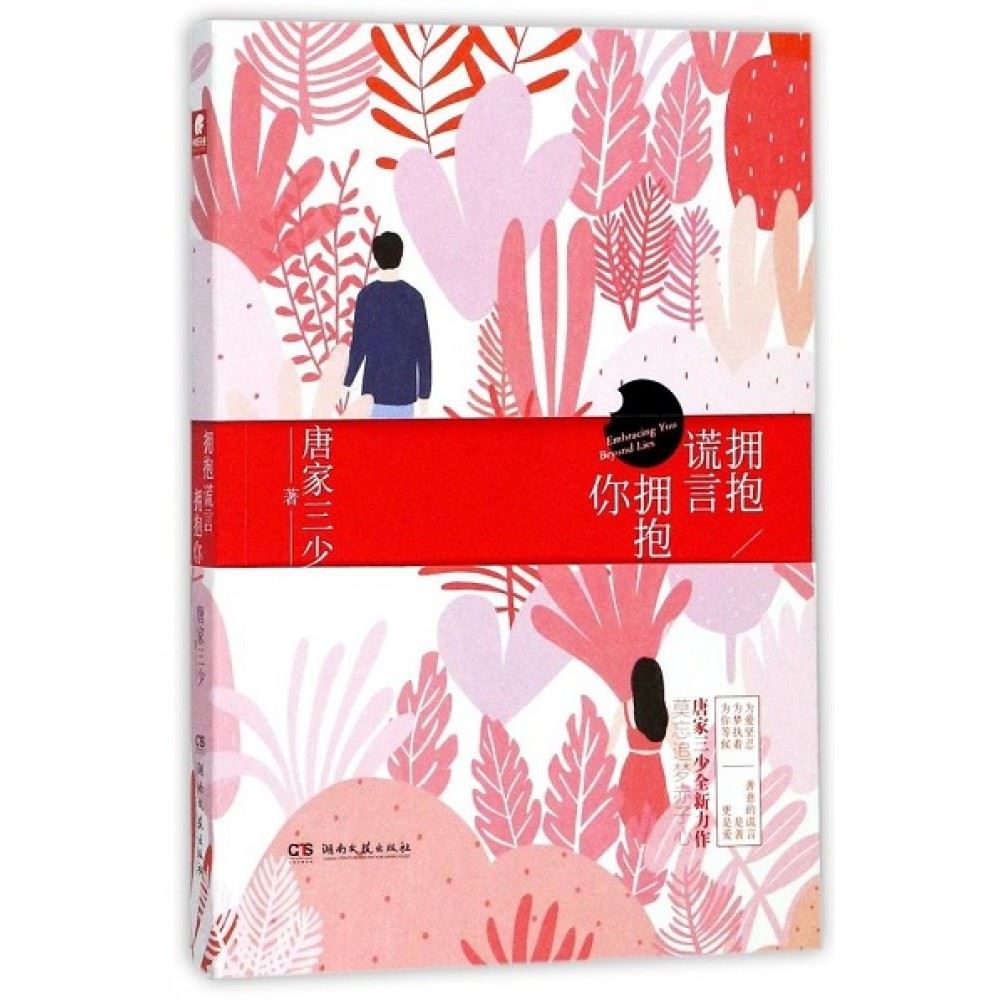
... Read More
Okay so can we just talk about how Yuan Lei dragging Zeng Yu into this business might literally be the most important random coincidence in the whole book? Like, I keep going back to that scene where she grabs his ID to check his birthdate because apparently she and Han Jiayi both believe in fate or whatever. And then it turns out this guy who just wandered in off the street knows Zeng Yu through the Sophie wine connection, and the whole chain of events just spirals from there. It reminds me of those moments in novels where everything seems completely random but looking back you realize the author planted the seed three chapters ago. The Michelin three-star restaurant buying 500 bottles of wine as a walk-in deal — that alone should have been the plot twist, right? Who does that? And then the foreigner asking for Yuan Lei's phone number and her shutting him down? So many loose threads hanging here. I'm genuinely curious whether Zeng Yu is supposed to be some kind of lucky charm for the company or if the author is setting up a bigger conspiracy involving Wang's second uncle and that French chef connection. Also the whole Wang Zheng subplot with his father in prison and the second uncle showing up out of nowhere — that's a completely different storyline that feels like it's about to collide with the business plot. Do you think these two narrative tracks are going to merge, or is the author keeping them parallel for now? Because honestly I'm here for both. The business intrigue is giving me serious power-moves energy while the Wang family drama is pure emotional landmines.
... Read More
Can we talk about how complicated these two are? Jiang Nan spent the whole chapter trying to explain why she hid her family's wealth - 'the timing didn't feel right' - but really she was scared of being seen as materialistic. Meanwhile Zeng Yu just bought the most expensive thing he could afford and lied about the price to protect her feelings. Both of them are performing love through sacrifice but missing each other's actual needs. The forehead hug moment where she says 'I understand. I'm sorry' - that's the purest moment in the whole chapter. But then the bracelet scene? He's fumbling putting it on her wrist, she's trying not to laugh at his 'knockoff' excuse. It's sweet but it's also sad because they're both pretending everything is fine when clearly the status gap is eating at him. 'Qing bu fu wo, wo bi bu fu qing' - love doesn't yield to me, so I won't yield to love. That line though... he's already preparing himself for heartbreak and she has no idea. And her dad being the voice of reason while her mom's ready to fight everyone? Perfect parental contrast.
... Read More
This sequence reads like a hurricane that somehow knows where it's going. We open mid-conversation with Wang Zheng already injured, then spiral into a phone call with Zeng Yu, then the rescued family arriving, then the parents Materializing, then the next day's hospital transfer, then a completely separate arc with Zeng Zhanhao leaving. That's six distinct beats in roughly the space of five chapters and yet the pacing never drags. The author uses a technique I've noticed elsewhere in this book: the conversational pivot. Every time the emotional intensity hits a peak, someone cracks a joke or changes subject. Zeng Yu threatening to punch Wang Zheng → suddenly talking about whether he's crippled. Wang Chenghan about to give a serious speech → Yuan Lei scolding him for butting in. It creates this rhythm of tension-release-tension-release that keeps you turning pages without feeling manipulated. But the real pacing masterstroke is the closing image. Jiang Nan alone, reading a text from Zeng Zhanhao, realizing they're already gone. The whole previous section was crowded rooms and hospital corridors and noise. Then suddenly: silence, a bus ride, a unanswered call. The shift from chaotic warmth to isolation in two paragraphs is brutal and effective. I had to put the book down for a minute.
... Read More
"No love, no sorrow. Easy to find priceless treasures, but hard to find a loyal lover." Jiang Nan thinks this as she watches Zeng Yu walk away, and honestly? It hit me like a truck. This girl is running around with business plans and 51% share offers and mother- manipulation tactics, but at the core she's just lonely. She lost her grandmother three months ago. She's unemployed. She's watching a man walk away who she actually seems to want—not just as a business partner, but as someone real. And Zeng Yu? He gave up smoking because of Xiao Xiao. That detail absolutely wrecked me. He quit a habit he probably had for years, not because he wanted to, but because someone he liked didn't like it. And what did it get him? Nothing. She's gone. He's left with the phantom limb of a relationship that didn't work out and a proposal on his computer he can't delete because of the months of work he poured into it. The line "Often, giving doesn't necessarily bring rewards" appears as he's about to go buy cigarettes anyway, and I couldn't stop thinking about how much of Zeng Yu's entire existence is about this. He gives—quits smoking, helps carry drunk neighbors, puts months into business proposals—and gets almost nothing back. Meanwhile Jiang Nan is performing affection like it's second nature, getting what she wants from her mother in minutes, but she's hollowed out by grief she hasn't processed. These two are both deeply lonely people circling each other. Whether they find something real or just use each other to feel less empty is the question keeping me up at night.
... Read More
I need to talk about Wang Chenghan bowing to Ye Xiyan. I literally stopped reading and re-read that paragraph three times. This man spent years seeing his son as a disappointment—a spoiled brat, unreliable since childhood—and in one breath he hands Ye Xiyan a villa and says "perfect as a daughter-in-law." That's not just acceptance, that's a complete reversal of everything he's been projecting. What does that say about his pride? About how much he actually values the relationship over face? I think about that a lot. And Ye Xiyan's response! She immediately deflects and takes blame. "It's all my fault" — of course she does. Even now, even after everything, her instinct is to shrink herself to make everyone else comfortable. But Wang Chenghan sees through it and gently pushes back. There's a moment there where I actually felt something in my chest. Zeng Yu is another one. "You're not dead, right? Not crippled either?" The absolute menace in that voice masking pure relief. And then the hug—pounding his back, yelling about how he deserves to suffer. That's not friendship, that's sibling-level codependency and I respect it. Meanwhile Yuan Lei's energy is just chaos in the best way, scolding her husband for butting in and getting a cheerful "You're right, boss" in return. The family dynamics here are so layered, I don't know how the author does it.
... Read More
The stakes in this section are insane and they keep escalating. Let me count: Xiao Xiao facing economic abuse from parents who beat her—her stake is survival and autonomy. Wang Zheng dealing with a father returning from prison while his own family fractures—his stake is identity and belonging. Leng Qing walking into that room knowing she's hated, carrying a dead woman's final message—her stake is clearing her conscience. And then the mother's video reveal ratchets everything up to a new level. She died alone, in pain, lying to the person she loved most, and the son only finds out after it's too late. The conflict between Wang Zheng and his father is the most charged moment. He slams the car door, stomps on his cigarette, snatches the backpack without a word. This is a man who has every reason to walk away and chooses not to. Why? Because despite everything, 'a father is still a father.' That line from the narration is doing so much work—it's not forgiveness, it's obligation, and obligation is still a kind of love in these families. The Leng Qing confrontation is another pressure cooker. She has a clear conscience but no defense against his resentment. The mother's death is the unresolved wound in this whole family, and now it's open again. Wang Zheng is trapped between mourning a mother he thought he knew and facing a father he barely understands. The stakes aren't just emotional anymore—they're existential. Who is he if his entire family history was built on lies? And what happens when the last truth finally comes out?
... Read More
Let's talk about stakes because this chapter quietly raises them to a whole new level. Zeng Yu faces down two seasoned fighters to protect his drunk friend. Not because he's reckless—because Wang Zheng is ALL he has in this city. The stakes aren't dramatic explosions; they're quiet and desperate. 'He's my friend. I'm here to take him home. Move aside.' That's it. That's the whole battle cry. And yet it hits harder than any action sequence I've read. But here's where the internal conflict really lives: Zeng Yu with Jiang Nan. He's caught between a relationship that ended two years ago and still hasn't healed, and a new connection that makes him feel inadequate. 'He felt he didn't deserve Jiang Nan.' That insecurity—deep, specific, personal—is the real stakes here. It's not about winning or losing; it's about whether he can believe he's worthy of being chosen. Meanwhile, Wang Zheng's stakes are even more tragic. His family is gone, his uncle is a stranger who returns too late, and his only coping mechanism is alcohol. Zeng Yu picking him up from bars at 2 AM—that's not just friendship, that's someone holding onto the last thread of someone else's life. And Xiao Xiao? She's the conflict that doesn't need drama. Her refusal to engage with Zeng Yu's family, her subject-changing, her sudden silence when he hangs up—the stakes are emotional survival. Who gets left behind when people decide you're not worth the effort?
... Read More
I need to talk about the absolute tension between Jiang Nan and Ying Su and how NEITHER of them is even aware they're in a competition. Ying Su is sweet, polite, grateful - she thanks everyone constantly, she doesn't want to 'get in the way,' she offers to treat Wang Zheng and Ye Xiyan to dinner instead of joining the family meal. She's literally the perfect guest. And Jiang Nan? Jiang Nan is the perfect girlfriend-in-training. She anticipated Zeng Yu's parents' needs, she handled the medical arrangements, she played the supportive role flawlessly. "If she could just learn to cook, she'd be the perfect daughter-in-law." - Fu Yu's comment hit me like a ton of bricks because it's said lovingly but it's also a crack in the armor. Jiang Nan is already being measured and found slightly wanting, and she doesn't even know it. But here's what's really interesting - Zeng Yu's relationship with BOTH girls is completely different. With Ying Su he's practical, helpful, almost fraternal. He arranges her housing, introduces her to friends, warns Wang Zheng to take care of her. With Jiang Nan it's collaborative, intimate, there's this shorthand between them. When he says "Great acting" and she blushes? That's a couple moment. That's not friend energy. And Yuan Lei seeing Jiang Nan blush and immediately calling it "one-sided"? She's not wrong. But is it really one-sided anymore? Because Zeng Yu calling Jiang Nan "much better than I expected" with genuine gratitude - that sounds like more than friendship too.
... Read More
The imagery in this chapter is doing SO much heavy lifting. That scene where Zeng Yu walks into the Chanel boutique in baggy shorts and flip-flops? I could feel the humiliation and determination at the same time. The author painted that contrast perfectly - luxury stores as 'a world apart' for him. But the realest moment has to be when he drops her off at HER apartment complex and just stands there watching her walk away. She doesn't even realize she's living in luxury anymore - 'completely forgot that they were standing at the entrance to her luxurious, high-end apartment complex.' That's the tragedy right there. Their worlds collided but neither fully sees what the other lost. And then she faints-dizzy-scene at her parents' house, and suddenly we're worried about her HEALTH not just her relationship. What's the bigger stakes here? Class difference or medical emergency? The author made me care about both at once. Zeng Yu searching for answers about those clothes at the end? He's looking for reasons to either hold on or let go. Every conflict in this chapter is layered - financial shame, romantic insecurity, family expectations, health scares. No wonder the title is just him sighing.
... Read More
Let me just say this one time: the cinema scene is CINEMATIC. I don't use that word lightly. Jiang Nan choosing an art film with slow pacing, both of them drowsy, the theater lights coming up and—then the moment. 'Their eyes met, like magnets attracting each other, neither of them wanting to look away.' I need this directed by someone who understands silence and tension because this scene doesn't need dialogue. It needs a close-up and a swelling score. And before that, the detail about Zeng Yu walking on the road side of the sidewalk and instinctively shielding her from electric bikes—that single gesture tells us everything about who he is without him saying a word. The author builds atmosphere through these tiny physical details rather than grand descriptions. Jiangyu Company's dinner party, everyone holding plates, gathering in small groups—that's a warm, lived-in world. It feels like a place where people actually exist beyond the plot. Even the dim night at the end, Jiang Nan's flushed face, the unfinished question about fate—this isn't just setting, this is emotional weather. The world of this novel breathes.

Leave a comment

You must be logged in to leave comments. or
