Dry Land - Reviews

Dry Land
+Add to Custom List
Sort
Add review
... Read More
I need to process what I just read and I'm not sure I can. The external conflict is straightforward enough—Fang Fengzhi is emotionally torn between his feelings for Min Zhi and the rational reasons he shouldn't pursue them. He's married (to someone else's subordinate), Min Zhi supposedly isn't interested in Omegas, there are social barriers and moral complications everywhere you look. Fang Fengzhi knows all of this and keeps fighting himself about it anyway. But the INTERNAL conflict—the real stakes of this chapter—are terrifying. Min Zhi is an Enigma/Alpha with predatory instincts that he literally cannot control without pharmaceutical intervention. The chapter makes it brutally clear: when he's near Fang Fengzhi, he doesn't just feel attraction, he feels the urge to consume him. Not metaphorically. Actually eat him. His own thoughts disgust him. His face becomes ugly. He has to go take pills just to function normally around the person he's with. And Fang Fengzhi? He has no idea. He falls asleep trusting Min Zhi, thinking maybe this time it's real, maybe this time it's not just pheromones. He sees pity in Min Zhi's eyes and feels safe. The stakes here aren't just about will they won't they. The stakes are: what happens when Min Zhi stops fighting himself? What happens when the medicine runs out? What happens when Fang Fengzhi discovers what Min Zhi was actually thinking while holding him? I don't know if I can keep reading and NOT know.
... Read More
"The warm chamomile scent struggled to spread, pitifully overwhelmed and trapped by Fu Baiqi's rich woody scent." This single image contains the entire thematic architecture of the novel. Chamomile — gentle, soothing, traditionally associated with calm and healing — representing Fang Fengzhi's nature. Woody — deep, dominant, unyielding — representing Fu Baiqi. And the chamomile is not just competing, it's TRAPPED. Pitifully so. But wait, there's more. The pheromone extract bottle that triggered all of this — that's another symbol. It's pheromones in bottled form, love reduced to chemistry, intimacy manufactured and dispensed like medicine. Fu Baiqi threw it in the trash. But Min Zhi noticed it. The extract represents control over something that was never meant to be controlled. Then there's the marking itself — a biological imperative dressed up as intimacy. Fu Baiqi's mother using a fake hospital visit to engineer a marking. Love and manipulation becoming indistinguishable. The temporary mark is supposed to be harmless but it leaves Fang Fengzhi physically compromised and confused. The repeated motif of bodies betraying minds is the central theme here. Fu Baiqi's body wants what his head hasn't accepted. Fang Fengzhi's body responds to the mark even as his mind questions everything. Even Min Zhi's body reacts before his consciousness catches up. In a world where pheromones are literally irresistible, can any choice truly be free?
... Read More
Okay, so I need to talk about this entire sequence because it is absolutely unhinged in the best way possible. Fang Fengzhi wakes up in Min Zhi's room, sees a ring on his finger, and his first thought isn't even relief—it's that everything moved way too fast. Like, this man just got out of a divorce and Min Zhi already marked him, proposed, AND installed a new lock on the door. The plot thickens, literally. The moment I knew something was deeply wrong was when Fang Fengzhi tried to leave and found the door locked from the outside. Locked. From. The. Outside. This isn't romance, this is a hostage situation with better aesthetics. And then Xu Wen shows up—that assistant who was already giving off major unease vibes—and casually drops that President Min wants Fang Fengzhi to stay put. Put. Put! As in, not leaving. Ever. But the real plot twist came when they drove him over an hour into a remote mountain area to what can only be described as a supermax prison for dangerous Alphas and Enigmas. Min Zhi is locked inside, bandaged up from fighting Fu Baiqi, and separated from Fang Fengzhi by glass. The author really said 'let's give our lovers a prison visit' and I am HERE for it. It's so dramatic, so operatic, so completely unhinged that I literally gasped out loud reading it. What really caught me off guard though was Min Zhi's explanation. He just... admits it. 'I was afraid you'd choose someone else.' That's not the monologue of a psychotic stalker—well, maybe it is, but he says it with genuine vulnerability. The line 'Our relationship was never normal from the start' hit me like a truck. It reframes everything that came before. This isn't a power move, it's panic. Desperate, twisted, possessive panic from someone who genuinely believes he's unworthy but can't stop himself from grabbing onto whatever warmth he can find. And then the chapter ends with Fang Fengzhi being taken to see Fu Baiqi, who looks like he went twelve rounds with a lawnmower. What is this man's face even looking like?? I need the next chapter immediately.
... Read More
There are three scenes here that stick in my mind like photographs. The nursery, cold and quiet except for the sleeping child. The dim path where Min Zhi carries Fang Fengzhi on his back, the city faded around them, just two silhouettes moving through empty streets. And finally, the car—brightly lit elevated bridge, the mist on the window where Fang Fengzhi's head rests, Min Zhi seeing the condensation and realizing his partner is crying. The author doesn't overdescribe. The world feels lived-in but not cluttered. The nursery is functional: towels, bottles, a lamp turned off. The path is just a transition space, a place between the noisy barbecue and the private car. The car interior becomes the real stage—a confined space where bodies press close but emotions stay miles apart. The mist on the window is such a simple detail, but it's the visual thesis of the entire sequence: intimacy and isolation existing at the same time, breath fogging up the glass while the outside world blurs past. I also loved the contrast between the warm home Fang Fengzhi used to return to—"a kiss and a hug from Min Zhi were enough to wash away all the day's frustrations"—and the current reality where that home feels like a battlefield. The domestic details (breastfeeding issues, nipple pain, child's gums) ground the emotional conflict in physical reality. This isn't abstract relationship drama; it's two people trying to co-parent, share a bed, and survive jealousy in a house that still smells like milk and tiredness.
... Read More
The sensory world-building in this passage is actually *insane* and I need to appreciate it properly because most people would just skim past the smells and get to the action. But the SMells. Let me enumerate because this is art: Gunpowder on Min Zhi. That's not romantic. That's violent, sharp, dangerous. He comes into Fang Fengzhi's space and the FIRST thing that hits is the smell of weapons and combat. This is a man who carries war with him everywhere. Chamomile on Fang Fengzhi. Faint. Almost undetectable on his breath but when Min Zhi smells his SWEAT—'the essence left behind after crushing fresh chamomile, warm, damp, delicately fragrant'—it becomes something almost visceral. The author made me literally smell this through text and I am not okay. And then the collision: Min Zhi's pheromones (gunpowder invading) versus Fang Fengzhi's natural scent (chamomile defending). 'The pheromones left by Fu Baiqi in his body began to resist other invaders.' So there's ALREADY someone else's scent claiming him. There's a chemical war happening inside this Omega's body and Min Zhi is the unwanted soldier crossing the border. The bedroom itself—tangled bedsheets, purple-wrapped wrists, wetness, the clinical detail of the water cup, the bedside phone. It's intimate without being luxurious. This is a space of suffering, not romance. The only beautiful thing in the room is a mole on an eyelid and a tongue that tastes like chamomile. The author also drops this exposition about temporary vs permanent marking that reads like a medical textbook inserted into an erotic scene. 'Temporary mark: disappears in less than a month. Permanent marking: will never disappear unless there is an accident.' This is world-building through clinical detour. I love it. It makes the biological rules feel real and dangerous, like the story has its own physics and they're not商量ing with anyone.
... Read More
I'm still processing this. I genuinely cannot process this. Fang Fengzhi—this beautiful, trembling, almost pathetic little Omega who thought he could slip into someone else's arms and just... exist for a moment? And Min Zhi? God, Min Zhi. He's not even trying to be mean about it. He just... absorbs him. Like a puppy sniffing its owner's collar, the text says. That phrase alone made my stomach twist. Fang Fengzhi comes from someone who abandoned him, thrown him out like garbage, and now he's in Min Zhi's arms anyway. The desperation in that image—it's not romantic. It's not even particularly sexual. It's predatory but also kind of tender? Min Zhi's hands on his waist moving in slow unconscious gestures while he's supposed to be in a meeting. That's not calculated dominance. That's something far more complicated. And Fang Fengzhi—he's shaking, his legs moving randomly, toes curling up. The text says he couldn't stop thinking about his husband's voice while his body completely betrayed him. That dissonance between mind and flesh, between shame and pleasure—that's where the real pain lives. He didn't choose this. His body chose for him. And Min Zhi? He's holding this broken thing and somehow it makes him feel alive. The wetness, the tears, the raw desperate sobs at the end—that's not satisfaction. That's devastation wearing a different mask. I need to sit with this for a while.
... Read More
So this entire sequence is basically one long, slow-burn knot being pulled tighter and tighter. You start with the domestic tableau—the child, the breastfeeding issue, Min Zhi stepping in—and it feels cozy, almost safe. Then Min Zhi comes back into the nursery with another bottle and slides into bed behind Fang Fengzhi, and the text just hangs there. You can feel the tension coiling. It's not dramatic shouting; it's the quiet, suffocating kind where two people share a bed but are continents apart. The real plot spike comes when Fang Fengzhi finally says the thing he's been turning over in his head: "Fu Baiqi's gland was severely damaged. It's not just for revenge." And Min Zhi admits it. At first, yes. But then he confesses the darker, more human reason—"if this place was destroyed, there would no longer be such a thing as 'Destiny' for Fang Fengzhi anymore." That's the pivot. It's no longer about justice; it's about envy, about wanting something that feels impossibly perfect. After that, the plot does something interesting: it pulls away from the couple and shows Fang Fengzhi's alienation at work, his former discomfort with colleagues that now feels more tolerable because of his family. But that sense of home is already cracking. When he leaves the barbecue and runs into Min Zhi on the street, the narrative circles back to the same wound. The car ride, the mist on the window, Fang Fengzhi's drunken tears—it's all the same knot, just pulled from a different angle. By the end, we're left with Min Zhi's desperate "Tell me, what should I do?" and the question hangs unanswered. The plot doesn't resolve; it deepens. What struck me most was how the author uses the child as both a literal and figurative barrier. Min Hezhen wants his mother's milk, but Fang Fengzhi has stopped lactating. The child bites the hard arm meat instead. It's a small, visceral detail that says everything about their situation—instincts fail, hunger remains, and there's no easy comfort to be found.
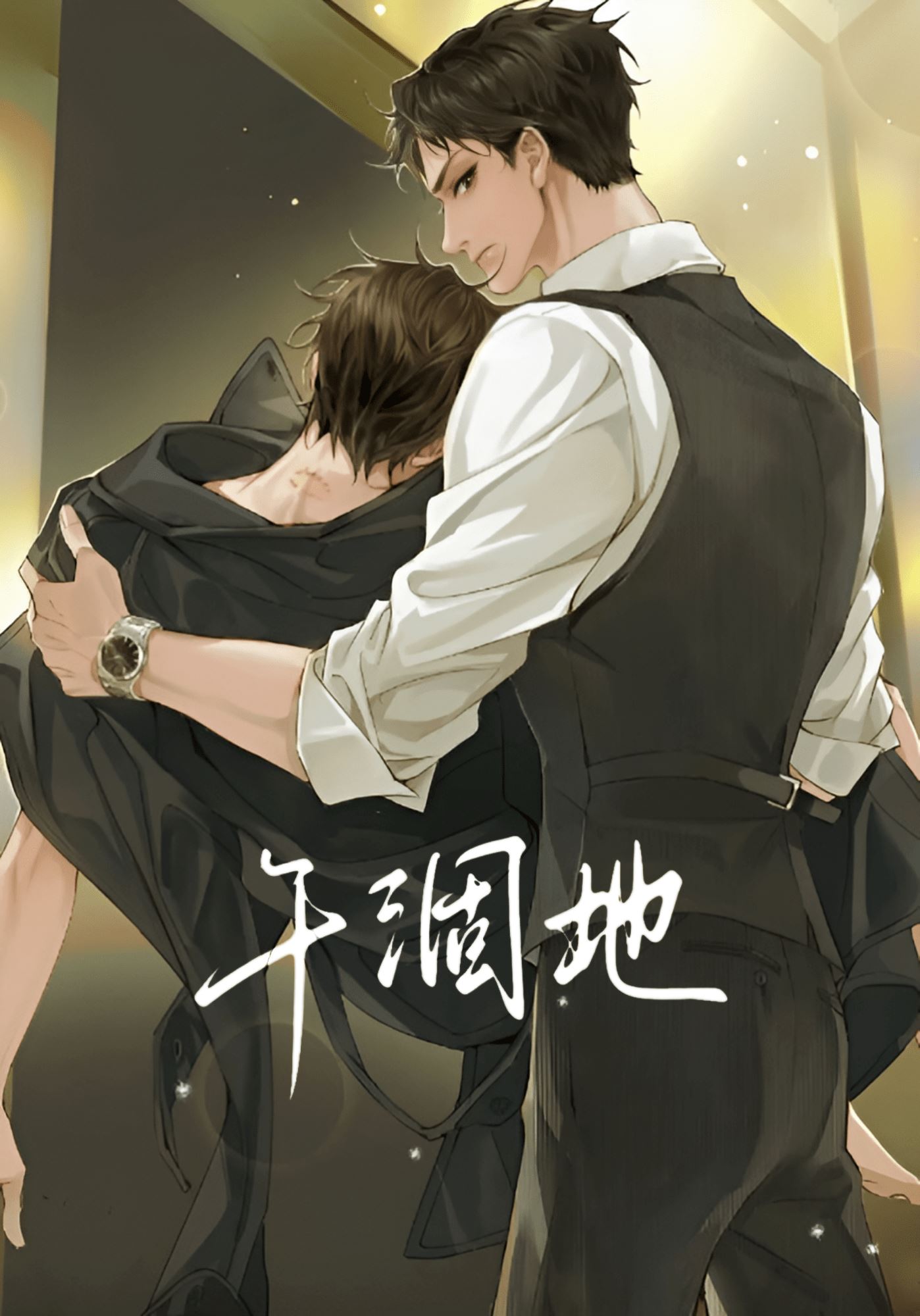
... Read More
Okay I need a moment. Just a moment. Because what happened in these chapters absolutely DESTROYED me and I am not okay. Let's talk about the structure here because the author really played a masterclass in tension escalation. You start with Fu Baiqi confronting Fang Fengzhi—seems like a verbal argument, right? Wrong. It escalates so fast that by the time you realize what's happening, Fang Fengzhi is on the floor with a knife pressed toward the man who supposedly loves him. And then Min Zhi walks in like some kind of deus ex machina except it's not clean at all—it's messy and bloody and every character is falling apart. The most brilliant plot move? Fu Baiqi's lie about Min Zhi liking Alphas. That single line—"His sexual orientation has always been alpha"—completely changes everything. It's either true or it's not, but either way it shatters Fang Fengzhi's hope in real time. And the author doesn't even confirm it! We're left wondering if Min Zhi is actually an Enigma who can't be claimed, or if Fu Baiqi is just manipulating. That ambiguity ischef-level writing. But the real plot bomb is the forced temporary mark scene. An Omega can only be permanently marked once. Fu Baiqi KNOWS this. He KNOWS that covering Min Zhi's mark with his own temporary pheromones means Fang Fengzhi will eventually feel the truth—that Min Zhi's enigma pheromones will fade and his own destined bond will reassert. It's not just violence, it's a calculated psychological strategy. The plot is layered like an onion and I am crying. "Then do you know that I am his legal husband?" — Fu Baiqi dropping this line like a grenade. Because the whole series has been building this tension between destined mates and legal obligation, and here it finally COLLIDES. The police showing up because someone called them beforehand? That's foreshadowing paying off. Someone anticipated this confrontation. My theory? Min Zhi. He came prepared. And I am HERE for it.
... Read More
I need to talk about the pacing of these chapters because the author clearly knows what they're doing. The whole sequence moves at this almost dreamlike speed—you start with the video call tension, then we cut to Min Hezhen opening the door and snapping his dad back to reality, then back to Fang Fengzhi hiding under the quilt, then the son calling his mother through tears, then the younger kids being introduced, then Fang Fengzhi rushing home, the flight delay (small bump in the road!), the midnight arrival, the dark house, the nursery discovery. Each scene transition feels natural, like walking through rooms in a house you know well. There's no rushing, no dragging. The author lets moments breathe—Min Zhi watching Fang Fengzhi on the screen, the sound that makes "a jolt of numbness through the top of Min Zhi's head," the way Min Hezhen tears up and then falls asleep against his father. And that ending? Perfectly paced. Fang Fengzhi unpacks, showers, checks on the babies, moves quietly to the big bed, gets pulled into an embrace, and then—"Goodnight, good boy." The tension dissolves so gently. It's the kind of pacing that makes you close the book and just sit with the feeling for a moment. No cliffhanger, no drama, just this warm exhale. That's mastery.
... Read More
Let's talk about how the author structured this entire sequence as one long, slow-motion emotional climax. We open with Fang Fengzhi telling Min Zhi to wait in the car — immediate signal that this is a solo mission, he's doing this alone. Then we cut to Fu Baiqi emerging from the police station, already physically diminished after fifteen days. The author deliberately makes us see Fang Fengzhi's reaction first: "He didn't know if it was because he's not doing well in the quarantine center or something else, Fu Baiqi lost weight." This is brilliant because it establishes that Fang Fengzhi still cares enough to notice, even as he's trying to leave. The divorce paperwork becomes this grotesque theater — Fu Baiqi deliberately拖延, unable to sign, while Fang Fengzhi signs quickly and decisively. The power dynamic has completely flipped. And then Fang Fengzhi drops the nuclear line: "Please let me go because I have loved you for so many years." He has to use his own confession as a weapon to escape. The image of that water drop hitting the paper before Fu Baiqi realizes it's a tear, and his signature coming out distorted — pure cinematic writing.
... Read More
Let me just say — this section is quietly devastating in the best way. The entire narrative arc here runs on a single pivot: Fang Fengzhi's realization that Fu Baiqi never marked him. That's it. That's the bomb. Everything else — the awkward dinner scenes, the dishwashing moment, the remembered glance from years ago — it all leads to this one detail that changes how we read every interaction between them. What's brilliant is how the author refuses to let us settle into comfort. Just when you think "oh they're actually getting closer," BAM — the kitchen scene happens, and Fang Fengzhi's emotional investment is so visible it hurts, while Fu Baiqi barely registers it as anything more than practical. Then there's the Min Zhi subplot that drops in like a completely different story. The supermarket encounter with the unnamed Omega — that scent description? "A distinct scent—an unfamiliar pheromone that sharply piqued his senses" — and suddenly we're in a whole new narrative lane. Is this person connected to the main couple somehow? The structure here is interesting because it refuses to telegraph its connections. It just drops us into this moment and lets the mystery breathe.
... Read More
The pacing here is absolutely relentless and I respect it so much. Let me trace through it real quick because it's a masterclass in tension escalation. We start in the elevator - tense, hands sweating, hiding from whoever might walk in. Then stairs, full-on kissing against a wall with danger outside the door. Then back to the ward where Fu Baiqi is literally there and Fang Fengzhi has to pretend his swollen lips are from eating cafeteria food. Then a time jump of a WEEK and suddenly Fu Baiqi's being discharged, which means the divorce timeline is now REAL and urgent. Then the lobby meeting where Min Zhi drags him away and bites him again. Each scene is shorter and more intense than the last. The chapter doesn't let you catch your breath. The time jump is the only real breather but even that just raises the stakes because now Fu Baiqi is leaving and Fang Fengzhi has to face the fact that his escape is getting closer but also that he'll have to pretend everything is normal one last time before going back to town. The author knows exactly when to cut and when to linger. Every transition pulls you forward.

Leave a comment

You must be logged in to leave comments. or
