Dry Land - Reviews

Dry Land
+Add to Custom List
Sort
Add review
... Read More
Let me just talk about this one incredible detail that almost got missed: the auntie. Min Zhi has NEVER brought anyone home before. The text says so directly: "It was the first time Min Zhi had brought someone home, and the Omega had even been carried in by him." And the auntie? She immediately shifts her entire demeanor. She's not just a background character who brings food and leaves. She becomes part of the worldbuilding — the living testament that something has changed in Min Zhi's life. When she takes the tray from Fang Fengzhi and says "I'll handle this," it's such a small moment but it carries so much weight. She's essentially telling him: you belong here now. You are another owner of this house. This isn't temporary in her eyes. And the physical space itself — the bedroom where Fang Fengzhi wakes up groggy and sore, the downstairs living room where Min Zhi is working on a laptop like nothing happened, the kitchen with the congee and mushrooms — this is a fully realized domestic space. It's not a hotel, not a clinical medical facility, not some dramatic warehouse. It's someone's actual home. Which makes the entire situation infinitely more intimate and more violating at the same time. The pheromone descriptions are also doing heavy worldbuilding. We get the "aggressive, smoky scent" that makes Fang Fengzhi's body react involuntarily, the way it envelops him, the physiological response. The A/B/O world feels lived-in because the biology actually matters to the plot — it's not just aesthetic flavor. It drives decisions, creates conflict, and generates consequences. This scene had me feeling like I was standing in the doorway watching everything unfold.
... Read More
I need to talk about how this chapter moves because the pacing is genuinely impressive. We go from Fang Fengzhi barely able to get out of bed eating noodles→ Min Zhi suddenly proposing→ they're literally at the registry doing paperwork → hospital confirming pregnancy → deciding to meet the father. That is A LOT of plot in roughly three chapters and somehow it doesn't feel rushed at all. The author is clearly confident enough to let quiet moments breathe. Like the ring scene—Min Zhi pulls out the ring, Fang Fengzhi pushes back saying marriage is a lifelong thing, Min Zhi says 'I know' and then puts the ring on slowly. That single beat of hesitation and then acceptance? Perfect pacing. No need to over-dramatize it. But then they hit the pregnancy reveal and the tempo shifts again. It slows down to this internal, almost paralyzed moment for Fang Fengzhi. 'I'm not ready yet' and then the whole section of him just sitting with that thought, never mentioning it again. That silence is deliberate. The author knows exactly when to let tension simmer without resolving it immediately. And honestly the Fu Baiqi subplot gets dropped in so casually. 'He didn't sue me. We just settled it privately.' ONE LINE. And suddenly we're relieved and confused and curious all at once. That's a masterclass in efficient storytelling.
... Read More
This sequence hits different. You've got Min Zhi stuck in a research facility, undergoing some kind of pheromone purification treatment that's clearly taking a toll on him, while Fang Fengzhi is back home dealing with the fallout of their marked bond — sneaking into his room at night just to sleep in his sheets because he can't reach him. The divergence between what Min Zhi says ('I'll be back soon') and what actually happens is quietly devastating. He keeps delaying, keeps promising, but each call gets weaker. That's not narrative misdirection — that's the story telling you something is seriously wrong without ever saying it outright. Then Fang Fengzhi shows up unannounced at the facility, and the whole emotional architecture of this arc collapses into a single moment. The glass window, the medical equipment, the surveillance cameras — Min Zhi has been hiding the worst of himself, and Fang Fengzhi walks right through it anyway. The confession 'I'll only forgive you once' lands like a hammer because we know there's context we haven't fully seen yet. The 'that day' reference — the失控 incident, the torn reproductive cavity — hangs over every interaction like a ghost. This isn't just a reunion scene; it's a reckoning.
... Read More
There's so much packed into the symbol of marking in these chapters. A permanent mark means forever bonded—inability to separate, to return to anyone else, to live independent of the bond. For Fang Fengzhi, whose previous marriage ended in failure, accepting a permanent mark isn't romance. It's risk. It's the ultimate vulnerability wrapped in biological inevitability. But here's where it gets fascinating: Min Zhi, as an Enigma, CAN mark countless people. The power imbalance is biological, not just emotional. He has the ability to bind forever; Fang Fengzhi, as an omega, can only receive one permanent mark. This means Fang Fengzhi's choice carries more weight—he's spending his one irrevocable bond on someone who could theoretically mark many, while he can only commit once. That's not just love, that's sacrifice. And then there's the inhibitor patch. Min Zhi has been suppressing his pheromones this entire time despite being physically intimate with Fang Fengzhi. What does that symbolize? Self-restraint? Fear of his own nature? Or is he protecting Fang Fengzhi from something he himself can't control? The patch is a mask—and masks in literature always mean something. The chamomile phantom smell Fu Baiqi detects? Could be Min Zhi's territory marking lingers on the premises, a ghost of占有 that Fu Baiqi senses subconsciously even if he can't identify it. The house itself is marked. And Min Zhi's reference to hell—not as metaphor but as literal belief system. He was taught that crossing moral lines leads to damnation. His love is framed as something that costs him his soul. That's not a happy romance framework; that's tragic romance at its core. The story isn't asking whether they'll be together—it's asking whether love justifies damnation.
... Read More
The dialogue in these chapters is basically everyone talking around each other. Fu Baiqi opens his mouth to say 'We…' and gets cut off by his aunt. Fang Fengzhi says 'I'm not angry' when clearly he is. Min Zhi asks 'What's wrong?' and gets 'I miss you a little' instead of the actual answer. And that's the whole book right there. Nobody says what they mean. Except Fang Fengzhi does — that's his thing. He's the only one who blurts out the truth. 'I miss you.' 'Are you happy today?' 'Does it look very familiar?' No filters, no AOI/Beta/Enigma dynamics protecting him, just raw honesty. And it terrifies everyone around him. Fu Baiqi couldn't even finish his sentence. Min Zhi's hand shook. The other characters operate in this world of half-spoken words and forced politeness, and Fang Fengzhi just walks through it saying whatever is actually happening inside him. Which is both the most powerful thing about him and the most tragic. He can't hide even when he wants to. His voice is too honest for this world.
... Read More
The stakes in this chapter are deceptively quiet. There's no battle, no threat of violence, no external force pressing down on Fang Fengzhi. The conflict is entirely internal, and that's what makes it so suffocating. On the surface, the external conflict is simple: Fang Fengzhi's marriage is over because his husband cheated. But the REAL conflict — the one the author is really mining — is about whether Fang Fengzhi can finally stop negotiating with his own pain. For two years he's been trying to make this work. He's been patient, accommodating, reasonable. He waited. He suppressed his needs. He used inhibitors instead of demanding his mate's presence. He swallowed every slight. And what did that get him? A husband who came home to another alpha's scent and immediately thought about his own possessiveness rather than his wife's wellbeing. The moment Fang Fengzhi asks "After we got married, have you done it with others?" — that's not a plea. That's not someone trying to save the relationship. That's someone who has already mourned it. The conflict shifts here from external (will Fu Baiqi change?) to internal (can I accept that he won't?). And the resolution is almost terrifyingly calm: "But at that moment, Fang Fengzhi didn't feel sad. In fact, he found that the sadness seemed almost trivial. It was as if a weight had been lifted off his chest, and he couldn't help but breathe a sigh of relief." Relief. Not devastation. Not anger. Relief. That's the highest stake in this entire story — not whether Fang Fengzhi will leave, but whether he'll be able to stop blaming himself for the marriage's failure. He's spent two years believing that if he just tried harder, waited longer, was more understanding, Fu Baiqi would finally choose him. The conflict was never about Fu Baiqi. It was always about Fang Fengzhi's ability to forgive himself for being abandoned. When he says "Let's go to the Civil Affairs Bureau sometime," the stakes have never been clearer: this isn't about punishing Fu Baiqi. It's about Fang Fengzhi finally choosing himself. And that's infinitely scarier than any external conflict could be.
... Read More
What the author has done here is absolutely diabolical. Let me break down the layers of stakes because there are SO MANY and they all threaten to destroy someone. First layer: Fang Fengzhi's body. His inhibitor stopped working. The doctor told him he can't conceive. If he goes through this heat unassisted, his body might suffer serious damage. He's literally fighting for physical survival right now. And he refuses Min Zhi's help because 'Baiqi will find out.' So he'd rather risk permanent bodily harm than betray his mate. That's not devotion—that's tragic self-annihilation, and I am HERE for it. Second layer: Min Zhi's control. This Alpha has been holding himself together with inhibitors and sheer willpower. We see it in his clenched teeth, his furrowed brow, the way he counts seconds like two minutes is an eternity he's barely surviving. If he marks Fang Fengzhi now, it's done. Permanent bond, permanent consequences, permanent mess. He's standing on a ledge and every instinct is telling him to jump. Third layer: Fu Baiqi. 'Hello?' 'I know.' Those two exchanges are COLD. This man knows something is wrong, knows Fang Fengzhi called him during heat, and his response is basically... nothing? The author hasn't revealed why Fu Baiqi isn't there, but that silence is louder than any explanation. Whatever the reason, it's clearly catastrophic. The infertility angle is the nuclear option the author keeps bringing up. 'You won't be able to conceive'—but also, if he DOES get marked by the wrong Alpha during this vulnerable state, what happens? The biology in this world is weaponized against everyone. Every choice is a trap. Every path leads to loss. That's why I couldn't look away. This isn't just spicy tension—it's genuinely harrowing. And Fu Baiqi's final 'I know'... what does he know? That his mate is in heat with another Alpha? That the heat was forced? I need to know so bad it physically hurts.
... Read More
I need to talk about the car scene because my entire nervous system is still recovering from it. Fang Fengzhi in heat, half-conscious, turns his face toward Min Zhi while he's driving and starts sniffing his neck like a dog. A DOG. The author writes "like a puppy" and I'm sitting here like—yes, exactly like a puppy, that's the most accurate description of romantic desperation I've ever read. Fang Fengzhi's earlobe gets bitten, he moves impatiently, he's searching for Min Zhi's lips in a daze. And Min Zhi—Min Zhi DOESN'T MOVE. He just waits. He waits for the Omega to find him. That's not dominance, that's devotion wrapped in restraint. When Fang Fengzhi finally presses his nose against Min Zhi's and their noses get all squished and deformed, and then Min Zhi just opens his mouth and lets the Omega suck on his lower lip like it's the most natural thing in the world—bro. I am not okay. The author describes it as "the primitive way animals express their love, licking and sucking" and somehow that makes it even more heartbreaking because it strips away all the civility and sophistication and leaves only raw need. And then the ring happens. The moment shatters. Min Zhi goes from tender to ice-cold in one breath, and Fang Fengzhi is crying before he even understands why. The emotional whiplash in this chapter is absolutely insane.
... Read More
Min Zhi says the name three times in this chapter. Three times. Each one means something different. The first time it's on the phone—just the name, no greeting, no softening. "Fang Fengzhi." Raw, like he's testing whether the name still fits in his mouth. The second time is in person, when he grabs his arm and the Omega flinches. And the third—"Fang Fengzhi, sober up a bit"—that one breaks me every single time because it's gentle. It's the first time Min Zhi uses anything other than command. Here's what I can't stop thinking about: Fang Fengzhi doesn't recognize him at first. His pupils are unfocused, his brain is drowning in pheromones and inhibitor damage, and the person standing over him is someone whose scent he finds uncomfortable. An Omega who has been marked should be obsessed with their mate's pheromones and repelled by all others—and Min Zhi's scent is making him nauseous. But still, he crawls toward him anyway. Still reaches for the抑制剂 drawer even while tied down. Still whispers "Mr. Min" through tears. This isn't gratitude. This isn't romantic longing. This is a creature reaching for the nearest solid thing in a drowning world. And Min Zhi—he ties his wrists. He holds him down. He watches him cry and looks away because if he looks too long he'll lose control. Is he the rescuer or the captor in this moment? The book won't tell you, and thank god it won't, because the answer is probably both.
... Read More
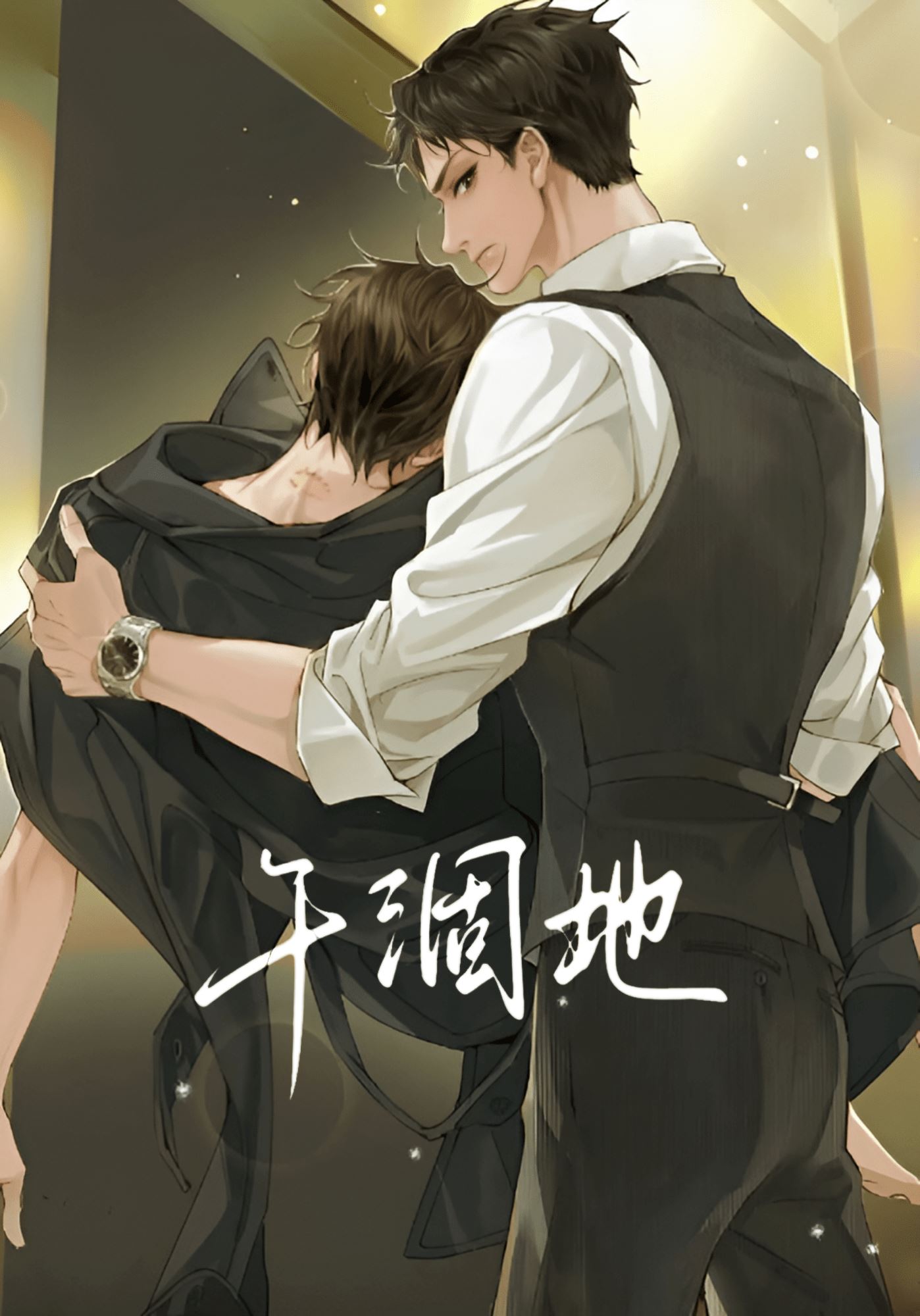
I need to talk about Fu Baiqi because this chapter completely reframes everything I thought I knew about him. Up until now, I've been reading him as this cold, arrogant Alpha who treats his Omega like furniture. Delete "wife" and move on—classic toxic husband energy. But then watch what happens when Fang Fengzhi is in actual danger. Fu Baiqi doesn't hesitate for a single second. He appears, he marks, he terrifies every other Alpha within a mile radius. And the most disturbing part? He does it while Fang Fengzhi is already traumatized, vulnerable, barely conscious. The text says something that haunts me: "He was marked. The person behind him didn't let him go and bit that place tightly. Pheromones continuously rushed to every part of the body, causing both pain and pleasure." This is possessive. This is ownership. Is this love? Is this protection? Or is it something darker that Fu Baiqi himself might not even understand? I think the author is deliberately blurring these lines. Fu Baiqi told Min Zhi that Fang Fengzhi is "not his wife but just someone who lived in his place"—yet he risked everything, showed up at the worst moment, and permanently bonded to an Omega he claims means nothing to him. The contradiction is GLARING. Now let's talk about Fang Fengzhi. This chapter breaks me. He's not some stoic sufferer—he's terrified, his hands are shaking, he's crying, and he's smart enough to know exactly what's about to happen to him. When the Alphas close in, his thought is: "This kind of thing can only be considered bad luck for him." Bad luck. Not injustice. Not fate. Just... bad luck. That resignation is heartbreaking. And Min Zhi! Oh, Min Zhi is so interesting right now. He's sick, feverish, already compromised—and still observant enough to notice Fang Fengzhi's pheromones from fifty meters away. He follows him, watches the predatory Alphas staring, and... does nothing. Not because he doesn't care, I think, but because he's conflicted. The text says: "It wasn't necessarily a mating instinct; perhaps he was just too sensitive to the Omega's pheromones." Too sensitive. That word choice is doing so much work. Min Zhi is drawn to Fang Fengzhi but also repulsed by his own attraction. Meanwhile, Fu Baiqi has no such conflict—he acts on pure, violent instinct. The relationship triangle is about to explode, and I am here for it.
... Read More
I need to talk about Min Zhi because this man is absolutely terrifying and I am HERE for it. Let's look at the dynamics here. Fang Fengzhi is the one who got cheated on by Fu Baiqi, yet somehow he's the one being gaslit in his current relationship. Min Zhi looks at him and says essentially: "You cheated on your ex, I'm worried you'll cheat on me too." Bro. You literally rebuilt your entire life around this man after he was wronged. And now Min Zhi is projecting his own trauma onto Fang Fengzhi like it's a prophecy. But here's what broke me: Fang Fengzhi's realization that Min Zhi's love is actually a cage. He steps BACK from Min Zhi. He physically retreats. After everything—the marriage, the child, the marked bond—he's looking at this man and seeing a spider who wove an incredibly patient web. The scene where Fang Fengzhi remembers all those moments through new eyes: the anxious marking, the rushed ring, the intensity. Things that seemed like passion now read as PREPARATION. And Fu Baiqi? Oh, tragic old Fu Baiqi. Walking around with recovered glands, still keeping that old ring in his drawer, seeing Fang Fengzhi with a NEW ring and a CHILD that looks like Min Zhi, and he can't even speak. He wanted a child to tie Fang Fengzhi down the same way. The irony is absolutely suffocating.
... Read More
"I was afraid you'd choose someone else." I have read this sentence approximately forty-seven times now and I am still not over it. Like, on one hand, yes, locking someone up and taking them to a prison to visit through glass is wildly problematic behavior. But on the other hand, the sheer raw trembling honesty of that admission?? The way Min Zhi says it while sitting wrapped in bandages, knowing he's being judged, knowing he's trapped, and just... letting it all hang out. That's not manipulation. That's someone who has completely lost their mind over love and is too exhausted to pretend otherwise. What killed me was the contrast between Fang Fengzhi's reaction and Min Zhi's devastation. Fang Fengzhi actually tries to be understanding. He says things like 'We can take it slow' and 'We were fine before, weren't we?' He's sitting there, still wearing the ring despite everything, still trying to hold onto the good parts of this relationship while facing the fact that his partner has become a stranger. The ring detail absolutely destroyed me. He doesn't take it off until he's forced to by Xu Wen, and then he hands it over like it's the only language left between them. And Min Zhi—oh god, Min Zhi. When he asks 'You don't like the ring?' with that soft, hurt tone... he sounds like a wounded animal. Not a villain. A wounded animal that happened to kidnap someone and lock them in a house. The complexity here is insane. He's clearly sick—literally and mentally—and his illness is warping every impulse into something obsessive and controlling. But beneath all that damage, there's this terrified little voice saying 'please don't leave me, please don't choose anyone else.' The scene where he presses his hand against the glass like he's trying to reach through it to touch Fang Fengzhi's? I'm not okay. That gesture is so devastatingly tender coming from someone who just committed what could fairly be called kidnapping. The emotional whiplash of reading this is something else entirely.

Leave a comment

You must be logged in to leave comments. or
