Dry Land - Reviews

Dry Land
+Add to Custom List
Sort
Add review
... Read More
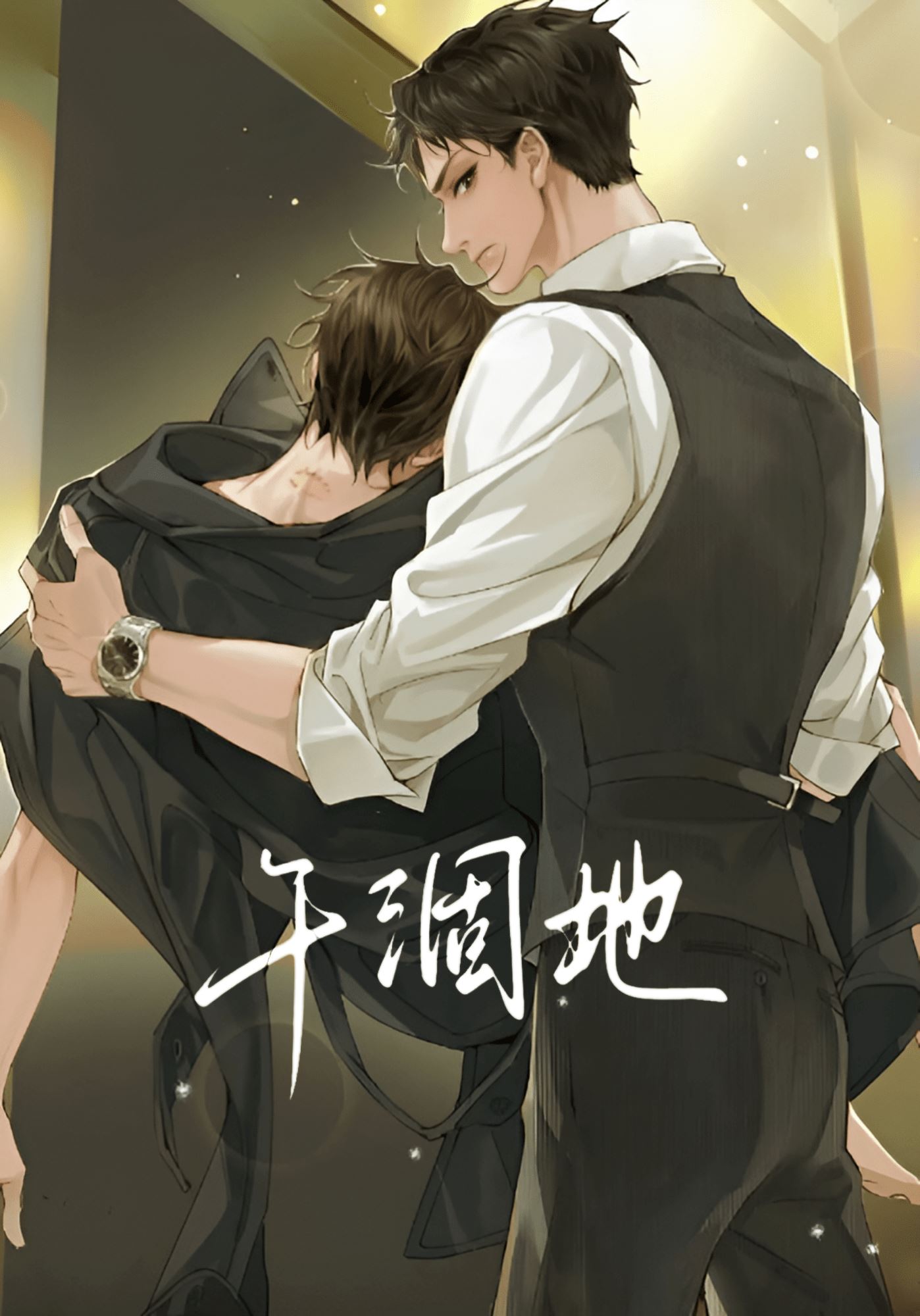
"each one barely audible, as if the Omega was trying hard to hide them, letting the sound escape only after it had been buried deep inside." I need to sit with this sentence for a moment. Just sit with it. This is not a person who is allowed to fall apart openly. This is a person whose entire existence has been trained to minimize their pain, to make themselves smaller, to apologize for taking up space even when they are literally dissolving inside. Fang Fengzhi didn't choose to cry in Min Zhi's arms because he wanted to—he chose it because for the first time in his married life, someone held him like he was something precious instead of something tolerable. And Min Zhi's response? No words. Just a full embrace, wrapping around someone so small his arms could almost enclose him entirely. The author wrote: "unless someone looked directly at them, they wouldn't even realize he was holding someone." That line destroyed me. It's the same fragility Fang Fengzhi has been carrying his whole life—the kind of smallness that comes from being treated like you don't take up enough space to matter. But then—and this is the part I can't recover from—Fang Fengzhi pulls away himself. He sees the wet spot on Min Zhi's chest and apologizes. He wipes his own tears before Min Zhi can. He creates distance before anyone can offer closeness. This is a person who has never once been held without condition, so when it finally happens, his instinct is to flee. Meanwhile, across town, Fu Baiqi is deleting messages from the same person and telling himself it was just a resemblance, just a passing thought. Meanwhile, Bai Zhen is leaning on his arm complaining about people being around, completely oblivious to the fact that his alpha husband is watching the rearview mirror with something that looks uncomfortably like guilt. The emotional geometry in this chapter is so cruel I can barely look at it.
... Read More
What strikes me most is how little anyone actually says in this entire passage. Min Zhi asks the auntie 'Is everything alright?' and that's pretty much it for direct dialogue. The rest is all body language, internal monologue, and actions that speak louder than words ever could. 'Still feeling uncomfortable?'—just three words, but they carry so much weight because Min Zhi is usually so guarded with his emotions. And Fang Fengzhi's muffled whimpers, the sounds he makes when he can't speak properly? Those become almost like dialogue themselves. The narrative voice here is incredibly tight, staying close to whatever character we're following and never breaking away. When we're with Fang Fengzhi, it's all feverish desperation and sensory overload. When we're with Min Zhi, it's controlled observation cracking under pressure. The author's voice shapes everything without ever drawing attention to itself. Even the single line 'He shouldn't have gone outside Fang Fengzhi's door' hits like a punch because it's stated as fact, not as a character's thought. That economical style—saying the minimum necessary to convey maximum emotion—is exactly why this works. You can feel the author trusting the reader to fill in the blanks.
... Read More
'He turned off the phone in disappointment and turned it on again a few seconds later.' I need a minute. That sentence is doing so much work. He doesn't trust that he'll reach Fu Baiqi, so he refreshes the contact list immediately. Not hope—habit. Years of learning that the people you love might not answer, but you call anyway. And then Bai Zhen picks up, and Fang Fengzhi HANGS UP. Not because he doesn't want help. Because accepting help from anyone other than his husband means admitting that his husband isn't there. The tears aren't from the sprain. He explicitly thinks: "He felt sorrow, no matter the reason." The physical pain is real, the heat is real, but underneath all of it is this hollow ache of being alone in your own home, surrounded by your things, while the person who should be holding you is miles away. And he's an Omega whose body is literally making him vulnerable right now, when he needs his mate most. The biology and the emotion are tangled together so tightly you can't pull them apart. Meanwhile Min Zhi is in the stairwell smoking cigarettes like a man trying to breathe through guilt. He tells himself he's fine, that he made the right choice leaving, that Fang Fengzhi already has an Alpha. But he stayed at his brother's place overnight, and the next morning he notices the bandage immediately. Of course he notices. He was the one who caused the problem, and he's watching the aftermath from three feet away in the elevator, saying nothing. "If this continued, what would happen if he suddenly went into heat in a public place?" Fang Fengzhi's worry isn't about pain or shame—it's about burdening strangers. Even broken, he's thinking about not being a inconvenience. That's the kind of emotional detail that sticks with you.
... Read More
The dialogue in this batch is genuinely outstanding and I have to talk about Min Zhi's voice specifically because it's so distinctive. He has this way of being simultaneously soft and razor-sharp, and it comes through in every line. "Did you have fun going out today?" — that opening line is so casual, so domestic, and it immediately establishes their dynamic without any exposition. Then later: "Why didn't you call me?" Simple. Three words. But the way it lands after Fang Fengzhi's silence says everything about Min Zhi's patience wearing thin. And then the verbal sparring match when Fang Fengzhi says 'you don't understand' and Min Zhi responds with 'How should I understand?' — that's not just dialogue, that's power shifting in real time. The author gives Min Zhi this blunt, almost abrasive way of speaking that cuts through all the emotional bullshit, and Fang Fengzhi's responses are all these fragmented whispers and deflections. Their voices are completely different and it makes every exchange crackle.
... Read More
Okay so Fang Fengzhi drops this bomb about wanting a divorce and Fu Baiqi just... stammers? Like, this is the guy who literally throws away his inhibitor, gets manhandled into a marking, pushes Fang Fengzhi to the ground bleeding, and then when the actual conversation they've been circling for chapters comes up, he says "let's talk about it later"??? The plot thickness here is delicious. It's not that Fu Baiqi doesn't want a divorce — he WANTED Fang Fengzhi to bring it up first, right? He was literally waiting for it. But now that it's on the table, something in him can't commit. And the thing that triggers this whole cascade is a mother faking illness as some kind of pheromone enforcement mechanism. Classic manipulative move and Fu Baiqi sees right through it but goes along anyway. Then there's this Min Zhi subplot that quietly sneaks in — a boss getting bothered by a colleague's scent to the point of disrupting a board meeting. That's not a throwaway scene, trust me. The author is weaving three separate tension lines here: the marriage cracking, the mother's interference, and this new obsession brewing at work. All converging around Fu Baiqi's body literally betraying his stated intentions.
... Read More
Okay so let me just say — Min Zhi is one of the most fascinating pieces of writing in this entire novel and I need everyone to understand how complex he is. The guy literally shoves an Omega out of a room because he almost lost control, locks himself in, and stands there with a vein throb at his temple like he's mourning his own failure. And then the next morning he can't even look at the housekeeper directly, just takes the breakfast tray himself like some kind of guilty ghost. This isn't a guy who's proud of what almost happened. He's ashamed. But here's what gets me — he DID do some things. The text literally says he made Fang Fengzhi throw himself into Min Zhi's arms, made him touch Min Zhi, and yes — played Fu Baiqi's voice to shatter whatever dignity Fang Fengzhi had left. 'Trampling on Fang Fengzhi's sense of shame.' The author doesn't mince words about this. And yet Min Zhi himself can't explain WHY he did it. 'Several times, he couldn't understand why he had acted this way as well.' He's genuinely confused by his own behavior. Then he reveals he's an ENIGMA. The Empire's most elite, most perilous, most violently dominant existence. And Fang Fengzhi is already marked by him. The power imbalance is SO extreme it makes my head spin. Who even IS this character? Is he a predator? A victim of his own biology? Both? The text keeps pulling in contradictory directions and I'm obsessed.
... Read More
Okay so the author puts a TWO-MINUTE PAUSE in the middle of a sex scene and I am SCREAMING. Let me explain why this is masterful pacing because most writers would just rush through it. The chapter starts IN MEDIO RES—Fang Fengzhi already tied to the bed, already in crisis, already saying 'Mr. Min, help me.' No warm-up, no setup, just THUD, you're in it. That's aggressive storytelling and it works because the reader has no choice but to accelerate along with Fang Fengzhi's panic. Then we get these mini-arcs within the chapter: Min Zhi refuses → Min Zhi relents (the untying) → Min Zhi hesitates again (the kiss, the confusion about the mole) → Min Zhi offers the temporary mark → Fang Fengzhi refuses → Min Zhi suggests calling the doctor → Fang Fengzhi calls Fu Baiqi instead. That's SIX turning points in roughly 1000 words. The chapter doesn't breathe but it also doesn't rush—it HURRIES with purpose. The longest moment is that two-minute silence after Fang Fengzhi grabs Min Zhi's wrist. 'For the next two minutes, Min Zhi did not make any movement.' The author stretches time itself. We're in Fang Fengzhi's head—heart racing, blood flowing faster, the inhibitor struggling—and then Min Zhi's head, equally chaotic. The prose slows to a crawl right when the tension should peak. It's counterintuitive and it's brilliant. The ending is a CLIFFHANGER disguised as a phone call. 'Fu Baiqi didn't...' The chapter cuts off mid-sentence, mid-reaction. We don't get Fu Baiqi's response. We don't get Fang Fengzhi's face. We don't get Min Zhi's. Just the raw beginning of another Alpha's voice on the other end and absolute uncertainty about what comes next. The pacing here is basically a heartbeat monitor—spiking, flatlining, spiking again. And I couldn't close the app.
... Read More
This chapter structure is SO smart. You go from the raw, visceral, near-violent confrontation in the bedroom — Min Zhi slamming the door, locked in, vein throbbing — and then suddenly you're in a sterile government research facility having a bureaucratic conversation about pheromone levels. The tonal whiplash is intentional and it WORKS. The pacing of the facility scene specifically is masterful. It starts clinical — 'Mr. Min, your normal physical examination should be in three days' — dry, procedural, almost funny in how bureaucratic it is. Then Min Zhi drops 'I recently marked an Omega' and the WHOLE energy shifts. The recorder and the person in charge both react. The narrative slow down right there, like the author wants us to feel the weight of that confession landing in a room full of officials who already have Min Zhi filed under 'Dangerous Entity #1.' And then the most important question: 'Do you want to mark him completely?' And Min Zhi says no. But the pause — 'This time, Min Zhi paused for a few seconds, as if thinking' — that pause is EVERYTHING. He's considering it. He just won't admit it out loud. The chapter ends with Min Zhi driving back to the villa, clutching that small bottle of pheromone extract, and Fang Fengzhi appearing at the door. The setup for the next confrontation is perfect.
... Read More
"During the period when the mark does not disappear, you can ask me for anything." A mark that doesn't disappear. Pheromone dependency that intensifies rather than fades. An inhibitor that Min Zhi administers without asking. These aren't just plot mechanics—they're symbols for something much darker about power, consent, and dependency. The mark itself is the central symbol here. It's supposed to be a bond, a承诺, a binding. But Fang Fengzhi's reaction to it is shame, not joy. He feels obligated to Min Zhi, not connected. And Min Zhi's response—offering pheromones as duty rather than affection—turns what should be intimacy into a transaction. You are marked. Therefore I must provide. Therefore you must accept. The language of care and the language of control are indistinguishable in this dynamic. The inhibitor is equally loaded. It's presented as relief—Fang Fengzhi's body is burning, and the syringe brings temporary peace. But who controls the inhibitor? Min Zhi. When is it administered? When Fang Fengzhi is vulnerable, disoriented, guilty. The tool that should protect an Omega from his own biology is instead a mechanism of dependency. Then there's Fu Baiqi's pheromone on Fang Fengzhi's skin, noticed by Min Zhi, triggering a possessive response. The scent itself becomes a symbol of betrayal—proof that Fang Fengzhi belongs to another, that his body carries traces of his marriage even as he submits to someone else. "He still couldn't control his urge to speculate." Fu Baiqi knows something is wrong but refuses to act on it. His denial is its own kind of cruelty. Destiny. Binding. Duty. These are the words the text keeps circling back to, and none of them mean freedom.
... Read More
I keep coming back to one question: what was Fang Fengzhi actually risking here? Sure, his husband found out. Sure, there's shame and guilt and all that. But the real stakes are deeper than betrayal. The text makes this clear when it mentions Infendone—the synthesized anesthetic derived from exactly this kind of pheromone concentration. The author is telling us that this isn't just about emotional consequences. It's about PHYSICAL survival. Fang Fengzhi could have died. Not metaphorically died—actually died from overstimulation, from his body shutting down under the weight of pleasure that became pain that became fatal. And Min Zhi? He knew that risk. The text says his canines 'itched with urgency'—that's not romantic tension, that's predatory instinct fighting against something closer to care. The conflict here isn't between two men or even between loyalty and desire. It's between agency and biology. Fang Fengzhi made a choice to go to Min Zhi, but once he was there, his body made all the choices for him. The pheromones didn't ask permission. They flooded his system and overrode everything—his shame, his love for his husband, his rational self-preservation. And the worst part? Min Zhi held him through it. He didn't stop. He couldn't. The research facility extracts these substances for pharmaceutical use because the effects are too potent to leave natural. That's the stakes. Not heartbreak. Not divorce. Mortality. The author built an entire ecosystem where intimacy equals danger and vulnerability equals death. That's not romance—that's horror wearing a lover's face.
... Read More
Okay. Let me just say this: the entire emotional weight of these chapters rests on ONE moment. Not a confession. Not a grand gesture. Two people standing in a kitchen, arguing over who washes the dishes. Fu Baiqi picks up an apron. "I'll do the dishes." And Fang Fengzhi—this man who has apparently spent their entire marriage being ignored—stammers out "N-No need…" like he's been handed something priceless. His voice lacks confidence. He's genuinely flustered. Because in his entire experience with Fu Baiqi, has this moment of domestic normalcy EVER happened? And then the physical touch: "the spot where Fu Baiqi had touched him was faintly warm." I actually had to reread that line three times. That is the most devastating sentence ever written about two people who don't yet understand what they're doing to each other. The dinner scene earlier sets this up perfectly too — Fang Fengzhi placing food in Fu Baiqi's bowl, his whole body tense, and Fu Baiqi actually EATING IT. For someone who'd never eaten food Fang Fengzhi offered before, this is basically a love letter. And we're supposed to be fine with this? Because the next chapter presumably introduces a mysterious Omega at a supermarket who absolutely WILL make us feel things?
... Read More
Okay so this whole arc is basically a house of cards and I am HERE for it. You've got Min Zhi pining after his married coworker while completely unaware that the person he's obsessing over is already taken—AND that husband is right there in the same scene, being mistreated, and Min Zhi doesn't even connect the dots? The dramatic irony is THICK. But then you flip to Fang Fengzhi's POV and WHAM—the reader already knew, but HE finally knows too. That moment when he looks at the spoiled breakfast and just... throws it away? I literally sat there with my mouth open. The plot isn't just about one affair either—it's layered. There's Min Zhi's secret crush, Fu Baiqi's double life, Fang Fengzhi's silent suffering, and Bai Zhen showing up like a ghost from the past demanding everything back. It's not even a love triangle anymore, it's like a fucking knot. And the worst part? Fu Baiqi never once denied he had someone outside. He just made excuses about 'colleagues' for months. That's not miscommunication—that's calculated. Also, I need to talk about that ending where Fang Fengzhi's mother calls and he's trying to act normal. We're left hanging on literally the most tense moment possible. What is she calling about? Is something happening? I swear the author knows exactly how to torture readers.

Leave a comment

You must be logged in to leave comments. or
