Dog on the Hutch - Reviews

Dog on the Hutch
+Add to Custom List
Sort
Add review
... Read More
I need to talk about Director Yeon because this man is genuinely terrifying and I am here for it. Like, think about his energy. He catches his omega trying to hide something behind a closed door, asks a loaded question about “another alpha,” then when Jung Heeyeon gets visibly upset, he immediately backpedals with a fake apology and presses kisses to his brow. That's not remorse, friends. That's manipulation disguised as affection. And yet somehow it works because the subtext is screaming: he doesn't actually doubt him. He wants to hear him say it. He wants Jung Heeyeon to reassure him out loud that he's the only one. And the omega does exactly that: “You're the only one I have. You can't talk about other alphas.” Perfect. Case closed. But here's where it gets interesting—the power dynamic shifts right after. Jung Heeyeon becomes the one setting boundaries. “Yes. You can't open the door. If you do, I'll stop sleeping with you and stay in the guest room.” Director Yeon's response? “Got it. I won't open the door.” The most dangerous alpha in the room just got told no and he accepted it. That's not submission. That's trust. That's the relationship actually working. And Jung Heeyeon's decision to wait before biting again? That's not weakness. That's him taking responsibility for his own body and his own abilities. He's saying “I want to do this right, I want to make sure it doesn't hurt you,” which is genuinely sweet when you think about it. He's learning to control his pheromones not just for himself but for his partner. These two are built different. The way Yeon watches him after intimacy—still possessive, still calculating, still watching that door—versus the way Heeyeon nestles into his chest like he belongs there. Both real. Both committed. Both holding pieces of each other hostage in the healthiest way possible.
... Read More
Okay, I need to just sit with this scene for a moment because the way Director Yeon strips off his suit jacket and hands it to Heeyeon—like it's nothing, like he's just getting undressed at home—while Heeyeon is standing there flustered and blushing? I am NOT okay. This man has the most devastating way of showing affection that isn't even sexual at all and yet it's somehow the most intimate thing ever. "It's because my Heeyeon here treats my clothes like a security blanket"—and then he just takes it off and gives it to him like it's the most natural thing in the world. He knows. He absolutely knows what this means to Heeyeon and he does it anyway. And then the eyelid kiss. THE EYELID KISS. Who does that?! Who kisses their partner's eyelids when they're about to walk into a police interrogation and just… no. I'm dead. The warmth and pheromones still clinging to the jacket when Heeyeon goes back to that enormous empty bed is honestly the most heartbreaking detail in this entire chapter. He never feared loneliness before but now the bed feels cold and empty—that line hit me like a truck. This man built his entire life around not needing anyone and now he can't sleep without the person who's literally been arrested. The contrast between how composed Yeon appears in front of the detective and how vulnerable he is with Heeyeon is just *chef's kiss*.
... Read More
One line in this chapter has been living in my head on loop: "You're the one who raised me like a fighting dog, Chairman Jung. But I guess your age is really catching up to you… You've forgotten, haven't you?" This is SO much richer than it appears on the surface. Chairman Jung raised Director Yeon as a weapon—a tool for violence, something to be unleashed and controlled. The fighting dog metaphor isn't just an insult; it's the entire history of their relationship compressed into two sentences. Jung trained him to bite, to never let go, to be cruel without hesitation. And yet—the irony is staggering. Yeon became exactly what Jung wanted him to be, and then TURNED THAT Violence toward protecting someone Jung tried to harm. The fighting dog learned to fight for love instead of for his master. That's not betrayal, that's evolution. Then there's the pheromone symbolism running through the whole chapter. Pheromones here represent both CONTROL and INTIMACY. Chairman Jung used pheromones as a weapon—to incapacitate, to dominate, to mark territory. Director Yeon uses them as comfort, as medicine, as a way to say "you're safe now" without words. Same mechanism, opposite intent. The chapter is basically asking: what happens when the weapon decides to become a shield? And Heeyeon's damaged pheromone glands? That's the ultimate symbol of what Jung tried to do—destroy the very thing that makes Heeyeon who he is, so that Yeon would "throw him away." The assumption that love is conditional on utility. That's the real horror beneath all the blood and marble.
... Read More
Okay I need to talk about this chapter because wow. The way the author set up that entire dream sequence was BRILLIANT and I am still recovering. It starts so innocently—Director Yeon picking him up, the line "Let's go home" which is supposed to be warm and comforting, and then BAM you're right there in Heeyeon's head having the most intensely intimate dream about him. And the twist isn't even that he had the dream, it's what happens AFTER. Most authors would just have a cute morning-after moment but NO, we get Heeyeon spiraling for an entire night. The guilt he feels toward the director is what makes this plot point so much richer than a typical smut-adjacent scene. He isn't just embarrassed, he feels like he betrayed someone by wanting something. And then the birthday reveal—turns twenty today!—it reframes everything. This isn't just a random heat thing, this is coming-of-age territory, and the fact that the same day he enters adulthood is the day his body and mind start rebelling against everything he's been taught about what an omega should feel? Chef's kiss.
... Read More
This chapter is a masterclass in how to build tension without ever raising your voice. Let me break it down. It starts slow — the dim hallway, the quiet footsteps, the suspenseful doors. You're walking WITH Jung Heeyeon, experiencing the unease in real time. Then the reveal: the glass room, the city, Lee Haejin on the phone. Immediate shift from atmospheric dread to political intrigue. The pacing accelerates naturally because the stakes just appeared on screen. What I love is how the author weaves exposition into dialogue. We're not getting a Info Dump about the media war — we're getting it through Jung Heeyeon asking questions and the others answering. He plays the audience surrogate perfectly. "I don't understand why you'd buy him off" — yes, tell me why, because I genuinely want to know. The structure moves like a conversation: arrival → greeting → business → revelation → personal moment → cliffhanger. But it never feels formulaic because each beat serves a different purpose. The hallway builds mood. The meeting builds plot. The Nam Soohyun question builds character dynamics. And that final door crack at the end? Classic. Just enough to make you open the next chapter immediately. If anything, I wish the transition from business talk back to personal territory felt even smoother, but the strawberry latte moment bridges it well enough. Solid chapter work.
... Read More
The imagery in this section is going to stick with me for days. The snow falling outside the window while Heeyeon presses his forehead against the cold glass—that visual alone tells you everything about his emotional state without a single internal monologue. You can feel the chill seeping into his skin, and it mirrors that emotional coldness he's trying to hide inside himself. But then the director makes him tteokguk (rice cake soup)! The description of the broth alone made my mouth water—milky white, with perfectly arranged egg strips and carrots and green onions. There's something so domestic and soft about it. The whole worldbuilding around the alpha/omega hierarchy is woven into these scenes naturally. The concept of the hutch suspension, the suppressants, the butler's teachings, calling someone a 'mutt'—all of it lives in the background while the characters just exist in their spaces. I love that the author trusts us to understand the weight of these concepts without spelling everything out. The car scene, the bedroom, the kitchen—each location carries emotional meaning.
... Read More
Let me just say that the pacing in these chapters is absolutely masterful and I want to discuss why it works so well. The author starts with what seems like a completely ordinary scene—two people sitting at a table eating porridge. Nothing dramatic happening, just casual conversation about pheromones and whether Jung Heeyeon is sick. It feels slow, almost mundane, and I caught myself thinking maybe this was just a breathing space between bigger events. But then the author slowly peels back layers. First Nam Soohyun notices the pheromone issue. Then she brings up the word baby and Director Yeon. Then she reveals she orchestrated the whole operation. Then twenty years of backstory drops in a single paragraph. By the time we reach the end of this chapter, we've gone from a breakfast scene to learning that everyone in this story has been traumatized by the same monster, and Director Yeon is deliberately using an omega as a weapon against his own grandfather. The transition from the intimate dining table to the massive revelation about Chairman Jung's past as a human loan shark happens so smoothly that I didn't even notice I was being pulled into deeper territory. And that ending—Nam Soohyun telling Jung Heeyeon he should learn to control his pheromones because they're leaking, and then the chapter cuts off mid-sentence? The cliffhanger is doing exactly what it should be doing. It's making me immediately open the next chapter. The author knows how to control reader engagement by starting small and escalating without ever losing the emotional thread.
... Read More
"Out, lights floated along the black horizon, where darkness and ocean merged." I'm just sitting here with this image and I can't stop thinking about it. It's so perfect. This novel has this incredible ability to paint scenes that feel almost cinematic. The whole chapter opens with this stark, cold imagery—Director Yeon leaning against something, gazing at a night sea that's basically just darkness swallowing everything. And those lights on the horizon? Tiny, distant, almost unreachable. It perfectly mirrors Yeon's own position: surrounded by power and wealth but emotionally frozen, stuck between revenge and something he can't name yet. And then the contrast with Heeyeon—he's been trapped in a house with solid walls his entire life, never seeing the outside world, never experiencing anything beyond those four walls. The ocean scene becomes almost symbolic. Heeyeon gazing at the endless sea for the first time in his life while Yeon watches him watch it. Two people, both imprisoned in their own ways, one physically and one psychologically. The car scene is also brilliant. Yeon cracking the window because Heeyeon's dominant omega pheromones are spilling out uncontrollably. The cold winter air cutting through the warm car. It's such a visceral, sensory detail that makes the whole situation feel immediate and real. You can almost feel that sharp wind yourself. I love how the author uses the environment to reflect character psychology without ever being heavy-handed about it.
... Read More
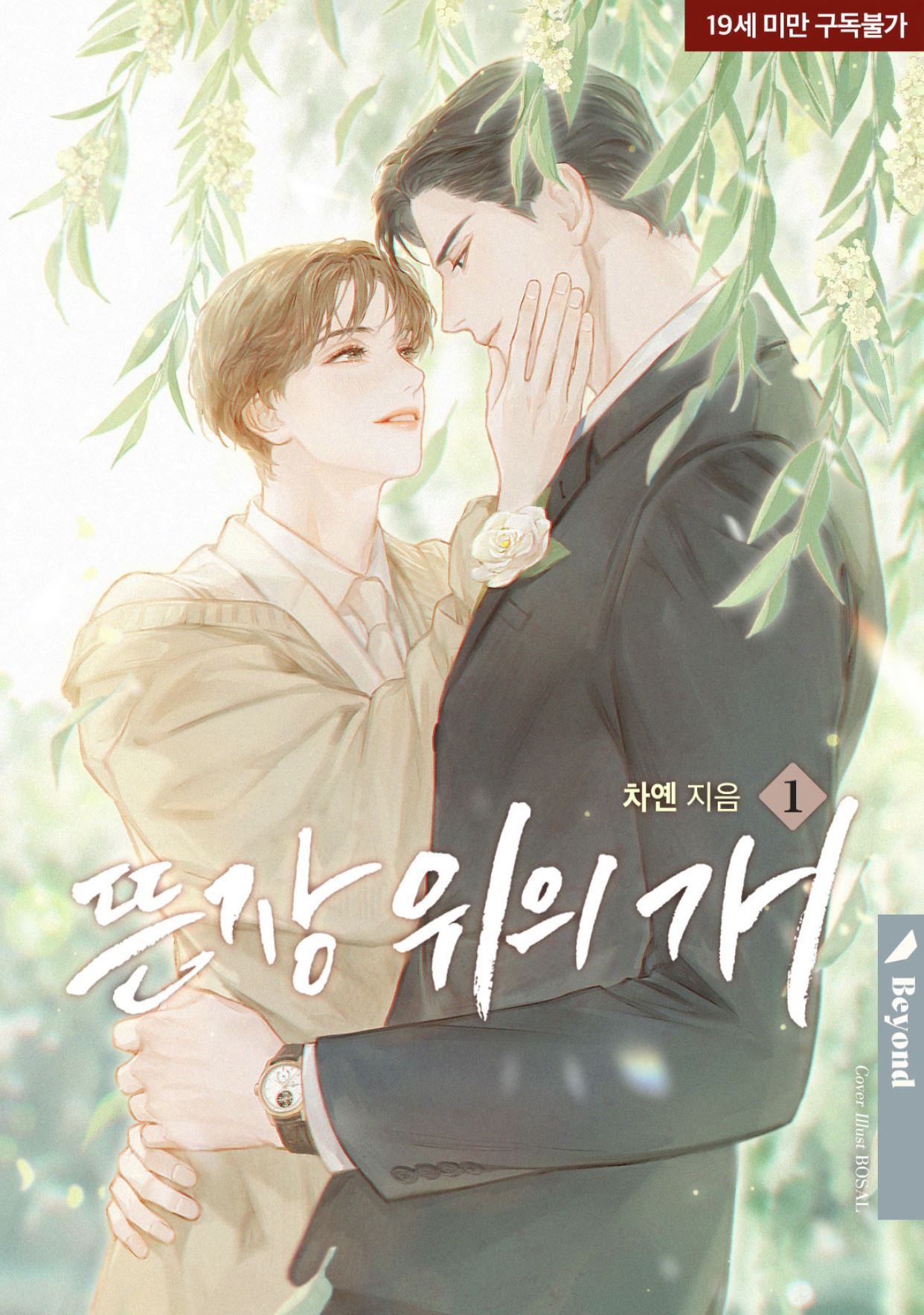
Can we talk about how devastatingly tender this chapter is, because my heart is absolutely shattered over here?? The entire setup—Jung Heeyeon buying tofu at dawn, checking the watch Director Yeon gifted him, worrying about whether ten thousand won worth of tofu is an appropriate gift—that is not just worldbuilding, that is pure, unfiltered emotional storytelling. The author doesn't need dramatic confessions or declarations when they can just show us Heeyeon hesitating over a cheap gift, terrified of seeming inappropriate. This man has been so thoroughly reshaped by fifteen years of living under Chairman Jung's roof that even a simple act of kindness feels risky. And then the crash happens and what does he do? He checks on Shim Soocheon first. Not himself—his ribs are splitting, his ankle is on fire, he inhaled some chemical cloud that probably qualifies as a war crime—but his IMMEDIATE thought is 'Is the team leader okay?' That is such a specific kind of loyalty that only develops when someone has spent their whole life being the one who takes care of everyone else. When he repeats 'It's okay, it's okay' over and over, I don't know if he's trying to convince himself or Soocheon or both. But the moment that absolutely destroyed me was this: 'Once he got out of this place he once called home—no, this hutch—he'd apologize and everything would be fine.' He's being kidnapped, drugged, trapped in a house where his ankle was surgically weakened to keep him subservient, and his biggest concern is that Director Yeon will see he got hit and be heartbroken. HE'S WORRIED ABOUT MAKING SOMEONE ELSE UNCOMFORTABLE WHILE BEING TORTURED. That relationship with Director Yeon isn't just romantic tension—it's the emotional anchor that's keeping this man alive, and the author makes it clear that Yeon coming for him isn't a maybe, it's a certainty in Heeyeon's mind. "He would hold on until then, no matter what. Because Director Yeon would surely come for him." That line alone carries more emotional weight than entire chapters of explicit romance dialogue.
... Read More
Let me just say—the atmosphere in this chapter is absolutely immaculate. You can FEEL the damp humidity when Jung Younggil wakes up. The rusty smell of metal, the damp earth, the blinding sunlight that he can barely look at. The author didn't just describe a cage—they described a whole sensory experience of entrapment. And then when Heeyeon steps on top of it? The image of him floating above, feet not quite touching ground, watching his grandfather grovel below—it's haunting. Like something out of a gothic novel or a psychological thriller. What really sold me was the contrast between the cold iron and the hot sunlight. Winter air bitterly cold but sun unbearably hot. Nausea rising with thirst. Yellow bile seeping through bars onto dirt floor. These details aren't just pretty words—they're making the reader physically uncomfortable, which is exactly what good horror worldbuilding does. You're not just reading about someone suffering, you're experiencing it alongside them. And the dogs! The barking, the chains clanging, the heavy shoes stomping overhead—it creates this soundscape of dread that just builds and builds. The author really understands that atmosphere isn't just about what you see, it's about what you hear, smell, feel. This pit might be buried underground but it feels more real than half the ballroom scenes I've read this year. Absolute masterpiece of environmental storytelling.
... Read More
"As long as you're with me, I'll be fine." I need a minute. I genuinely need a minute. That line right there? That's the entire relationship distilled into seven words. Everything about Heeyeon and Yeon's dynamic—the power imbalance, the trauma bonding, the fierce protectiveness, the way they keep finding each other despite everything—comes down to Heeyeon saying "I'll be fine if you're with me" and Yeon's large hand actually FLINCHING when he cups it. A flinch. From someone who has survived dog-fighting rings and presumably worse. He still can't believe this is happening. But here's what wrecked me most: the way Heeyeon goes from someone who didn't even know being locked up was illegal to someone who walks INTO a surveillance-monitored torture pit alongside his abuser's worst enemy, completely unafraid, because Yeon is behind him. That growth arc is staggering when you sit with it. And Yeon's tenderness toward Heeyeon in the same breath as his cruelty toward the Chairman—kissing his forehead, kissing the back of his neck, calling him brave, joking about him not being a baby—the contrast is almost unbearable. The man who built this entire vengeance operation has, in the same moments, found someone worth being gentle with. That duality is what makes their relationship so electric. The bit where Heeyeon firmly tells Yeon "no one else can say that about me" (referring to calling him a baby) and Yeon just... accepts it? I swear to god the CP energy in this book is off the charts. They're built different. Also the fact that Heeyeon says "I hate that person who hurt you too" like it's the most natural thing in the world. Not "I understand why you want revenge" but straight-up joining the hatred. That's not codependency, that's partnership.
... Read More
Okay so the cake scene. Let's talk about the cake scene because it seems casual but it is NOT. Director Yeon feeding Heeyeon cake only to let his fingers slide UP the omega's wrist, tracing veins like he's reading something? That is such a specific kind of predation. And Heeyeon's reaction—just swallowing hard, feeling like he's being devoured alongside the cake—is honestly peak submission that isn't even sexual yet. It's intimate in a way that makes your stomach flip. The fever scene later flips the power dynamic though. Director Yeon is still in control, still the one making decisions, but watch how he softens. "You need to take medicine first and rest." The voice changes. He calls him a baby, but it's affectionate, not mocking. And Heeyeon asking him to stay until he falls asleep—"Could you… stay with me until I fall asleep?" The hesitation, the ellipses, the fact that he's never asked this of anyone—Director Yeon must feel something fierce right there even if he doesn't show it. What I love is how neither of them name what this is. There's no confession. No dramatic moment. Just domesticity stacking on top of itself like snow outside the window. Heeyeon gets to experience firsts—first Christmas, first snow globe, first time someone stays when he's sick—and Director Yeon gets to be the one giving them. Who is actually more vulnerable here? The power exchange is so quiet it could be invisible to anyone not paying attention.

Leave a comment

You must be logged in to leave comments. or
