Dog on the Hutch - Reviews

Dog on the Hutch
+Add to Custom List
Sort
Add review
... Read More
Okay so this whole chapter is basically built on this tension between what's being said and what's NOT being said, and I love it. Director Yeon has this whole secret meeting scheduled with Lee Haejin while also managing this weird pheromone situation with Jung Heeyeon, and the plot just keeps layering these threads together like—first we get the pheromone control dilemma (want to see him vs. can't see him), then Kim Chulwoo walks in with news about Chief Nam, and THEN we find out there's a meeting with Lee Haejin happening TODAY. The pacing here is everything. Director Yeon deliberately tries to keep Jung Heeyeon in the dark—he even says 'it would be better to act swiftly' while the omega is literally standing right there. That moment where he leaves Jung Heeyeon in a private room alone while he goes off to handle 'business'? That's not just a scene transition, that's a plot pivot. The author is setting up a reveal or confrontation with Lee Haejin that feels inevitable now, and I'm dying to know what Chief Nam's 'person' has to do with all of this. The structure here is so deliberate—you feel like you're watching a chess game where half the pieces are hidden.
... Read More
Let me just say this: the sensory world-building in these chapters is *chef's kiss*. The author doesn't just tell us about the setting—they make you smell it, feel it, experience it through pheromones and temperature and texture. The very first paragraph drops us into this scene where Director Yeon lifts Heeyeon onto his thigh and adjusts their positions, and I could literally feel the shift in the room's energy. It's domestic intimacy at its most vivid. Then there's the gardenia pheromone description: "A faint gardenia scent drifted in the air—so subtle that, if masked by Director Yeon's pheromones, no other alpha would even notice it." This is such a brilliant way to show the omega's vulnerability without stating it outright. His scent is fading, his heat is ending, but it's still there—fragile and barely detectable beneath the alpha's presence. The world-building here isn't about describing architecture or geography; it's about building a society where smell and touch communicate everything words cannot. And the porridge scene! Director Yeon preparing food in the morning light, checking Heeyeon's temperature with his palm, the contrast between the warm porridge and Heeyeon's still-elevated skin temperature. "Your tongue was hot, too." These small physical details make the world feel so alive—you can taste the porridge, feel the morning warmth, sense the shift from dark bedroom to bright daylight. The author understands that atmosphere isn't decoration; it's emotional storytelling. The big house setting, the butler's presence (even when absent), the office that Director Yeon wants to bring him to—every location carries weight. This isn't just a romance with fancy furniture. It's a fully realized world where every space tells a story about power, care, and belonging.
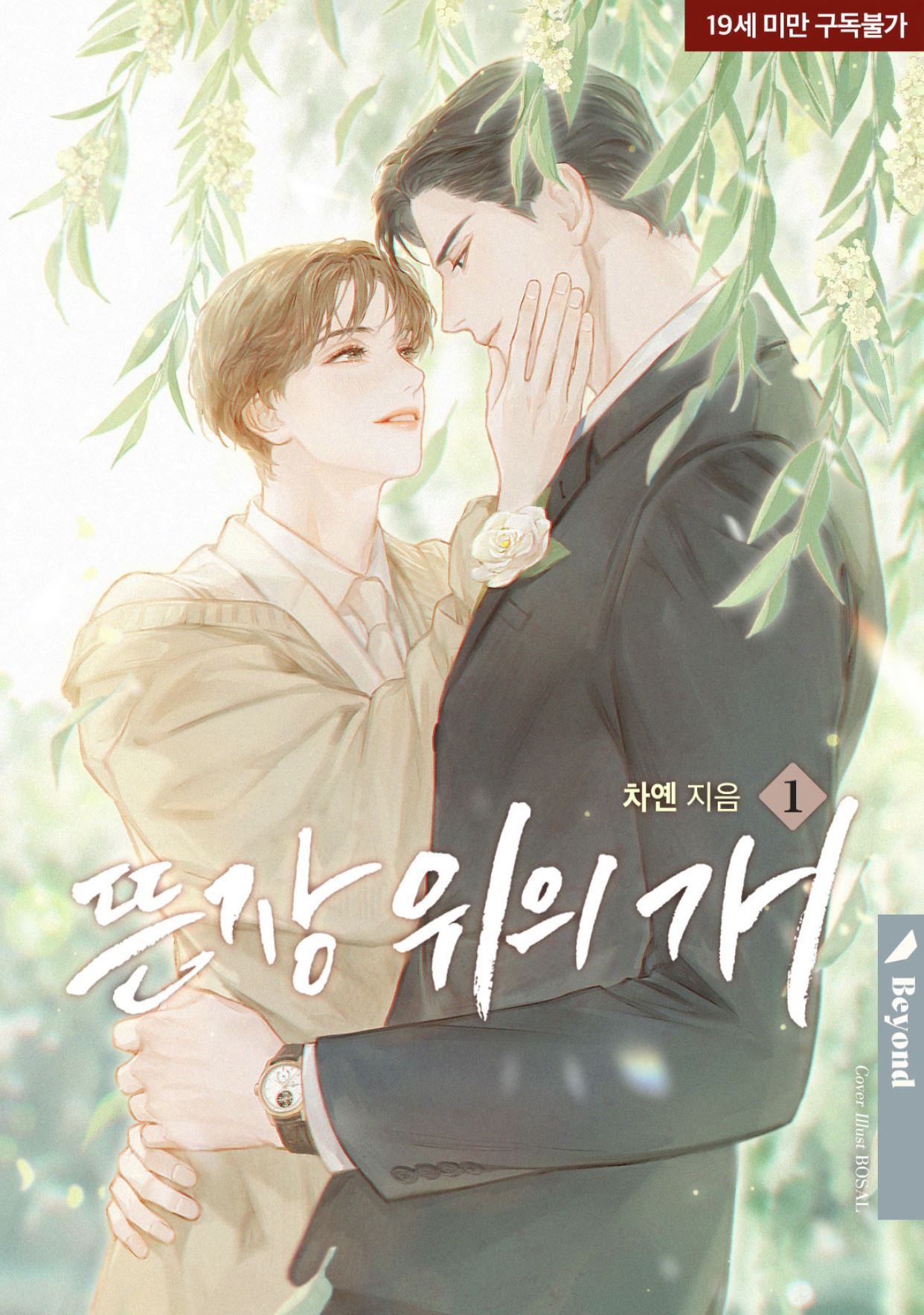
... Read More
There's so much symbolism packed into this seemingly quiet chapter. The suppressants themselves are the obvious one — Jung Heeyeon taking medication to hide who he is, to make himself palatable to an alpha who can't stand his natural state. But then Lee Haejin suggests STOPPING the suppressants so his pheromones can flow naturally? What is that even saying? That authenticity is dangerous? That being yourself requires someone brave enough to tolerate you? And Director Yeon opening the window to air out the room instead of... I don't know, touching him? That's not rejection, is it? That's protection. He's removing himself from the situation rather than exploiting an omega who can't control his own chemistry. The cardigan as cocoon is gorgeous too — Jung Heeyeon wrapped in someone else's clothes, hiding inside soft fabric, not quite ready to emerge as his true self. And the promise he made to Director Yeon that he won't discuss? Promises as both comfort and cage. The wet dream as first awakening — not just sexual but emotional, Jung Heeyeon's body finally catching up to feelings his mind hasn't processed yet. Every symbol in this chapter points to the same question: Can someone truly be themselves in a world designed to suppress them? And can love survive when the loved one has to take pills to be acceptable?
... Read More
Okay let's talk stakes because THIS is where the chapter really earns its keep. Jung Younggil isn't just captured—he's exposed. His hands are shaking, his body is failing him, his 'loyal' captain betrays him, and his own blood grandson is watching from above. What does he have left? His pride? Gone. His power? Gone. His freedom? Absolutely gone. The old man thought he was the hunter, but he's been the prey this whole time. But here's what makes the conflict so compelling—it's not just physical. The real battle is happening inside Jung Heeyeon's head. Director Yeon is literally terrified that his young lover might feel pity for the old alpha. 'I hadn't thought about what to do if his lover ended up feeling pity'—that's Director Yeon's greatest fear, and it's so human. He brought Heeyeon here for justice, but he's worried justice might make his partner soft. And yet Heeyeon's response cuts through all that anxiety. 'I don't feel sorry for him. He hurt you, Director.' That's not just rejection of pity—it's loyalty to the person standing beside him. The stakes aren't just about who wins or loses anymore; they're about what kind of person Jung Heeyeon will become. Will he let hatred consume him, or will he rise above it? And honestly? That uncertainty is what keeps me turning pages at 2 AM.
... Read More
The way this arc unfolds is honestly so satisfying. We've got all these threads converging—the illegal weapons trade, Director Yeon's investigation, Jung Heeyeon's past trauma, and the looming threat of Chairman Jung—and instead of letting them exist separately, the author braids them together in a way that makes every scene hit harder. The container of weapons being the bait is such a clever move. It's not just a MacGuffin; it's literally the thing Jung Heeyeon was once imprisoned in, which means Director Yeon is walking into danger with the weapon that caused his trauma. That's not a coincidence, and it's not a flaw in the plot—it's deliberate storytelling. The fact that Jung Heeyeon chooses to go into the container this time, after previously refusing in Busan, shows how far he's come. He's still terrified, his body reacts (the scrunched nose, the metallic echo grating on his nerves), but he's no longer hiding. The plot didn't need to resolve anything yet—the investigation is ongoing, Chairman Jung hasn't made a move—but it did something better. It turned the central conflict into something personal, something Jung Heeyeon has to face head-on instead of running from.
... Read More
The stakes here aren't life-or-death, but they're honestly more intimate. Heeyeon's central conflict is that he doesn't know what he likes — not in a vague philosophical sense, but in a very specific, daily way. Every choice is terrifying because he has no internal compass. The Director recognizes this and creates safe spaces for him to practice wanting things. The snow globe scene is the ultimate expression of this dynamic. Director Yeon could have just bought it for him, but instead he pushes Heeyeon to discover his own desire. 'Once you have it, you'll know whether you wanted it or not.' That's not just about a glass sphere — that's a philosophy for living. And the stakes of not resolving this? Heeyeon remains passive, reactive, defined entirely by how others treat him. But when he finally admits 'I'm not sure' and then later realizes he actually wanted the globe, he's exercising agency for the first time. The conflict isn't whether they'll end up together — that feels inevitable. The conflict is whether Heeyeon can become someone who knows what he wants and asks for it. This chapter suggests he's starting to.
... Read More
The dialogue in this section is incredibly natural and each character has such a distinct voice. Jung Heeyeon's lines are perfectly rendered—he's hesitant, mumbled, fidgety. 'Pardon?' 'Yes?' 'But Haejin hyung said what I drank wasn't really alcohol…' These short, almost childlike phrases capture his limited social experience and that endearing naivety. Meanwhile Director Yeon's dialogue is deceptively simple but loaded. 'Lee Haejin is not sir, but hyung?' is such a small question but it carries an enormous amount of subtext—you can HEAR the subtle shift in tone. And the best line, absolutely the best: 'The baby deserves to be pampered.' It's spoken after all that tension, after the scare about hitting, and it completely disarms everything. That's excellent voice work—Director Yeon saying something so warm yet so firmly authoritative, and it works perfectly for both characters. The banter between them feels like real people who know each other deeply, even with the power dynamic. The humor lands naturally too—like when Heeyeon deadpans 'Are you going to hit me…' and Director Yeon's dry laugh response. No forced quips, no exposition dumps through dialogue. Just two people talking, and you can feel everything unsaid between them.
... Read More
I need to talk about Director Yeon because WOW. This man is written with such delicious menace. He's the kind of alpha who could flatten a room with a glance and chooses instead to sip tea and watch people squirm. But then—then he looks at Jung Heeyeon and something shifts. The scene in the car where Yeon finally calls out to Heeyeon after the meeting? That's where the real character study lives. He asks 'Did you like it?' about the pheromone incident, and Heeyeon's response—'I was okay because your scent was on my clothes'—hits like a physical blow. This omega, this seemingly simple, hiccupping, docile boy, just dropped the most devastatingly honest sentence and didn't even know he was doing it. And Yeon's reaction? The veins in his hand becoming visible. The feigned gentleness cracking at the edges. 'I told you…' and then the touch—cupping both cheeks, that finger tracing under the eye. 'Don't tempt me into wanting to.' That is NOT a threat directed at Heeyeon. That's a threat directed AT HIMSELF. He's warning his own instincts. Meanwhile Kang Seoui watches all of this and can only stand there frozen. He sees it—the way Yeon's entire demeanor transforms from predator to something almost tender when Heeyeon is around. And Heeyeon? Heeyeon has no idea. 'Yes,' he just nods, obedient, not grasping the weight of what was said. The dramatic irony here is making me suffer and I love it. Also the detail that Heeyeon's hiccups STOP when he meets Yeon's gaze? Little physical tells like that tell us everything about how this relationship operates.
... Read More
I need to talk about this relationship because WOW. The way this author writes intimacy without ever being explicit is honestly *chef's kiss*. Let's start with Heeyeon. The man hasn't eaten properly ("just picked at his food distractedly") but the first thing he does after a phone call with the Director is clutch his jacket and sniff it. That is not a casual detail. That is someone who is emotionally starving and using whatever scraps of physical closeness they can get. The squirrel cradling an acorn comparison literally in the text?? I was not okay. And Director Yeon—his side of the conversation is so carefully calibrated. "Good boy." "I miss you too." "When I get back, I'll hold you." This isn't just affection, this is someone who understands EXACTLY what Heeyeon needs and gives it to him in measured doses. The fact that he notices Heeyeon's voice is hoarse means he's paying attention even from whatever dangerous situation he's in. But here's what really got me: the shared Hanja character. 连 in both their names. This changes the entire lens through which I'm reading their relationship. Is Heeyeon related to Yeon Woobeom? Did the Chairman (his grandfather?) choose that character intentionally? Does the Director know? The power dynamic just got so much more complicated—and charged. Shim Soocheon also deserves mention. The way he blocks Heeyeon from getting the food delivery, the playful comment about the Director never cooking for anyone else—this is someone who is clearly protecting Heeyeon and also quietly keeping an eye on things. There's a warmth there that feels genuine, not romantic but deeply loyal. The relationship between all three of these characters feels like a living ecosystem. Every interaction reveals something new about the hierarchy, the care, the unspoken tensions.
... Read More
I have to talk about the dialogue in these chapters because the author is playing with something special here, and I need to document it before I forget. The most powerful line isn't even dramatic. It's Heeyeon saying: 'You weren't… late either.' Two words with an ellipsis, delivered half-whispered to a man who is literally holding him after everything that happened. The implication is staggering—he's telling Yeon he didn't arrive too late to save him. That Yeon's presence, his timing, his choice to show up, matters. And Yeon's reaction is recorded as simply as: 'Director Yeon listened with a kind of desperate focus, as if he were trying to engrave every single syllable into his ears.' That's not just good dialogue, that's the narrative treating words like sacred objects. Then there's Heeyeon's explanation about his name, and the way it flows—natural, unhurried, almost dreamy. Like he's sharing something he's carried around for a long time and finally found the right person to tell: 'Heeyeonhada?' 'Yes. It means when the first white rays of sunlight make the sky glow at dawn.' It's so simple. So unadorned. And yet it carries the entire emotional weight of the relationship. No dramatic music, no heightened language—just two people in a car watching the sky turn gold, one explaining the meaning of his own name and the other realizing it was always about this moment. And Yeon's voice throughout—his internal narration is rough, blunt, self-loathing. 'A life so used to the mud fell right back into the mire.' That's Yeon talking about himself in third person basically. Then he encounters Heeyeon's warmth and even his internal voice can't quite maintain that cynicism. The contrast between how these two men speak and think is honestly the backbone of this story.
... Read More
There are so many layers in this chapter that I only caught on rereading, and honestly the symbolism is hitting different every time. The tofu—right. The whole chapter is framed by this mundane object that Heeyeon buys with trembling hesitation. Ten thousand won. Cheaper than most things in that car. But it represents something enormous: his attempt to participate in normal human generosity, to give something without calculating whether he has the right to. Throughout the story, tofu keeps appearing as this symbol of the small kindnesses that connect people. Chairman Jung would never understand this. Yeon understands it but doesn't need to be reminded. And Heeyeon—Heeyeon is still learning that he deserves to give and receive things freely. Then there's the watch. 'The watch that Director Yeon gifted him sat snugly there.' This little detail keeps appearing whenever Heeyeon checks the time, and it's not accidental. The watch is a tether—a literal connection to Yeon that persists even when they're physically separated. It has a tracker. It survived the crash. And it's the mechanism that will lead Yeon to him. A gift that becomes a lifeline. I keep thinking about how the watch also measures the time until Yeon arrives, turning abstract hope into something quantifiable. And the house itself—'this place he once thought of as home' but which he now correctly identifies as 'this hutch.' The evolution of that word from home to hutch to cage is the entire arc of his psychological journey compressed into a single chapter. The weakened ankle, the thing that was supposed to keep him from running, becomes the very thing that makes escape possible because it forces him to move slowly and deliberately rather than bolt blindly. Even his oppression contains the seeds of his survival.
... Read More
Okay so I need to talk about this scene because honestly it messed me up in the best way. Director Yeon finding Heeyeon asleep and then suggesting they sleep together—on the surface it reads like something out of a fluffy romance novel, right? Gentle fingers brushing through hair, a soft suggestion, all warm and cozy. But come on, we've been reading this book long enough to know better. Nothing about Yeon is simple or gentle in the way he presents himself. Think about it. Earlier chapters established that Yeon literally stalked Heeyeon's room, tracking pheromones like a predator following a scent trail. His footsteps were described as eerily silent, like someone accustomed to moving through darkness. And now here he is, bending over the sleeping omega, fingers tracing his cheek, asking if he had a nightmare. The tenderness is real—but so is the ownership. When he says 'why don't we sleep together in my bed,' is he offering comfort or claiming territory? What makes this relationship so fascinating is how asymmetrical it is. Heeyeon still seems to genuinely feel reassured waking up to see Yeon there. There's this tragic vulnerability in him—he vaguely recalls calling out in his dream, and his first instinct isn't fear but relief. Meanwhile, Yeon is standing over him like a man who has spent years learning how to wear humanity like a suit, unable to quite decide whether he feels kinship or something far more possessive. Nam Soohyun's suggestion that it was 'just kinship' feels almost ironic in retrospect. Yeon himself seems uncertain, caught between genuine care and something darker. And that's the thing that keeps me up at night thinking about this story—who is actually pulling whose strings here?

Leave a comment

You must be logged in to leave comments. or
