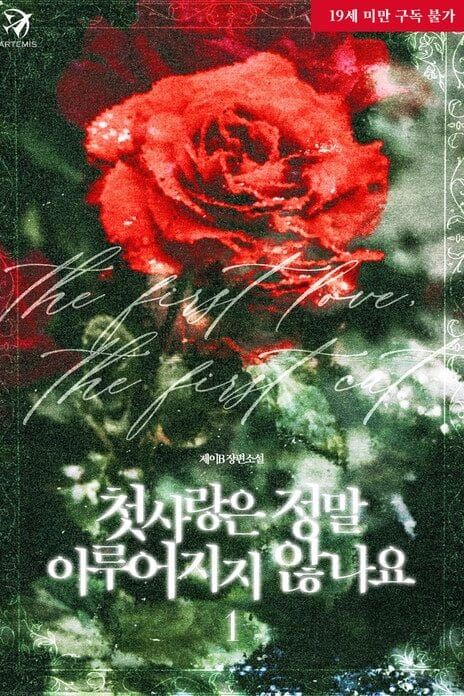
Does First Love Really Never Come True? - Reviews

Does First Love Really Never Come True?
+Add to Custom List
Sort
Add review
... Read More
There are so many layers to unpack here and I'm just going to dive in. The flowers. Wendy sends flowers IN LIEU of letters to Lucas. Flowers are beautiful, they arrive with no words attached, they require no emotional risk from the sender. But they're also DEAD things — cut, arranged, displayed, and slowly dying. That's the entire Wendy-Lucas dynamic in botanical form. She gives him something gorgeous that requires nothing of him, and he never reads the message underneath because he doesn't know how to. "Whenever I send letters, you always responds with baskets of flowers or fruits. But the south is too far for that." Lucas's own words betray him. He doesn't engage with her words — he redirects into gifts. The cycle repeats across distance and time. Then at the Earl's house: the GIFT SCENE. Every box represents a suitor's interest, a proposal waiting to happen, a life being offered like merchandise. Wendy sorting through them is like sorting through possibilities she doesn't want. Jayden throwing away James Finet's card like trash — he's not just rejecting a man, he's rejecting the whole system. But Wendy pushes back: "You only talk about the flaws." She wants men evaluated FAIRLY, not because she likes them, but because reducing them to their worst traits is how Jayden (and apparently Lucas) treat anyone who gets near her. It's possessiveness disguised as protection. "Liking the gift doesn't mean liking the sender." This line is Wendy's manifesto. She refuses to let the symbolism of a gift dictate her emotional response. She wants agency over her own reactions. And yet — she CAN'T bring herself to examine the gifts in front of Lucas. Because she KNOWS what the gifts symbolize. She knows what it looks like to a woman surrounded by offerings from other men while her first love watches silently. The deepest symbol though? Charlotte. The energetic niece who exhausts Wendy. A CHILD who represents pure, uncomplicated love. Wendy takes care of her in the south and it SUSTAINS her. Not romance. Not longing. Just a small human being who needs her. That's what healed her — not time, not distance, but PURPOSE.
... Read More
I keep coming back to the scarf. Not just because it's a plot point, but because it's the central symbol of everything this story is about — giving, receiving, miscommunication, and the tragic gap between intention and impact. Lucas gives Wendy a scarf. It's a birthday present, which means it's supposed to carry meaning beyond utility. Wendy gives it to an old lady because she's kind. The Dowager Duchess receives it and thinks, 'Poor thing — she must have liked it a lot as a gift.' She's right, but she's also wrong, because the real tragedy isn't that Wendy cherished it too much. It's that she didn't understand what it meant at all. There's also the snowman hairpin mentioned in passing — cracked because it's old. Another small object, another sign of something precious degrading through use and time. Wendy keeps things. She holds onto them. And yet she keeps losing them anyway. The cherry blossoms work the same way. Beautiful, ephemeral, destined to fall. 'The flowers will fall quickly,' Lucas says, and it's both about the trees and about whatever possibility exists between him and Wendy. The Dowager Duchess's meditation on arranged marriage and habit-love — 'they still believe they love each other like a habit' — is the book's thematic thesis. Love isn't always dramatic. Sometimes it's just... persistence. And Wendy is tired of persisting toward someone who sees her as family.
... Read More
There's a recurring pattern here that I can't unsee: every time something real happens between these characters, someone runs. Wendy flees the villa the morning after. She flees to the south. She flees from his gaze under the cherry trees. And the title of the chapter literally says 'Sometimes, Running Away Is the Answer'—but does it really? I keep thinking about what the cherry blossoms symbolize in this context. They represent beauty that is transient, moments that can't be held onto. Wendy wanted to enjoy them one last time because she knew they wouldn't last. And Lucas mirrors this when he says she might not be able to come back next year because of her mother's marriage plans. The blossoms become a metaphor for their situation—precarious, time-sensitive, potentially destroyed by circumstances beyond their control. The alcohol is another symbol worth sitting with. It's the only thing that gives Wendy permission to speak her truth. Sober she's cautious, compliant, careful. Drunk she's fearless. Lucas notices this too—he's flustered not just by what she said but by the fact that she smelled like roses instead of booze, that her eyes were still sharp despite the drink. The alcohol didn't change who she was; it removed the mask. And then there's the line 'You can't hide your blood.' When Wendy says it, she's talking about her family's resistance to alcohol—but it applies to something much deeper. You can't hide what's truly in you. Lucas knows this. Wendy knows this. That's why running feels like the only option when the truth becomes too visible.
... Read More
Okay, let me just say — this whole scarf thing is the kind of plot device that does SO much heavy lifting without the book ever stopping to explain itself. Wendy gives away the scarf Lucas gave her to a random old lady because she noticed the woman was cold, and the Dowager Duchess ends up wearing it. The timing is just exquisite. Think about it: Lucas gives Wendy a gift meant to signify something personal, Wendy doesn't even realize she's giving away a piece of his affection, and the grandmother figure who supposedly knows best ends up wearing it like some ironic trophy. The Dowager Duchess herself seems to understand the symbolism — 'she must have liked it a lot as a gift. Poor thing' — but she still doesn't connect the dots enough to warn Wendy. And then the cherry blossom chapter hits right after, and the structure is almost cruel in how it juxtaposes warmth and rejection. Everything outside is spring, blooming, alive — and inside Lucas's head, he's already mourning a future where Wendy belongs to someone else. The author doesn't tell us this directly. We're supposed to see it in the way Lucas watches Wendy run through cherry blossoms like she's still a little girl, then immediately laughs at the thought of her married. The plot doesn't need explosions or betrayals here. It just needs one scarf, one cathedral, and a whole lot of unspoken feelings crashing into each other.
... Read More
Let me just say this: the author's control of pacing in these chapters is genuinely impressive and I need to break it down because it's one of those things you only notice when it's done really well. Chapter 1.3 opens with the ball and immediately drops us into this whirlwind of social choreography. We get Wendy's nervousness, Lucas's promise, the dance itself—all flowing together in this almost dreamlike sequence. The author doesn't rush it. We feel every second of Wendy's anticipation, the way her heart pounds, the dizzy moment when Lucas leans in. It's romantic in the way that slow-burn romance should be: patient, immersive, letting you live inside the moment. But then—the cut to the next morning. Breakfast at the Devon household. The silence. The Dowager Duchess's clinical assessment of Wendy. "It was disappointing." And suddenly the romance is over. The fantasy is punctured. We're back in the harsh, structured world where Wendy is just another daughter to be evaluated. This is masterful pacing. The author lets us feel the high of the ball, lets us fall into Wendy's hopeful perspective, and then immediately deflates it. It's the narrative equivalent of waking up from a beautiful dream and remembering your problems. Then Chapter 1.4 takes us to the Rosewood household, which feels almost too warm, too normal after the Devon coldness. The breakfast banter, Jayden's teasing, the Earl's warmth—it's a relief but also a reminder of what Wendy has at home versus what she's chasing. And then she's alone at the reading club, watching autumn leaves fall, processing rejection after rejection. The structure here is really about contrast and rhythm. Highs and lows. Warmth and cold. Community and isolation. And the chapter ends not with a resolution but with the Dowager Duchess asking the Countess the most cutting question possible: "Do you desire the Devon Ducal Household?" It's a perfect cliffhanger—direct, brutal, and it completely shifts the power dynamic. The Countess, who moments ago was worried about Wendy meeting nice boys, is now being interrogated like she's done something wrong. That reversal is everything. The author knows exactly when to accelerate and when to let scenes breathe, and that's why this reads so smoothly.
... Read More
I'm still not over the flashback scene where Wendy first meets Lucas. The author writes it like a movie - the snow falling, the sunlight catching his platinum hair, the way time literally stops when their eyes meet. And Wendy's reaction is so physically described that you can feel her heart pounding. 'Her face felt hot despite the cold weather, and she worried, Is my face turning red?' I related to this SO hard. That moment of crystalline clarity where everything around you fades except this one person - it's captured perfectly. But what absolutely destroyed me was the contrast between that magical moment and what comes after. She spends six years building this enormous feeling, planning to confess as soon as she becomes an adult, imagining it countless times. And then we cut to the present where her best friends are basically telling her to give up. The emotional whiplash is real. There's this one line from Wendy in the carriage that I keep coming back to: 'Love isn't something that vanishes just because you decide to stop. It doesn't work that way, which is why it's so hard, painful, and distressing.' That is perhaps the most honest thing I've read about unrequited love in any book. The author understands that feelings don't have on/off switches. And then - and this is the cruelty of it all - she blames her brother. 'It's all my brother's fault. If he hadn't brought Lucas back then...' You can see her trying to externalize the pain because the alternative is accepting that she's been in love with someone who will never love her back for SIX YEARS.
... Read More
Can we just sit with the snow scene for a moment though? Because I re-read it four times and each time it hits differently. Wendy running into the snow like a puppy — the text literally compares her to one — and then falling and NOT caring, just lying there happy. This is the same woman who was quietly dying inside at the restaurant three hours ago in narrative time. And the snow doesn't fix anything. Lucas doesn't fix anything. But for five minutes, she gets to be young again. She gets to exist without the weight of her own feelings pressing down on her chest. And then Lucas appears. Not dramatically, not romantically — just there, watching her, concerned, wrapping his coat around her, brushing snow off her hair like she's something precious even though he's never really treated her like that. 'How long since you recovered from your cold, and you're out here like this?' He's scolding her gently and she's pouting and it's SO domestic and SO normal and it's killing her. The part that destroyed me: she keeps pulling the scarf up to her nose, avoiding his gaze, wanting to stay outside just a little longer because being near him is the most painful and most wonderful thing in the world simultaneously. And when he extends his hand — 'Come on' — she stares at it, wishing he was cold, wishing he was indifferent, and then he's just... warm. His breath visible in the moonlight, his coat lighter than hers, his hand waiting. She takes it anyway. Of course she takes it. She always takes it. This is the most honest depiction of unrequited love I've ever read. Not the dramatic kind with tears and confessions. The quiet kind where you walk beside someone in the snow and hate how much you want to.
... Read More
I need to discuss the Crystal Palace scene because the setting here is doing SO much heavy lifting. First, let's talk about how the author establishes this location. It's not just a Christmas market—it's held in a 'large glass greenhouse known as the Crystal Palace' instead of the usual city square. The number of entrants is limited, tickets sold out in days, scalpers can't even find one. This immediately signals: this is a prestigious, almost sacred space. It's exclusive. And Wendy's father had to 'put in some effort' to get the ticket. The emphasis on scarcity and difficulty of access makes this venue feel like a rare opportunity—a door that opens only for the privileged few. Then consider the temperature contrast the author builds. Outside: 'chilly,' 'overcast,' Wendy is 'stamping her feet,' her lips are 'blue with cold.' Inside: 'warm,' 'lights must be on,' 'it will look even prettier.' Wendy is physically positioned on the threshold—standing at the entrance, unable to go in because she has no one to go with, watching the people she cares about disappear into the warmth. The glass walls of the Crystal Palace become a barrier she can see through but not cross on her own terms. The time progression is also a masterful environmental detail. The meeting is scheduled for 2 PM. Wendy arrives at 1:30. The sun begins to set by 6 PM. By the time Lucas appears, 'the weather grew even colder.' The fading light mirrors Wendy's fading hope. And when Melinda says 'now that the sun has set, the lights must be on,' it's almost cruel—because the beauty of the Crystal Palace only reveals itself in darkness, and Wendy will never experience it at its best. Even the Christmas market itself becomes symbolic. Wendy describes decorations she hasn't seen, tree leaves and trunks in different colors—all fabricated details picked up from other visitors. She's performing an experience she was denied. The Crystal Palace, a place of light and glass and warmth, becomes a prison of her own making because she couldn't bring herself to tell the truth. And one small detail that stayed with me: the Earl wearing red, white, and green while shaking the ticket. The colors feel almost festive and alive against the growing cold of the scene. The author knows exactly when to saturate the world with color and when to drain it.
... Read More
I need a moment. I need to sit with this. "The biggest realization Wendy had while in the south was that as long as he wasn't in sight, she could manage." This sentence. This one sentence carries the weight of SIX YEARS of unrequited love and then some more months of pining in the south. It is devastating in its simplicity. Wendy didn't need time to forget him — she needed TIME AWAY FROM HIM. The geography did what years of willpower couldn't. And even then, a SINGLE EYE CONTACT at the banquet broke her composure. "Her heart sank again, inevitably." INEVITABLY. She knows it's coming. She PREPARES herself and it STILL happens. That word choice is everything. She's not surprised anymore. She's disappointed in herself, repeatedly, like she's watching a pattern she can't break. But then here's the thing that absolutely wrecked me — she CHOOSES to keep showing up. She doesn't stay in the south forever. She comes back. She attends the banquet. She faces him. And when she does, she performs. She smiles. She holds another man's hand. She laughs at someone else's jokes. Every single gesture is a weapon aimed at her own heart. And Lucas? He's doing the exact same thing in reverse. He shows up. He watches. He can't look away. He tells himself it's sibling-level concern but his BODY language is screaming something else entirely. The quadratic dance scene is probably the most emotionally dense sequence in the entire novel. Wendy deliberately focuses on her partner to steady her racing heart. She succeeds. She feels PROUD of herself. Six months of progress. And then LUCAS SEES HER doing it — sees her trying so hard to be normal — and something cracks in him. His crooked smile says everything his words won't.
... Read More
Okay so I need to talk about this flashback scene because it is EVERYTHING. The way the author structured the meet-cute between Wendy and Lucas is actually brilliant when you think about it. You've got this whole setup where Wendy is just being her chaotic little sister self, wielding a snowball like a weapon, and somehow it completely backfires - literally hitting the one person she's going to obsess over for the next six years. That's not just a funny moment, that's THE inciting incident of the entire love story. And then there's the parallel structure with the Countess and the Dowager Duchess scene earlier. The author cuts between two very different types of conflict - the high-society etiquette battle about whether Wendy is proper enough, and then this intimate flashback showing us exactly why Wendy is so hopelessly smitten. It's like the author is setting up the central tension of the whole story: Wendy's family's expectations versus her own heart. The Dowager Duchess says 'there is a limit to freedom' and honestly? That line feels like it could be the thesis statement for the entire novel. The timing of the reveal where Wendy realizes she showed up in pajamas under her coat is such a perfect comedic beat too. After all that breathless, cinematic description of Lucas - platinum hair sparkling, eyes like the blue sky - she just... was basically in her sleepwear. The contrast is devastating and hilarious. I laughed out loud and then immediately felt bad for her.
... Read More
The dialogue in this passage is fascinating because it's built almost entirely on what characters refuse to say. Let me start with Wendy and Lucas's interaction at the Crystal Palace entrance. This is arguably the most important conversation in the entire passage, and it's remarkable how little actual information gets exchanged. Lucas asks: 'What brings you here? You're not alone, are you?' His concern is visible—he notices she's shivering, her lips are blue. But he doesn't ask the question that matters: why is SHE here alone when he was supposed to meet her? He seems to interpret her presence as coincidence, not intention. And Wendy's response is a masterpiece of evasion. 'I came with a friend.' She lies. But notice what she doesn't say: she doesn't say 'I came with YOU.' She doesn't say 'I waited for you since 1:30.' She doesn't say anything that would force him to understand the significance of her being there. Her silence is louder than any confession could be. Melinda's dialogue creates an interesting counterpoint. She's warm, effusive, completely natural in a way that makes Wendy's stiffness stand out even more. 'Oh my, your hands are cold. Have you been outside long?' She offers warmth, offers inclusion ('would you like to come in with us?'), offers a carriage home. Every kindness Melinda shows worsens Wendy's position because it highlights how Lucas hasn't offered her any of the same consideration. And yet Wendy has to accept it gracefully because she's 'a proper lady.' The father-daughter dialogue earlier in the passage is warmer and more direct. The Earl says 'I wanted to give this to my daughter as soon as possible' and Wendy responds with genuine excitement. There's honesty there, which makes the later deception feel even more tragic. The author contrasts these two types of relationships—the open, reciprocal love between father and daughter versus the coded, obstructed communication between Wendy and Lucas. One line that stays with me: Lucas says 'It's just Christmas decorations, after all.' To Melinda, this makes him unromantic. To the reader, it makes him beautifully, tragically oblivious. He's looking at the Crystal Palace and seeing nothing more than seasonal display, while Wendy is standing outside in the cold having just risked everything to be here. His casual dismissal of the venue underscores how little he understands the magnitude of what Wendy was hoping for. The letter cards also function as dialogue—minimal, repeated, almost ritualistic. 'He received her letter well.' These three phrases carry the weight of a decade of one-sided communication. Lucas never writes back with substance. He never asks how she is. He never says 'I missed you' or 'I'm glad you wrote.' The cards are courteous but empty, and Wendy has built her entire emotional world on the foundation of those empty courtesies.
... Read More
Okay so I have to talk about the reading club scene because it's this seemingly minor moment that somehow became one of my favorite pieces of atmosphere in the whole book. Wendy is sitting there, pretending to pay attention while actually staring at the garden. The author describes how "the leaves were turning red and yellow" and "a few days of rain had left the ground covered in fallen leaves." Just... leaves. Falling. And yet it perfectly captures this mood of transition, of things changing whether she's ready or not. And the line: "They say autumn, when every leaf becomes a flower, is a second spring. What a waste of time not to go out." The Countess says this almost casually, but it lands like a commentary on Wendy's whole situation. Autumn is supposed to be beautiful but Wendy can't even enjoy it. She used to love winter, which meant autumn was just the hopeful countdown. Now autumn itself feels empty. Second spring? More like second disappointment. The contrast between the two households during breakfast is also genius worldbuilding. The Devon Ducal Household is described as having a "quietly solemn meal" with only the clink of silverware breaking the silence. Then cut to the Earl Rosewood household: bread baskets being passed, the Earl winking, Jayden stealing his sister's bread. One side is cold formality, the other is warm chaos. And Wendy is literally caught between them, like she's trying to navigate two completely different worlds. The ballroom scene itself is also vividly rendered—the swirling dancers, the orchestra, Lucas's hand on Wendy's waist, the way the music starts and her nervousness gradually melts into fluid movement. But what stays with me is that moment when her steps tangle after Lucas whispers in her ear. The physical closeness that makes her flinch. The author really understands how to use setting to amplify emotional tension. I also loved the cathedral encounter between the Countess and the Dowager Duchess. The cane, the stiff posture, the "almost a show of goodwill" nod. You could feel the entire social hierarchy pressing down on that hallway conversation. The world feels so lived-in.

Leave a comment

You must be logged in to leave comments. or
