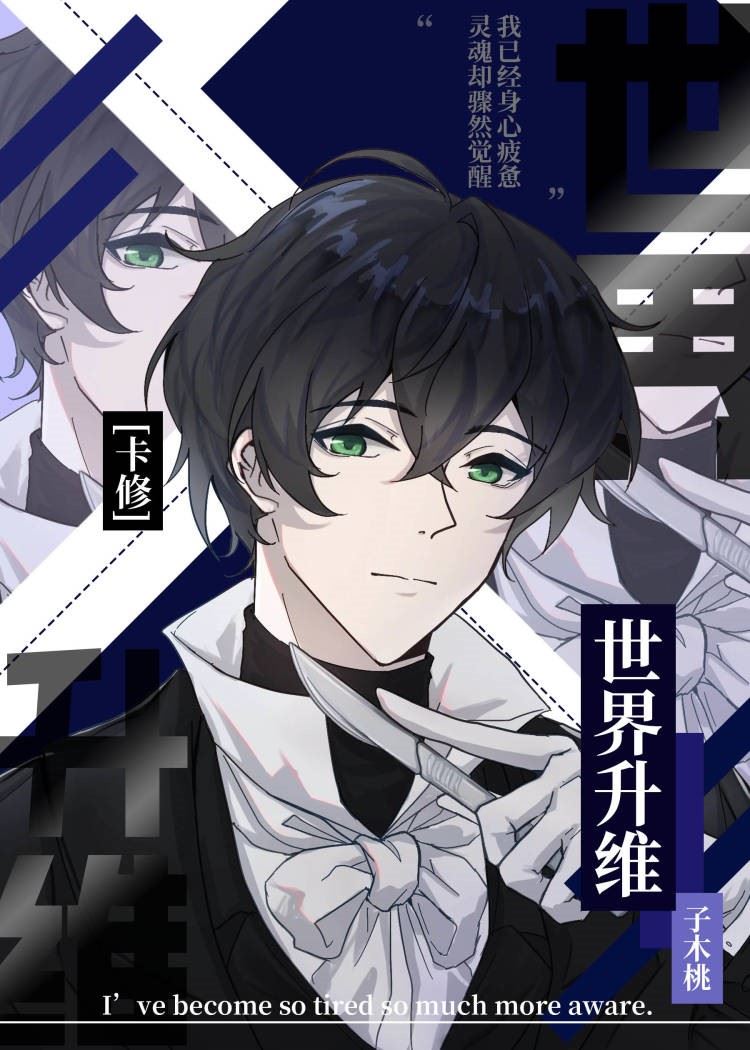
The pacing in these chapters is absolutely ruthless and I am HERE for it.
Let me break down why this works so well. We open with Chu Zaizhou waking up, checking his acting points (which jumped to 50,000), and immediately deciding to go to work early. That's three beats in three paragraphs—hook, escalation, transition. Then we cut to the office, which is already noisy, already buzzing. No setup, no 'here's some context about the office,' just straight into the chaos. The video plays, we learn about Liu Wei and his father's death, and within the same scene we get the colleagues discussing whether Ka Xiu could be an esper.
Then—cut to July 1st. Afternoon. Wenhai District. Maolin Street. Ka Xiu entering a hidden alley. The scene shift is clean, almost cinematic. We go from the noisy, chaotic office to a quiet, mossy, stained alley. The pacing slows down but the tension doesn't drop—it just changes frequency. Instead of social chaos, we get atmospheric dread.
The hotel scene itself is a masterclass in controlled pacing. Ka Xiu enters, pays, goes to his room, circles it twice, rests. Seven o'clock, police arrive, they kick the door open, they find... a guy with a kettle saying 'I paid.' The tension builds through the raid but releases through pure comedic timing. The author knows exactly when to let the reader breathe and when to squeeze.
And ending on 'Zhang Ah cha? Can you show me your ID card?' with Ka Xiu's deadpan silence? That's a cliffhanger that doesn't feel forced—it feels inevitable.