Dimension of the World [BL] - Reviews

Dimension of the World [BL]
+Add to Custom List
Sort
Add review
... Read More
There's this one line that keeps echoing in my head: 'Human psychology is interesting—they manipulate and ignore the weak; compete and exclude peers; but they never question or oppose those far stronger than themselves.' This whole story is built on the idea that power is the ultimate shield, and the 'Central Institute for Supernatural Abilities' that Chu Zaizhou invented on the spot represents something deeper than just a cover organization. It's armor. It's legitimacy. It's the difference between being hunted and being feared. The rain-soaked window scene is doing SO much heavy lifting symbolically — the 'hazy rain blurring the boundaries' between his mundane reality and the supernatural world he's about to step into, the 'dazzling lights' of the city above, the normal people buying late-night snacks who have no idea what's happening beneath their feet. And the wind shaking the documents — chaos literally stirring up his plans. The gambling metaphor runs throughout this entire passage. Whether to save the million or invest it, whether to play safe or go all in. Chu Zaizhou chose. The choice was already made 'when he acted in front of those two espers.' He just hadn't admitted it to himself yet.
... Read More
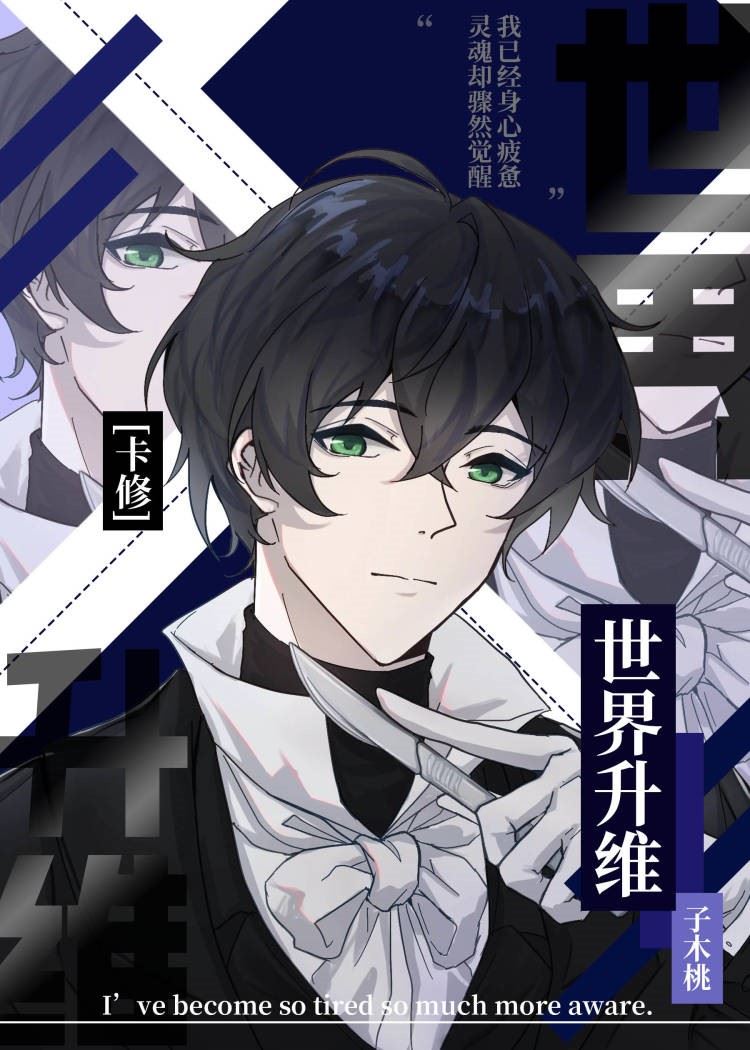
The atmosphere in this chapter is so dense you could cut it with a scalpel, which is fitting because there are multiple scalpels involved. Start with the warehouse setting—"the ground covered with a sticky, moist liquid" after a supernatural entity was just eliminated. You don't need more than that to know this world has recently gone through something violent. The dim daylight through the warehouse window, the wet wooden table, the whole scene feels like a film noir filtered through urban fantasy. And then it gets better: fifty meters away, on a bungalow roof, SWAT officers are setting up sniper rifles loaded with spirit bullets. The juxtaposition of mundane tactical gear with supernatural ammunition tells you SO much about this world without a single exposition dump. But the real worldbuilding victory is the magic items reveal. Not through infodump, but through Fu Chuan's shifting focus. Pens, handkerchiefs, badges with starry sky patterns, gloves, matches... and then the rabbit. Yu Tianhe's internal monologue does the heavy lifting here: "Among these seemingly ordinary items were magic items!" And the author doesn't even need to explain further because the characters' reactions carry the weight. A city-level team has only a few detectable magic items, and this random unregistered esper is carrying an entire inventory in his pocket. The world feels lived-in because the economics of it make sense—supernatural appearances are rare, items are scarce, and someone with access to that many is clearly from somewhere important. The visual of Ka Xiu's green eyes catching the dim light, eyelashes casting shadows, suddenly shifting to cold predatory focus—this reads like a storyboard.
... Read More
Okay let's talk about structure because the author here is clearly playing 4D chess with how they reveal information. The pacing across these first four chapters is actually impressive. We get three distinct worlds layered on top of each other without a single info-dump: (1) Chu Zaizhou's grueling corporate drone existence, (2) the Special Events Management Bureau operating in the shadows, and (3) whatever supernatural reality is seeping into the world through anomalies. Each world gets its own breathing room before colliding with the others. The transition into the gaming pod is where it gets really clever. We're already fatigued alongside Chu Zaizhou—headache, damp pants, endless work drafts—so the author lets us decompress with the game. But then the moment Chu Zaizhou character-fuses into Ka Xiu, the chapter immediately pivots to Qing Qing and Da Hai's office banter. It's a seamless handoff that doesn't feel jarring at all because both scenes share the same underlying anxiety about increasing anomaly frequency. And the ending! "They don't know how expensive our high-end equipment for detecting anomalous fluctuations is." CUT TO BLACK. I literally threw my phone across the couch. The chapter ends mid-conversation, mid-mystery, mid-everything. The energy spike disappeared, the game fusion happened, and we're left wondering: did Chu Zaizhou's fusion trigger the anomaly? Is he now inside the game world? What does Ka Xiu's ability even mean in practice? The author isn't just吊胃口—they're building a pressure cooker and the valve is about to blow.
... Read More
Can we talk about how good the dialogue voices are in this? Not just the characters—the SYSTEM itself has such a distinct, almost comedic personality that completely changes the reading experience. Chu Zaizhou's internal monologue is effortlessly relatable. When he first realizes his game has 'broken through dimensions,' his immediate reaction isn't panic or heroism—it's to mutter into the void: 'Is the System there?' '10086!' 'How many floors can a bag of rice be carried to?' These are Chinese internet references, yes, but they translate perfectly into character. This is someone who copes with existential dread through humor and absurdity. He's not a traditional protagonist charging into danger; he's a gamer who accidentally became an Esper and is now trying to figure out if reality has a patch note. And the system's responses are gold. [As you can see, you have killed the strange entity.] When Chu Zaizhou is having an existential crisis and the system's entire takeaway is literally just confirming he did the quest objective? The comedic timing is impeccable. Then [Correct, this is reality. I know what you're thinking. You can treat the game as your cheat code.]—saying the bare minimum while withholding crucial information. It's like talking to a customer service bot that knows everything but cares about nothing. The dialogue between Chu Zaizhou and Ka Xiu is similarly sharp. Ka Xiu's 'Looks like you still need me' is delivered with such calm, knowing confidence that it completely flips their power dynamic. And Chu Zaizhou's deadpan 'This definitely isn't me disliking you, how could I dislike myself?' followed by the silent '…' from Ka Xiu? Perfect comedic beat. The author also uses formatting brilliantly—system messages in brackets, internal thoughts italicized or plain, narration shifting tone based on whose perspective we're in. The voice never feels confused or generic. Every line serves character or mood. The only thing I'd want more of is maybe a little less system exposition and a little more of these delicious conversational moments.
... Read More
Okay can we talk about how Chu Zaizhou manages to be simultaneously the most threatening and the most endearing character in this chapter? Because that transition from flipping a scalpel like a menace to pulling out a STUFFED ANIMAL POCKET FULL OF MAGIC ITEMS is genuinely hilarious AND sweet in a way I didn't expect. The moment that wrecked me was when Ka Xiu pulls out that black-and-white rabbit. Like—his demeanor with the scalpel is all sharp angles and cold green eyes, "I find it hard to refrain from attacking things that I perceive as threats" and Yu Tianhe is over there analyzing whether this guy is actually malicious or just traumatized. And then *squeak* a rubber ball of fluff appears. The contrast between "conditioned reflex developed from living in a perilous environment" and someone who apparently carries a stuffed rabbit everywhere is such a specific kind of character writing. And the weird thing is, the emotional core here isn't romantic at all—it's the entire unspoken dynamic between Ka Xiu and the people he saved. Yu Tianhe keeps bowing, keeps apologizing, slides a business card like he's trying to negotiate with a wild animal. Fu Chuan's just standing there thinking "Captain, do we run?" and then his focus completely derails when he realizes these magic items fit in one pocket. That's not worldbuilding—that's character. These people are trying to figure out who this stranger is while he's busy deciphering a crumpled note like nothing else matters.
... Read More
Let me just start by saying: this author knows how to paint a scene. Every setting feels deliberate, atmospheric, and viscerally real. The opening sequence in Wenhai District's Happiness Community is almost claustrophobic in its detail. Black mud everywhere, Chu Zaizhou leaping between spots not covered by it, the shadow with that 'thin, sharp scalpel glint[ing] faintly.' The black viscous fluid stretching and crashing into surroundings—this isn't just combat description, it's body horror disguised as game mechanics. The overturned Guanyin statue left behind after the translocation gadget catches the anomaly? That religious imagery embedded in an urban decay setting creates such a striking visual contrast. Then there's the domestic interlude—Chu Zaizhou squatting on his sofa, hugging his knees, contemplating life while his alt character cleans up with a mop. The broken broomstick detail! It's tiny, almost throwaway, but it grounds the supernatural in the mundane. Something broke. Reality is fragile. This isn't a polished game world; it's messy, unpredictable, and slightly damaged. And then—the landfill in Jianren District. 'The abandoned warehouses looked like giant beasts with gaping mouths, dangerous and cold.' Rain pouring. Police cordoning off the area under the pretext of hazardous materials. Scavengers possibly buried in the debris. The coordinates locking onto a place Chu Zaizhou passes through every single day on his commute. This is worldbuilding at its most effective: the supernatural invading the ordinary, the familiar becoming terrifying. I also appreciate how the author builds the Esper lore through environmental consequence rather than exposition. The fact that corrupted individuals 'turn into strange entities themselves' means every ruined space, every cordoned-off district, every missing person report could be evidence of this invisible war. The world feels lived-in because the damage is visible even when the enemy isn't. Baisha City is starting to feel like a character itself—coastal, five districts, rainy, layered with hidden threats beneath its mundane surface.
... Read More
I need to talk about Ka Xiu for a moment because WOW. The scene where Chu Zaizhou opens the door and Ka Xiu is just standing there like a drowned black cat, dripping water, too proud to muddy the floor because 'it would still be me who'd have to clean it up' — I felt that in my SOUL. The body-sharing arrangement between them is honestly the most beautiful arrangement I've ever read. When Chu Zaizhou helps Ka Xiu take off his overcoat and their consciousnesses merge, it's described as 'a comforting warmth like soaking in a hot spring.' That line right there. Just — that. And then Ka Xiu's line about the 'inherent attribute of forgetfulness' being a problem? He's literally apologizing for his own existence and Chu Zaizhou just says 'I'll go out and buy a new notebook later.' No drama, no resentment, just pure understanding. The way Ka Xiu cleans up at FIGHTING SPEED when the police arrive? He's been with Chu Zaizhou long enough to know exactly what to do. These two are married in all but name and I am HERE for it.
... Read More
Soooo good! I am on pins & needles waiting for the next chapter!
... Read More
Just love this book.. ohhh specially Aiden...3>
... Read More
To author:I was looking forward to your other books to read..but looking at comments grammar/pronouns then this discourages me fr your previous work which had 0 ratings.Even this book, had pronouns issue as u have mentioned u r non native English speaker.I truly hope ur other works can be fixed.
... Read More
the words were wrongly written and is not in a right grammar

Leave a comment

You must be logged in to leave comments. or
