Dimension of the World [BL] - Reviews

Dimension of the World [BL]
+Add to Custom List
Sort
Add review
... Read More
I cannot stop thinking about Ka Xiu's internal monologue — specifically 'Panicked and cleaned too much.' That's literally a stage direction in his head while the police are standing at the door and I'm dead. The dialogue throughout is so naturally deadpan from Ka Xiu's side. His line 'We need to take the initiative' delivered in a 'calm and matter-of-fact' tone while sitting next to Chu Zaizhou after a magical body-merge? Chillingly perfect. And Chu Zaizhou's response — 'I really am not content with mediocrity' — comes after this entire backstory dump about surviving orphanage, working through school, getting into the top company. The voice of someone who has spent their whole life climbing and finally has a ladder that goes impossibly high. The police interaction is also wonderfully written — Qing Qing asking casually about 'pets acting strangely agitated' while secretly investigating, Chu Zaizhou immediately pointing to his broken gaming pod as a distraction, then remembering he didn't offer slippers. The humor in those tiny moments of social awkwardness makes the tension even better because you can feel the author breathing down everyone's necks simultaneously.
... Read More
What I love about Ka Xiu's dialogue is how almost nothing he says is actually dialogue. He's got maybe five lines across the entire chapter and each one does a different job. "System, do you know about the esper ID number?" — wait, that's Chu Zaizhou. Ka Xiu's first real line when Yu Tianhe finally corners him is just "That's why I didn't strike fatally." Five words that contain an entire philosophy. He's not explaining himself, he's stating a fact like a scientist noting an observation. Then he adds "I find it hard to refrain from attacking things that I perceive as threats" which is equal parts confessional and warning. Most characters would either apologize profusely or double down on being menacing. Ka Xiu just... states it. Deadpan. Meanwhile his body is still doing combat-flips and he's still reading the note like his life depends on it. And the narration voice itself is such a weird hybrid. You've got Chu Zaizhou's internal monologue going full internet-native ("bitter joy.jpg", "Acting tough and then running away is really thrilling.jpg") while the external narration stays cool and literary. That tonal whiplash is deliberate and it works. The System's responses are perfectly minimal—just [Please explore on your own.] which is either passive-aggressive or genuinely incapable of answering, and we never learn which. Yu Tianhe's dialogue carries the emotional weight of someone trying desperately to maintain composure while internally panicking. "Please tell me, what can I do for you?" comes after literally two minutes of silence and failed small talk, and you can hear the resignation in every word.
... Read More
I need to talk about the emotional undercurrent running through ALL of this because it's way deeper than the surface chaos makes it seem. Liu Wei. Just one name dropped in a video description, but it hits hard. His father, Liu Ziping, died mysteriously in a warehouse in Jianren District. The police didn't provide a clear answer. So what does he do? He takes turns with his grandfather watching the junkyard, trying to find evidence of police inaction. This is a grandson who lost his father and decided to become a amateur investigator because the system failed him. THAT is emotionally resonant. THAT is what made me actually feel something in the middle of all this action and comedy. And then his grandfather gets chased away, he retrieves the camera, and BAM—captures Ka Xiu in the act. The video wasn't made to go viral. It was made by a grieving kid looking for answers. The fact that it blew up and exposed something bigger than he intended is both tragic and powerful. Meanwhile, the office workers are just vibing. 'Can I have that handsome green-eyed guy?!' they say. 'Do you think their salaries must be higher than ours?' The casual thrill-seeker energy contrasts SO sharply with Liu Wei's genuine desperation. One guy is searching for justice for his dead father; another group of people is fantasizing about whether they can awaken special abilities for extra income. The disparity between these emotional registers is what makes the world-building feel so lived-in.
... Read More
Okay so let me just say this — Chu Zaizhou bluffed his way into creating an entire supernatural organization and now the SYSTEM is somehow making it a MAIN QUEST? Like, bro literally just said 'Central Institute for Supernatural Abilities' on the spot to buy time and now he has to BUILD IT? The sheer audacity of this premise had me wheezing. But here's what actually got me — the way the author handled the aftermath of the landfill incident was so crisp. We see the navy-blue uniform espers cleaning up, deleting footage, bribing the manager with plausible excuses. This world feels REAL because even the bureaucracy around the supernatural is meticulous. And then suddenly — doorbell rings. POLICE at his door. Right after he made the biggest decision of his life. The timing is diabolical in the best way possible.
... Read More
The pacing in these chapters is absolutely relentless and I love it. You start with two guys at a crime scene, lifting police tape, talking to a homeless guy—super grounded, almost mundane. Then THREE SENTENCES later someone yells "who's there!" and the whole setting transforms into a nightmare ocean inside a warehouse. That transition is chef's kiss. No slow build, no foreshadowing paragraphs. One moment they're doing routine investigation, next moment Fu Chuan is on his knees holding onto a floating table while shooting at something in the dark water. The author doesn't give you time to breathe and that's exactly why I couldn't put it down. But here's where the pacing gets SMART—it doesn't stay at maximum intensity the whole time. When Ka Xiu arrives, there's this brief moment of stillness where the entity gets systematically dismantled. The screaming, the cutting, the water receding—it's almost meditative compared to the chaos before. And then immediately after, the scene shifts to Chu Zaizhou's POV with that "daily mission completed" notification. The tone changes from survival horror to something more curious, almost comedic. The chapter ends on a perfect cliffhanger too. "Could you please tell us your esper ID number?" ..."…? Esper ID number?" Cut to black. You are NOT getting away with that.
... Read More
Okay, so let me just talk about this viral video moment because holy shit, the author really knew exactly how to detonate a story bomb here. Remember when Chu Zaizhou walks into the office and his coworkers are already losing their minds? That's the beauty of starting IN MEDIA RES. The video has been out since June 30th, but the official authorities haven't deleted it—and that silence is SO much more interesting than any explosion. Why aren't they deleting it? That's the real question, right? It suggests either incompetence or something much darker. And then there's Chu Zaizhou's arc in these chapters alone. He goes from 'I should pack and resign' to literally doing it while his colleagues are still pretending this is some game effect. The contrast is delicious. These office workers are like 'do you think they could rig wires at a junkyard??' and Chu Zaizhou is sitting there knowing the truth—that Ka Xiu literally walked out of a 2D world. He could tell them everything, but instead he just swallows it and thinks about his conscience. That's a great character moment wrapped into a plot moment. Then Ka Xiu himself enters a seedy hotel, circles the room twice like a trained operative, and is greeted by a squad of police who think they're raiding a brothel. The man looks at them holding a disconnected electric kettle and says: 'I paid.' THE COMEDY. The tension just flips from danger to pure absurdity in one sentence.
... Read More
Okay, can we just take a moment for the absolute audacity of that card? I nearly fell out of my chair reading: "Damn, I can't believe I'm falling for that man. Do you guys have a dating service? Go expand one! Three minutes, I want all the information on Chu Zaizhou!" THIS IS THE FUNNIEST THING I'VE READ ALL YEAR and I am HERE FOR IT. The alternate character—Qiu Qiu presumably—is absolutely unhinged and I love them. There's something genuinely touching underneath the chaotic energy too. This person (or entity, whatever the deal is) is risking exposure just to leave a rom-com-style complaint note. That's dedication. That's commitment. That's the kind of emotional investment that makes me actually care about the side characters and their chaotic little missions. And then watching Qing Qing and Da Hai's reactions—pure comedic horror. Qing Qing internally screaming while maintaining professional composure? Chef's kiss. The fact that they're now obsessed with figuring out who this mysterious organization is, when really it's just their target's alt acct having a crisis? The dramatic irony is so thick you could cut it with a knife. Meanwhile Chu Zaizhou is over here like 'I'm a delicate flower' pinching Ka Xiu's muscles while his actual body lies there getting zero love. The contrast between his calculated masterplan and his inner monologue is giving main character energy.
... Read More
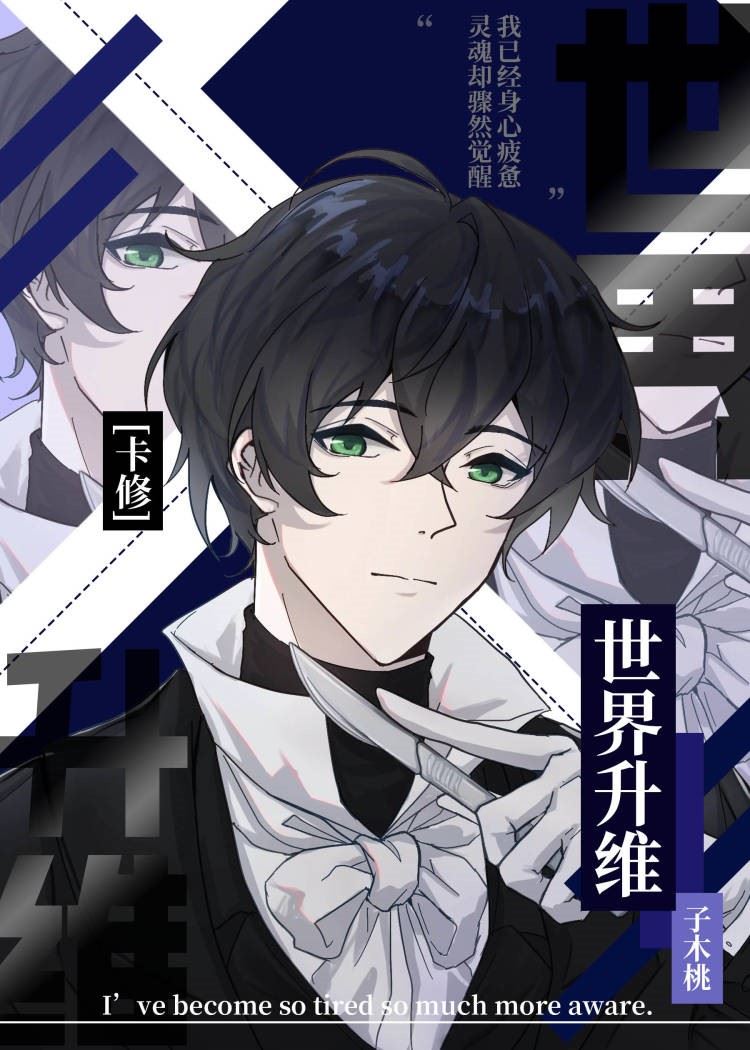
"This definitely isn't me disliking you, how could I dislike myself?" I literally laughed out loud at this exchange. But then I kept thinking about it, and there's something genuinely unsettling—and kind of beautiful—about the relationship forming between Chu Zaizhou and Ka Xiu. Let me explain. Throughout the early chapters, Ka Xiu has been presented as an 'alternative character'—basically a game avatar with randomly assigned personality tags. Chu Zaizhou controls him remotely, like operating a puppet. But after the pod incident, that dynamic has irrevocably shifted. Ka Xiu is now sitting beside him in reality, handing him water, picking up a mop with clumsy movements, and raising that 'extremely subtle arc' of a smile while saying 'Looks like you still need me.' The power dynamic is fascinating here. On one hand, Chu Zaizhou is the 'player'—the one who supposedly has control. On the other, Ka Xiu has developed autonomy. He adjusts his behavior based on personality settings, yes, but he's also showing moments of genuine personality: the confidence, the teasing, the calm competence in combat. When he says 'If I haven't forgotten the address, that is' before teleporting to the next mission, there's a casual swagger that feels completely unscripted. And Chu Zaizhou's reaction—rubbing his temples, zoning out, contemplating life while being handed water by his own alternate self—reveals so much about his character. He's pragmatic enough to adapt quickly ('Instinctively double-tasking from his gaming days'), but also genuinely shaken. The scene where he almost stabbed himself controlling Ka Xiu shows that there's a literal life-and-death boundary now between 'game character' and 'person.' I'm really curious where this relationship is heading. Is Ka Xiu becoming more than a tool? Is there a moment where Chu Zaizhou has to choose between controlling him and trusting him as a separate entity? Because right now, the line between 'my alt character' and 'someone who exists independently' is blurrier than either of them probably realizes.
... Read More
There's this one moment—just one—and I need to process it because it wrecked me in the best possible way. After Chu Zaizhou's gaming pod breaks and his vision splits into dual perspectives, Ka Xiu does something so simple. He crouches down and pokes Chu Zaizhou's cheek. The narration tells us: 'Without the sensory shielding of the holographic gaming pod, a hundred percent real touch transmitted from the contact point, warm and soft.' Warm and soft. In a story that immediately pivots to shadow monsters, translocation gadgets, and world-ending conspiracies, the author chooses to anchor the emotional turning point in physical contact. Two versions of the same person—same consciousness, different bodies—touching for the first time outside the game. Chu Zaizhou's eyelashes trembling, Ka Xiu blinking, and then the mutual realization that nothing is the same. What makes this hit so hard is the context. These two have been sharing a mind, sharing experiences, sharing Combat instinct. Ka Xiu has been Chu Zaizhou's weapon, his companion in battle, his most reliable tool. But until this moment, there was no physical proof of separation. The poke makes it real. Both literally and emotionally. And later, the domesticity of it—all that chaos reduced to Ka Xiu handing Chu Zaizhou water and picking up a mop—creates this strange, tender atmosphere. They're stranded together in reality, two halves of a whole, and there's no going back. The silence between them speaks volumes: "…?" followed by "!!!" says more than any internal monologue could. I keep coming back to the system's line: 'You can treat the game as your cheat code.' But the real cheat code wasn't the gameplay—it was gaining a companion who could exist beside him. Not inside a screen. Not as a controlled avatar. As someone warm and soft who could sit on his sofa and make jokes about needing him. I'm not okay.
... Read More
I keep coming back to the Guanyin statue. Not because it's the creepiest thing in these chapters—it absolutely is—but because I think it's the central symbol of everything this story is about. Guanyin is the Bodhisattva of Compassion. She represents mercy, observation, protection. And what happens to her statue? It gets consumed by black mud. The statue changes appearance depending on whether someone is looking at it directly. It sits in a normal apartment alongside normal neighborly warmth, while something rotting happens beneath the surface of everyday life. This is the thesis statement of the entire novel, I'm convinced. The world looks fine on the surface. Your neighbor brings you soup. The news debunks weird claims with dry humor. But underneath—underneath there's black mud, anomalies, things that shift when you're not watching. The government is preparing for "transition smoothly after disclosure," which is bureaucrat-speak for: we've known about the apocalypse-level supernatural events for years and we're figuring out how to tell people without panicking them. Chu Zaizhou's corporate exhaustion mirrors the world's spiritual exhaustion. He stays up late, works overtime, can't even enjoy a bowl of noodles because his body is failing him—and meanwhile, the actual fabric of reality is fraying. The game he plays, where he creates characters and fights monsters, becomes horrifyingly literal when he FUSES with Ka Xiu. The boundary between escapism and participation just dissolved. The recurring motif of vision—things looking different depending on who's looking, eyes twitching, people not seeing what's right in front of them—suggests this is a story about perception vs. reality. And that's terrifying, because if reality changes based on observation, then nobody can trust what they see. Including themselves.
... Read More
The pacing in these chapters is actually insane when you think about it. We start with Chu Zaizhou half-asleep, half-tracking Ka Xiu through a magic item, lazily absorbing worldbuilding about esper IDs and supernatural levels — very chill, very investigative. Then Ka Xiu returns drenched, they have this tender domestic moment, the system drops the MAIN QUEST bomb, and Chu Zaizhou has this huge internal monologue about taking risks versus playing it safe. The wind shakes the windows, documents fly, he snaps out of it — and RIGHT THEN the doorbell rings. The author doesn't even let him finish planning before the police show up. It's like the universe itself is going 'oh you wanted to think about your choices? SURPRISE, CONSEQUENCES.' And the scene ends mid-investigation with Qing Qing pulling out a pen-like device, leaving us absolutely hanging. The structure of this chapter is basically: calm buildup → emotional peak → philosophical moment → panic → cliffhanger. Classic escalation and I loved every second of it.
... Read More
Can we just talk about how Yu Tianhe's internal monologue goes from gratitude to straight-up terror in about three seconds? That man bows to Ka Xiu, thanks him, and then silently thinks he looks like a serial killer. And honestly? Fair. The description of Ka Xiu cutting apart that entity—"as if watching the process of slicing noodles"—is genuinely unsettling. Yu Tianhe isn't wrong to be creeped out. But here's what's interesting: Ka Xiu doesn't seem malicious. He just... indifferent. The green eyes reflecting their figures, "profound and indifferent." He saved them, but not out of heroism or anything. More like he completed a daily mission and this happened to be happening during it. That emotional detachment is what makes him fascinating. And Fu Chuan! Fresh out of academy, Level D sensing ability, trembling hands, wasting bullets—this kid is EVERY new investigator ever. He's the audience surrogate for sure, but he also has this great moment where he's too terrified to even process what just happened. Meanwhile Yu Tianhe is already running tactical assessments in his head, thinking about spirit bullets and retreat strategies. These two couldn't be more different and it works perfectly. The dynamic between Ka Xiu and Chu Zaizhou is also doing quiet work. We see the real Chu Zaizhou mentally critiquing everything while his avatar Ka Xiu stands there looking mysterious and powerful. The gap between who he is and who he appears to be—that's the whole joke and the whole tension of the story right there.

Leave a comment

You must be logged in to leave comments. or
