Dark River, Ever Bright - Reviews

Dark River, Ever Bright
+Add to Custom List
Sort
Add review
... Read More
Here's the plot setup that got me immediately: Gu Chen fought for Lu Lianning to get the male lead role and lost. Not because he couldn't act—because of SCANDALS. The director chose Ye He, the recent Best New Actor winner, and Lu Lianning got second male lead instead. But here's the kicker—this second male lead has nearly equal screen time to a dual male lead arrangement. The author is clearly setting us up to expect that Lu Lianning's character matters just as much if not more than Ye He's protagonist. The drama-within-the-drama plot mirrors this beautifully. Ye He's character starts privileged and sheltered, then loses his entire family over the course of a year, ends up starving and climbing a mountain in tears. That's a descent arc. And Lu Lianning's character? He's the cold immortal who appears like a deity and saves him. The savior role. The one the protagonist clings to. Think about who gets the emotional anchor moment in that backstory. Meanwhile the real-world plot is cooking along. They're stuck on a mountain as winter hits. Ren Qi is pushing hard to beat the snow. Chen Miao is running errands up and down the mountain every day. Something is building—whether it's between Lu Lianning and Chen Miao, or something going wrong on set, or Ye He's simmering resentment—that's the tension keeping me turning pages.
... Read More
Can we just appreciate how the author builds atmosphere in this section? The whole sequence from the school office to the old residence has this incredible visual rhythm to it. You start in this sterile, fluorescent-lit school office—parents angry, teachers nervous, Li Yan sweating through his apology—and then those black-suited men walk in and the entire energy shifts. It's like a horror movie entrance but for wealthy alpha politics. The description of the Lu family's old residence is sparse but loaded. We don't get a full tour, we just get the living room with a designated building block area for Lu Zerui—which tells us everything about how the family treats him: he has a space, but it's a designated one, cordoned off like a little exhibit. The rest of the house belongs to the adults and their power plays. And then Lu Anling descending the stairs. Half an hour of waiting. The deliberate pacing of someone who knows exactly how much his presence weighs. The author doesn't describe his appearance in detail, just the attitude radiating from him, and somehow that's even more intimidating than a physical description would be. Li Yan sitting on that sofa, pressing his lips together, palms sweating—this is a man who has never faced anyone like this and knows it in his bones. The contrast between the two spaces is what gets me. The school is bright, ordinary, almost mundane. The old residence is heavy, shadowed, suffocating. One world operates on rules everyone understands. The other operates on something older and darker, and Li Yan is standing in it completely unequipped. The visual shift alone makes you feel the threat without any dialogue about it.
... Read More
I need to talk about Li Yan and the Chens because honestly it still chafes. He goes back, hopeful, finds his own place shabby and dusty, and then visits Father Chen. And what does he get? A lecture about Chen Yu's transplant, scholarships, investments. The man beams while describing how his son has 'made something of himself.' Meanwhile, Li Yan—who literally saved Chen Yu's life—is treated like a ghost. Father Chen pats his shoulder, offers a few hundred yuan, bosses him around. That's not gratitude; that's dismissal. And the new Omega wife, who looks about Li Yan's age, sits there serving tea while the past is rewritten. What kills me is the silence. Not one mention of Li Yan. All that sacrifice, all those promises kept, and he's been edited out of the family narrative. Chen Yu's success is celebrated, but Li Yan's role in it? Vanished. It's a subtle betrayal, the kind that doesn't come from malice but from a story so convenient that the truth becomes inconvenient. I kept waiting for Li Yan to snap, to ask 'where was I in this?' but he just smiles and nods. That frozen smile says everything. It's not forgiveness; it's the quiet acceptance of being replaceable. And then there's Liu Qing, calling him brother, offering him a place back with Qin Liu. The loyalty of the old gang versus the blood family that pretends he never existed. Where does Li Yan belong? It's not clear, and that ambiguity is what makes these relationships ache. I reread that scene with Father Chen dyeing his hair and rambling about visitors at the door. The man has moved on so completely that Li Yan's presence is almost an embarrassment. How do you reconcile saving someone's life and becoming a stranger in their home? I don't have an answer, but the author makes you feel the weight of it without ever explaining it. That's character work.
... Read More
The pacing here is masterful. We open with this massive internal revelation—twenty years of belief shattered in a single realization. It's intense, almost overwhelming. But then the author immediately pulls back. Instead of dwelling on the drama, we get quieter moments: waking at night, finding an album, handing it back. The transition from high emotion to mundane action is exactly how grief and shock actually feel. You don't stay furious forever; you go back to your routine, but everything's changed underneath. The structure mirrors this—each section moves forward in time but circles back to the same emotional core. First the revelation, then the album discovery, then the bathroom confrontation, then the hospital, then the gift. Notice how each scene is shorter than the last? The opening monologue is long and breathless. The photo album scene is medium-length with dialogue. The bathroom scene is fragmented, almost chaotic. The hospital and gift scenes are brief, matter-of-fact. This compression suggests Lu Lianning is trying to process everything quickly, to move through it. But the emotional weight doesn't disappear—it accumulates. The ending with the tassel nightlight is deceptively simple. Lu Lianning brings a gift, Li Yan likes it but hides that he likes it, then can't resist playing with it anyway. That's the entire relationship in miniature: hesitant, careful, longing, concealed. The author doesn't give us resolution. They give us motion—characters moving through space, doing small things, avoiding big conversations. And somehow that's more powerful than any dramatic climax.
... Read More
This chapter is a masterclass in pacing. Let me break down why it works so well. It opens with Qi Zhen delivering exposition—a scene that could easily drag if written poorly. But the author makes it snappy, almost darkly comic. Qi Zhen tossing grapes, clearing his throat dramatically, clicking his tongue at the birthdate—these small physical details keep the scene alive. Then BOOM, backstory dump. Efficient. No fluff. Then we cut to Li Yan waking up. The transition is jarring in the best way. From the bright, almost casual tone of Qi Zhen's scene to a dimly lit room, a bandaged man, and heavy silence. The sensory details do a lot of work here—the faint light through the curtains, the needle-prick pain, the肿胀 face. We're immediately grounded in Li Yan's physical suffering before any dialogue starts. The confrontation between Lu Lianning and Li Yan is where the pacing gets interesting. It moves in waves—silence, then accusation, then deflection, then emotional explosion, then that strange quiet laughter at the end. Each beat earns its space. The author doesn't rush the jealousy reveal or the collar grab. It unfolds naturally, almost painfully slowly, which makes the eventual eruption feel earned. And then—the cutoff. Right at the moment of maximum tension, when Li Yan is on the floor reaching for Lu Lianning, we shift to Chen Yu's POV. Seven days have passed. A mysterious Alpha appears. The chapter essentially has TWO cliffhangers stacked on top of each other, and I am NOT prepared for either of them. Some authors would have padded this chapter with more internal monologue or放缓了节奏. But this one trusts the reader to sit with discomfort. The pacing is ruthless. I respected every second of it.
... Read More
The atmosphere in these chapters is just immaculate and I have to talk about the environmental storytelling. The opening image of Chen Miao transferring leftover soup into a thermos before the caregiver's call comes through, his hand shaking and spilling it everywhere—it's such a small domestic detail that grounds everything before the chaos hits. Then you've got the warehouse scene described in this brutal winter night: pitch black sky, biting wind, a street where even the streetlights are broken. Twenty minutes of walking in that cold with a feverish person on your back. The physical discomfort the author paints makes you feel it. On the other side of town, Lu Lianning is at a New Year's Eve rehearsal surrounded by people who care about him, but the setting shifts quickly to his dressing room where he opens his phone and the entire internet seems to be screaming at him. "Boycott Lu Lianning" trending. The contrast between these two worlds—one of desperate physical danger in the cold dark, the other of cold professional ruin in fluorescent-lit corridors—is really striking. Neither character gets a break in these chapters, and the settings themselves seem to conspire against them.
... Read More
I'm sitting here thinking about how the dialogue in this chapter absolutely destroyed me, and not in the way you'd expect. Like, sure there's plenty of talking—'Relax!', 'Do you hear me!', 'Wait...wait... please stop'—but it's what Chen Miao DOESN'T say that's haunting me. The very first line: 'Thank you, Lu-ge.' Just before lips meet. Four words. That's it. No poetry, no declaration, no trembling voice. Just a quiet, flat acknowledgment. And the narrator immediately points out—'There was no emotion in his voice—only a simple, polite expression of gratitude.' This is the first time in the entire chapter that Chen Miao speaks, and it's delivered like he's ordering coffee. Meanwhile Lu Lianning's dialogue is all imperative. Commands. 'Relax!' 'Do you hear me!' 'I said, relax!' He never asks anything. He never checks in. When Chen Miao stammers 'Wait...wait... please stop, it won't fit...really...' Lu Lianning's response is 'Besides, wasn't this what Chen Miao wanted?' NOT A QUESTION. That's a rhetorical mic drop from someone who's already won. But the most brilliant use of voice is Gu Chen's entrance. 'This is a surprise.' Then later, 'I told you to take care of him, and you really went all out, didn't you? Even served him in bed?' The way Gu Chen says 'served him in bed' like it's some mild complaint about restaurant service? Perfect. Absolutely perfect. It shows how disconnected everyone is from actually caring about Chen Miao as a person. And then Chen Miao's only other lines are: 'Lu-ge, let's go to the bedroom' (flustered, desperate) and 'Mr. Gu' (proper, distant). Two modes. One is pleading, one is professional. Never once does he say 'I don't want this' or 'why are you doing this' or even 'what are we doing.' His voice fails him when it matters most. The author's narrative voice is cold too—detached, almost clinical when describing what should be intimate. 'His lower body eagerly moved toward the exposed entrance.' Not 'he wanted this.' Not 'he was eager.' Just 'his lower body eagerly moved.' Like it's autonomous. Like Chen Miao isn't even in control of his own desires. That's 2024 writing, baby.
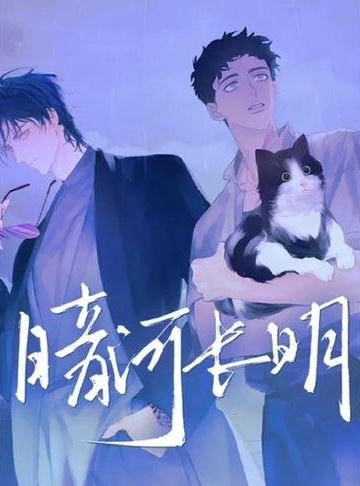
... Read More
I need to dedicate a whole note to Du Lin's dialogue because this author knows how to make a side character live. "What's the deal? Every time, you say you have something to do. What are you so busy with? Are you in a rush to scam someone!" — This is exactly how a frustrated friend talks. It's crude, it's impulsive, it's affectionate violence disguised as anger. And the fact that he immediately regrets it ('The words slipped out before he could stop himself') makes him feel real, not crafted. Lin Sheng's voice is completely different, and that contrast is what makes the dialogue sing. Where Du Lin is loud and scattered, Lin Sheng is economical. "Come over and join us." "That's enough training for today." "What do you mean?" Each line carries weight because he's saying so little. His silence speaks louder than Du Lin's entire monologue. And Li Yan's dialogue—minimal, trembling, defensive. "It's a misunderstanding… a misunderstanding…" The repetition here is doing heavy lifting. He's not just talking to the Alphas; he's trying to convince himself. The narrator's voice also deserves a mention. It's close third person, deeply embedded in Li Yan's head, but it has this dry, wry quality—especially in Li Yan's internal monologue. Things like 'Could he say he didn't need it!' and 'That brat!' give the whole narrative a personality that's distinct from any single character.
... Read More
Let me just say this: I have never been more anxious about a character's situation in my entire life. Li Yan has NO PHONE. NO MONEY. A seven o'clock CURFEW. Servants reporting his temperature to some mysterious young master. He was so weak from illness that he could barely sit up, and now he's being moved around like he's some fragile package. And the stakes aren't even clear yet — is he being protected or imprisoned? The line between those two things seems dangerously thin in this world. But what gets me is the pheromone incident. Something happened where his Omega pheromones leaked and it ruined whatever event Lin Sheng was at. In an ABO world, that's not just socially awkward — that's potentially catastrophic. What does that mean for Li Yan's safety? For his restrictions? For why he's being kept under such tight control? And then Lu Lianning comes up in conversation and Lin Sheng can't stop thinking about him, and the butler mentions that Lu Lianning 'watered every plant' and 'opened a can of cat food' — these mundane domestic details that somehow feel like evidence in an investigation. Who is the young master? Who is Lu Lianning? Why does Lin Sheng feel this uncanny familiarity? And what's the real reason Li Yan can't leave this house? Every unanswered question feels like a tripwire and I'm terrified of what happens when someone steps on one. The tension isn't just building — it's coiling like a spring and I am NOT ready for what's coming next.
... Read More
I need to talk about the river metaphor because it's everywhere and I only fully understood it at the very end. From the beginning of Li Yan's story, he's been wading through a dark, muddy river alone. No visibility, no prediction, just stumble and fight and try to stay afloat. The survival logic he clung to his whole life was: run faster than the pain, brace before the next blow, never stop moving. But then Lu Lianning says those words and Li Yan STOPS. He looks around. And the first thing he notices isn't the river — it's the sky. "The sky was clear." The river doesn't disappear. It transforms. "Only when he looked up did he see—the sky was clear. From then on, the dark river flowed ever bright." That's the entire thesis of this novel in two paragraphs. The suffering doesn't end. The river is still there. But having someone who yields to your tears, who challenges your survival logic, who says "I'll handle it for you" — that changes everything about how you move through it. Other symbols stacking up: the fruit knife (courage for destruction vs. courage for love — Qi Zhen's interpretation is wild but fitting), the hundred thousand yuan (a lifetime of savings vs. one piece of clothing — the inversion of worth), the burial plot (Lao Yue finally laid to rest, which frees Li Yan too), and the light — Lu Lianning now sleeping in it, Li Yan finally resting his head on a chest instead of running. "It turned out that Li Yan could cry, and his tears could be useful." That line alone carries more thematic weight than entire novels.
... Read More
Okay so this chapter had me genuinely holding my breath. The hostage scene with the fruit knife? Absolute tension masterclass. Let me walk through why this works so well structurally. First, the escalation pattern is textbook perfect. You've got Li Yan physically broken from yesterday's fight, sedated, dragged across cities like luggage — then he wakes up, processes his situation, and makes a choice. Not a gradual realization, but a cold, calculated decision to grab that knife. The pacing here is brutal in the best way. We don't get a montage of him planning. He just... does it. One minute he's refusing dinner, the next he's pressing steel to someone's throat. What really sold me though is how the author flips the power dynamic without breaking credibility. Li Yan is a Beta who lost a fistfight against an Alpha yesterday. He can barely stand. And yet here he is, holding the most dangerous person in this estate hostage. The reason it works isn't because Li Yan becomes suddenly competent — it's because the author gives us the one advantage Li Yan actually has: Lu Lianning's absolute control over every guard in that courtyard. Nobody moves without his say-so. So Li Yan weaponizes that hierarchy against itself. He knows they'll obey him over their young master because Lu Anling would have their heads if anything happened to Lu Lianning. That calculation is the entire plot engine of this scene. And then — BAM — the sniper. Who was at that window? A forty-something man with a hunting rifle. Not a bodyguard. Someone positioned strategically, probably prepped for exactly this scenario. This wasn't random. Lu Lianning anticipated the knife. He knew Li Yan would try something desperate. The structural irony here is devastating. Li Yan thinks he's outmaneuvered everyone, that he's turned their own loyalty system against them. The gate is opening. He's about to win. And the author drops the other shoe so cleanly — just one sharp pain, one numbing sensation, and it's over. No dramatic monologue, no last-minute rescue. Just the clinical reality that you cannot plan your way out of being completely trapped. This chapter also loops back beautifully to earlier setup. Remember how Li Yan threw the first punch yesterday? How sensitive he was about Chen Yu's fate? That emotional trigger — it's the same one that drives him to grab the knife tonight. He's not escaping for himself. He's escaping to get to Chen Yu. The plot thread is consistent, not scattered. But here's what really got me: the gate opens. The bodyguard says yes. Li Yan's eyes light up. He's actually going to make it. And then the arrow. That split-second where hope and devastation occupy the same frame — that's the moment this chapter lives and dies on. The author doesn't soften it. Li Yan doesn't get a heroic last stand. He just goes limp. The knife clatters. And Lu Lianning's response isn't relief or anger — it's immediate, physical domination. Elbow to the abdomen, easy as breathing. This is tight plotting. Every beat earns its place. Nothing pads the scene. Even the detail about Li Yan's swollen face being turned away so it doesn't press against anything — that's character work disguised as logistics. It shows Lu Lianning watching him, noting details, even while maintaining control.
... Read More
The stakes in this story just kept escalating in ways I didn't expect, and I need to process it. At the beginning of these chapters, the conflict is simple: Li Yan suspects something is wrong, and he's right. But what makes it unbearable is how the author ratchets up the stakes with each revelation. First, Li Yan discovers he's pregnant. Then he realizes this is physically impossible for a Beta—meaning Lu Lianning has been doing something medically dubious to him for months. Then he begs for an abortion, and Lu Lianning refuses. Each beat raises the question: how much worse can this get? And the answer is always: worse. The most horrifying moment isn't the confrontation—it's the aftermath, when Li Yan stops fighting and just… withers. He stops eating. Stops speaking. His body literally shuts down. This is the ultimate conflict: not Li Yan vs. Lu Lianning, but Li Yan's body vs. itself. His own biology has become the battleground, and he's losing on every front. But the real nail in the coffin is Lu Lianning's negotiation. He's kneeling. He's holding Li Yan's hand—bones visible. And he's asking 'What will it take for you to agree to have this child?' As if Li Yan has options. As if this is a business deal and not a hostage situation. The fact that Li Yan still tries to find a way out—'Then can you let me go?'—shows that even at his lowest point, he's still fighting. And Lu Lianning's silence when asked that question? That's the moment the reader realizes: there is no resolution here that doesn't involve more damage. The stakes have gotten so high that every possible outcome hurts someone.

Leave a comment

You must be logged in to leave comments. or
