Dark River, Ever Bright - Reviews

Dark River, Ever Bright
+Add to Custom List
Sort
Add review
... Read More
The atmosphere in this chapter is so thick you could cut it with a knife. We start with snow—heavy, relentless snow that makes Li Yan's eyes red and his gloves disappear. It's not just weather, it's emotional weather. Everything is cold and isolating. Then we move indoors to this pristine dining room where Lu Lianning sits at the head of the table like a king holding court, arms crossed, fury barely contained. The power dynamics are visible in the furniture arrangement alone. But what really gets me is the bedroom. Li Yan rushing up there, closing the door like it's a fortress. The fever scene—sweating, weak, food coming back up. It's visceral. You can feel the sickness in your own bones. And then Lu Lianning, who hasn't slept, finally lying down beside him. The stillness after the storm. It's quiet but loaded with everything unsaid. There's this one moment where Li Yan is eating ramen with 'eyes half-lidded' and the narration tells us 'even the simple joy of eating ramen felt off in front of Lu Lianning.' That's worldbuilding through emotional architecture. The house itself becomes a character—a place of safety but also imprisonment. The study where Lu Lianning disappears with those pregnancy books. The hospital where Zheng Zhi operates while his phone buzzes with updates about someone else's husband. The car where Zheng Zhi sits in silence reading messages about shrimp. The author paints these spaces so specifically that you feel trapped alongside the characters. The snow outside, the warm interior, the fever dreams, the clinical hospital—each location mirrors their internal states. And that recurring image of food going uneaten or tasting wrong? It's not just about pregnancy cravings. It's about how the world loses its flavor when you're disconnected from yourself.
... Read More
The pacing in these chapters is absolutely insane and I respect the author's commitment to making us wait for everything. We open with this slow-burn domestic tension—Chen Miao getting dressed, the food aromas, the obvious aftermath of last night's encounter. Gu Chen walks in and we get this awkward silence before the real confrontation begins. Then Gu Chen drops the Ye He backstory, which feels like a sudden pivot but actually grounds everything we've seen so far in context. The car scene moves fast—Gu Chen lights a cigarette, rolls down the window, and just starts laying it all out. It's efficient exposition that doesn't feel forced because Gu Chen clearly has been thinking about this for a while. After that, we cut to Chen Miao's apartment and the pace slows way down. This is where the author really shows off—everything becomes quieter, more intimate. The noodle cooking, the sudden pain, the bloodstains, the midnight laundry. These scenes breathe. We're meant to sit with Chen Miao's suffering, to feel the weight of his exhaustion. The transition from the loud, tense car scene to the quiet, dark apartment is masterful. Then—just when we think we've been ground down enough—we jump to Europe. Sun, beach, surfing, coconuts. The shift is so jarring it almost feels like a dream sequence. But it works because Lu Lianning's internal monologue sets it up: he's deciding whether to bring Chen Miao because he's convenient. The author uses this pivot to show how disconnected Lu Lianning is from the reality of what he's put Chen Miao through. One minute we're watching a man scrub blood out of his underwear by moonlight, the next we're on a Mediterranean beach with sunshine and sunscreen. The chapter ends with that photo being taken and the crimson clouds—and then cuts off mid-sentence during the coconut scene. Not a clean cliffhanger, just... stopping. Almost like the author couldn't bear to give us closure. I immediately needed to read the next chapter. The rhythm of suffering → relief → new suffering → escape → photo that might expose them... it's relentless and I'm obsessed.
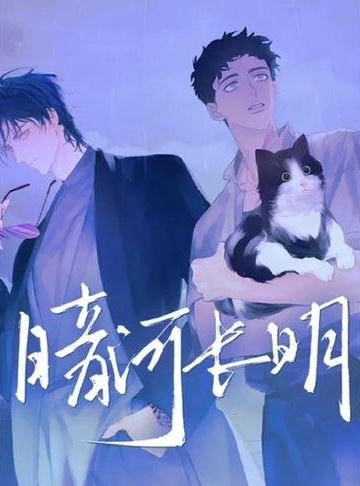
... Read More
Okay, let me just say this: the interrogation scene between Lu Lianning and Li Yan is one of the most tense things I've read in a while and I am SHOOK. The power dynamic is so obvious but the author never lets us forget it either. Lu Lianning sitting on the sofa, commanding, while Li Yan stands before him like a scolded child. 'Whose car did you just get out of?'—just three simple questions that carry the weight of a thousand unspoken accusations. And Li Yan's response? trembling, stammering, making up this elaborate lie about meeting through a hospital visit. The reader knows he's lying but Lu Lianning clearly knows too, and that shared knowledge between them is what makes the scene absolutely electric. What really gets me though is the escalation. It starts with anger—pure, cold, controlled anger—and then shifts into something far more complicated when Lu Lianning touches him. Li Yan steps back, grabs his wrist, reminds him they did it yesterday. And Lu Lianning's response? 'Oh? And what if we did?' That line hit me like a truck. It's possessive, it's punitive, but underneath it there's something almost hurt. Like he's punishing Li Yan for enjoying himself while Lu Lianning was stuck feeling insecure. The stakes here aren't just about jealousy—they're about control, trust, and the terrifying vulnerability of being someone who's been 'kept locked up' their whole life. Then Lin Sheng's investigation adds this whole other layer. His cousin drops this bombshell about Li Yan's past—brrought back years ago, some grudge, confined until he could barely speak, mentally unstable. This reframes EVERYTHING. Suddenly Li Yan's fear of Lu Lianning isn't just about a possessive partner, it's about someone who may have been imprisoned and is now trapped in a different kind of cage. The stakes just went from relationship drama to something far darker and more urgent.
... Read More
Okay so I need a minute. I need to sit down with a glass of water and process what I just read. That one word — "Mom" — whispered in the dark by a five-year-old who had just climbed into bed with someone who clearly wasn't his mother... and Li Yan's reaction. He felt his heart jolt. He opened his eyes wide. An "indescribable ache" filled his chest. And then he just... lay there. Didn't pull away. Didn't push the kid off. Let himself be held from behind while that small body pressed warm against his back. I am not okay. What makes this hit so hard isn't just the sweetness — though God knows it's plenty sweet — it's the context. This is a kid who ran away because something was wrong at home. Who knocked on someone's door late at night with fury and fear. Who tested the waters, saw rejection (Li Yan left him waiting outside), and still didn't leave. He followed. He found a way in. And the first thing he does after confirming that scar Li Yan has is whisper that word in the dark, afraid of waking him, careful not to make noise. The butler witnessed this scene from afar and stayed until the candlelight flickered softly before leaving. That detail alone tells me everything about what just happened here. Two strangers becoming something like family, lit by a single candle, completely unaware they were being watched. And then Li Yan agreeing to sing "Brother John" in English because the kid asked for a lullaby and was too proud to cry about it. I can't — I genuinely cannot. This is the kind of slow-burn found family that I will die on a hill about.
... Read More
I always thought Qi Zhen was just the chaotic neutral force in this story, the rich cousin causing problems. But this chapter completely rewired how I see him. Watch Li Yan pull out the knife and then he has this entire internal monologue about who Li Yan is — "a greedy and foolish man" → "a somewhat clever person" → "an ordinary person" → "an ordinary person who wasn't quite ordinary." He literally tracks Li Yan's entire character arc across years and still can't understand him. And then the line that got me: "Logically, after all the suffering and pain he endured, he should have changed. Yet, even in his thirties, he remained naive and impulsive." Qi Zhen attributes it to Lu Lianning taking care of him. Fair. But the moment where Qi Zhen asks to keep the fruit knife? He says gripping it could give someone "the courage to embrace destruction and the bravery to pursue true love." And Lu Lianning calls him a lunatic. THIS is the kind of character interaction that makes the whole novel worth reading. Everyone sees Li Yan differently — Lin Sheng thinks forgiveness is unworthy, Qi Zhen thinks it's inexplicable, but only Li Yan knows what he actually gained. And the ending... Li Yan lying in bed wrapped in Lu Lianning's arms, finally able to sleep in the light? That's not just plot resolution, that's character transformation.
... Read More
The stakes in this chapter went from personal to generational and I was NOT ready. On the surface level, the conflict is straightforward: Li Yan is recovering from severe trauma and Chen Yu is frustrated that his friend won't move on. But the deeper conflict — the one that has me genuinely anxious — is about TRUTH versus survival. Li Yan survived something terrible. He rebuilt his life. He has relationships now (Liu Qing, Chen Yu, even the quiet garden moments). And the idea that all of that could be unraveled by a revelation about his past? About WHO he is? The Lu Zerui storyline raises the stakes even higher. This is a CHILD caught in the crossfire of adult secrets. He's already tough, already defending his father against classmates, already building castles out of blocks and kicking them down when reality doesn't match his expectations. And now he's holding a photograph that could shatter his entire understanding of who his family is. When the butler says "He is your mother" and Lu Zerui immediately suspects a LIE, that's not just kid skepticism — that's instinct. That's the moment where a character's entire world fractures. What kills me is that we, the readers, know more than any of these characters. We KNOW Li Yan was tortured. We KNOW Lu Lianning is involved. We KNOW there's a hidden photograph. But none of them know what we know. That dramatic irony is EXCRUCIATING and I love it. Every conversation between these characters is laced with unspoken tension, and I'm just sitting here sweating.
... Read More
I need a minute. THIS SECTION. Qi Zhen telling Lu Lianning to drug Li Yan again, to lock him up and teach him until he behaves. Like it's nothing. Like it's a training problem, not a human being who just gave birth and tried to kill himself. And Lu Lianning saying 'I can't do it'—his voice just breaking—and Qi Zhen basically saying then let him go. The stakes here are so visceral. Li Yan's body after childbirth, his wrists already scarred from a previous attempt, the baby he just brought into this world. Every time he tries to die and fails, Lu Lianning gets more trapped. It's a losing bet and they both know it. Qi Zhen lays it out brutally: either Li Yan dies and he's free, or Lu Lianning breaks and lets him go. There's no happy ending on the table. And Li Yan's own internal monologue at the end—why me, why always me, all those people he failed apologizing to him in his head—this isn't just dramatic tension, this is someone drowning and the water keeps rising. I was literally holding my breath reading this.
... Read More
That opening scene where Li Yan bowing to Qin Liu hits different because it sets up the entire power triangle we see play out across these chapters. Three bows to a man barely acknowledging him—then Lu Lianning walking in like he owns the air everyone breathes. The plot twist isn't some big revelation; it's watching Li Yan realize his escape routes were always an illusion. He thought he could disappear for Chen Yu's treatment, save money, quit smoking—he did all that—and it still wasn't enough to get out from under Lu Lianning's shadow. That's the real narrative arc here: a boy who thought effort meant freedom, learning too late that some debts can't be paid off. The subplot of the stores being smashed was just performance, really. The actual destruction happened later, in that car, in that room. The author knew exactly what they were doing when Li Yan's internal monologue runs out of oxygen mid-thought—"Could Chen Yu really be dragged into this?" That question hanging there while Lu Lianning drags him out, while Qin Liu can only sit with cold tea... it's masterful misdirection. The real story isn't the 4.3 million or the 2.96 million. It's about how systematically someone erases another person's agency until even their resistance feels scripted.
... Read More
I need to talk about this moment with the fried eggs because it absolutely wrecked me. Chen Miao makes these perfect little heart-shaped eggs, trying to charm his way into Lu Lianning's good graces, and what does our ice-king do? He cuts right through the middle like he's bisecting a broken heart and then shreds it into a messy pile before eating it. That's not just cruelty—that's a plot point that changes everything. From that scene forward, Chen Miao stops making fried eggs for him. The whole dynamic shifts. You can feel it in the narrative. It's this tiny moment that carries so much weight, and I kept coming back to it because it represents everything wrong with their relationship: Chen Miao performing love through food, and Lu Lianning systematically destroying every gesture. But here's what made this storyline work for me—the author doesn't spell it out. There's no dramatic confrontation, no tears, no big emotional speech. It's just a guy eating breakfast and deciding, quietly and permanently, that he'll try a different approach. That restraint is what makes the plot hit so hard. And then, months later, when Chen Miao gets that haircut—shaved it himself with a razor blade to save money—and Lu Lianning asks 'Who gave you that haircut?' with this weird, almost jealous edge to his voice? I knew something was happening. Lu Lianning had spent the entire winter pretending he didn't care, and now he's suddenly noticing everything about Chen Miao. The plot was building toward something, and I just had to wait and see what would happen when the ice finally cracks.
... Read More
The final scene description of Shattered Window is absolutely cinematic and I cannot stop thinking about it. Lu Lianning curled up inside this imagined mother's warmth, surrounded by golden sunflowers — symbols of hope AND happiness, the text literally tells us — and yet it reads as a burial. "What dripped from his body wasn't just paint, but scars woven from blood." That line wrecked me. The color palette shifting from bright yellow to dying, withered gold — it's a visual metaphor for his entire arc in this film and possibly in life. Then the story pivots from that haunting artistic death to this grotesque underground venue and the contrast is visceral. Rust on the door, basement levels, Omegas in latex bunny ears. The worldbuilding here is doing heavy lifting — we're learning about this society's hierarchy through Chen Miao's confused eyes, and it's horrifying precisely because HE doesn't understand what's happening. When Lu Lianning pins his wrist and says "This isn't the entrance," he's protecting Chen Miao from the full scope of his world. The basement lighting is described as "bright as day" which makes the abuse below feel almost clinical, exposed. This author knows how to make a setting feel alive and dangerous simultaneously.
... Read More
"I'll handle it for you, Li Yan." That's it. That's the line. Three sentences if you count the ones before it, but really it's one promise that changes the entire trajectory of the story. Lu Lianning's dialogue in this section is so unlike his usual self. He's not calculating, not negotiating, not playing some long game. He's frustrated, defeated, giving in — and that's when he becomes most honest. "Fine! Go ahead. As long as you don't kill him, no matter how you stab him, I'll take care of it." That's not a lawyer speaking. That's someone who has watched the person he loves nearly destroy themselves and decided to share the burden. Qi Zhen's dialogue is different entirely — theatrical, philosophical, almost poetic. The knife line about "courage to embrace destruction and bravery to pursue true love" is the kind of thing only a character like Qi Zhen would say. And Lu Lianning calling him a lunatic in response? Perfect. The rhythm of their relationship in three words. Lin Sheng's one real question — "Why?" — cuts deep because it's the question the reader also wants to ask. And Li Yan's vague response? That's the most truthful thing in the whole chapter. Some answers can't be spoken. They can only be lived. The narrator's voice too — that final extended metaphor about the dark river isn't dialogue but it functions like it. It's the story speaking directly to us, and it's devastating.
... Read More
Let's talk about how these characters actually speak to each other, because oh boy, do they ever talk PAST each other. Lu Lianning's dialogue is all sharp edges and rhetorical violence: 'What's your problem?' 'Is the table not dirty enough for you?' But the genius is in what he doesn't say. When Li Yan climbs the stairs refusing to eat, Lu Lianning follows him. He wants to drag him down. But he doesn't. He just stands at the foot of the stairs and clenches his jaw. The silence between his lines is where the real conversation happens. Li Yan's voice is softer but equally telling. 'I'm not crying. It's snowing outside, and I got wet.' That denial, delivered to someone who clearly knows he's lying—it's so painfully tender. And later, 'I don't feel like eating anyway!' isn't really about food. It's about agency. It's about saying NO when you've been saying YES to everything else. Zheng Zhi is the only one who speaks directly, even through text. 'No need to go into such detail.' Polite, restrained, but also clearly struggling not to ask 'what detail? What is happening?' His clinical detachment cracks slightly through those careful words. The butler operates in minimal, diplomatic phrases: 'Let him rest for a while. I'll bring him something to eat later.' He's the stage manager of this domestic drama, acknowledging the chaos without entering it. And those messages from Lu Lianning to Zheng Zhi—'He's becoming really fierce. Today, he loudly complained that I'm annoying.' Who talks like that?! It's so formal and detached, like he's reporting symptoms instead of describing his partner. The dialogue here reveals everything about how broken their communication actually is.

Leave a comment

You must be logged in to leave comments. or
