Dark River, Ever Bright - Reviews

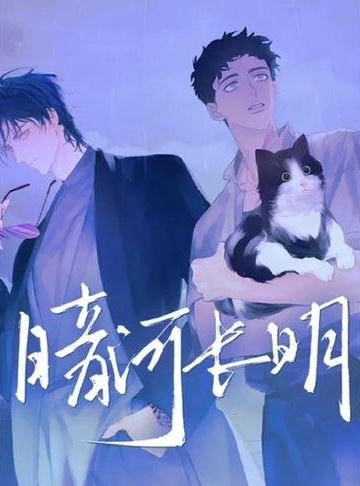
Dark River, Ever Bright
+Add to Custom List
Sort
Add review
... Read More
Okay so this chunk of the story is doing a lot of heavy lifting behind the scenes. On the surface it's a kid beating up another kid over bread, right? But look at how it connects everything. Lu Lianning's entire arc here is basically a tightening noose—he dreams about losing Li Yan repeatedly, which is almost poetic because he literally cannot stop losing him even in his subconscious. The child being raised becomes this physical manifestation of his failure, and the fact that the kid looks more like Lu Lianning each day? Chef's kiss for dramatic irony. The real plot bomb drops when Li Yan gets called to school. This is the first time we see him actually parenting, and the bread-making detail is deceptively small—it's not just cute domestic fluff, it's the catalyst for everything that follows. One piece of bread, a punch to the stomach, a scraped face, and suddenly the entire Lu family machine rolls in. Those tall Alphas in black suits showing up? That's not a normal teacher conference response, that's the old residence asserting dominance through sheer intimidation. And Lu Anling on the other end, sitting upstairs like some sort of patriarchal judge, takes the whole thing to a completely different level. What really gets me is how Li Yan handles it. He doesn't fight back, he apologizes, he pulls his son along and leaves. The power dynamic shift is immediate and brutal. He thought he'd found some kind of peaceful life, and one playground incident proves he never escaped anything.
... Read More
Let's talk about the symbolism in these chapters because wow, the author is stacking imagery like it's going out of style. The red thread ring — obviously referencing the Chinese folk belief that red threads connect destined lovers across time and space. But here's the twist: Li Yan made it himself, with his own hands. This isn't fate handing them together; this is effort, intention, choice. He's saying: I chose you, I worked for this, I'm not leaving. And Lu Lianning wearing it all night, almost taking it off to examine it and then putting it back on, trembling with the flowers — this is a man who spent a decade feeling unworthy of tenderness finally receiving proof that he is chosen. Then there's the birthday element. Lu Lianning forgot his own birthday but Li Yan remembers. This reversal — the one who abandoned everyone finally being the one who shows up — is thematically massive. It completes a decade-long arc of absence and presence. And that line: "It turned out his heart wasn't made of stone, but of a radiant, sparkling diamond — one that had been removed and placed into Lu Lianning's hand." This is the core metaphor of the entire novel distilled into a single passage. The heart that was thought to be cold was always precious, just misplaced. "Placed into Lu Lianning's hand" — it wasn't given as a gift to be admired from afar, it was handed to him to hold, to keep, to protect. That's the book's thesis in one sentence. And Li Yan saying he is "the best Li Yan from Wujingwan Town"? That's identity as self-determination. He's not defined by his past failures or the rough edges he carried — he's defined by this moment, by this choice to be better, to be here, to cook dinner and wear red thread rings and remember birthdays. The whole story converges on this image of two men in a modest kitchen at sunset, and it's the most powerful ending beat imaginable.
... Read More
Let me ask you something. Lu Lianning could FORCE Li Yan. The text literally says so. 'Sure, he could force it.' But he doesn't. Why? Because if he does, what happens? The stakes aren't just about a medical checkup—they're about what happens to this entire power dynamic if Lu Lianning crosses that final line. Li Yan has already lost weight, his ribs are showing, he's traumatized to the point of physical resistance. And yet Lu Lianning is STILL trying to find a way through instead of just taking it. The internal conflict is the real conflict here. On one side: frustration, anger, the need to fix something he broke. On the other: guilt, maybe something he won't name, the realization that he pushed too far. And the external stakes—Zheng Zhi's warning, the deteriorating health, the fact that Li Yan is now physically fighting back—that all raises the pressure. Every scene in this chapter is a countdown to something breaking. The cat scratch at the end? That's the author whispering 'this is how it starts'
... Read More
Let me just say—Lu Lianning's internal monologue about his father is some of the most quietly devastating writing I've read. He's sitting across from Ren Qi, watching Gu Chen drink in silence, and his thoughts go from 'maybe I wanted to fight him' to 'with just a flick of Lu Anling's finger, my opportunities could be wiped out' to 'this was likely only the beginning.' No melodrama, no shouting—just the cold realization of a son who loves his father but is trapped by him. And then there's Chen Miao on the phone with Qi Zhen: "Were you serious about offering a million for one night?" He's standing outside a hospital in the snow, about to make the worst decision of his life, and his voice sounds almost casual. That's what makes it hit so hard—the everyday tone of someone selling themselves. And the Alphas in the hotel room? Their dialogue is properly vile. 'Your face is average, but your body feels pretty firm. Betas like you last longer than those delicate Omegas.' The casual cruelty, the entitlement—it's exactly the kind of dialogue that makes you want to throw the book across the room. But the scariest line has to be the older Alpha saying 'It's a new drug. Perfect time to see how well it works.' He's treating Chen Miao like a lab specimen. Meanwhile Qi Zhen stretches in his chair with 'an uncontrollable thrill'—this man is enjoying someone else's suffering like it's entertainment. The author's voice across all these characters is so distinct. You never lose track of who's speaking.
... Read More
I need to talk about Lu Lianning because THIS MAN. He is simultaneously the most romantic and most self-destructive character I have ever encountered in fiction. Let me count the ways he's ruining himself: First, he damaged his OWN gland. With a STONE. Against a ROTTEN ORANGE. Do you know how specific and pathetic that image is? He didn't just hurt himself—he made it wasteful, unnecessary, almost comically self-sabotaging. And when Li Yan points out that the damage is irreversible, Lu Lianning's response is basically: 'I know, but is losing YOU reversible?' CHARGÉ. But here's what makes him complex: he's also deeply self-aware. He KNOWS he's being reckless. He KNOWS Li Yan thinks he's hopeless. And he does it anyway because apparently the pain of staying close to someone who doesn't want you is less than the pain of pretending you're fine without them. The relationship dynamic between these two is... complicated. Li Yan clearly still cares—he stays, he listens, he eventually says 'Alright' which is basically him agreeing to whatever Lu Lianning wants. But there's resentment too. Remember how Li Yan thought Lu Lianning was 'controlling' him before? Those questions about what he ate, what he did? Li Yan interpreted that as surveillance, but now we see it was just... love. Clingy, desperate love, but love nonetheless. And then there's Lu Zerui, the son who seems to exist primarily to make Lu Lianning miserable. The kid wants the RED SCARF. The same red scarf Li Yan made for him. And Lu Lianning grabs it and wears it like a wounded animal claiming its last shred of territory. Classic move. I'm also obsessed with how Li Yan's relationship with Song Ruan is mentioned. 'Though not even taken seriously by Lu Lianning, [Song Ruan] had remained captivated by his face.' OUCH. That's such a casual cruelty to drop in there. Lu Lianning doesn't even remember who Song Ruan is, but he knows Li Yan was once captivated by someone else's face. The jealousy runs DEEP. These two are toxic together and I cannot look away.
... Read More
The atmosphere in this chapter is suffocating and I need to talk about how the author uses setting to mirror emotional states. Start with that bedtime scene. It's warm, peaceful—Li Yan reading stories, humming, Lu Zerui resting his head on his arm catching the scent of soap. This is the calm before everything shatters. And then Li Yan drops that line about him not coming back anymore. The warmth becomes ice. The courtyard at night—Li Yan chasing after him, Lu Zerui running too fast, tripping on the ground. The physical vulnerability mirrors the emotional one. That scraped knee drawing blood? So visual, so stark against the pale skin. And then Li Yan applying disinfectant, his hands trembling. The domestic intimacy of caring for a wound becomes the only language either of them knows. "The floor beneath Li Yan's bowed head was damp"—was that tears? The text implies it. A grown man crying silently while treating a child's injury. The image is devastating. And then Wujingwan Town itself. Rain, cold, damp. The weather is always rain here—it's been established as a permanent feature of this place. The town feels trapped in this perpetual melancholy, and the characters reflect it. "Both father and son had taken turns telling him they forgave him, even though Li Yan had never actually apologized." This line about the empty house feeling empty after Lu Zerui leaves hits so hard. Li Yan alone in that courtyard, looking at the empty house, feeling no relief. The architecture of grief—empty rooms, closed doors, the space between people who share a home but not understanding. The world-building here isn't about fantasy elements or grand descriptions; it's about how a house can feel like a prison, how rain can feel like isolation, how a small room becomes a battleground for love. The transition from the warm bedroom to the cold courtyard to the rainy doorway where Lu Lianning appears—each shift in location mirrors an emotional shift. The author never lets us forget that this family exists in a constant state of weather, both meteorological and emotional.
... Read More
Okay so I need to talk about Chen Miao because this whole scene with Lu Lianning left me emotionally wrecked and I keep thinking about it. The way Chen Miao just stands there taking it—literally and figuratively—while whispering 'Thank you, Lu-ge' like it's some polite customer service exchange instead of the most intimate moment of his life? That juxtaposition killed me. Remember how the text says 'There was no emotion in his voice—only a simple, polite expression of gratitude'? That's not just describing a kiss, that's describing someone who's completely dissociated from their own body. Chen Miao is here but not here. He's allowing himself to be handled like he's packaging up a gift, not like he's about to lose his virginity to a man half his size. And then Lu Lianning goes and toys with him—'You didn't think I was going to kiss you, did you?' Like that's the punchline. Like Chen Miao's entire emotional state is a joke. The fact that Chen Miao doesn't even push him away? That's not submission, that's something darker. That's someone who's so used to being an object that being treated like one doesn't register as surprising anymore. But here's what got me—the rain. The storm outside gets heavier as things get more intense. 'The sound of the rain filled his ears, growing heavier, with droplets tapping against the window.' Nature is screaming while Chen Miao can't even make a sound. He's panting 'like a fish deprived of oxygen' and the author keeps reminding us it's his first time, like we're supposed to feel bad for Lu Lianning's lack of consideration or for Chen Miao's trauma dump disguised as sex. By the end when Chen Miao's consciousness blurs and he 'couldn't distinguish whether the sensations in his lower body were pain or pleasure'—that line is brutal. That's not romance. That's someone breaking down. And then the next morning when Chen Miao is cooking in Lu Lianning's oversized clothes with bite marks everywhere, looking 'rather unwell'? I want to hug him through the page. This emotional journey from 'thank you' to 'please stop' to 'I'm making breakfast' is the most devastating arc I've read all year.
... Read More
Okay so let me just say this: the blocker patch reveal in Chapter 19 is the kind of plot bomb that made me drop my phone on my face. Like, we've been sipping slow-burn tension with Lin Sheng coaching Li Yan, everyone getting along, and then BAM—Du Lin rips off that patch and suddenly we're in completely different territory. A Beta who's been marked? That changes EVERYTHING about how we read Li Yan's character up to this point. What's brilliant about the setup is how the author gives us false leads. First it seems like Li Yan is just some poor neglected young master (and honestly, we're meant to feel sorry for him). Then the 7:30 curfew thing makes us think it's some controlling parent situation. Every time I thought I had the puzzle solved, another piece contradicted it. The pheromone leak being brief but telling—that's such a tight detail. Betas can't be fully marked, so whoever did this to Li Yan really went all out, and it left traces. It explains his desperation to get home, the fear, everything. And ending Chapter 20 with Lin Sheng chasing after him? Perfect cliffhanger. We know something huge is about to happen between those two, but the direction is completely unpredictable now. The plot has pivoted from 'slow burn enemies-to-lovers-possibly' to something way more complicated.
... Read More
The dialogue in this passage is deceptively simple. On the surface, it reads almost casually—people talking, sometimes awkwardly, sometimes sharply, sometimes not saying what they mean at all. But the real brilliance is in what the characters DON'T say to each other. Take the opening exchange between Li Yan and Lu Lianning. Li Yan says "I think I'm really sick…" and Lu Lianning's response is immediately deflective. "Of course not. Your illness has been cured." The way he pivots from the medical question to the emotional manipulation—"Do you think I'm like you? Always lying, such a liar"—is terrifying because it's so natural. This is how control works in real conversations. It doesn't announce itself. It hides inside care. But Lin Sheng's dialogue is where the voice work really shines. Every line he speaks carries the weight of someone who's done the math on a friendship and found it wanting. "Have you even been to the gym at all recently?" sounds like small talk but it's an accusation. "You've been tamed by him" sounds like an observation but it's a verdict. And "have Lu Lianning take you for ramen" is pure wounded pride dressed as sarcasm. Li Yan's voice, by contrast, has been eroded. His lines are hesitant, apologetic, shrinking. "I know you're still mad about what happened last time. But I didn't have any other choice. I'm really sorry. Can you forgive me?" Read that as one breathless paragraph and you'll hear it—the pace of someone who has practiced apologizing so many times that it's become automatic. The contrast between these two voices is the contrast between two people who speak from fundamentally different places in the world. Lin Sheng has the luxury of directness because he's never had to survive. Li Yan has the discipline of deflection because he has. Their dialogue isn't just conversation—it's evidence. And then there's the narration, which occasionally drops these devastating direct-access moments that cut through all the spoken words: "He couldn't even remember when he stopped asking why." That's not dialogue. That's the author leaning in and whispering the truth that none of the characters can say out loud.
... Read More
'Snowflakes drifted softly as the night deepened. The surroundings were dim, illuminated only by the car's lights, which made the tiny snowflakes barely visible.' I have to start with this because it's one of the most atmospheric moments in the entire arc. The author doesn't just describe weather—they use it to create this sense of isolation and intimacy that defines the whole relationship. They're in a car, locked together, and outside there's this endless white nothingness closing in. What strikes me is how the environment mirrors their emotional distance. The snowflakes are barely visible in the dim light, just like their feelings for each other—there, but hard to see clearly, easy to miss if you're not paying attention. And that windshield wiper sound? 'The steady scrape of the windshield wipers clearing the thin layer of snow, only for it to be quickly covered again'—that's basically the entire relationship in one sentence. Clearing, covering, clearing, covering. Endlessly trying to make progress against an environment that keeps resetting them. Later, when Chen Miao is lying on the sofa in that 26-degree apartment, he wraps himself in the blanket Lu Lianning tossed him, and the author writes: 'His low-rent apartment was too cold and damp; every time he reached for his single thin blanket, it seemed to retain an icy chill that never went away.' This isn't just description—it's commentary. The author is telling us something about Chen Miao's entire existence and how this moment on the sofa represents the most comfortable he's been all winter. And don't even get me started on the wrap party scene. Even though the text cuts off, I can already picture it—the warm indoor lights against the dark snowy night, the crew celebrating, Lu Lianning surrounded by people but still finding Chen Miao with his eyes. The setting grounds every emotional beat. I felt like I was there.
... Read More
Let me be honest — I stayed up until 2 AM reading this batch and I have no regrets. The pacing here is MASTERFUL. It starts slow, almost languid. Chen Miao hurrying through snow. Lu Lianning waiting. The hand warmer incident — this could have been a quick comedic beat, right? Exploded hand warmer, awkward moment, move on. But NO. The author stretches it out. Ten minutes. TEN MINUTES of Lu Lianning's hands on Chen Miao's bare stomach, and it reads like an eternity because every second is loaded with unspoken desire and unspoken contempt. Then the transition to evening. The snow blocking the mountain road. The bonfire party. This is where the pacing DOES something brilliant — it briefly LIGHTENS the mood. Crew members sharing food. Laughter. Relief that outdoor shooting is done. And then: one tent. Just one tent. The reader KNOWS what's coming and Chen Miao walks right into it. The bed-warming scene is the emotional climax of this entire passage, and it lands because everything before it has been building toward this moment of utter humiliation. Chen Miao thinks if he warms the bed, if he anticipates ONE more need, maybe Lu Lianning will see him differently. And the response? "Get out." But here's what I love: the author doesn't let us rest after the rejection. Chen Miao doesn't just sulk. He SITS. He watches. He THINKS. And that final realization about the stray dog — it comes at the PERFECT moment, after we've already felt the full weight of what happened. The Ye He assistant showing up at the end is the cherry on top. Gloating smirk. "How did Young Master Lu's right-hand man end up like this?" This isn't just a scene ending — it's a trap closing. Chen Miao is trapped by his own feelings, by the cold, by poverty of spirit, and now by public humiliation. The pacing here is like the snow itself — gradual accumulation until everything is buried.
... Read More
Let's talk about how the author structures this chapter because honestly the pacing is sneaky AF. You start with what feels like a low-stakes scene—Aunt Liu matchmaking, cold food, a kick under the table. It's almost domestic comedy. Then BAM, 5 AM phone call and suddenly we're in a car heading back to City A. The transition is so seamless that Li Yan himself doesn't even process what's happening until he's halfway there. That's brilliant narrative misdirection—the reader goes along with it too. The chapter then slows down for this quiet, almost eerie domestic sequence in the house. Breakfast. The butler. Spring rolls. Li Yan going upstairs to find the pajamas. It's deliberately unhurried, giving you space to breathe after the earlier tension, and then—right when you think it's settling into something comfortable—it CUTS to the basketball arena and drops Lin Sheng into the frame like a grenade. The cliffhanger is perfect because it's not an action cliffhanger, it's an emotional one. Li Yan thinks Lu Lianning brought him here on purpose. He whispers thank you. But what if he didn't? What if Lin Sheng just happened to be there? The ambiguity is torturous and I immediately need to read the next chapter. The author understands that the best suspense isn't about what happens next—it's about what the characters believe is happening next, and whether those beliefs are accurate or dangerously wrong.

Leave a comment

You must be logged in to leave comments. or
