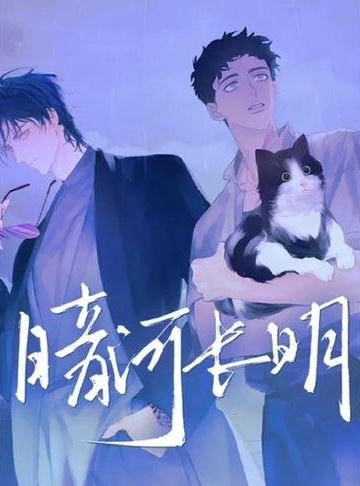
There are symbols everywhere in this chapter, and they're not subtle. I appreciate that.
The needle. We get the childhood origin — broken needle, blood, grandmother's soothing voice that meant nothing — and then the author explicitly links it to Lu Lianning's methods: 'He had no idea how many more needles he would encounter in Lu Lianning's hands.' This isn't just plot foreshadowing. The needle is the symbol of medical violation, of forced intervention, of care that feels like harm. Lu Lianning doesn't just hold Li Yan captive; he administers him. Sedatives, injections, the surgical manipulation of his body. The needle represents the illusion of benevolent control — the idea that what's done to you for your own good is still violence.
The knife is equally loaded. Li Yan grabs a fruit knife — domestic, ordinary, meant for cutting food, not flesh. He tries to use a symbol of nourishment as a weapon of escape. And it almost works. The knife at Lu Lianning's throat is mirror imagery: two men, one holding sharp steel, neither willing to yield. But the knife fails because it's the wrong symbol for this relationship. You can't cut your way out of something that was never tied with rope.
The gate. The iron gate opening slowly — this is the symbol of false hope, the moment where the story promises liberation and delivers capture instead. But look deeper: the gate was never meant to stay closed. It was meant to open, to tempt, to make Li Yan believe he'd chosen correctly. The real prison isn't the locked door; it's the belief that the door leads somewhere.
The hunting rifle at the second-floor window — cold, mechanical, distant. This is the symbol of institutional power. Individual resistance (the knife) fails against organized control (the sniper). Lu Lianning doesn't need to touch Li Yan himself; his infrastructure handles it. The rifle represents the family's reach, Lu Anling's authority, the system that outlasts any single act of defiance.
And the artificial forest — manufactured nature, designed beauty, controlled landscape. This is the ultimate symbol: everything around Li Yan has been curated to look wild while being entirely domesticated. He's not in nature. He's in a simulation of nature. His imprisonment isn't brutal; it's beautiful. And that's what makes it inescapable.