Crossover Actors - Reviews

Crossover Actors
+Add to Custom List
Sort
Add review
... Read More
Okay so let me just say—the worldbuilding in these chapters is quietly brilliant and I need to talk about it because nobody else will. On the surface, it's a behind-the-scenes drama about filming a school-set story. But the author layers two worlds so seamlessly that you forget which one you're watching. The classroom where Qu Yanting sits in Ye Shan's exact seat? That's not just plot convenience. It's the entire thesis of the piece visualized in one prop choice. The director deliberately put him there. And Qu Yanting—oblivious, arrogant Qu Yanting—uses a script that belongs to the ACTOR playing Ye Shan as a cushion. A script. For a character whose uniform is described as shabby, old, crumpled, and smelling of fish because his mom sells fish at the market. The details are obsessive. And the behind-the-scenes world feels so lived-in. The lunch incubator in the corridor. Xiao Zhang running back and forth with takeaway. The stylist arriving late. The lighting team adjusting according to storyboards. These aren't set dressing—they're the actual machinery of production, and the author treats them with the same weight as the dramatic scenes. When Sun Xiaojian says "the porridge was on discount and even the delivery fee was free," that's the kind of line that makes the whole film set feel like a real place with real people who have budgets and worries. The classroom corner where Qu Yanting sits alone, writing with his head down, wind blowing papers off tables—that's a scene that actually plays like a movie frame. I could see it. I didn't just read it, I saw it.
... Read More
There's a recurring motif of hands and faces in this passage that I can't stop thinking about. Lu Wen's character Ye Shan covers his face with his hands—a gesture of shame, of self-erasure, of someone who can't bear to be seen. Then he rushes to wash those same hands until they're raw and scratched, as if the sensation on his skin can substitute for the emotional release he's denying himself. Hands become both the instrument of hiding and the target of punishment. Meanwhile Qu Yanting's hands are elsewhere entirely—patting Xiao Zhang's shoulder absently, ordering assistance for someone he claims to despise, thinking about overlapping silhouettes. The overlapping silhouettes detail is everything. Two figures merged into one shadow, indistinguishable, inseparable. That's the thesis of their entire relationship compressed into a single image. And then there's the arithmetic of misreading. Sun Xiaojian tries to calculate their interactions like a formula—wrong car, wrong thing, wrong person—and arrives at this neat theory about revenge. But the math doesn't add up because human emotion isn't linear. Qu Yanting's cruelty and care exist simultaneously and that contradiction is the point. The empty heart Lu Wen describes isn't emptiness at all—it's overflow. Everything he feels has nowhere to go because the vocabulary for it hasn't been offered. Even the name Ye Shan carries weight if you're paying attention. And the millet porridge—that's sustenance, care disguised as accident, warmth offered without announcement. The story keeps asking: can we recognize love when it refuses to announce itself? Can we forgive people for seeing us clearly when we'd rather be misunderstood?
... Read More
This sequence is a masterclass in controlled pacing. The author starts with Lu Wen's internal monologue about having to fake smiles at the banquet—he's building this world of performative social interaction. Then we cut to Qu Yanting's POV, and the rhythm changes. shorter sentences, more internal tension, physical details like wet palms and pressing nails into fingers. The transition between their two parallel escapes into the bathroom feels almost choreographed. Lu Wen goes first, creates the scene, washes his hands with theatrical precision. Then Qu Yanting enters like a ghost appearing in the mirror. The author doesn't rush this meeting. They let it breathe. Two strangers in a bathroom, neither wanting to be somewhere else, finding each other by accident. Then comes the dialogue—long, flowing, almost playful. Lu Wen dominates the conversation, and the pacing slows to a comfortable conversational rhythm. We think we're just watching two guys chat. We're not. The author is letting us settle into a false sense of security before dropping Qu Yanting's identity on everything. That final exchange—"Actually—" interrupted, followed by the script reading refusal, and the closing lines hanging mid-sentence—is pure narrative cliffhanger. The chapter doesn't end with resolution. It ends with a question mark. We're left wondering what Qu Yanting was about to reveal, and more importantly, how Lu Wen will react when he finally finds out.
... Read More
Can we just talk about how natural these conversations sound for a second? Ye Xiaowu's opening lines: 'Do you have to take an installment for a bowl of small noodles? Do you have to take out a loan to eat pot skewers?' This kid is absolutely lethal with sarcasm. He's not even raised his voice. He's just standing there, listing financial crimes, and Uncle Qian is the one who ends up embarrassed. The humor lands because it's observant, not mean. Then there's Ren Shu's casual cruelty wrapped in nostalgia: 'When we were in college, we secretly played cards in the dormitory. Screenwriter Qu never participated...' This is the kind of thing people say to manipulate without anyone noticing. It's not a direct order, it's a memory weaponized. And Lu Wen? He understands the game immediately: 'this is probably called avoid suspicion.' Two words and we get the whole strategy. But the line that haunts me: 'Deduct from your salary.' That's Qu Yanting saying it, completely deadpan, after winning three rounds straight. No apology, no 'sorry I won too much,' just this casual administrative brutality. The man doesn't even pretend to care about social niceties. And the narrator's voice itself deserves mention — the way the author slips in cultural references ('sparrow god') and translations naturally without breaking the immersion. It feels like reading something written by someone who lives in this world, not someone describing it from outside. The prose doesn't announce its cleverness, it just is. One question though: when Qu Yanting says 'Thank you uncles and aunts for your sponsorship,' is he being sincere or is he mocking them the same way Ye Xiaowu mocked Uncle Qian? I can't decide and I think that ambiguity is the point.
... Read More
I need to talk about how this passage flows because the author really knows how to control the rhythm. It starts SO casual. Hongyadong at night, tourists, fishing boats, singing along to some song — you'd think this is just a chill slice-of-life moment. And then the emotional hit comes: the father-son phone call. We go from bustling riverside to a completely silent, one-sided conversation where Lu Wen hangs up confused and deflated. Goodbye fun evening. Then he goes back to the hotel, takes a bath, does his skincare routine — mundane stuff, right? Grounding us. But the hand-washing memory hits and suddenly we're in psychological thriller territory. "It really gives me a psychological shadow." And THEN. The minute hand circles twice. Hunger wakes him up. He walks to the hallway in the dark, pulls out the room card, looks through the peephole — and there it is. Ruan Feng. At Qu Yanting's door. Bathrobe. Wet hair. The whole thing. The pacing here is GENIUS. It moves from wide-angle tourism shot → intimate emotional breakdown → quiet horror → genuine shock and excitement. Each beat earns its place. No filler. The final line — "Damn, this crew was really exciting" — after everything we've just witnessed? That's not excitement. That's someone who's so starved for drama and connection that even scandal feels like a replacement for feeling alive.
... Read More
The visual composition in this passage is absolutely stunning and I think the author understands film language instinctively. Let me walk through some of it. We open with Qu Yanting slipping out through a back door at dusk—that's not accidental lighting. Dusk is the threshold between day and night, between visibility and concealment, and Qu Yanting is literally moving from the public world into private spaces. Then the corridor scene: Sun Xiaojian hovering with a kettle and snacks like a grandmother waiting for her grandson. That image is so specific and warmly comic it grounds the whole scene in reality before we pivot to shadows and silence. The school itself—dim everywhere, no large wattage lamps, fading light as they exit the teaching building one by one. There's this haunting emptiness to the space after hours that mirrors Lu Wen's internal state perfectly. And then the monitor room: frame by frame analysis, the glow of technology revealing truth that the naked eye missed in real time. Ye Shan alone in the last corner of an empty classroom, long after everyone has left, rubbing his hands until they're red and scratched. That bathroom scene—God, the physicality of it. Water running, vigorous rinsing, the almost violent need to wash something away that isn't dirt. It's the kind of scene that doesn't need dialogue because the body is doing all the talking. The contrast between the cramped, dim school and the contained intimacy of the RV where makeup removal happens is also worth noting. Both are temporary spaces, both reveal vulnerability, but one is communal and one is private. Hongyadong as the promised destination at the end—Chongqing's iconic tiered complex glowing at night—sets up this beautiful geographic and emotional elevation. They're literally going upward, away from the dim classrooms, toward something luminous.
... Read More
I need to talk about Lu Wen and Sun Xiaojian's dynamic because it's everything. This duo has such a grounded, funny friendship—Sun Xiaojian is the schemer pulling strings while Lu Wen is the earnest one who just wants to do right by the script. The way Sun hands him a prepared speech like it's a battle plan tells you everything: he's invested in Lu Wen's success, but also treats these high-stakes moments with playful pragmatism. Meanwhile, Qu Yanting's characterization here is subtle gold. He's the biggest investor, sitting next to the director, yet he's casually eating noodles while everyone else is drowning in champagne and pretense. His dry 'hey' and that final reveal show someone who observes more than he participates, who finds amusement in others' flustered efforts without gloating. The real win is how their interaction flips the power dynamic—Lu Wen came in preparing to beg for favor, but Qu Yanting's amused tone suggests he already sees something worth noticing. Who else gets to read this scene and simultaneously root for the awkward actor and appreciate the quietly observant investor?
... Read More
I need to talk about this moment because it hit me harder than I expected to: Lu Wen gets into the nanny car, notices the lingering perfume smell from whoever was in it before, and instead of being upset or awkward, he just... admires the scenery. Thinks about Chongqing's slopes being like life's ups and downs. And starts singing. Softly. With his naturally low pitch. Like a phone vibrating. This man is carrying a pillow he forgot, got basically ignored by the top-billed actor at the airport, smells someone else's perfume in his car, and he's making ART out of it. That's not obliviousness. That's a survival mechanism. He turns every slight into content. Every inconvenience into a joke. But here's what gets me—the perfume smell. Whose perfume was it? Was it Qu Yanting's? If so, that changes the whole meaning of that airport scene. Qu Yanting wasn't just rude—he was dismissive of someone who doesn't even belong in his world. And Lu Wen, smelling it, doesn't know the full story but he carries it anyway. Then there's Sun Xiaojian. This guy who walks in with Lu Wen, tries to get information, makes jokes, suggestsively asks about the Porsche. He's not just a sidekick—he's the friend who stays. Who notices when something's off. Who says 'we met Director Liu at the airport' and then immediately exchanges a look with Lu Wen like 'yeah, we noticed that too.' That kind of friendship—the quiet 'I see what you're seeing' moments—is what makes these characters feel human. And Lu Wen choosing his own hotel? Not because he's entitled, but because 'it's very annoying' having to greet higher-rank actors in the hallway? That's not pride. That's exhaustion. The emotional labor of always being the nice one, the grateful one, the humble one—even when you haven't made it yet. God, I felt that.
... Read More
I need to process what just happened in that dressing room because my chest actually hurts. Lu Wen gets in Qu Yanting's personal space, all citrus and bravado, demanding to know if he looks like a movie emperor. And Qu Yanting—this man who has spent months or years building an identity that keeps people at arm's length—does the most incredibly tender thing without saying a word. He lets Lu Wen close. He lets the question hang. He watches him leave. And then he picks up the hand cream. There is nothing more heartbreaking and hopeful than a man anointing himself with the scent of someone who barely knows his name. 'He could feel his heart beating steadily, and inexplicably relaxed.' Relaxed. Not excited. Not panicked. Relaxed. Because for fifteen minutes, someone saw him without the script, without the producer credit, without the past hanging over him like a blade. And that is worth more than any award. Then cut to Lu Wen at the banquet, hungry, low on sugar, performing the golden boy routine while internally crumbling. He tells Sun Xiaojian 'In case I'm never going to be popular, do I have to provide for you until old age?' and I swear to god that is the saddest joke I have ever read. This man is starving for something and he doesn't even know what it is yet. Two men. One hand cream. A script neither of them will ever openly acknowledge. How is this not the most romantic setup in recent fiction?
... Read More
The pacing in these chapters is genuinely masterful and I need to talk about how the author moves you from one emotional temperature to another without ever slamming the brakes. Chapter 74 starts hot — Ye Xiaowu being his loud chaotic self, arguing about exams, climbing on parallel bars with Qi Xiao. You're laughing, you're energized, the dialogue snaps. Then BOOM, you're on a film set and suddenly the energy shifts from playful to TENSE. The censorship conversation between Ren Shu and Qu Yanting is like a pressure valve — it slows everything down for a second and makes you realize: these kids are being watched, judged, edited. Every physical detail matters because it might get cut. And then, after all that noise, the final scene drops you into absolute silence inside that RV. Qu Yanting sleeping. No lines. Just breathing. The contrast is so sharp it almost physically hurt. It's like the author looked at the reader and said " okay you've had enough noise, now sit with this." That scene transition from the loud teaching building to the dark RV felt intentional, deliberate, like every chapter is a room you walk through and the doors only open one way. The three-hour break Lu Wen gets? That's the book giving you breathing room too. It trusts you to sit with the quiet moments instead of filling every gap with exposition. I finished those chapters and just stared at my phone for a minute.
... Read More
Let's talk about stakes, because this batch is full of them — some obvious, some sneaky. On the surface, Lu Wen's conflict is simple: he needs to redeem himself with Qu Yanting after whatever happened last night. His agent is basically running damage control, coaching him on posture and tone. 'You must be respectful, show a cute smile and be more courteous.' The word 'cute' in a professional instruction made me wince. This is a guy being told to perform humility. But the real stakes are quieter. Qu Yanting's conflict isn't about being mad at an actor — it's about not letting someone SEE him after a nightmare about his dead father. He can't risk being vulnerable because vulnerability led to that dream in the first place. The stakes are existential: if he lets Lu Wen in, he might have to admit he's not okay. And he's clearly not okay. Ren Shu's conflict is different but equally tense. He's the director trying to make a film while also managing a team that's full of people with histories. Qu Yanting, his co-creator, is emotionally unavailable. Lu Wen, the actor, is trying to climb his way into favor. And Ren Shu is just... holding it together, making schedules, offering to 'grind this together.' The stakes for him are professional survival — this film has to work, and his people are barely cooperating. And then there's the noodle scene, which sounds ridiculous until you realize: four takes, sweating, makeup ruined, tongue too hot to speak. The stakes of a single scene can make or break a shot. In the film industry, that's real money. Real reputation. Lu Wen is fighting for every frame, and he's doing it alone while Ruan Feng shows up with a fan club outside.
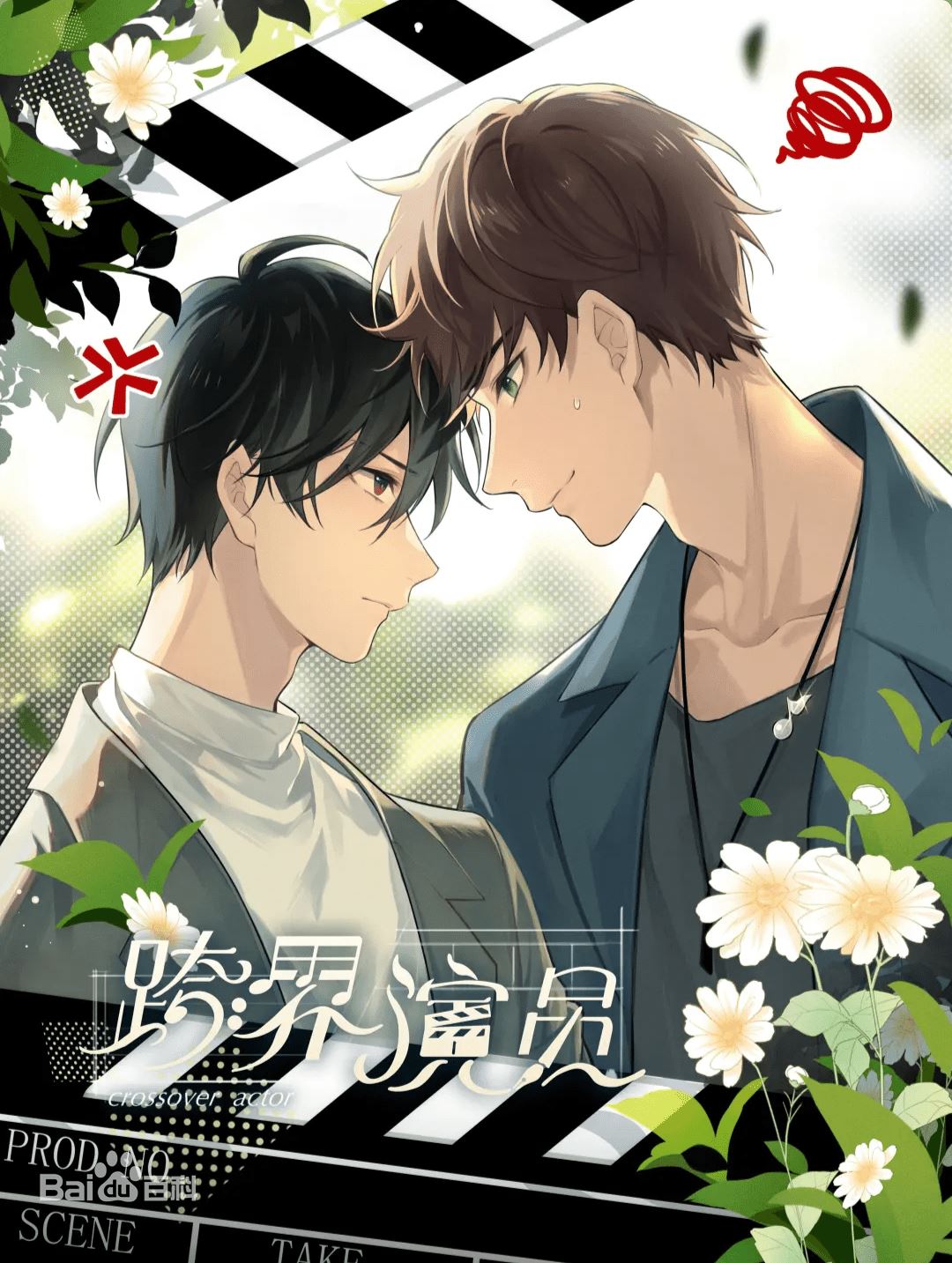
... Read More
I am not okay. I am genuinely not okay. "I hope he doesn't cry again like he did tonight." Four sentences before that and I was fine. Five sentences after and I'm sitting here questioning my entire existence. Let me break this down because my heart cannot handle it any longer. Lu Wen says this about Ye Shan — or is it about Qu Yanting? Or is it about both? The ambiguity IS the point. The actor is looking at the screenwriter and essentially saying: I see you. I see how much this hurts you. And I don't want you to hurt anymore. This comes right after Lu Wen's breakdown about how his own mother was killed by him, about how no one should be blamed, about how the father died in an accident. This is a man who carries guilt like a second skin and somehow still manages to be tender. And Qu Yanting — stoic, composed, "my hand slipped" when he answers the phone — he can't even respond to that emotional grenade. He just... swallows. His Adam's apple rolls. That's the most romantic thing I've ever read and I didn't sign up for this. The carnation on the porch cabinet appears again later, and I swear every time that flower shows up my heart does something weird. What does it mean? I don't know. But it feels like a promise. Or a vigil. Or both.

Leave a comment

You must be logged in to leave comments. or
