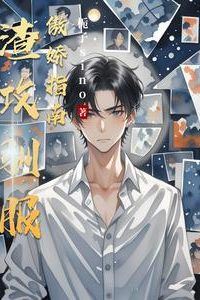
Summary

... Read More

Qu Yanting is a reclusive and highly acclaimed screenwriter who has achieved immense success in the film industry, backed by powerful mentors and family connections. Despite his fame, he avoids public appearances and social gatherings, preferring isolation and minimal interaction with the entertainment circle. Lu Wen is an aspiring actor ranked at the lowest tier of the industry, struggling for recognition with no fans or strong agency support. He is cast as the male lead in a new web drama titled "The First Night," a role that requires him to portray twin brothers with contrasting personalities. His agent, Sun Xiaojian, is inexperienced but enthusiastic, constantly trying to help Lu Wen navigate the complex social hierarchies of the film industry.

The story begins when both Qu Yanting and Lu Wen arrive in Chongqing for the production of "The First Night." At the airport, a mix-up occurs involving crew transportation. Lu Wen mistakenly enters the wrong vehicle, a Porsche Cayenne designated for the highest-ranking personnel, only to be discovered and ejected by the production director. The actual passenger, Qu Yanting, arrives moments later and takes his place, leaving Lu Wen stranded and embarrassed. This initial encounter establishes a dynamic of misunderstanding and class disparity between the two men.

Upon arriving at the hotel, Lu Wen discovers that Qu Yanting is staying in the adjacent suite. Their paths cross again in the hallway, where Lu Wen attempts to engage Qu Yanting in conversation, but Qu Yanting remains cold and dismissive, withdrawing into his room. Later, at a script reading session, Lu Wen learns that Qu Yanting is the chief screenwriter and a major investor in the project. The revelation shocks the cast, as Qu Yanting is a legendary figure who rarely interacts with actors. Lu Wen becomes anxious about making a good impression, driven by his agent's advice to curry favor with the powerful screenwriter.

The narrative shifts focus to the growing tension and curiosity between the two protagonists. Qu Yanting, despite his desire for solitude, finds himself increasingly aware of Lu Wen's presence and personality. He observes Lu Wen's natural, unpretentious behavior, which contrasts sharply with the calculated flattery he encounters from others in the industry. During a break at the hotel restroom, Lu Wen confronts Qu Yanting again, mistakenly believing he is merely a minor investor or someone with connections due to his VIP treatment. Their dialogue reveals Lu Wen's naive confidence and Qu Yanting's guarded amusement.

A pivotal turning point occurs during the startup banquet. Lu Wen, dressed formally and preparing a rehearsed speech, is directed to meet "Teacher Qu." He enters the private dining box expecting to find the screenwriter. Instead, he walks past Qu Yanting, who is seated next to the director, and addresses Zhou Zong, a producer, mistaking him for Qu Yanting. He delivers an overly enthusiastic and awkward tribute, unaware that the real Qu Yanting is watching him from just a few feet away. The scene culminates in Qu Yanting breaking his silence, revealing his identity and correcting Lu Wen's mistake, leading to a moment of shared shock and eventual, albeit awkward, connection between them.

The story sets the stage for a developing relationship built on these misunderstandings and the contrasting worlds of the elusive screenwriter and the struggling actor. As filming progresses, Lu Wen must balance his professional duties with his personal growth, while Qu Yanting faces the challenge of maintaining his privacy amidst the demands of the production and the unexpected intrusion of a lively young actor into his life.

Latest Release
DateGroupRelease
2026-09-26knoxt c36
2026-09-26knoxt c35
2026-09-26knoxt c34
2026-09-26knoxt c33
2026-09-26knoxt c32
2026-09-26knoxt c31
2026-09-26knoxt c30
2026-09-26knoxt c29
2026-09-26knoxt c28
2026-09-26knoxt c27
2026-09-26knoxt c26
2026-09-26knoxt c25

Community Reviews

Rating(4 / 5.0, 113votes)
5 stars
38(34%)
4 stars
42(37%)
3 stars
32(28%)
2 stars
1(1%)
1 stars
0(0%)

Popular reviews

... Read More
Okay so I need to talk about Qu Yanting for a second because this man is a walking contradiction and I am here for it. On one hand he's the guy who doesn't like to beat around the bush, says only what's necessary, waters flowers in silence. On the other hand he REMEMBERS. He remembers that Ren Shu wanted to see Professor Wu. He remembers their entire college history — the wrong clothes, the wrong meal card, the hot pot dinners. And then he casually offers to set up a meeting with someone Ren Shu has admired for years, and when Ren Shu asks why he's being so generous, Qu Yanting basically says "I have a conscience" and pivots to directing duties. This man deflects emotional depth with humor and practicality like it's a sport. But the most revealing moment is between Qu Yanting and Lu Wen in that car. Lu Wen says "Ye Shan should not be blamed" and his eyes tremble. Not literally, but you can feel it — this is personal. Qu Yanting writes about trauma, about guilt, about loss, and Lu Wen is the one embodying it on screen. When Lu Wen says "I hope he doesn't cry again like he did tonight" — that "he" isn't just about the character. That's Lu Wen speaking for someone. And Qu Yanting? He just swallows hard and says "What?" That's it. That's the entire response. He understands. They both do. There's this whole layer of unspoken understanding between them that I'm still processing.
... Read More
This chapter reads like a painting and I keep coming back to the visual motifs the author builds. The grapevines under which the card game happens — that's such a specific, intimate setting. It's not a casino, not a gaming den. It's this half-abandoned set space where people who've already finished filming just... linger. The air is thick with the smell of finished work and unfinished conversations. You can almost feel the heat of a production day settling into your bones. Then there's the broken fence. 'The fence was missing a few bars, and Lu Wen easily passed through.' This detail matters more than it should. The fence is literally broken, incomplete, and yet it's passable — just not for everyone. Lu Wen squeezes through like it's nothing, but it's also trespassing. There's this whole theme of boundaries being porous here: between actor and character, between script and reality, between watching and participating. And the window scene — pure cinema. Lu Wen jumping up to peek into the 101 window from outside, while Qu Yanting sits in the living room with his pen and paper, oblivious. Two frames within a frame. The reader sees both simultaneously: the watcher and the watched, the outsider and the insider. It's almost intrusive, the way we're positioned here. We're literally looking through a window we don't have the right to look through. The author keeps using these thresholds — doors cracked open just enough, fences with missing bars, windows you can see through but not enter. The whole world of this story feels like a set of rooms where the walls are thinner than they should be.
... Read More
Okay can we just talk about the father-son thing because MY HEART. "I am a fool to miss you!" Lu Wen says it and I literally screamed. This whole scene where he's hovering over the call button, fingers shaking, after changing his dad's name in his contact list from "Dad" to "Lu Zhanqing" back in elementary school after getting beaten up — that detail alone tells us SO MUCH about their relationship. Years of resentment, pride, distance. And then his dad answers immediately, cold voice, and Lu Wen cracks like a kid again. And the dad's response? Not warmth. Not even a real response. "Did you get into trouble?" That's it. That's all he has in him. Classic Lu Zhanqing — emotionally constipated to the highest degree. But then he laughs. He actually LAUGHS. And tells him to find Old Zheng for money. Which is his love language apparently. Give the kid money, never say anything nice directly. Meanwhile on the other side of the corridor, Qu Yanting opens his door in a bathrobe with wet hair to let Ruan Feng in. The parallel is BRUTAL. Two different kinds of secret relationships happening simultaneously, two people hiding something behind closed doors on the 62nd floor. And Lu Wen watching from behind the peephole, wide awake, excited somehow instead of disgusted. That's the trauma talking isn't it? After everything he's been through, even this feels like an upgrade from being alone.
... Read More
Okay so first of all — the comedic setup here is absolutely brilliant. Lu Wen walks into this event, completely unsuspecting, and accidentally treats the actual Mr. Qu Yanting like some random old man named Mr. Zhou. He toasts to him like he's some legendary figure, completely unaware he's talking TO the person himself. Then Ren Shu just DROP the bomb: "Xiao Lu, you got the wrong person! This is Mr. Qu!" and the way it plays out with the assistant director sweating trying to explain, Director Liu turning red from laughing, Ren Shu calling him a "living treasure" — it's pure comedy gold. But then the scene PIVOTS so hard. Everyone leaves, it's just the two of them now, and suddenly it's quiet. Too quiet. Lu Wen's panic becomes this huge wave of embarrassment and regret. The way the narrative shifts from chaotic laughter to this almost suffocating silence in that private box — you can feel the temperature drop. And then Qu Yanting starts asking him questions like "Didn't I hint you?" and "Isn't it annoying to pretend to be a grandson?" Like he's been playing a much longer game than anyone realized. The ending where Lu Wen half-confesses but then decides to shut up — THAT'S the hook. Who said the speech? Was it really his agent or was it something more? And Qu Yanting's response — "Things like 'seeing you is like seeing my father', don't say such nonsense" — tells us he knows more than he lets on. The plot didn't just surprise me here, it rearranged itself completely.
... Read More
I need to discuss the pacing of this sequence because the author is a monster and I love it. Chapter 47-50 starts slow—awkward classroom encounter, Qu Yanting ignoring Lu Wen, scribbles on paper. Very low energy. Then suddenly the reading begins and the pace accelerates. Everyone has duties. Seven or eight repetitions of a scene. Lunch sacrifice. And then—the corridor scene with Sun Xiaojian, the forgotten porridge, the delivery mix-up. This is where the pacing does something really smart. The author could have just had Lu Wen offer the porridge and called it a day. But instead, there's this whole detour with Xiao Zhang ordering boiled fish for Qu Yanting, Qu Yanting refusing because he doesn't eat fish, the allergic-sounding deflection, the awkward exchange. All of this builds a tiny pressure cooker before Lu Wen intercepts it with the porridge offer. The tension isn't about romance—it's about social navigation. Lu Wen doesn't want to look like he's trying to please the director. He needs an excuse ("I took the wrong car and drank your Paris water"). He gives one, then SPRINTS away before Qu Yanting can respond. That sprint is the perfect structural beat. After all that buildup, Lu Wen bolts. The scene ends on Qu Yanting still holding the warm lunchbox, watching him disappear. No resolution. No acknowledgment. Just warmth in plastic and a silence that lingers. This is how you build micro-tension without melodrama.
... Read More
The dialogue in this batch is doing two completely different jobs, and both are excellent. In the filming scenes, the conversation between Lu Wen and Qu Yanting is sparse, almost deadpan. Qu Yanting barely says anything—he coughs, he says "keep your voice down," he mutters to himself about not praising or scolding. His voice is the voice of someone who has learned that every word costs something. Even "What's the matter?" comes out slowed down, measured, like he's checking the weight of it before releasing it. "You don't have to think about how to act. Enter the role of Ye Shan and just follow the reaction in your consciousness." That's Qu Yanting giving acting advice, but it's also him giving *life* advice. He's telling Lu Wen what he probably needed to hear himself at some point: stop performing, start feeling. The fact that this comes right before we dive into Ye Shan's nightmare journal is not accidental. Then the mother-son dialogue hits and the whole texture changes. Mother Ye's voice is rapid-fire, defensive, spiraling. She doesn't listen—she predicts. She's already written the script of what Ye Shan must be feeling before he can speak it: "You think I'm not treating you well... You feel very upset, right?!" "The thing you are most aggrieved is that I forced you and Xiao Wu to exchange admission tickets..." She's narrating his guilt for him. And the cruelest line—the one about the father—comes out almost casually, like she's sharing trivia. "If you hadn't made a fuss about going to the movies when you were eight year old..." No buildup. No softening. Just the truth dropped like a stone. And Ye Shan's response isn't words—it's his body. "knees softened, and he threw himself down on his knees." The dialogue has run out. There's nothing left to say.
See all reviews

Custom lists

See all custom Lists