[Crime Investigation] 13th Case - Reviews

[Crime Investigation] 13th Case
+Add to Custom List
Sort
Add review
... Read More
Can we just take a moment to appreciate the elderly man — Grandpa Yin — for a second? Because this character moment was so perfectly written that I actually laughed out loud. First we meet him as this grumpy old man chasing the cops away with a BROOM. Chasing them. With a broom. He's complaining about two deaths in two days, basically telling them to get lost. Then five minutes later, his grandson Yin Zhuo comes running after him yelling 'How many times have I told you not to go downstairs alone?!' and the old man's just there with his eyes 'nearly closed into slits' being all gentle and sweet. Lao Li and Xiao Zhao's reaction — they just exchange glances and shake their heads. It's such a perfect little human moment. Everyone has their match. This grumpy old man who scares off cops is completely tamed by his own grandson. And Yin Zhuo — Dr. Yin, the refined young man who reported Shen Jun's fall — he's clearly worried about his grandpa, brings him lunch, scolds him like a concerned kid would scold a stubborn elder. There's something really warm about that dynamic. But honestly, the REAL character revelation here is Zou Shuyang. The man is trying to maintain his cool detective composure while Guan Jie drops the name 'Jian Mengyan' and he goes completely still. His colleagues notice. ALL of them. What is his connection to this girl?? Is he hiding something? Does he know her? The text says he was 'clearly not in the right state to ask any more questions' and just hands off to Xiao Tang. That's not normal detective behavior. That's someone who's personally invested in this case in a way he's not admitting to.
... Read More
The stakes just mutated. We started with a teacher's murder, a student's blackmail, a family's cover-up. Now Lin Shaohuai—the wildcard, the potential witness, the emotional center for Jian Mengyan—is dead by hired hands. The conflict isn't just about justice anymore; it's about survival. If the loan shark Brother Long has people on both sides of the law, then the system itself is compromised. Zou Shuyang is poking a hornet's nest with his bare hands. What makes this terrifying is the personal angle. Jian Mengyan is grieving her teacher, yes, but she's also watching her ally die because she didn't move fast enough. Her diary clue might have saved Lin Shaohuai if she'd shared it sooner. That guilt will eat her alive. And Zou Shuyang—he's torn between protecting her and hunting a killer who can buy cops. The internal conflict for him is massive: duty vs. love, law vs. loyalty. The external stakes are razor-sharp now. Brother Long isn't just a loan shark; he's a threshold guardian between the criminal underworld and institutional corruption. Taking him down means fighting a hydra. Every time you cut off one head, another politician or detective pays him off. The novel is pushing us into moral gray zones. Is it okay to bend rules if the system is rigged? Can Jian Mengyan trust Zou Shuyang if he's embedded in that system? The tension isn't just whether they'll catch the killer—it's whether they'll survive the pursuit. And honestly? I'm terrified for them both.
... Read More
This whole Lin Xi storyline hit me like a truck. I keep coming back to this moment when she says, 'At that moment, I laughed.' Not a cackle, not a sob—just a laugh. The kind of laugh that comes when years of helplessness suddenly get vindicated in the most grotesque way possible. She watched five people die one by one over six years, summoned by texts, and every time she stood there and watched the people who ruined her life get their comeuppance. What destroys me is how calm she is throughout the interrogation. Frail, thin, dressed in those same dull blue clothes, carrying groceries like nothing happened. But inside? She must have been carrying an ocean of grief that she never once let herself drown in. Instead, she became a witness. A living witness. Someone who got to see justice served without ever having to lift a finger herself. I also can't get over Zou Shuyang's reaction when he finds out Lin Xi is Shen Tinglan's widow. He just... stops. And Xiao Tang's face when he realizes how small the world is—those two teachers connected to this web of death. There's something almost tender about how Captain He tells Zou Shuyang to 'be gentle' with her. This woman lost her husband, and then spent six years being forced to watch his murderers die right in front of her. That's not just grief. That's a special kind of haunting. I need to talk about it with someone. Or maybe just sit with it for a while.
... Read More
Okay so here's what is genuinely bothering me about this chapter, and I need to talk about it because it's like the author is throwing us a bone and then immediately pulling it away. Lao Li and Xiao Zhao go to Cheng Hao's death scene and what do they find? A neighborhood so tight-knit that an old man complains about two deaths in two days, yet NOBODY knows who Cheng Hao was. Lao Li himself says it — this is an old community, people know each other. But the apartment was clean, someone was cleaning it regularly, and yet the neighbors had zero idea. Zero. That's not just a clue, that's the whole case right there. And then there's the Ding Jing thread — Guan Jie drops this absolute bombshell that Ding Jing's BEST FRIEND was Jian Mengyan, and Zou Shuyang literally freezes when he hears the name. All eyes turn to him. What does he know?? And Guan Jie casually mentions that the people who died were mostly from the same attention-seeking clique, EXCEPT for the boys who were apparently obsessed with Ding Jing. So now we have a pattern: deaths, a missing girl, a teacher (Shen Tinglan), a best friend who knows something, and a class full of people who are either lying or terrified. The plot is threading two investigations that I SWEAR are going to collide. Cheng Hao's fall, Shen Jun's fall, Ding Jing's disappearance, and all these dead students from the past — what connects them? The author is building this like a house of cards and I am HERE FOR IT.
... Read More
The contrast between the opening scene and the police station sequence is masterful worldbuilding through juxtaposition. You open in some faceless corporate office where a secretary delivers threats like weather reports — 'Frame it as a suicide out of guilt.' No drama, no raised voices. Just cold administrative evil. Then you cut to the police station, and suddenly you have Xiao Tang performing like a campfire storyteller, Xiao Wang getting visibly excited for details, Zou Shuyang deadpanning through it all. It's almost comedic, which makes the shift back to real danger even more jarring. The Yunshang Villa Community address that Jian Mengyan casually sends over — I immediately pictured gated walls and manicured hedges, the kind of place that screams hidden wealth. And the photo of young Lin Shaohuai with his thick bowl cut and glasses 'suppressing any potential good looks'? I could see it clearly. The author isn't over-describing anything, but the details that are there hit with perfect precision. Every setting serves a purpose: the corporate office establishes the shadow power structure, the police station establishes the protagonists' world, the class reunion memory establishes the past timeline. There's no wasted atmosphere here.
... Read More
The structure of these chapters is doing some serious heavy lifting, and I need to acknowledge it. You start in the present—hospital room, mundane fruit-gift banter between Captain He and Zou Shuyang, casual conversation that slowly curdles into something darker. The pacing here is deliberate, almost slow, letting the details accumulate: the phone number registered but never used, the bank account with zero transactions, the implication that someone is manufacturing proof of life for a dead woman. It's information delivered like a series of quiet punches. Then Director Zhong enters, and for a beat you think the tension might spike—but he leaves as smoothly as he arrived, leaving behind only unease. And then the chapter pivots. June 4, 2012. The rain. The apartment. The confession. The shift from procedural investigation to emotional memory is seamless but jarring in the best way. You're yanked from clinical hospital lighting into a storm that feels both literal and symbolic. The flashback doesn't just explain backstory—it recontextualizes everything. Mengmeng's silence, her trauma, her unwavering loyalty to this man who asked her to pretend. By the time we return to the present, every prior scene gains new weight. The pacing here is masterful because it trusts the reader to hold two timelines at once, to feel the past bleeding into the present like rain seeping through cracked concrete.
... Read More
This batch opens with an old man getting played for dead and honestly I was NOT ready for that level of coldness. The masked man just casually tosses back the pills like 'sorry but I can't let you have this' and watches him die. No drama, no speech, just 'it's only right that you die.' Brutal and efficient. Then we cut to Zou Shuyang climbing those disgusting stairs, investigating Cheng Hao's apartment, discovering it's some fake showroom life, calling Xiao Tang, then this pivot to Captain He — all while the reader is still processing the old man's death. The pacing is relentless but not rushed. Each scene gives you just enough to feel the dread building. The forensic lab scene is where things really pick up — Coroner Cui drops needle marks, the PHR769 anesthetic revelation, the suspect profile (1.85m, medical background, upper body strength). And then it ENDS with this two-year-old journal about the discovery of the drug. The last line cuts off mid-sentence which is such a classic cliffhanger move and I immediately wanted chapter 28. The author is playing 4D chess with pacing here — every section escalates, every revelation opens new questions instead of closing old ones.
... Read More
Let's talk about what's at stake here because it went from 'one guy jumped off a building' to 'someone is systematically eliminating people with experimental anesthetics' pretty quickly. The old man thought he was working with someone — he did what he was asked, he had the money under his bed, he was grinning like he won. And then the masked man reveals he was never going to pay him properly. The old man was always expendable. 'After all, you were involved in what happened back then too.' What happened back then?? I don't know and I need to know. Meanwhile the victims both have fresh needle marks but ZERO drugs in their systems, which means someone is using them as test subjects or the drug metabolizes impossibly fast. PHR769 is in clinical trials — meaning it's not even approved for public use, which makes whoever has access to it even more dangerous. And Coroner Cui's profile: tall, strong, medical background. This isn't some random killer. This is someone with resources, knowledge, and a clear agenda. The stakes keep climbing because every answer just opens three more questions. Zou Shuyang is closing in but the enemy is one step ahead and armed with experimental science.
... Read More
I need to talk about Shen Tinglan because god damn, that scene in the apartment hit me like a truck. You know that moment when he says, 'Mengmeng, pretend you don't know anything. Leave it to me'? That's the kind of line that stays with you. It's protective, authoritative, slightly desperate—but also deeply affectionate in its own way. He's taking on whatever secret she witnessed, whatever danger is swirling around Ding Jing, and he's shielding her. But here's what kills me: he doesn't trust her completely. He makes her swear to silence, makes her focus on exams, and then leaves into the rain. The class monitor finding her later, soaked and shivering, searching for him? That detail about her wet clothes clinging to her body, looking fragile and delicate—it's such a visceral image. It tells you everything about her devotion, her fear, her absolute helplessness in that moment. And Shen Tinglan? He disappears into the storm. Whatever he went to do, whatever truth he was chasing, it cost him. The relationship between these two—it's teacher and student, but it's so much more. There's reverence there, maybe admiration, maybe something deeper that the narrative never quite names but hangs in the air like static. When he closes the door behind him and leaves, you know he's making a choice. A dangerous one. And Mengmeng is left alone with a broken watermelon and a coldness that has nothing to do with the weather.
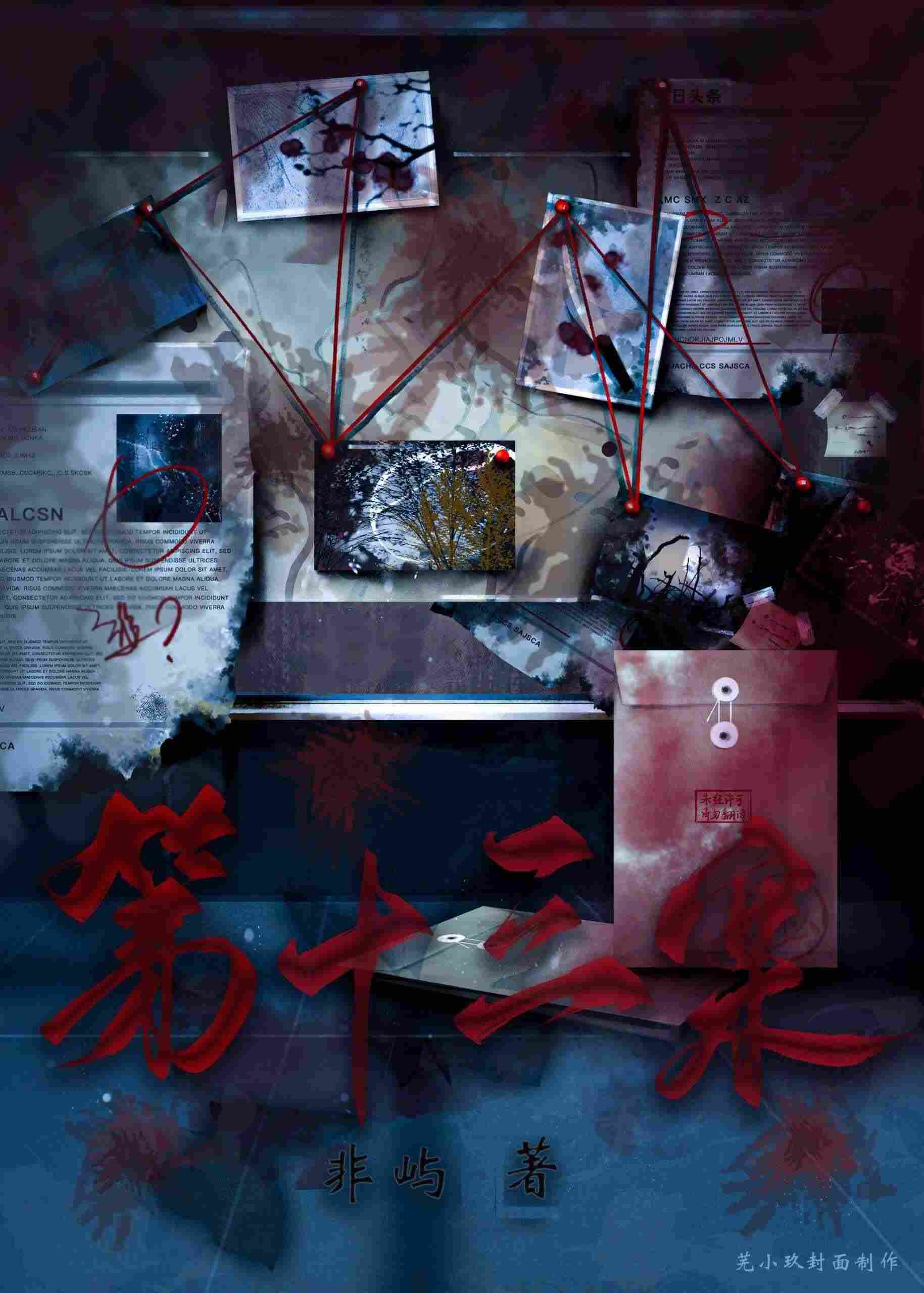
... Read More
The reeds. The endless identical sea of them. The damp house. The musty shoebox. The sound of heavy rain. Every sensory detail in these chapters works together to create this suffocating, melancholic atmosphere that I couldn't escape even after closing the book. The village isn't just a backdrop—it's a living, breathing entity that seems to swallow people whole. Shen Jun wrote his diary in a place where the only surveillance camera was at the supermarket entrance, where dampness ruins everything including buried secrets, where an old man with cloudy eyes can see everything but pretend he sees nothing. This is a world where information is scarce and people make desperate choices because there's no way out. The interrogation room scene is a stark contrast—fluorescent, clinical, sterile—and yet it serves the same function. Both spaces are traps. One is a rural village that traps you emotionally and physically; the other is a police station that traps you legally and socially. The author understands that atmosphere isn't just about pretty descriptions; it's about creating environments that reflect and amplify the internal states of the characters. I also want to talk about that shoebox moment. A battered door behind handmade brooms, a worn-out shoebox, the musty smell—these details ground the entire story in physical reality. You can almost smell that damp. You can feel the mold on the memory card. It's not glamorous worldbuilding; it's textured, lived-in, uncomfortable. And that's what makes it work.
... Read More
There's a recurring symbol here that I can't stop thinking about: disguise. The fake doctor sheds his white coat to reveal a dirty shirt and a worn-out hat. He transforms from authority figure to downtrodden criminal in plain sight. But who else is wearing masks? Jian Mengyan performs grief for Zou Shuyang, then drops the act the second he's gone. Zou Shuyang performs concern, but maybe hides his suspicion. Even Hao Yiming's family performs ignorance, kicking investigators out while protecting their son. The novel keeps asking: what are we hiding, and why? And then there's the diary. Shen Jun's habit of keeping records isn't just a plot device; it's a metaphor for truth surviving death. He wrote things down because he knew, even as a student, that evidence matters. That memory matters. The diary is his voice after silence, his证据 against those who wanted him forgotten. It's also a class commentary—Shen Jun wasn't top of his grades, but he was smart enough to hold onto leverage. The system overlooked him, but his own intelligence saved him posthumously. The rain in this section feels symbolic too. It washes away traces, hides movements, creates atmosphere. Zou Shuyang drives through it; Jian Mengyan watches it fall. Water as cleanser and cover. What truth is the storm trying to hide—or reveal?
... Read More
"Sometimes, watching the killers die in front of you is the most satisfying, don't you think?" Zou Shuyang says this line and I literally stopped reading for a second. Because he's not accusing Lin Xi here—he's making an observation. Almost admiring. The man investigating the murders just admitted that witnessing justice served can be more powerful than delivering it yourself. That's a character note so efficient it should be illegal. And then there's Lin Xi's voice. Every word she speaks feels measured, clinical even. 'I was at the market buying groceries. If you need it, I can provide the receipt from the supermarket.' She doesn't get emotional during questioning. She offers evidence. She's methodical about her own trauma, which makes it infinitely more heartbreaking because she's refusing to give anyone the satisfaction of seeing her break. Xiao Tang is also doing his thing—always the eager one, always jumping to conclusions, always getting slapped (figuratively, in this case) when he's about to say something wrong. Their dynamic is easy to love. Zou Shuyang pulling him aside instead of letting him blurt out accusations about Lin Xi being the avenger? That's a captain who knows how to protect his team from stepping into dangerous territory. Captain He's voice is another standout. Even when he's furious, there's this underlying layer of concern for Lin Xi. 'Teacher Lin has had a tough life. When you question her again… Be gentle.' The fact that a tough cop like He would ask for gentleness tells you everything you need to know about this woman's suffering. The author doesn't need to write a thousand words of exposition—three lines of dialogue do the job.

Leave a comment

You must be logged in to leave comments. or
