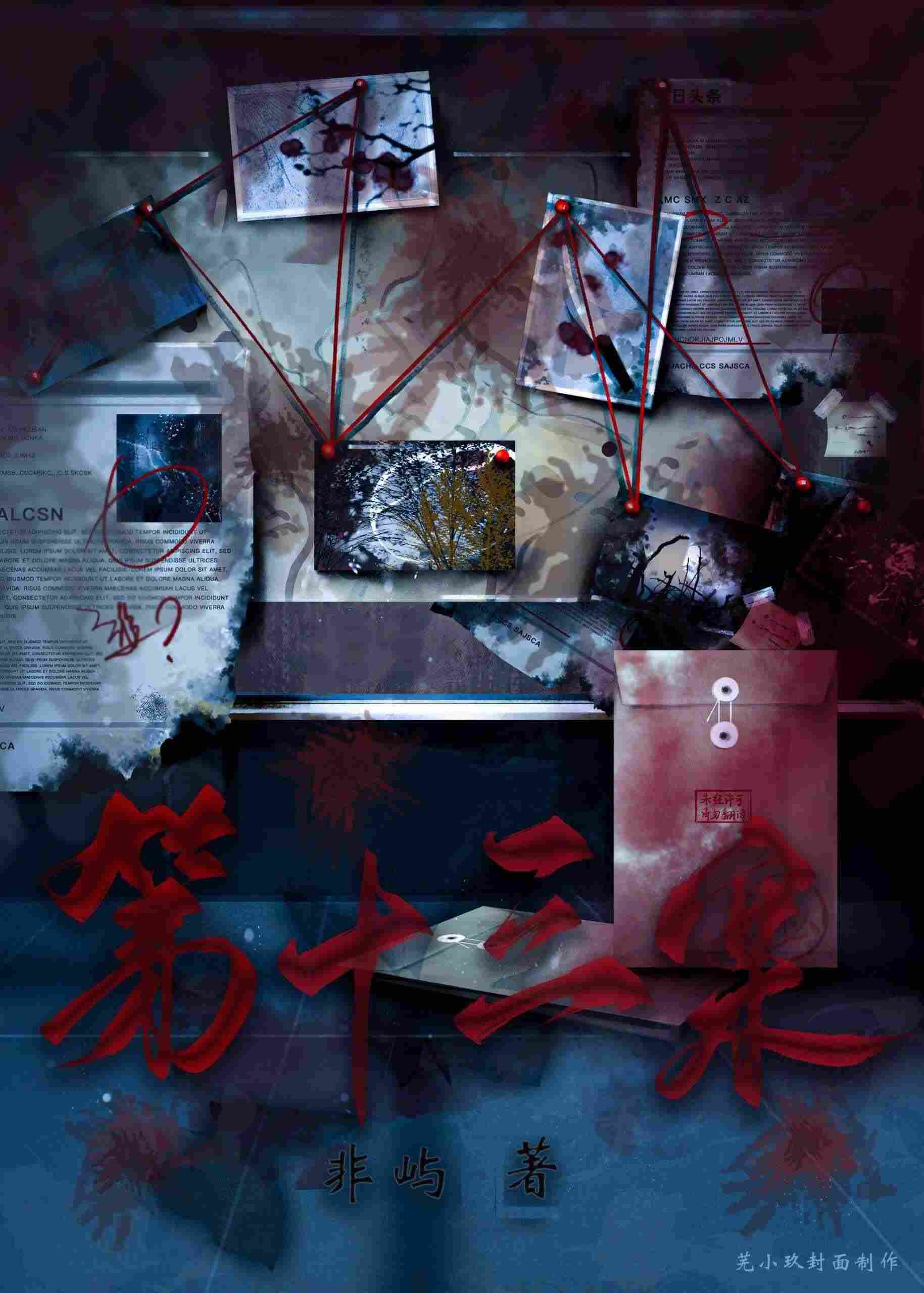
This batch really got me thinking about what justice actually means when it twists into something else entirely. Yin Zhuo claims he did it out of love for Ding Jing, but reading between the lines, there's this whole other layer happening that I couldn't shake. The title card at the beginning—"I believe in justice, but I don't have much time left"—hit different after everything that unfolds. It's not just a confession; it's a eulogy. And the fact that Jian Mengyan wrote it before dying? Chilling.
The imagery of circles keeps coming back, doesn't it? Zou Shuyang literally says it out loud: "They had all gone in circles, but in the end, someone should have a good ending, right?" But nobody does. That's the point, isn't it? The novel keeps asking whether revenge is justice or just another form of destruction, and honestly, the answer seems to be: yes. Yin Zhuo thought he was avenging Ding Jing, but he's just another piece in someone else's larger puzzle. The real architect might be Jian Mengyan, whose PhD thesis on PHR769 apparently ties into everything.
And those spores—mentioned casually by Zou Shuyang like a throwaway detail, but they've been lurking in the background this whole time. A surgeon who shouldn't have access to them, yet somehow does. The housekeeper carrying antidepressants. Ding Jing's river suicide that Yin Zhuo witnessed, held her, threw her in. The water imagery is everywhere: the river, the drowning, the way people keep disappearing into currents they can't escape.
But what really gets me is the contrast between the ordinary and the extraordinary. Jian Mengyan describes herself as so ordinary she'd disappear in a crowd, yet she's apparently orchestrating murders through someone else's hands while doing her graduate research. That irony is brutal. She wanted attention from her parents as a kid, sent fake messages from her teacher's phone, skipped class to go to that smelly internet cafe just to feel something. And now? She's the most connected person in the story, pulling strings from beyond the grave.
I keep coming back to that final line about Jian Mengyan. She doesn't get closure. She doesn't get the happy ending any of them deserved. The sun comes out after the rain, Xiao Tang says the sky is blue, but Zou Shuyang knows something is wrong. The world keeps turning even when your whole foundation crumbles. That's the theme this book is really about—not justice, not revenge, but the impossibility of clean endings when people are this broken.