Summary

... Read More

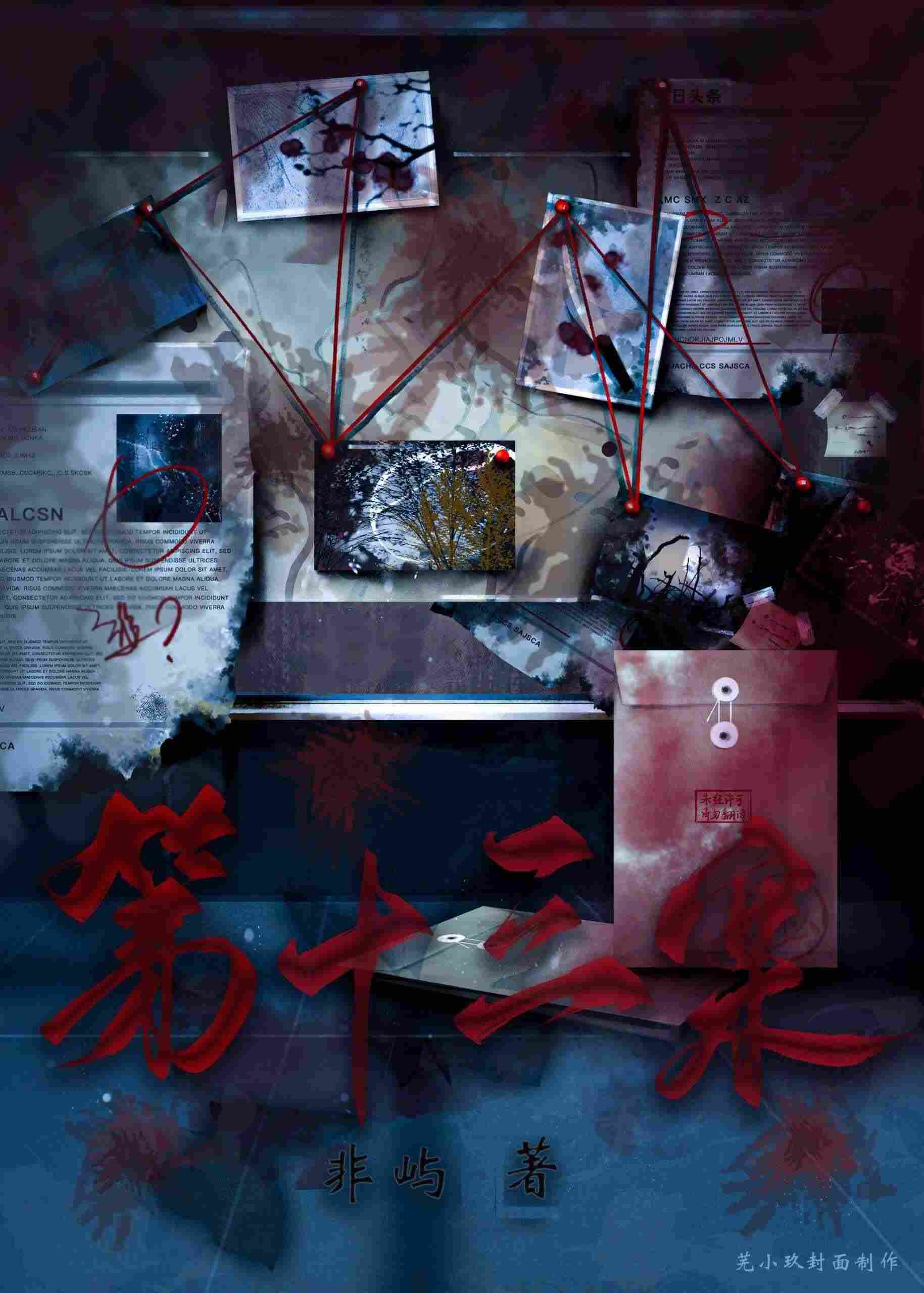
Zou Shuyang is a deputy captain in the Serious Crime Unit of the Jiangzhou Public Security Bureau, known for his sharp deductive skills and calm demeanor. He works closely with his subordinate Xiao Tang and maintains a romantic relationship with Jian Mengyan, a high school teacher. The story begins when an elderly scavenger discovers the body of Shen Jun, who fell to his death from an unfinished building on Xiyi Road. The scene appears to be a suicide or accident, as forensic evidence shows no signs of restraint and only the victim's footprints are present. However, the witness claims to have seen a mysterious figure dressed entirely in black, described by the scavenger as a ghost-like woman with glowing eyes, before the fall.

Zou Shuyang takes charge of the investigation and identifies the victim as Shen Jun, a man who served time in juvenile detention ten years earlier for killing his high school homeroom teacher, Shen Tinglan, in a fit of rage. Jiang Hongye, Shen Jun’s accomplice from that case, is brought in for questioning. Jiang reveals that he was the only participant still living in poverty, while the other four accomplices had all died under seemingly accidental circumstances—drowning, alcohol poisoning, and car crashes—despite suddenly acquiring wealth after the original murder. Jiang feared he was the next target of revenge.

The case escalates when Cheng Hao, another accomplice, jumps to his death from a residential balcony in full view of Zou Shuyang. A shadowy figure is seen escaping the apartment, but the stairwell is empty by the time Zou Shuyang investigates. Jian Mengyan, who was present at the scene, identifies the victim as her former classmate. Zou Shuyang later discovers that Jian’s official witness statement from the original teacher murder case is missing from the archives, a discrepancy tied to a hospitalization she experienced around that time. Coroner Cui provides critical forensic details: both Shen Jun and Cheng Hao had been injected with a needle in the neck prior to their falls. The injection marks indicate the use of a novel, experimental anesthetic derived from spores, administered by someone with medical training and significant upper-body strength.

Investigation leads Zou Shuyang to Lin Xi, the widow of the murdered teacher Shen Tinglan. Lin reveals that she has been receiving text messages from an unknown number for six years, instructing her to come to specific locations to witness the deaths of her husband’s killers. She attended each execution, confirming that the deaths were staged to look like accidents while she watched. Zou Shuyang deduces that the killer is not taking a direct hand in the murders but is manipulating events to force a reopening of the cold case. The killer’s goal is to expose the truth behind Shen Tinglan’s death, which Zou suspects was a contract killing rather than the impulsive act recorded in the original files.

A suspicious old man who provided Zou with information about Cheng Hao’s financial activities is found dead from an apparent heart attack, a murder staged to look natural. This confirms that the killer is eliminating loose ends and controlling the flow of information. Zou Shuyang realizes the entire series of deaths is a calculated performance designed to draw him into the mystery. Meanwhile, Jian Mengyan attends a high school reunion and learns that ten students from her class have died under suspicious circumstances over the years. When Zou asks about their connection to Teacher Shen, her classmates refuse to speak, treating it as a taboo subject. The narrative concludes with Zou Shuyang deepening his inquiry into the original murder case, recognizing that the killer is someone intimately connected to the past events, using the anesthetic and psychological manipulation to enact a long-delayed vengeance.

Latest Release
DateGroupRelease
2026-09-26knoxt c38
2026-09-26knoxt c37
2026-09-26knoxt c36
2026-09-26knoxt c35
2026-09-26knoxt c34
2026-09-26knoxt c33
2026-09-26knoxt c32
2026-09-26knoxt c31
2026-09-26knoxt c30
2026-09-26knoxt c29
2026-09-26knoxt c28
2026-09-26knoxt c27

Community Reviews

Rating(4 / 5.0, 183votes)
5 stars
65(36%)
4 stars
61(33%)
3 stars
56(31%)
2 stars
1(1%)
1 stars
0(0%)

Popular reviews

... Read More
"People aren't plants; how can they be without feelings?" I keep coming back to this line. It's the quiet anchor of the entire chapter, sitting right after all the drama and tension. Jian Mengyan has just processed the news that her friend Ding Jing is dead, she's been attacked in her own home, she's being watched by Director Zhong, and yet her final thought before the chapter closes is this almost philosophical observation about human emotion. There's something so heavy about the contrast between Yin Zhuo's grief and Jian Mengyan's resilience. Yin Zhuo frames his pain as world-collapse, as if Jingjing's death destroyed him completely. But Jian Mengyan sees through it — not because she doesn't care, but because she understands something deeper. Survival doesn't mean forgetting. It doesn't mean your heart isn't dead. It just means your mouth is still alive and you're still here talking. The oranges are interesting too. Unseasonal, sour, barely edible — and Yin Zhuo eats them anyway while making faces. Is that a metaphor? People consuming pain even when it hurts? Or maybe it's just flavor text, which honestly wouldn't surprise me given how much else is happening. And what about the silence between characters? The things that go unsaid. Yin Zhuo never explains why he feels he "got what he deserved." Zou Shuyang never asks about Jian Mengyan's past with the attacker. Jian Mengyan never tells Zou Shuyang that she saw something that might have been Yin Zhuo at her window. Every character is holding something back, and I think that's the real theme here — survival as an act of selective silence, of choosing what to speak and what to swallow.
... Read More
The symbolism in this passage is suffocating and I love it. The travel bag full of cash—what a ridiculous, cinematic image. Not a digital transfer, not an envelope. A literal bag dumped in a living room. It's almost comedic in its excess, which makes it even more sinister. Money as a physical object, heavy and tangible, like a weight that Chen Fang carried home that night and couldn't put down. The bag becomes the same shape as the guilt. Then there's the recording. A phone capturing truth in a space where truth was supposed to die with Shen Tinglan. The irony is thick enough to cut—the very act of cowardice (recording as insurance) becomes the instrument of justice ten years later. Chen Fang recorded it out of fear of being blamed, and that fear-weaponized evidence is what finally brings everything to light. She thought she was protecting herself from consequences, but she was actually building a time bomb. And the karma theme—'Heaven took my daughter from me.' Whether or not you believe in literal divine punishment, the metaphor works beautifully. Chen Fang's daughter needed money that came from another person's death. The surgery money saved one child and killed another. The book doesn't shy away from the impossibility of this equation. No amount of money can balance that scale, and Chen Fang knows it. Her daughter's death isn't karma—it's coincidence, or fate, or just the random cruelty of the world. But she chooses to see it as punishment, and that choice tells us everything about her guilt. Zhong Langming gazing at the 'gloomy sky'—another symbol I can't shake. He's looking outward, away from his own complicity, projecting his unease onto the weather. But the sky won't answer him. It never does.
... Read More
I love how the author builds this world without giving us a single info-dump paragraph. You basically learn Jiangzhou is a dying mining city with last-place GDP and 2,100 yuan/sqm housing prices, and it IMMEDIATELY changes how you read everything. Shen Jun having 100,000 yuan isn't just surprising—it's almost impossible in a place this depressed, which makes the mystery infinitely more gripping. The scenes themselves are wonderfully rendered. I keep going back to that moment when Zou Shuyang rolls down his car window at the high school and just listens to Jian Mengyan talking to her students. The tomato-and-egg uniforms, the girls laughing about mushroom poisoning in a biology lab, the way Jian Mengyan threatens midnight door visits over genetics grades—it's so specific and alive. You can HEAR this school. Then you cut from that warm scene to the narrow alley of old apartment buildings where Zou Shuyang drives Jian Mengyan home, and the contrast is chef's kiss. The author never tells us how Jiangzhou FEELS emotionally except through these tiny environmental details, and somehow it's more effective than any description of crime scenes or interrogation rooms could be. The unfinished building on Xiyi Road—already mentioned twice, never shown—haunts me the most. It's a setting that exists only in a suspect's muttering, and that's somehow scarier than anything fully described.
... Read More
Let me just lay out what Jian Mengyan is walking into, because the stakes are genuinely terrifying. She has evidence of murder in a pink box. Someone is trying to steal that evidence. That someone has already orchestrated a car accident to create a distraction. They have contacts inside a coffee shop (or at minimum, they knew Lin Shaohuai would be there). They have a replacement box ready to swap. And they're willing to hit a woman with a van in a populated area to get it. This isn't petty crime. This is organized, patient, and ruthless. The old man's dialogue with his crew is chilling in its casualness: "That's why I didn't want to bring you along. You're too reckless. We're talking about something worth hundreds of thousands. One little mistake, and the money's gone." They're professionals who view Jian Mengyan as a minor obstacle, not a person. She's a bottleneck between them and their payout. But the internal conflict is what really gets me. Jian Mengyan KNOWES something is wrong. She's been feeling unease since she got in the car. Her sixth sense—established earlier as sharp and reliable—has been screaming at her the entire time. And yet she still sits on that bench. Still talks to the old man. Still lets her guard down for a single, heartbreaking moment when she thinks about Lin Shaohuai. The tragedy is that she's vulnerable precisely because she cares. The thieves exploit her physical distraction (the accident), but they also accidentally exploit her emotional one (the high school memory). She's under attack on two fronts simultaneously, and she doesn't fully realize it until the damage is done. What does she stand to lose? The evidence, obviously. But also: her safety, her trust in Lin Shaohuai, and whatever fragile sense of closure she thought picking up this gift would give her. If the box contained truth, it was her ticket to understanding Shen Tinglan's death. If it contained a trap, it's a noose around her own neck. The author has built a situation where every outcome is bad, and that's what makes it so gripping. There's no safe choice. There's only the next move.
... Read More
What I love about this section is that EVERY character is running from something. Zhong Langming is curled in a corner screaming "don't kill me" — the stakes are literal survival. He's lost his mind, lost his dignity, and possibly lost his freedom depending on what Yin Zhuo decides to do with that recording. Yin Zhuo is the ghost in this whole operation. He claims to want justice — "let the truth come to light" — but he's also leveraging information like a weapon. The stakes for him are probably power and control, maybe revenge for something tied to Shen Tinglan that we haven't learned yet. Zou Shuyang's stake is professional and possibly personal. If this case goes sideways, if Yin Zhuo is playing him, his entire investigation could collapse. And that line from Zhong — "his injuries weren't serious, so why did he die?" — that's the central question that makes everything else matter. If a patient dies from untreated or mismanaged injuries that shouldn't have been fatal, that's not negligence. That's something worse. The stakes are layered: individual survival, professional reputation, institutional corruption, and the unresolved death of Shen Tinglan hanging like a ghost over every conversation. Nobody is safe here and the author makes that clear by having characters lose their minds, their composure, and their secrets in roughly equal measure.
... Read More
This batch really got me thinking about what justice actually means when it twists into something else entirely. Yin Zhuo claims he did it out of love for Ding Jing, but reading between the lines, there's this whole other layer happening that I couldn't shake. The title card at the beginning—"I believe in justice, but I don't have much time left"—hit different after everything that unfolds. It's not just a confession; it's a eulogy. And the fact that Jian Mengyan wrote it before dying? Chilling. The imagery of circles keeps coming back, doesn't it? Zou Shuyang literally says it out loud: "They had all gone in circles, but in the end, someone should have a good ending, right?" But nobody does. That's the point, isn't it? The novel keeps asking whether revenge is justice or just another form of destruction, and honestly, the answer seems to be: yes. Yin Zhuo thought he was avenging Ding Jing, but he's just another piece in someone else's larger puzzle. The real architect might be Jian Mengyan, whose PhD thesis on PHR769 apparently ties into everything. And those spores—mentioned casually by Zou Shuyang like a throwaway detail, but they've been lurking in the background this whole time. A surgeon who shouldn't have access to them, yet somehow does. The housekeeper carrying antidepressants. Ding Jing's river suicide that Yin Zhuo witnessed, held her, threw her in. The water imagery is everywhere: the river, the drowning, the way people keep disappearing into currents they can't escape. But what really gets me is the contrast between the ordinary and the extraordinary. Jian Mengyan describes herself as so ordinary she'd disappear in a crowd, yet she's apparently orchestrating murders through someone else's hands while doing her graduate research. That irony is brutal. She wanted attention from her parents as a kid, sent fake messages from her teacher's phone, skipped class to go to that smelly internet cafe just to feel something. And now? She's the most connected person in the story, pulling strings from beyond the grave. I keep coming back to that final line about Jian Mengyan. She doesn't get closure. She doesn't get the happy ending any of them deserved. The sun comes out after the rain, Xiao Tang says the sky is blue, but Zou Shuyang knows something is wrong. The world keeps turning even when your whole foundation crumbles. That's the theme this book is really about—not justice, not revenge, but the impossibility of clean endings when people are this broken.
See all reviews

Custom lists

See all custom Lists