[Crime Investigation] 13th Case - Reviews

[Crime Investigation] 13th Case
+Add to Custom List
Sort
Add review
... Read More
'Zhong Langming had indeed been clever. With just a few words, he had managed to cover up what had happened to Shen Tinglan.' I read this paragraph and my stomach dropped. Because right before this moment, we just spent five pages watching a woman destroy herself with the truth, and now Zhong Langming is just... sitting there. Smiling. Unbothered. The stakes just shifted so violently I had to re-read that sentence three times. Here's the thing that keeps me up at night: Chen Fang has the recording. She gave it to the police. But does Zhong Langming know she has it? Does he know she's talking to them? The text says 'Just as Zhong Langming was feeling smug, the hospital room door suddenly opened.' That timing is excruciating. He's at his most vulnerable—confronting his own past, feeling victorious—when the very people he tried to buy into silence walk in. The suspense here isn't about whether he's guilty. We know he's guilty. The suspense is about what happens NEXT. Will he panic? Will he try to bribe them too? Or will he double down on that practiced mask of innocence? The external conflict is obvious—police vs. a corrupt doctor. But the internal conflict is what kills me. Chen Fang is torn between the truth she just told and the terror of what Zhong Langming might do to her now. She's an accomplice who became a witness, which makes her both dangerous and expendable in his eyes. And Zou Shuyang? He's been smiling faintly the entire time. 'Hidden beneath Zou Shuyang's puzzled expression was the faintest hint of a smile.' What does he know? What isn't he telling Xiao Tang? The stakes have never been higher and I am NOT ready for what comes next.
... Read More
I need to talk about Yin Zhuo because this guy is NOT normal and I'm obsessed with how the author writes him without ever saying 'he's creepy.' Look at this: "His overly thin face was adorned with a smile that seemed like a mask, with his mouth curving just the right amount." Just the right amount. Not too much, not too little. A calibrated performance. And then he stands by the window in sunlight holding a thermos like he's... what, posing for a portrait? The way he addresses Zou Shuyang — "Team Leader Zou, you've probably seen Director Zhong by now" — he ALREADY KNEW. He anticipated this moment. He knew Zou would come to him. That's not coincidence, that's choreography. And Zou Shuyang! The man senses danger and still walks into it anyway. He doesn't press play immediately, he hesitates, he senses something off, but eventually he does it. That's a good investigator — curious to a fault. Their dynamic is so interesting because Yin Zhuo keeps offering information like it's a gift, but it feels more like bait. Zou keeps raising his guard (the text literally says "silently raising his guard against him even further") but can't look away. It's the oldest trick in the book and yet it works every time because the reader is right there with Zou, desperate to know what happens next.
... Read More
The atmosphere in these chapters is absolutely cinematic and I need to talk about how the author uses setting as a mood engine. We start in a fluorescent-lit interrogation room—the noise, the recordings, the tension between Zou Shuyang and Captain He exchanging loaded glances. Then we transition into this relentless torrential rain that follows Zou Shuyang everywhere, and it's not just weather, it's like the novel is wetting down the entire world to make it feel more isolated and murky. The drive to Shen Jun's house is such a vivid sequence—GPS leading them further and further into remoteness until there's literally no road, just a muddy path through a vast field of reeds. And then this old man appears with his cane, his black umbrella splashing rainwater everywhere, guiding Zou Shuyang through what feels like the edge of the world. The house itself is described with such specific, unsettling detail: tangled wires hanging from eaves, uneven cemented walls, a roof so low you can see the tiles if you stand on your toes. Except THIS particular house—the nicest one in the area—stands out like a sore thumb, paid for by money that shouldn't exist. There's a visual contrast here that screams narrative importance: everything is rotting and decaying except this one house, which is maintained by dark money. The old man's warnings about Shen Xiangxiu's mental state add another layer—the house becomes almost a character itself, a monument to a mother's denial and a son's secrets.
... Read More
Alright, so this opening hit me like a cold splash of water. Let me just say—the plot setup is brilliantly messy, in the best way possible. You've got a corpse with no identity, a witness who may or may not be reliable, and a whole neighborhood that believes in ghosts. Classic locked-room energy but outdoors, which somehow makes it creepier. What really sold me is the structure. Chapter 1 drops us straight into the crime scene with no exposition dump. We learn about the unfinished building through the old man's muttering, not some narrator telling us. That's smart. The pacing here is deliberate—slow enough to build dread, fast enough that you don't get bored. The twist with the black-clad figure is classic misdirection. The forensic team says no second person was there, but the witness insists someone was. Who do we trust? The evidence or the testimony? This isn't just a procedural; it's a game of who's lying and who's deluded. I also love how the victim's identity is withheld. No face recognition yet, no phone data. It's like the author is looking at us and saying, “Figure it out.” That keeps you hooked because you're not just reading; you're investigating along with Zou Shuyang. One thing that made me pause—the witness's pattern of disappearing in winter. That's not random detail. That's a clue someone planted early. I'm betting the scavenger knows more than he's letting on, or he's not who he seems. And Captain He being absent? Yeah, that's not just comedy relief. Every missing authority figure in a mystery is doing heavy lifting. I'm expecting him to drop a bombshell revelation later. The ending of this batch—Zou Shuyang walking into the interrogation room while the young officers flee—was pure tone-setting. This isn't your typical hero entrance. It's casual, almost dismissive, which makes it memorable.
... Read More
Okay so I just finished these chapters and my brain is still processing everything. The diary reveal is absolutely masterful storytelling. We're given this incredibly intimate window into Shen Jun's head—his moral conflict, the moment of temptation, the decision, and then the quiet aftermath of keeping the memory card as evidence. It reads like a genuine confession, which makes it so much more devastating than any third-person narration ever could. What I love is how the plot layers work here. The surface story is Zou Shuyang investigating a murder, but the diary peels back to reveal that Shen Jun wasn't just a victim—he was someone who made a terrible choice, got greedy, tried to protect himself, and still died anyway. That's not a clean moral narrative at all. The story isn't asking us to like Shen Jun; it's asking us to understand him. And then there's the old man. The way he withholds information, reveals just enough to be useful but never enough to be safe, and then lies to protect Shen Xiangxiu—it's a masterclass in slow-burn plot progression. The author doesn't rush to explain everything. Every answer creates two new questions. That's how you keep readers turning pages. The only thing that bugged me slightly was the transition from the emotional Shen Xiangxiu scene to the Hao Yiming interrogation. It felt like a tonal whiplash, honestly. One moment you're sobbing with a character, next you're reading about some guy complaining about foam on the walls. But maybe that's intentional—life doesn't maintain mood, does it?
... Read More
There's this recurring image of reflected light that keeps appearing and I think it's the key to the whole story. The old man testified that he saw a woman with glowing eyes at Shen Jun's fall scene, and Zou Shuyang immediately connects it to glasses reflecting sunlight. Then the same woman appears at Cheng Hao's jump—wearing glasses, wearing a faded blue shirt, holding a plastic bag, and her face shows satisfaction. Satifaction! After watching someone throw themselves off a building! The glasses become this perfect metaphor: they're supposed to correct vision, to help you see clearly, but instead they create reflections that disguise what's really there. Everyone in this story is looking through distorted lenses. Jiang Hongye sees his past through guilt. Zou Shuyang sees clues through instinct. Jian Mengyan sees her dead teacher through trauma. And that woman with the glasses? She's the one who actually knows what she's seeing. The reflection motif also ties into the theme of surfaces versus depths—the body hits the ground and splatters, but the real story is inside the apartment, inside the phone call log, inside the ten-year-old secret. Nothing is what it appears to be on the surface, and the glasses are the visual shorthand for that entire philosophical question.
... Read More
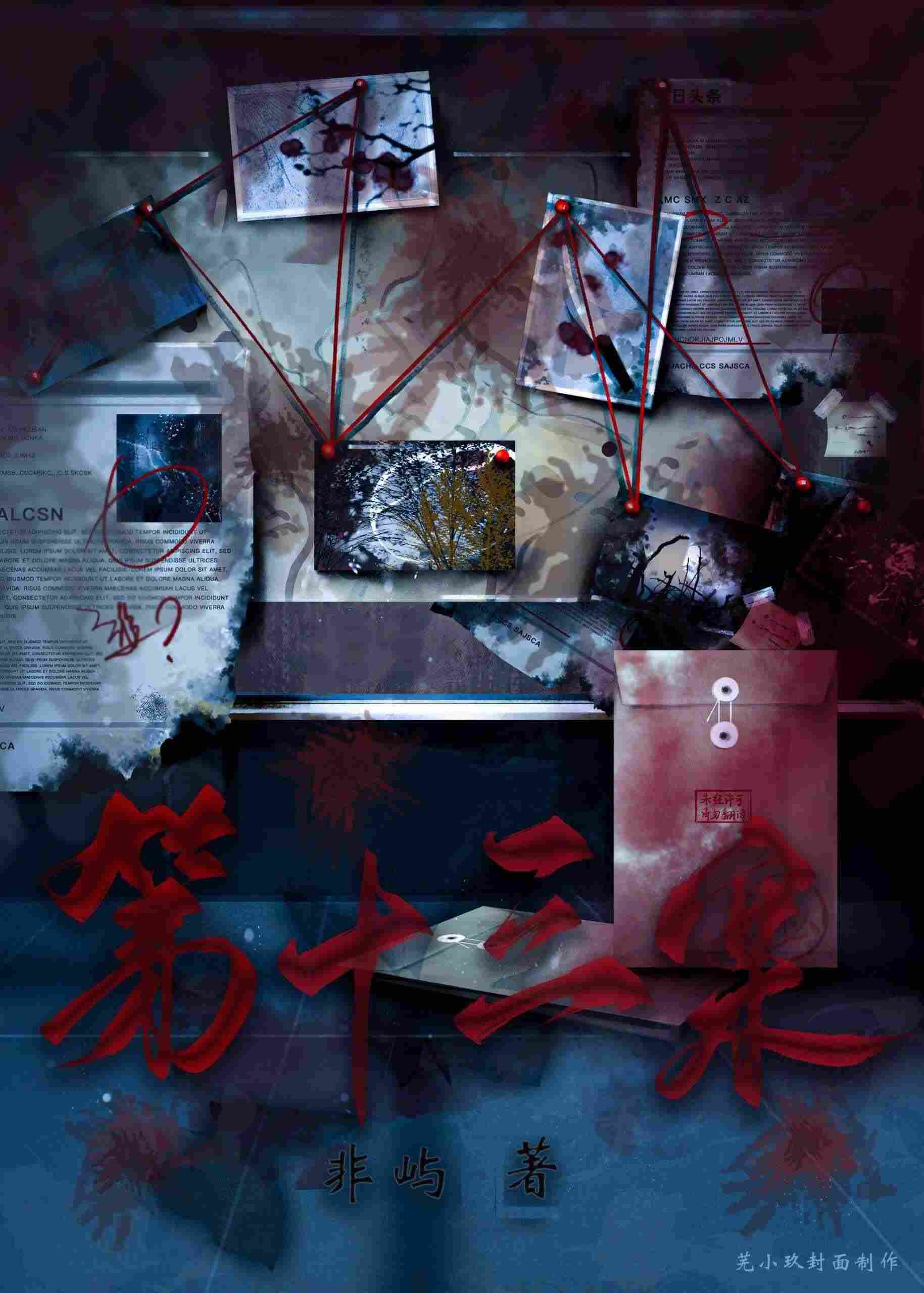
I need to talk about Jian Mengyan because she's the most fascinating character in this entire story, and she's barely even alive in this batch. On the surface, she's described as ordinary. "So ordinary that if I were thrown into a crowd, I would disappear without a trace." But that's the first lie we're told. She comes from wealth—parents who run big businesses, plenty of money, nobody paying attention. She skips class to an internet cafe, not because she wants to game, but because she wants to feel something, to be seen. She sends fake messages pretending to be her teacher, hoping her parents will notice. All these small acts of rebellion that fail because nobody is watching. Fast forward, and she's orchestrating murders through Yin Zhuo's hands. She's a surgeon's associate with access to PHR769 and spores. She wrote a thesis that apparently explains everything. And when it all comes crashing down, she kills herself rather than face consequences. "Meng Meng committed suicide." Zou Shuyang says it like he's still trying to process it. But the relationship between her and Zou Shuyang is what haunts me. They're clearly close—romantically involved, presumably. And when he realizes she might be the real killer, he can't bring himself to arrest her. He grabs Yin Zhuo by the collar instead, desperate for some kind of confession, some proof that his girlfriend isn't a monster. When Yin Zhuo won't give it to him, Zou Shuyang just leans against the table, closes his eyes, and breathes. Yin Zhuo's relationship with Ding Jing is tragic in its simplicity. He loved her, she felt tainted, she wanted to die, and he gave her that gift. But did he? Or was he manipulated into it? The text leaves this ambiguous, and I think that's intentional. Maybe Yin Zhuo really did throw her in the river. Maybe Jian Mengyan told him to. The truth might be lost forever. And then there's Shen Tinglan—dead, mentioned only in passing, but apparently the one person who treated Ding Jing well after her family went bankrupt. "He was a good person who met a tragic end." Yin Zhuo says this almost casually, but it reveals everything: he didn't know Shen Tinglan, didn't care about him, but he avenged him because it served a larger purpose. That purpose, of course, was Jian Mengyan's design. The tragic symmetry is that nobody wins. Yin Zhuo thinks he's found peace in confession, but he's just another pawn. Zou Shuyang is about to lose the woman he loves to a investigation she created. Jian Mengyan gets her revenge but not her life. Ding Jing dies anyway. And the readers? We're left wondering who we're supposed to sympathize with.
... Read More
Let's talk about how the author uses dialogue to build tension without anyone actually saying anything important. The old man is the quietest character in the most dangerous way. When he says 'people are biased. Even fingers aren't all the same length,' he's delivering a philosophical observation that simultaneously justifies his inaction and condemns the entire system that failed Shen Jun. It's understated, almost offhand, but it lands like a bomb. Hao Yiming's dialogue in the interrogation room is equally brilliant in its own way—every line is designed to project control while revealing absolute panic. 'Your conditions here are pretty basic, huh?' followed by 'Do you have any water? I'm thirsty.' The shift from false confidence to childish complaint is so smooth it's unsettling. And that line about the water quality being insufficient? It's either genuine entitlement or a desperate attempt to maintain some semblance of power in a space where he has none. Zou Shuyang's dialogue is noticeably sparse. He speaks little, observes much. When he does speak, it's usually a question or a lie—not a confession or a declaration. That restraint in his voice makes every word feel weighted and deliberate. And Shen Xiangxiu's lines are devastating precisely because they're so ordinary. Grocery lists. Offers to cook. Self-deprecating apologies about a musty shoebox. The author understands that the most emotionally powerful dialogue isn't the kind that announces feelings—it's the kind that tries desperately to avoid them.
... Read More
Okay I need to talk about Zou Shuyang because this man has been carrying so much emotional weight in these chapters and honestly he deserves an award. Let's trace his arc quickly. We meet him first as a competent investigator having a theoretical discussion with Captain He about the boyfriend theory. Very professional, very contained. Then Jian Mengyan calls him from the dream, half-conscious, and suddenly we see him shift into pure panic mode—'hurriedly grabbed the clothes draped over the sofa and threw them on,' driving at the fastest speed the city's limits would allow. The detail about throwing on clothes is so specific and human. You can picture him, half-dressed, grabbing whatever's closest. Then he finds her. Lying on the floor near the balcony door, 'face still frozen in an expression of shock.' He's 'too afraid to approach her' and has to take a deep breath to summon the courage. This isn't a tough cop who's seen it all—this is a man who loves someone and is terrified of losing them. So much more compelling. And then the nurse asks 'Are you the patient's family member?' and he just... says it. 'I'm her boyfriend.' No hesitation, no performance, just the truth. In a moment where he's probably still processing that she was drugged and he barely found her alive. That's not a performed declaration, that's a desperate affirmation of connection. What fascinates me most is how his relationship with Jian Mengyan mirrors the larger mystery. She can't remember who he is in the dream ('Who... who are you?') and now she can't remember their life together. He's the anchor to a reality she's losing hold of. Meanwhile, the investigation into Ding Jing's death is partly what brought them together in the first place. Love and grief and investigation are all tangled up in the same knot. Also Director Zhong and Dr. Yin giving Jian Mengyan those knowing looks before leaving? Something is definitely going on there. I'm not buying the 'random recognition' excuse.
... Read More
I need a minute. Just a minute. Because the scene with Shen Xiangxiu absolutely destroyed me and I am not okay. This woman—who cannot even see properly anymore—is clutching Zou Shuyang's wrist, feeling his hand, and convincing herself that her dead son has come back to life. "They all said my Junjun was dead, but you wouldn't die." Do you hear that? A mother so fundamentally unable to accept loss that she rewrites reality itself just to keep her child alive in her mind. And then she hands him expired Coke. Expired THREE YEARS ago. And she's still smiling. I am genuinely shaking. What makes this even more heartbreaking is that Zou Shuyang doesn't know how to respond—he's not used to familial affection, the text says so directly. He's standing there, surrounded by this woman's overwhelming love directed at the wrong person, and he has no framework for it. Meanwhile, all we know about Shen Jun from the old man's story is that he was filial, that he beat a teacher to death and went to juvenile detention, and that he suddenly started having money out of nowhere. This mother is living in a house she couldn't afford without her son's mysterious funds, and she refuses to believe he's gone. The tragedy isn't just that he died—it's that his death is somehow connected to all this money and criminal activity, and his blind mother has no idea what kind of world her son was actually living in. She thinks he was outstanding. The old man literally said "He was such a good kid" with zero awareness of the darkness behind it. I'm not crying, you're crying.
... Read More
Teacher Shen isn't just a character—he's a structural tool the author uses to control emotional tempo. Every time the narrative gets too heavy (Jian Mengyan's loneliness, her parents' absence, her fear of forever being alone), the teacher appears and provides a breather. He's the narrative equivalent of a soft landing. After the classroom heat, his home is cool. After empty streets, his kitchen is warm. After silent phone calls, his voice is present. But here's the trick: he also ACCELERATES the plot. It's THROUGH him that Xiao He is introduced. Through him that Jian Mengyan confesses her deepest fear. Through him that we learn about the neighbor who 'doesn't say much.' He's not just comfort; he's exposition delivery disguised as kindness. The author could have had Xiao He appear organically—a chance encounter, a classmate's sibling, a random neighbor. But by routing him through Teacher Shen, the author creates a dependency chain: Jian Mengyan needs the teacher → the teacher introduces Xiao He → Xiao He becomes inevitable. Every relationship in this story passes through someone else first. This pacing choice means no connection is direct. Every bond is mediated, which makes them all feel slightly precarious. What happens when the mediator is removed?
... Read More
I need to sit with this part for a minute. Jian Mengyan and Zou Shuyang. God, the way she pushes him out the door. Every sweet moment—the nose pinch, the 'what a fool' mutter, waving through the rain—is layered with this quiet devastation. She's letting him go. Not just physically, but emotionally. She has the diary clue, the blackmail evidence theory, and she's taking the case back into her own hands. That vulnerability she shows him, crumbling into his shoulder? It's real grief. But the second he's gone, she becomes steel. "After leaving Jian Mengyan's place, Zou Shuyang couldn't shake the feeling that something was off." And we know what it is. She's planning something he's not part of. I'm obsessed with how their dynamic has shifted. He's the protector, the cop, the one who promises justice. But she's the strategist, the one who remembers that Shen Jun kept a diary. Who held onto evidence. That intelligence isn't just academic—it's survival. And the tragedy is, he doesn't see it coming. He's too busy being sweet and concerned. Meanwhile, she's calculating every move. When she says, "If you keep dawdling like this, when are you ever going to catch the killer?" is she pushing him away, or is she trying to keep him safe by keeping him busy? I think it's both. And that hurts. Because their love is real, but her mission is bigger than their relationship right now. Who is she really becoming?

Leave a comment

You must be logged in to leave comments. or
