[Crime Investigation] 13th Case - Reviews

[Crime Investigation] 13th Case
+Add to Custom List
Sort
Add review
... Read More
I need to sit with this chapter for a while because the thematic weight behind it is staggering. Memory. Identity. The boundary between the living and the dead. These aren't just plot devices — they're the CORE of what this story is exploring, and this chapter makes it undeniable. Jian Mengyan doesn't remember Ding Jing. Or rather, she DOES remember but it causes physical pain. The memory isn't just information — it's TRAUMA stored in the body. That scar by her nose? It's a permanent mark from an event she can barely recall. The body keeps the score, right? Even when the mind tries to protect itself. The phone number saved as 'Y' — is that Yuan? Is that a doctor who knows what she is? The fact that she calls HIM instead of Zou Shuyang says everything about where her loyalties lie, or where she thinks they should lie. Is she protecting him? Or is she already too far gone to be honest with the person closest to her? "He was dead. And so was she." This line operates on so many levels simultaneously. Literally — if both people died, then what IS Jian Mengyan? Thematically — the death of identity, the death of self when memories slip away. Psychologically — the feeling of being dead inside when trauma erases who you were. The rain motif is huge here too. June 3rd, 2012 — a storm so violent it killed someone (or caused someone to die). And now, ten years later, the memory of that rain still hurts her skin. Weather as emotional landscape. Storm as cleansing or destruction. The boundary between past and present blurring like rain on glass. Shen Tinglan walking them home in the dark with a flashlight — that image of him checking her homework is almost comically mundane, which makes its loss even more devastating. The normalcy of life before the tragedy. The last good memory before everything went wrong. And the plastic board — an everyday object, something as trivial as flower pot cushioning, becoming the instrument of a scar that will define her for a decade. How much of our identity is shaped by random, meaningless accidents? This story is about what we carry when we can't remember. And Jian Mengyan is carrying EVERYTHING.
... Read More
Let me break down how this section is built, because the pacing is deliberately uneven in a way that keeps you turning pages. It opens at maximum tension — Zhong Langming being dragged out of the basement, terrified, throwing threats. Immediate hook. Then it drops to a conversation mode between Zou Shuyang and Xiao Tang, where the stakes are explained through dialogue rather than action. This is the exhale before the next inhale. Xiao Tang's attempt to rationalize why Jian Mengyan is safe actually does the opposite — it makes you more worried because Zou Shuyang clearly isn't convinced. Then the POV switches to Xiao Wang, completely unaware that he just delivered Zou Shuyang's location to Captain He. This dramatic irony is uncomfortable in the best way. You're watching a innocent cop walk into a trap while the reader screams internally. Hao Yiming's entrance is the pivot point — the temperature drops, the polite smile doesn't reach his eyes, and suddenly the narrative voice shifts from procedural to something darker. The line "the air around Hao Yiming seemed to drop a few degrees in temperature" is doing heavy thematic lifting here. The final act at the villa moves faster. Door opens, blood, suicide attempt, collapse. Four paragraphs to go from walking up to the door to Zou Shuyang exhausted on a sofa. That compression is deliberate — the author trusts you to fill in the emotional aftermath without spelling it out.
... Read More
Can we just talk about how natural this dialogue is for like five seconds because I am obsessed. The conversation between Jian Mengyan and Zou Shuyang in the car is SO believable. You know how real couples talk? That little dance where one person is trying to bring up something awkward and the other one sees it coming a mile away? That's exactly what's happening here. "You…" — he starts, can't finish. She interrupts BEFORE he can ask. "If it's about an ex-boyfriend, don't bother asking." This line is EVERYTHING. She's not even letting him get the words out. She's already decoded his entire worry and neutralized it before it became a conversation. That's either the most attentive girlfriend move or the most calculated deflection in literary history and I cannot decide. The narrator's voice in this section is also doing a lot of work. Lines like "feeling like a child who had done something wrong" and "wishy-washy" give us Zou Shuyang's internal state without needing long exposition dumps. It's efficient characterisation through narration that still feels personal and close to the POV. And then there's the Doctor Y phone call — shorter, more clinical, but with that underlying tension. "What happened? Did something happen?" The repetition here feels like genuine concern cutting through the professional exterior. And her response — calm, collected, lying about being busy — contrasts perfectly with his obvious alarm. The principal's dialogue is a masterclass in bureaucratic evasion. "I wasn't the principal back then" followed by the implied "so I don't know anything." Then the pivot to "that student wasn't particularly notable" when pressed. It's so realistically annoying — the way authority figures talk when they're hiding something. The author nails the cadence of someone sweating through a conversation. "Did I get myself a boyfriend or a new dad?" — this line alone is worth the price of admission. It's funny, it's affectionate, it's dismissive, and it reveals everything about Jian Mengyan's personality in one breath. The dialogue throughout this excerpt never feels forced. Every exchange advances character OR plot or both, and rarely does it do just one. That's skilled writing.
... Read More
What are the stakes here? Because they're higher than anyone realizes. On the surface, Jian Mengyan has fake amnesia. She's being blackmailed by Director Zhong for money. Her friend Ding Jing is missing. Someone attacked her in her home. That's a lot—but it's not the real conflict. The real conflict is internal. Jian Mengyan knows something about Ding Jing's disappearance and she's been sitting on it for ten years. She's using Zou Shuyang—a detective—to get closer to the truth without revealing what she actually remembers. That's the core tension. Every conversation she has is a balancing act between revealing enough to keep him engaged and hiding enough to protect herself. Director Zhong raises the stakes explicitly: "The person behind all of this might be too powerful for you to handle." That's not just advice—that's a warning. Someone powerful is involved. Someone who could hurt her if she digs too deep. But she's already digging, just not openly. She's using Zou Shuyang as her instrument. Zou Shuyang's stakes are different. He's invested emotionally and professionally. His girlfriend was attacked. A killer with over a dozen victims is involved. And he's falling for a performance. If he finds out she's been manipulating him this whole time—that's personal betrayal on top of professional failure. Ding Jing's stakes are the highest of all. She's the one missing. Her boyfriend is being investigated. Her past is being reconstructed by strangers. And Jian Mengyan—who knew her best—has been holding fragments of the truth silently. The attack on Jian Mengyan escalates everything. Someone entered her house at 8 PM. The cameras were broken or showed nothing. This is a deliberate message. The killer knows she's connected to Ding Jing's case and is targeting her directly. But here's what keeps me up at night: Jian Mengyan called a doctor named Yin Zhuo to check on her. Why? Is she testing something? Testing whether her memory is truly unreliable? Or is she setting up another layer of deception? The stakes aren't just about solving a case anymore. They're about survival, betrayal, and the cost of silence. And Director Zhong just asked for more money. That's not greed—that's escalation. He knows something is coming and he's positioning himself.
... Read More
'The stairwell was dimly lit, the air heavy with the smell of dampness, and the landing between the two flights of stairs was piled high with junk.' That's it. That's the sentence. Five lines and I can SMELL that building. The author didn't need a paragraph of description—just damp air, stacked clutter, and darkness that swallows sound. It creates this claustrophobic tunnel vision that mirrors Zou Shuyang's mindset: he's racing up those stairs, alone, gunless, chasing a shadow that already escaped. And before that, there's the contrast—the narrow alley where Zou Shuyang takes Jian Mengyan to eat, the cool shade, the bustling sounds, her complaining about how hard it is to get a meal with him. It's domestic warmth, normal life, and then BAM—a man falls to his death from the seventh floor. The worldbuilding here works on two levels: the physical spaces are rendered with enough sensory detail to feel lived-in, but the emotional geography is what really matters. The police station interrogation room with its glass partition, the open apartment door with no footprints, the crowd of onlookers giving unsolicited tips—every location tells you something about the characters occupying it.
... Read More
The dialogue in this passage is razor-sharp. Look at how Captain He speaks versus Zou Shuyang. Captain He's all tension — his knuckles turn white, he sneers, he points and accuses. His lines are clipped, aggressive. Zou Shuyang, on the other hand, is measured. He walks Hao Yiming through the timeline like a teacher explaining a math problem. "At first, Shen Jun refused," he says casually, holding up the diary like it's nothing. The contrast is intentional and brilliant. And Hao Yiming's voice? It shifts dramatically. At first he's smooth, calling himself a law-abiding taxpayer. Then the recording plays and his voice becomes desperate, fragmented. "How did this happen?" — three words that carry the weight of a man watching his entire world collapse. The audio recordings within the scene are a masterstroke of narrative voice. We hear Hao Yiming's own voice accusing himself through Zhang San's testimony: "What are you going to do? Kill Shen Tinglan?" It's chilling how the author lets the recordings speak for themselves without commentary. Even the lawyer's entrance feels like a beat in a script — "May I see my client now?" delivered with that polished, approachable smile. The dialogue never telegraphs emotions; it reveals them through subtext and pacing.
... Read More
There's something deeply unsettling about how Zou Shuyang navigates his relationship with Jian Mengyan. On the surface, he's the caring partner—calling when she's scared, worrying about her sleeping groggily—but underneath, his every instinct screams that she's hiding something. I love how the author doesn't resolve this tension neatly. Instead, we see him sitting on his sofa, staring at a whiteboard covered in red string and names, muttering to himself, “Mengmeng, what exactly are you trying to do?” That moment crystallizes their entire dynamic: he's drawn to her warmth, but he can't stop piecing together the clues that point to her knowing more than she lets on. Their phone conversation after the earthquake is a masterclass in subtext. He tells her he dreamed her house was on fire; she teases him about PTSD and laughs it off. But the real subtext is in the silence after—he's not really asking if she's safe; he's testing her reactions. And her response? “Don't worry, I've already arranged for the housekeeper. My mom just called…” She's deflecting, redirecting, maintaining control of the narrative. Then she sends him that WeChat message: “Zou Mama, your child has grown up. Please learn to let go.” It's playful, but it's also a boundary. She's telling him, in her way, that she doesn't need saving. And yet, he still leaves that whiteboard up. Still connects her name to Ding Jing's with a line. Still wonders. It's not malicious—it's the friction between love and doubt, and that's where the character work shines. Both of them are performing versions of themselves: he performs the devoted boyfriend while privately obsessing over her secrets; she performs the detached, self-sufficient woman while secretly burning syringes and pretending she's fine. Their relationship is built on these parallel monologues, never quite intersecting. That's what makes it feel so real.
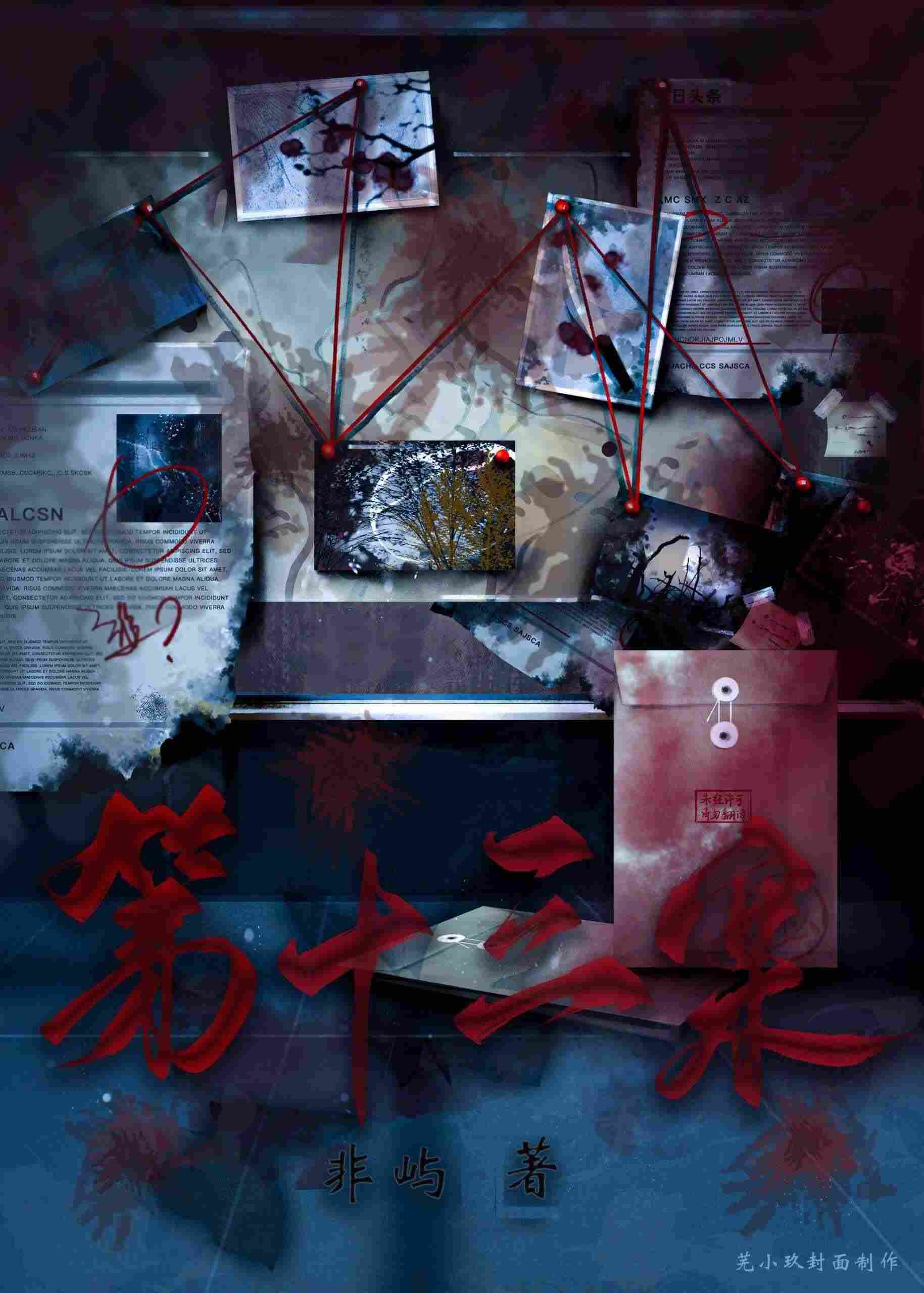
... Read More
Let me just say: the pacing in these chapters is absolutely surgical. The chapter opens with Jian Mengyan already in motion—dressed up, leaving the house, having received a cryptic call. No warm-up. No exposition dump. We're dropped into urgency immediately. And the structure keeps escalating: phone call → speculation → driving → arrival at coffee shop → retrieval of box → rearranging contents → text to Zou Shuyang → rear-end collision → bus stop scene → resolution → realization of the swap → driving home → parallel cut to the thieves celebrating. Every beat builds on the last. There's almost no fat. Even the internal monologue about where the gift might be hidden serves dual purpose: it develops Jian Mengyan's deductive reasoning AND it establishes her emotional connection to Lin Shaohuai (his mysterious nature from high school). Nothing is wasted. The collision scene is where the pacing really shines. On the surface, it slows down. She's waiting. Sitting on a bench. Talking to an old man. But the reader knows what's actually happening—we're watching a predator circle prey, and the tension is suffocating because we're waiting for the swap to be discovered. And when the insurance guy leaves and she gets back in the car, the moment she smells the unfamiliar scent... snap. The tension releases just enough for her to process, then the real tension kicks in. The final paragraph cuts between two perspectives—Jian Mengyan driving silently home, and the thieves celebrating their heist. This parallel structure is a masterclass in dramatic irony. We know she figured it out. They don't. The chapter ends on that gap between knowledge and ignorance, which is exactly how you make someone open the next chapter immediately. If this pacing held for the whole novel, I would have burned through it in a weekend.
... Read More
Can we just talk about Zou Shuyang for a second because this guy is INSANE in the best way. While Xiao Tang is genuinely freaked out—goosebumps creeping up his face, throat tight—and Jiang Hongye is basically having a full breakdown reliving the murder, Zou Shuyang is just sitting there slapping the boy on the back to snap him out of it and asking practical questions like a detective who hasn't lost his mind yet. Their dynamic with Xiao Tang is also perfect. Xiao Tang is clearly the emotional compass of the group, the one who FEELS the dread, while Zou Shuyang is pure process. When Zou Shuyang asks 'Is there anything different about you compared to the other five?' he's not being cruel—he's doing actual investigative work. And Jiang Hongye, broken as he is, actually listens. He starts connecting dots. That moment where his expression goes blank and he says 'They were all better off financially than I was'? That's a character who's been running on pure fear suddenly finding a thread to hold onto. The relationship between Jiang Hongye and Cheng Hao hit me though. He let Cheng Hao stay at his place, he kept an eye on him after juvenile detention, and then Cheng Hao basically disappeared into this new life with money he shouldn't have had. There's something deeply tragic in Jiang Hongye telling that part of the story with such empty confusion. He didn't see it coming. He was trying to HELP and the person he helped ended up dead under Zou Shuyang's own nose.
... Read More
Let's talk about Lin Shaohuai for a moment. The portrait that emerges from these chapters is beautifully unsettling. Outwardly: helpful class president, good student, reliable assistant. Everyone had nothing negative to say about him on the surface. But then Xiao Tang reveals the details and suddenly the picture shifts into something grotesque. He glared at a restaurant owner with what could only be described as murderous intent because someone knocked over his water. He secretly retaliated against the classmate who scored higher on an exam — specifically Ding Jing. The most terrifying part? Kids know. Xiao Tang's line about this is one of the sharpest observations in the entire text: 'No matter how well someone hides their true nature, long-term interactions will eventually reveal it.' Children sense fakeness before adults do. And the worst part about Lin Shaohuai isn't just his malice — it's that he has no genuine friends. Not one. Everyone felt something was off after getting to know him. Meanwhile, Zou Shuyang's relationship with his team is a completely different flavor. He pats Xiao Wang on the shoulder and tells him to stay safe before a stakeout, and the kid gets teary-eyed. There's a warmth there that feels earned, not manufactured. It grounds the whole investigation in something human. I'm genuinely invested in whether Zou Shuyang can bring Lin Shaohuai to justice when the latter is apparently this deeply embedded in systems that make him nearly invisible.
... Read More
I need to talk about Zou Shuyang because this man is carrying so much and I love him for it even though he's being terrible at keeping it together. The scene in the car is everything. Here's this guy—detective, supposedly decisive, used to handling situations—and he can't even say one sentence without trailing off into silence. "I…" and then nothing. Not because he doesn't care, but because he does. He's choosing between his job and her. The text literally says he could have joked about it casually, but he felt that asking would imply he didn't trust her. That is such a specific, human kind of love. He's protecting her feelings even when his instincts are screaming. And then she pecks his cheek and calls him out for being indecisive and he finally looks satisfied. There's so much warmth in that moment despite the heavy subject matter. These two have history, they have comfort, and somehow that makes it hurt more. But then Jian Mengyan goes home alone, digs out her graduation photo from under clothes in her closet—buried, literally hidden away—and whispers "Teacher…" The fact that she had to search for it, that it was buried, suggests she's been avoiding this for years. She tells Zou Shuyang nothing's wrong, says she's been back for years and nothing happened, but the subtext is suffocating. She's lying. Or she's lying to herself. The emotional distance between them right now is enormous and neither of them is naming it.
... Read More
There's something deeply unsettling about that clean apartment that I can't shake. Think about it — an old neighborhood where neighbors know everything, but this one apartment is spotless, regularly cleaned, and completely unknown to everyone around it. What does that symbolize? A life that was performed. Cheng Hao lived there, or at least appeared to live there, but no one in the community had any idea. He was invisible. And now he's dead, jumped from a balcony, and the cleanliness suggests someone was curating an image — a life that didn't match the reality. The building itself is almost a character. Two deaths in two days. An old man counting misfortunes like beads on a string. No elevator, hard to navigate, residents clinging to chess buddies and memories. It's a place stuck in time, and something dark is happening inside it. The old neighborhood represents community, history, familiarity — but all of that familiarity breaks down when you look at that one apartment. What was hidden behind the clean floors and tidy surfaces? And then there's the school dynamic — Ding Jing's high school class, where beauty and wealth made you a target, where rumors were weapons, where the girls ganged up on her and the boys wanted her. When her family went bankrupt, the power shifted. Xu Yiran became aggressive. The attention-seeking clique turned on her. But Guan Jie makes this crucial distinction: the boys weren't part of the girls' cruelty. They were 'obsessed' with her figure. That's a different kind of danger — the kind that disguises itself as admiration. Death after death. Guo Yuanjia. Shen Jun. Cheng Hao. Ding Jing disappeared. Who's next? The pattern feels almost ritualistic, like the past is catching up to everyone in that classroom.

Leave a comment

You must be logged in to leave comments. or
