City of Hope - Reviews

City of Hope
+Add to Custom List
Sort
Add review
... Read More
I've been thinking about the Dai Blade as a symbol and it's honestly brilliant. On the surface it's just a gift, right? Jiang Muhe remembered she mentioned her old blade was worn and quietly had a new one made. But dig a little deeper and this thing is carrying so much weight. The text literally says 'Only through relentless hammering can a fine blade be forged.' That's not just about metalworking, that's about the relationship too. And Uncle Kanyong's line — 'A woman wearing a blade looks most dashing!' — it connects Youyun to her heritage, to her identity as a Dai woman, while simultaneously being a romantic gesture from Jiang Muhe. The blade is both cultural anchor and love letter. Then there's the sunset photo that opens the whole thing. Jiang Muhe keeps it in a drawer, clasping a crystal glass, feeling 'a dull ache throbbed in his heart.' The photo captures a moment of beauty that changed everything — he went from photographer to prey. And the frangipani flower in Youyun's hair, described as 'white petals and a yellow center,' matching the radiance of her smile when she reads his message. Flowers, blades, sunsets — all these images of beauty and sharpness intertwined. The story keeps asking: what do we carry with us? What do we forge? What do we leave behind when we return to the city?
... Read More
I literally gasped when Jiang Muhe spotted Youyun in that bar. Let me set the scene for you—she's in this goose-yellow spaghetti-strap dress, hair completely loose, bright red lips, standing out like a beacon in the chaotic crowd. And he's there, among his friends, dice in hand, completely distracted. The text says 'the dice in his hand no longer obeying his command' and I just—how do you not feel that? It's this tiny, almost mundane detail that says everything about how affected he is. She doesn't even know he's there. She's on the phone with Zhang He, annoyed about work, then stepping outside into the rain, and he's just... watching. Shrouded in shadow, lighting a cigarette he doesn't usually smoke, feeling 'a long-lost stirring.' This is the kind of moment that makes your heart do that little flip, you know? The one where two people are in the same space but completely separate worlds, and the tension is so thick you could cut it. And then the chapter just... ends there. No resolution, no acknowledgment. Just smoke rings and a gaze. I need to know what happens next. Does he approach her? Does she sense him? What is this thing between them that the author is building so carefully?
... Read More
The opening paragraph alone is enough to make me want to book a flight to Xishuangbanna. "Every April, as the rainy season begins, the rain falls, stops, falls again, in an endless, tireless cycle." That sentence just... I felt the humidity. I could taste the wet air. The author doesn't just describe the setting, they make it breathe. What's remarkable is how the rainforest functions as more than backdrop. It's almost a character in its own right — indifferent, beautiful, dangerous, indifferent again. The golden spires of Buddhist temples glowing through mist, the blue tiles of stilt houses steaming in the sun, the wild elephants whose cries make Youyun's blood run cold. These images aren't decorative; they establish a world that operates on its own terms, completely separate from Youyun's Beijing anxieties and career ambitions. The pit scene itself is rendered with such visceral detail that I actually felt nauseous reading it. The mud, the darkness, the tangled roots, the way the setting sun creates this theatrical lighting that makes everything feel like a fairy tale gone wrong. "Thick mist rose around her, the surroundings lush and green—a scene straight out of a fairy tale, perfect for a 'picnic.'" That single sentence does so much work. It's ironic, it's darkly funny, and it perfectly captures Youyun's desperate attempt to find normalcy in an abnormal situation. The boundary between village and rainforest being "blurred" is such a loaded detail. It's not just physical — it's thematic. Youyun herself exists in a blurred space, between her Beijing life and this rural posting, between wanting to be invisible and being thrust into the spotlight.
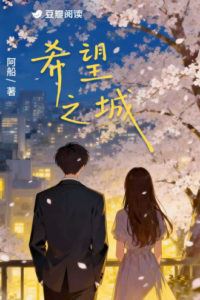
... Read More
I need to talk about Youyun's voice because honestly it's one of the most distinctive narrative voices I've encountered in recent fiction. The author gives her this razor-sharp, relentlessly opinionated inner monologue that's equal parts cynical, anxious, and darkly funny. Watch how she handles the tissue moment: "In this filthy, pitch-black pit, it stood out glaringly." That's not just description — that's character. She notices the absurdity of a clean white tissue in a muddy pit because that's how her mind works. She finds the contradiction, she dwells on it, and then she moves on. Efficient, observant, slightly absurd. And her rant! Oh my god, the rant. "Do you think that makes you cool? Is being unconventional and edgy so impressive? Do you even want to carve a heart into a tree or something?" This is the kind of specific, culturally-grounded frustration that makes dialogue feel alive. It's not generic anger — it's the anger of a Chinese village cadre who has dealt with exactly this type of privileged young person enough times to have a fully formed opinion. The contrast between her verbal violence and his silence is where the real voice work happens. He barely speaks, but when he does — "I'm not a college student" — it lands with perfect comedic timing. The author understands that sometimes the most powerful dialogue is what you choose NOT to say.
... Read More
The Water-Splashing Festival sequence is doing SO much work thematically and I can't stop thinking about it. On the surface, it's just a vivid cultural description—tourists swarming like fish, water curtains spraying meters high, rainbows forming in the spray. But the symbolism is right there if you look. Water in Dai culture is blessing, it's purification, it's community bonding. 'Splash until you're soaked, and happiness will follow you for life!' But then Youyun is also literally soaked to the bone chasing after funding, dealing with bureaucratic rain, and stepping outside the bar into rain that 'dilutes the repeatedly surging effects of the alcohol.' Water is both celebration and exhaustion. And the rainforest itself—Yan Wenkan protecting it, Director Dao wanting to develop it, the whole tension between preservation and progress. The festival is supposed to be joyful, but underneath it all there's this current of economic pressure, of someone (the missing college student) whose tragedy became the pretext for getting funds. 'What was lost in the east could be gained in the west.' Everything is transactional, even blessing. Even community. Even love, maybe.
... Read More
Let me just say this — the stakes in this opening are layered in a way that keeps getting more personal the deeper you go. On the surface, it's a rescue mission. Three students missing, search parties deployed, deadline ticking. But the real stakes are internal and deeply personal to Youyun. She's two years into a village assignment that was supposed to be a strategic retreat from office politics. She's got a promotion waiting in Beijing, a deputy director position that's basically guaranteed if she can just... not mess anything up. The leader's words echo through the entire first chapter: "Stand your final watch well." That's not encouragement — that's a warning wrapped in bureaucratic politeness. Every complication that arises threatens not just her career but her entire sense of self-preservation. She's built a life on playing it safe, on being invisible, on not drawing attention. And the rainforest seems determined to prove that impossible. The physical danger is real — wild elephants, deep pits, storm clouds rolling in — but the psychological stakes are what keep you turning pages. Youyun is terrified not just of dying in a forest, but of being the person who couldn't handle a simple task. The calls from Beijing, the fear of public opinion, the self-criticism sessions she's already imagining — these are the stakes that matter. And then she falls into that pit. The ultimate metaphor for someone who just wanted to stay above ground.
... Read More
The author really understood the assignment when it comes to setting this story in a Dai village. I'm not usually one for worldbuilding notes but this place feels so alive I could smell the food. Let me just say — Aunt Yunan's kitchen scenes are a whole vibe. 'Their yard was always filled with drying banana and mango slices, spiral bean pods hung from the bamboo loft, and the backyard even raised short-legged chickens perfect for stewing with mushrooms.' This isn't just decoration, this is a fully realized world. And the Water Splashing Festival backdrop? The rainforest with 'towering sky-reaching trees and strangler figs'? The ancient well? Every location feels intentional. But the scene that stuck with me the most was Uncle Kanyong's workshop. 'Several workbenches were old wooden tables, equipped with forging stones, hammers, and other tools. Nearby, a stove fire burned brightly.' You can hear the rhythmic clanging just from reading it. The author even takes time to explain WHY the Dai Blade matters — weddings, funerals, rituals, self-defense, daily life. It's not just a prop, it's woven into the culture. And then Youyun standing in that sunlit workshop, the gleaming silver edge making her squint, and Jiang Muhe's name appearing on her phone. The contrast between the ancient craft and modern WeChat notification — that's the kind of detail that makes a setting feel real and lived-in.
... Read More
This chapter is a masterclass in pacing. Like, the author just SLAMS you with that argument between Zhang He and Youyun—full throttle, no warning, dialogue flying back and forth, emotions at maximum volume—and then what does the chapter do? It just... stops. Everyone drives away. The car kicks up dust. And then Youyun is walking alone on a cement road under the April sun. I know some people might complain that the middle section drags, but I literally could not look away. The silence after the argument is so loud. You can feel the exhaustion hitting her. She walks past dragon fruit fields and lemongrass bushes—"the vegetation so green it was dazzling"—and instead of rushing her to the next plot point, the author just lets her walk. Lets her remember her mother. Lets her talk to the sun like it's a person. "Countless days and nights, whenever she felt lonely, she would look at the sun or the moon—they would always stay with her, silently shining, her most loyal companions." That transition from the noisy courtyard to the empty riverbank road is chef's kiss. It gives the reader space to breathe after the emotional assault of Zhang He's speech. And then—BAM—we cut to Jiang Muhe's POV, strumming a guitar, drinking beer, completely unaware that the woman he just met is the one who made him sit up straight when he heard Yan Nuo call her "fierce." The structure here is so intentional. You have the argument (high tension), the walk (emotional processing), the Jiang Muhe scene (mysterious attraction building), and then Zhang He driving back to apologize (comedic relief that also advances the plot). Each section serves a different purpose and the shifts between them never feel jarring. The author knows exactly when to speed up and when to let the camera linger. I stayed up way too late reading this chapter because I couldn't stop.
... Read More
I've been thinking about this chapter for hours and the symbolic layers just keep revealing themselves. Let me start with the most devastating one: Youyun crying "Mom" in her sleep. This isn't just a plot detail—it's the key to understanding her entire character. She's a woman who has built herself into something tough, something sharp enough to cut through bureaucracy and corruption in grassroots work, but underneath all that armor she's still the daughter who misses her mother. Ten years and she still looks at the sun and moon like they're her mother watching over her. "But you're already up there—how can you have my back?" She's talking to a dead parent and the grief is so fresh it could be yesterday. Then there's Jiang Muhe's longyi. The text spends actual time describing it—"just slip them on and tie a knot at the waist"—and how he feels like he can "truly become a Dai person" only when wearing one. This is about identity and belonging. He's a military man who retired, who's caught between his father's expectations in Beijing and the life he's built in Banna. The longyi is his anchor to this place, to this culture, to himself. And the fact that he's bare-chested under an umbrella, drinking beer, watching the sunset paint his back "pink"—it's a man who has finally found a version of himself that fits. The roses are everywhere too. Yan Nuo's flower cakes, the rose garden on the back hill, the packaging that's selling nationwide. Roses as something cultivated and beautiful that can also be commodified and shared. Youyun fell into a pit while trying to save Jiang Muhe—she got her hands dirty for him—and now his roses are feeding an entire village's economy. There's something deeply symbolic about that: her sacrifice literally blooming into something that sustains people. And the sun. The sun that Youyun looks at when she's lonely. The sun that kisses Jiang Muhe's back pink. It's the same sun that her mother is supposedly watching from. Light as connection, light as witness, light as the one thing that never abandons you.
... Read More
Okay, I have to talk about Yan Wenkan because this guy is absolutely fascinating. Here's this village chief who literally runs to the county government half-soaked in rain, plays the poverty card, drops childhood nicknames like 'A Ban,' and somehow wrings funding out of a director who already said no multiple times. The man is a tactical genius. And the best part? He admits it wasn't even about building attractions at all—he just needed an excuse to get the rainforest protection subsidies. 'Construction means cutting down trees, and the rainforest can't withstand that kind of damage.' He literally used a fake project as cover to protect the actual forest. That's not just clever, that's a whole different level of local governance chess. And then he promises to make Youyun a commendation banner when she goes back to Beijing. The guy thinks about the aftermath, about relationships, about making sure people feel seen. Meanwhile, Youyun's view of him shifts from seeing him as just 'Village Chief' to this warm 'big uncle' figure who genuinely cares about his 'good girl.' Their dynamic is so wholesome and weirdly touching. But here's what bugs me—does Yan Wenkan's approach actually work long-term, or is it just patching things together with favors and family ties? And what happens when the system doesn't bend for someone else?
... Read More
Everyone keep it down because I need to scream about the stakes in this chapter. Youyun is about to go back to Beijing. She's been here as a resident cadre, built something real — the livestream sales account, the community, Aunt Yunan's love — and now she has to leave. 'The closer the departure date approached, the more reluctant she became.' But she's also not ready to give up everything she worked for. Master's degree, stable job, the whole trajectory. She can't just stay in paradise forever. And Jiang Muhe shows up at the worst possible moment — right when she's holding the blade he sent, right when she's smiling at her phone, right when the stakes of her leaving are hitting her. The deputy county head inspection subplot adds pressure too — two weeks of sleepless nights, drafting proposals, repairing everything. She's running on fumes and then BOOM, romantic tension. The suspense isn't about whether they'll end up together, it's about whether she'll stay or go, and whether he'll let her leave without a fight. His 'I came here to mooch a meal' line? That's him testing the waters, seeing if there's an opening. And the fact that he followed her to the village at all — she literally points out it's a detour — means he's already invested. The real question hanging over everything: when she goes back to Beijing, does he follow, or does the blade stay as the only connection between them?
... Read More
Okay so I need to talk about Zhang He's monologue because HOLY. I just sat there with my mouth open after reading that scene. He basically drops this whole history lesson on Youyun in one breath—like, the guy has been carrying this around for YEARS and just explodes it right there in someone else's courtyard. "Life is a slaughterhouse—the tougher you are, the sharper their knives become!" I literally gasped out loud. That line is going to haunt me. But here's what's actually brilliant about the plot structure: the author doesn't just give us a big emotional fight for drama's sake. Zhang He's not being mean for no reason—he's genuinely terrified for her. Remember how he brought her there in the first place? He wanted Youyun to meet Jiang Muhe, and he manipulated the situation by keeping things from her. The plot threads are ALL connected. His desperation to get Boss Yanshuai involved in Mannuan Village's development explains why he was so pushy about the dinner invitation. And Youyun's reaction—she's not just angry about being lied to, she's hurt because she considers him a friend. Then there's the Jiang Muhe subplot that I did NOT see coming. The man checks the surveillance footage just to hear what they were arguing about? That's either deeply caring or deeply obsessive and I can't decide which. But the real plot bomb drops when we learn Youyun was crying in her sleep calling him "Mom." That changes EVERYTHING about how we read their earlier interactions. She wasn't just being difficult—she was carrying this massive grief and exhaustion and projecting it onto everyone around her. And Jiang Muhe, who just wants to lie there and drink beer in his longyi, suddenly becomes this quiet anchor she leans on without even knowing why. The chapter ends with Zhang He rolling on the ground apologizing and Youyun finally seeing through his scheme. Classic misdirection—the reader thinks Zhang He is the villain of this scene, but he's actually just a flawed friend who made a terrible plan. Meanwhile Jiang Muhe is sitting in his rattan chair wondering why this woman who berated him so fiercely made him feel something he can't name. The plot is setting up SO much tension for what happens next.

Leave a comment

You must be logged in to leave comments. or
