City of Hope
Novel Info
  • Author:
  • 阿船
  • Status:Ongoing

Summary

... Read More

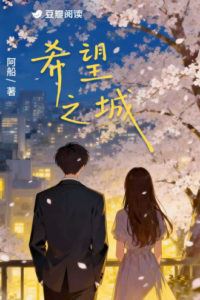
Liang Youyun is a thirty-something cadre stationed as the first secretary of Manle Village in Xishuangbanna, Yunnan Province. Having spent two years in rural revitalization work, she is nearing the end of her assignment and eagerly anticipates returning to Beijing for a promotion. Her primary goal is to survive the final months without incident, avoiding the political pitfalls that previously forced her into this remote posting. Manle Village, located near the tropical rainforest, is preparing for the upcoming Water Splashing Festival, a time that typically brings increased tourism and administrative pressure. Liang Youyun’s routine is disrupted when three college students go missing after venturing into the rainforest via unofficial trails during heavy rain. As the village secretary, she is tasked with coordinating the search, a responsibility that fills her with anxiety due to the potential for negative public opinion and professional repercussions.

During the search, Liang Youyun becomes separated from her team and suffers from exhaustion and hunger. While resting in the forest, she hears a noise and discovers a man trapped at the bottom of a deep pit. Initially assuming he is one of the missing students, she berates him for his recklessness before realizing her mistake. The man, covered in mud and silent, reveals that he is not a student. Despite her frustration, Liang Youyun attempts to rescue him. The rescue goes awry when the rope she uses slips, causing both of them to fall into the pit. After a chaotic tumble, she manages to climb out with the man’s help, only to discover that he could have escaped on his own had he not chosen to assist her first. He then helps rescue her colleagues and the missing students, who were trapped by a landslide, before disappearing into the night without leaving his name.

Liang Youyun recovers in the hospital from a fever caused by her sprained ankle. Upon returning to work, she learns from her colleagues that the mysterious rescuer is Jiang Muhe, a former special forces soldier who returned to the region to care for his late comrade’s parents. He has built a successful restaurant chain and lives in seclusion in a nearby village. Driven by a mix of duty and curiosity, Liang Youyun, accompanied by her colleagues Zhang He and Yu Xiang, visits Jiang Muhe’s home to express gratitude. However, the encounter is tense. Jiang Muhe declines any formal recognition or public thanks, insisting that the matter be left private. When Liang Youyun refuses to meet with him alone, interpreting his request as a personal advance, the conversation ends abruptly. Zhang He later reveals that he had hoped to leverage Jiang Muhe’s business success for the development of their own village, a plan that has now been complicated by Liang Youyun’s rigid stance.

The incident leaves Liang Youyun reflecting on her own life and career. She recalls her mother’s death and her own feelings of isolation and failure in the workplace. Her interaction with Jiang Muhe stirs emotions she has long suppressed, particularly her vulnerability and desire for connection. Jiang Muhe, meanwhile, is intrigued by Liang Youyun’s fierce independence and hidden tenderness. He learns that she called out for her mother while unconscious, a detail that resonates with his own sense of loss and duty. As the Water Splashing Festival approaches, the tension between Liang Youyun’s professional obligations and her personal feelings grows. The story follows her navigation of these complex dynamics, as she balances her impending departure from the village with the unexpected emotional impact of her encounter with Jiang Muhe. The narrative explores themes of duty, loss, and the possibility of human connection in a remote, beautiful landscape.

Novel Items

More
Weapon
A traditional Dai knife carried by Liang Youyun in her bag. She unsheathed it when she heard a dull thud in the rainforest, assuming it might be a tiger, and assumed a combat posture ready for a life-or-death struggle.
Item
The man's backpack that hung from a tree branch near the pit, likely dislodged when he fell in. It contains a rope that the man suggested using for rescue.
Item
Liang Youyun's water bottle containing locally grown small green limes that are halved. She shakes the bottle to blend the juice with water and drinks it for refreshment while resting in the rainforest.
Item
Food carried by Liang Youyun in a plastic bag from her backpack. The sticky rice is wrapped in banana leaves and has a sweet aroma. She eats it ravenously while resting on a fallen tree trunk in the rainforest.
Material
A material required for the processing workshop. It is dropped by large monsters and is in high demand.
Daily Item
Shen Jiaojiao carried tissues in her pocket. She used one to wipe the cola off Xie Yanqing's clothes and arm after the incident, and later to gently clean the blood from the corner of his mouth.
Latest Release
DateGroupRelease
2026-08-11shanghai fantasy c12
2026-08-11shanghai fantasy c11
2026-08-11shanghai fantasy c10
2026-08-11shanghai fantasy c9
2026-08-11shanghai fantasy c8
2026-08-11shanghai fantasy c7
2026-08-11shanghai fantasy c6
2026-08-11shanghai fantasy c5
2026-08-11shanghai fantasy c4
2026-08-11shanghai fantasy c3
2026-08-11shanghai fantasy c2
2026-08-11shanghai fantasy c1

Community Reviews

Rating(4.1 / 5.0, 16votes)
5 stars
6(38%)
4 stars
5(31%)
3 stars
5(31%)
2 stars
0(0%)
1 stars
0(0%)

Popular reviews

... Read More
I've been thinking about the Dai Blade as a symbol and it's honestly brilliant. On the surface it's just a gift, right? Jiang Muhe remembered she mentioned her old blade was worn and quietly had a new one made. But dig a little deeper and this thing is carrying so much weight. The text literally says 'Only through relentless hammering can a fine blade be forged.' That's not just about metalworking, that's about the relationship too. And Uncle Kanyong's line — 'A woman wearing a blade looks most dashing!' — it connects Youyun to her heritage, to her identity as a Dai woman, while simultaneously being a romantic gesture from Jiang Muhe. The blade is both cultural anchor and love letter. Then there's the sunset photo that opens the whole thing. Jiang Muhe keeps it in a drawer, clasping a crystal glass, feeling 'a dull ache throbbed in his heart.' The photo captures a moment of beauty that changed everything — he went from photographer to prey. And the frangipani flower in Youyun's hair, described as 'white petals and a yellow center,' matching the radiance of her smile when she reads his message. Flowers, blades, sunsets — all these images of beauty and sharpness intertwined. The story keeps asking: what do we carry with us? What do we forge? What do we leave behind when we return to the city?
... Read More
I literally gasped when Jiang Muhe spotted Youyun in that bar. Let me set the scene for you—she's in this goose-yellow spaghetti-strap dress, hair completely loose, bright red lips, standing out like a beacon in the chaotic crowd. And he's there, among his friends, dice in hand, completely distracted. The text says 'the dice in his hand no longer obeying his command' and I just—how do you not feel that? It's this tiny, almost mundane detail that says everything about how affected he is. She doesn't even know he's there. She's on the phone with Zhang He, annoyed about work, then stepping outside into the rain, and he's just... watching. Shrouded in shadow, lighting a cigarette he doesn't usually smoke, feeling 'a long-lost stirring.' This is the kind of moment that makes your heart do that little flip, you know? The one where two people are in the same space but completely separate worlds, and the tension is so thick you could cut it. And then the chapter just... ends there. No resolution, no acknowledgment. Just smoke rings and a gaze. I need to know what happens next. Does he approach her? Does she sense him? What is this thing between them that the author is building so carefully?
... Read More
The opening paragraph alone is enough to make me want to book a flight to Xishuangbanna. "Every April, as the rainy season begins, the rain falls, stops, falls again, in an endless, tireless cycle." That sentence just... I felt the humidity. I could taste the wet air. The author doesn't just describe the setting, they make it breathe. What's remarkable is how the rainforest functions as more than backdrop. It's almost a character in its own right — indifferent, beautiful, dangerous, indifferent again. The golden spires of Buddhist temples glowing through mist, the blue tiles of stilt houses steaming in the sun, the wild elephants whose cries make Youyun's blood run cold. These images aren't decorative; they establish a world that operates on its own terms, completely separate from Youyun's Beijing anxieties and career ambitions. The pit scene itself is rendered with such visceral detail that I actually felt nauseous reading it. The mud, the darkness, the tangled roots, the way the setting sun creates this theatrical lighting that makes everything feel like a fairy tale gone wrong. "Thick mist rose around her, the surroundings lush and green—a scene straight out of a fairy tale, perfect for a 'picnic.'" That single sentence does so much work. It's ironic, it's darkly funny, and it perfectly captures Youyun's desperate attempt to find normalcy in an abnormal situation. The boundary between village and rainforest being "blurred" is such a loaded detail. It's not just physical — it's thematic. Youyun herself exists in a blurred space, between her Beijing life and this rural posting, between wanting to be invisible and being thrust into the spotlight.
... Read More
I need to talk about Youyun's voice because honestly it's one of the most distinctive narrative voices I've encountered in recent fiction. The author gives her this razor-sharp, relentlessly opinionated inner monologue that's equal parts cynical, anxious, and darkly funny. Watch how she handles the tissue moment: "In this filthy, pitch-black pit, it stood out glaringly." That's not just description — that's character. She notices the absurdity of a clean white tissue in a muddy pit because that's how her mind works. She finds the contradiction, she dwells on it, and then she moves on. Efficient, observant, slightly absurd. And her rant! Oh my god, the rant. "Do you think that makes you cool? Is being unconventional and edgy so impressive? Do you even want to carve a heart into a tree or something?" This is the kind of specific, culturally-grounded frustration that makes dialogue feel alive. It's not generic anger — it's the anger of a Chinese village cadre who has dealt with exactly this type of privileged young person enough times to have a fully formed opinion. The contrast between her verbal violence and his silence is where the real voice work happens. He barely speaks, but when he does — "I'm not a college student" — it lands with perfect comedic timing. The author understands that sometimes the most powerful dialogue is what you choose NOT to say.
... Read More
The Water-Splashing Festival sequence is doing SO much work thematically and I can't stop thinking about it. On the surface, it's just a vivid cultural description—tourists swarming like fish, water curtains spraying meters high, rainbows forming in the spray. But the symbolism is right there if you look. Water in Dai culture is blessing, it's purification, it's community bonding. 'Splash until you're soaked, and happiness will follow you for life!' But then Youyun is also literally soaked to the bone chasing after funding, dealing with bureaucratic rain, and stepping outside the bar into rain that 'dilutes the repeatedly surging effects of the alcohol.' Water is both celebration and exhaustion. And the rainforest itself—Yan Wenkan protecting it, Director Dao wanting to develop it, the whole tension between preservation and progress. The festival is supposed to be joyful, but underneath it all there's this current of economic pressure, of someone (the missing college student) whose tragedy became the pretext for getting funds. 'What was lost in the east could be gained in the west.' Everything is transactional, even blessing. Even community. Even love, maybe.
... Read More
Let me just say this — the stakes in this opening are layered in a way that keeps getting more personal the deeper you go. On the surface, it's a rescue mission. Three students missing, search parties deployed, deadline ticking. But the real stakes are internal and deeply personal to Youyun. She's two years into a village assignment that was supposed to be a strategic retreat from office politics. She's got a promotion waiting in Beijing, a deputy director position that's basically guaranteed if she can just... not mess anything up. The leader's words echo through the entire first chapter: "Stand your final watch well." That's not encouragement — that's a warning wrapped in bureaucratic politeness. Every complication that arises threatens not just her career but her entire sense of self-preservation. She's built a life on playing it safe, on being invisible, on not drawing attention. And the rainforest seems determined to prove that impossible. The physical danger is real — wild elephants, deep pits, storm clouds rolling in — but the psychological stakes are what keep you turning pages. Youyun is terrified not just of dying in a forest, but of being the person who couldn't handle a simple task. The calls from Beijing, the fear of public opinion, the self-criticism sessions she's already imagining — these are the stakes that matter. And then she falls into that pit. The ultimate metaphor for someone who just wanted to stay above ground.
See all reviews

Characters

See all characters

Custom lists

Oops…There is nothing here.