Chang’an’s First Beauty - Reviews

Chang’an’s First Beauty
+Add to Custom List
Sort
Add review
... Read More
Let me just sit with this for a second. The entire emotional architecture of this relationship is mapped onto a BED. Not grand gestures, not love confessions—just which side of the satin sheet someone chooses to sleep on. Shen Zhen has always slept on the inside. Since she was a child. Her mother warned her about this, tried to fix it, but she couldn't. The inside position is the protected one—the one against the wall, the one that requires someone else's back to feel safe. She brought a soothing sachet from Chang'an because this new bed, this new life, doesn't feel like hers yet. She is physically present in his home but psychologically still somewhere else, still bracing for impact. And Lu Yan—this proud, impatient man who grips cups until his fingers bleed and builds wine cellars with the intensity of a man trying to construct something permanent—notice what he does. He doesn't ask her to talk about her fears. He doesn't give a speech. He just... moves her to the inside. Translates care into action because words have never been his language. The wine cellar itself is symbolism I can't ignore. Deep underground, isolated from sunlight, kept dry—everything hidden and protected from the outside world. Is that what he's trying to build with her? A space where she can finally feel safe enough to sleep through the night?
... Read More
The pacing of this chapter is masterful in a way I didn't expect. The author takes roughly one hour of real-time action—the walk from the boat back to Wulipu—and stretches it across what feels like an eternity of emotional beats. Each mini-event escalates the tension: discovery of wounds, smashing the wine pot, finding the drugs, picking her up, her struggling and re-opening wounds, the ear bite, the question about reciprocation, her sudden sobbing, the vomiting, the silent carriage ride refusal, the frozen moment in the snow, the cleaning, the dawn. It's relentless. There's no breathing room. And then Chapter 26.1 starts with Shen Zhen waking up with a hangover, the COMPLETE emotional anti-climax. She remembers nothing coherent, she's hiding under her covers, she's wishing to erase it all. The structural contrast between the previous chapter's raw intimacy and this chapter's fragmentation is devastating. We spent an hour in Lu Yan's perspective experiencing everything in real-time—his anger, his tenderness, his exhaustion—and then we snap to her waking up empty-headed. The reader knows everything. She knows nothing. That asymmetry IS the chapter's emotional engine. The author also uses a great structural trick with the vomiting scene: right when the pace quickens and Lu Yan thinks things might be getting better, he accelerates and her stomach rebels. Just when the snow gives way to warmth, she ruins everything. It's almost comedic but underneath it's heartbreak—she can't even be properly sick without making it worse for him. The chapter ends on Tang Yue dressing her like a wandering spirit and her closing her eyes in despair at the mirror. No resolution. No confrontation. Just another day continuing after the worst night of her life. That's not a cliffhanger—that's worse. It's the absence of a turning point.
... Read More
There's something so cinematic about this entire sequence. Let me paint it out because the imagery is doing SO much work here. You've got a boat — obviously a pleasure boat given the context — candlelight flickering, Lady Huan singing, the rich smell of Yangzhou's famous Yunli liquor being poured from a chinese rosewood box. These aren't random details; they're building a world that feels luxuriously lived-in. You can practically hear the clink of porcelain, see the glow on polished wood, feel the humid river air. And then the yin-yang pot — that detail alone tells you everything about the world these characters inhabit. This is a society where a seemingly elegant gesture (offering someone wine) can be a weapon. Where courtesy and menace share the same table. The pot itself is described as a 'table toy' but it's really a symbol for how these people operate: two chambers, two truths, poured from the same vessel. The dimming candlelight at the end is such a perfect atmospheric beat. It's not just 'the party is over' — it's literally the last light failing before things go dark. And then the image of blood against fabric in that dying light? Chills. Absolute chills.
... Read More
What I love about this passage is how the pacing works in waves rather than a straight line. You open with suspense — the inn, the watchers, the footsteps stopping at the door. Heart is already up. Then it dips into something private and almost languid with the intimacy scene. You breathe. Then — HERON GARDEN. Visual relief, wonder, expansion. Then BOOM: political exposition dumped on you through Yang Zong's report. The Zhao Chong corruption reveals hit me like a wall. Forced transactions. Closed mills. The Miao family destroyed. And right after all that weight, the chapter ends on soup and a half-finished sentence about promises. The author is playing with breath here — tight, loose, tight, loose — and it works because the emotional beats are never disconnected from the plot mechanics. The inn scene isn't just atmosphere, it's where Lu Yan confirms his intelligence was correct. The garden visit isn't just scenery, it's how he physically establishes his foothold in Yangzhou. The corruption reveal isn't just worldbuilding, it's the actual target taking shape. Even the tenderness between them has structural purpose — Shen Zhen's care is both genuine emotion AND strategic investment in keeping Lu Yan's attention focused on her while she pursues her own goal. Every layer serves multiple functions and the pacing never lets you settle into just one mode of reading. Some parts made me want to speed ahead, others made me reread slowly. That's good pacing — when it makes you physically react differently to the text.
... Read More
The atmosphere in these chapters is actually incredible. The author paints scenes like a camera would — there's this one moment after everything happens between Lu Yan and Shen Zhen where the text just says: 'the sky was already dark, the moon was bright and the wind was calm.' That's it. Three sentences. And you can feel the quiet intimacy, the stillness, the unspoken emotions hanging in the air. It's cinematic without trying too hard. Then we cut to morning and the description of the breakfast spread — fish, boiled pork, hibiscus tofu, black-bone chicken soup, rice porridge. It's domestic warmth against the backdrop of whatever tension exists between them. The kitchen maids are gone (returned home) so it's just the two of them. The contrast is striking. You have this woman moving around him with a stiff waist and numb arms, visible marks on her body, while he watches in silence. The light, the food, the porcelain — it all feels like a period drama set you can almost touch. Later when we shift to the yamen scenes, the atmosphere changes completely. Stone steps, officials slapping tables, frustrating bureaucratic processes. The Song family's arrogance, their refusal to cooperate, their daughter's trauma — it creates a whole different mood. But honestly the most powerful visual is probably Shen Zhen alone in Lanyue Pavilion, rubbing her purple bruises, watching Lu Yan's carriage disappear. That image stays with you.
... Read More
Okay so let me just talk about Lu Yan for a second because THIS MAN. When Sun Xu asks about the female painter—anyone with eyes can see Sun Xu is fishing—and Lu Yan shuts him down with that fake smile, you feel it. That's not just being protective. That's genuine panic. The narration says his eyes were puffy after getting in the carriage, and it hit me right then: he's counting faces. Two people looking for her now. Sun Xu. The unnamed Lord Sun with his case. What's next? And notice what Lu Yan does—he doesn't stay at the mansion that night. He goes straight to Lanyue Pavilion. He needed to see her in person, ground himself. This man is wildly attached but will literally never say it out loud. Instead he ruffles her hair and pretends he prepared the money all along. Classic Lu Yan.
... Read More
The structural choices in these chapters are aggressive. Chapter 284 starts INTIMATE. Bedroom scene, physical closeness, Lu Yan hugging Shen Zhen from behind, her nudging his chest with her elbow — all tiny gestures that say they're comfortable together. Then BAM, dream sequence hits and we're transported to a completely different world. The polo match scene runs long — maybe too long? But it serves a purpose because it establishes Xu Yiqing as this looming presence before she even fully appears. The Empress praising Su Heng, Concubine Xi asking about marriage, An Zhaoyi dropping intel about Lu Yan asking about the Shen family — it's all worldbuilding disguised as court conversation. Then the transition back to reality is brutal. Lu Yan wakes up. Shen Zhen is crying. The emotional climax hits immediately after the extended dream sequence, which means the author is using the dream as emotional foreshadowing rather than just spectacle. The chapter ends on a cliffhanger — "listen to my explanation. It's not what you think" — and then Chapter 59 picks up EXACTLY where that sentence leaves off, repeating the moment almost verbatim. This creates this weird stutter effect, like the narrative is double-taking on its own drama. It works, honestly. Makes you re-read that line three times.
... Read More
There's so much symbolism packed into this sequence. Let's start with the dagger. Lu Yan uses it to threaten Nie Yuan, pressing it to his throat until the man confesses. 'Killing a chicken to scare the monkey'—literally severing Pang Shu's tendon to make Nie Yuan talk. But then he put the knife away immediately when he learns about the affair. The dagger is power, yes, but it's also blunt instrument. It gets information, but it can't get intimacy. Which brings us to his hand. After touching Shen Zhen's hair and feeling nothing because she turned away, 'His hand suddenly felt empty.' Empty of what? Of control? Of certainty? Of the illusion that he can manipulate his way into closeness? And then there's the secret room behind the movable cupboard. Hidden truths. What's concealed in Zhao Chong's private space isn't just a person; it's the whole corrupt architecture of Yangzhou. But symbolically, it mirrors Lu Yan's own heart—accessible only if you know how to move the right thing, and dangerous once you're inside. Even the Lantern Festival as the planned climax date isn't random. It's a time of revelations, lights in darkness, disguises coming off. Everything is waiting to be exposed. The recurring motif of sleeping versus wakefulness matters too. She sleeps; he stays awake. She's unaware; he's painfully aware. Knowledge as burden. Truth as isolation. Brilliant.
... Read More
I need to discuss the pacing here because the author absolutely butchered my heart in the best possible way. Chapter 17 starts with family politics—Madam Wen and Madam Meng discussing marriages and the imperial draft. It's dialogue-heavy, informative, necessary exposition. Then we cut to Meng Suxi confronting Lu Yan, and BOOM, emotional devastation. She's begging, crying, wanting reconciliation, and he gives her nothing. The chapter ends on that rejection. Then Chapter 18 opens immediately after. No time skip. No 'meanwhile.' Just—Lu Yan walks into his inner room, feels tired, and then the knock comes. The transition is seamless. One moment he's being cold to Meng Suxi, the next he's riding through a snowstorm for Shen Zhen. The structural juxtaposition is devastating because the author doesn't comment on it. Doesn't need to. The contrast speaks for itself. But here's what I love most: the Yang Zong conversation. Yang Zong says "I don't dare to invite a doctor easily"—and Lu Yan immediately starts writing a prescription. He doesn't hesitate. He doesn't overthink. The pacing of his decision is so fast it mirrors how instinctual his concern is. He's not choosing to care; he's just caring. And then the final scene—Shen Zhen whispering just one word: "Cold." After everything, after Lu Yan tucking her hair behind her ears, after all that worry and travel, the most she can manage is a single syllable. The chapter ends on that whisper, and I was sitting there like… that's it? That's the note we're ending on? Absolutely brilliant.
... Read More
I need to talk about the neck scratches. They appear twice in this chapter and each time they mean something completely different. First, Shen Zhen notices them and suggests covering them up—her instinct is protection, care, the gentle hand of someone who wants to shield her partner from judgment. Then Lu Yan delivers the line: 'the more one tries to hide, the more one is exposed.' It's whispered almost lovingly, but it's also a warning. Don't hide what I've done to you. The second time we see those scratches, Magistrate Sun notices them and immediately assumes they're from 'Miss Yun,' the top courtesan. This is where the emotional complexity becomes almost unbearable. Sun Xu represents every person in this world who would assume the worst about a woman—she's a courtesan, therefore she's promiscuous, therefore any mark on Lu Yan must be earned through transaction rather than intimacy. Lu Yan's muttering to him is described as changing Sun Xu's face 'drastically,' and what he actually said was the truth: this girl is fourteen, untouched, a painter wearing a curtain hat because she's shy, not because she's fallen from grace. But the most emotionally charged moment for me was Song Lingerer's outburst: 'How can you understand? I'm afraid a lady like you will never know what it feels like to be pressed down on your body and tortured wantonly!' And Shen Zhen's response—quiet, simple, irrevocable: 'I have experienced this too.' No drama, no performance, just truth landing between two women who thought they were alone in their suffering. That's the kind of emotional beat that makes you put the book down and stare at the wall for ten minutes.
... Read More
The atmosphere in these chapters is absolutely *dense*. Let me just talk about the worldbuilding for a second because the author is stacking details like they're going out of style. First, the brothel scene: 'surrounded by pink walls and black tiles, with the decadent sound of the pipa echoing continuously.' That single sentence does SO much work. Pink walls = pleasure, decadence, the sensual world. Black tiles = weight, shadow, the reality pressing down on it all. And the pipá — that sound echoing — it's everywhere, constant, inescapable. You can literally hear this place. Then Lu Yan stands at the window and Yunzhi sees it all from his perspective. She's trembling because she understands the unspoken warning. The brothel isn't just a setting; it's a metaphor for everything she is in his eyes — replaceable, beautiful, transient. And then the SECOND scene drops us into complete contrast: the gossip about Taoist Master Ge, the painting from Luzhou, the earthquake forty years ago, the man in blue rolling out this scroll like he's revealing a holy artifact. The painting shows Ge in front of a 63-meter Buddhist pagoda, looking exactly the same as he does now. 'He hasn't changed at all.' The atmosphere here shifts from sensual/decadent to something ancient, mystical, almost ominous. Secrets spreading faster than anything else in the world — that line hit me. Then CUT to Shen Zhen, steaming hot, wearing a skirt 'as thin as a cicada's wing,' fanning herself, drinking herbal tea. The sensory detail is so vivid I can feel the heat. It's such a domestic, intimate moment that completely contrasts with the political and mystical weight of everything else. And it's genius — it grounds the story in a body, in flesh, in heat, before the next bomb drops.
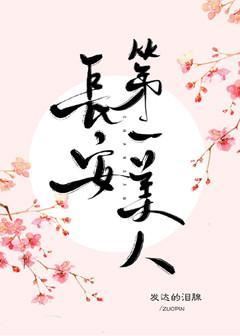
... Read More
I've been sitting with this passage for a while and the symbolism just keeps accumulating. Let me start small: the hand stoves versus the cloak. Shen Zhen is holding two literal heat sources and still freezing. But Lu Yan's cloak—one garment—keeps her warm. Is this about how external warmth (objects, status, wealth) is never enough? Only his presence, even enforced, actually sustains her? That's either the most romantic thing or the most chilling thing I've ever read, and I can't decide which. Then the throat pinch. His two fingers on her neck—a gesture that's simultaneously intimate and threatening. He's touching the place where she speaks, literally silencing her preferred form of address ("My Lord") and replacing it with his ("Master"). Language as power. Title as ownership. Every time she says the wrong word, she risks exactly this. The cloak protects her body; the threat protects his control. Both are forms of care and violence at once. And the ring. Lu Yan "gently turned the ring on his hand" when thinking about the spy's death and the missing gold. A ring—heirloom? Symbol of office? Token of some deeper allegiance? The fact that he moves it subconsciously suggests it's tied to his identity in a way he barely acknowledges. Combined with the map and his heart sinking at two places—that's the structural key to everything. The ring connects to the canal. The canal connects to the missing wealth. The wealth connects to treason. One gesture, one object, and the entire conspiracy starts unfolding. Finally, the mulberry trees. Mulberry—not just scenery, but economic symbolism. Mulberry trees mean silk. Silk means wealth. Wealth that's apparently being siphoned away while refugees starve at the edges of this prosperous city. The very trees lining the road are reminders of the wealth extraction happening beneath Yangzhou's surface. The author put them there for a reason. They're not decorative; they're accusatory.

Leave a comment

You must be logged in to leave comments. or
