Chang’an’s First Beauty - Reviews

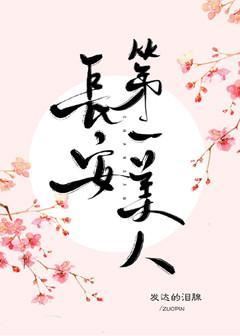
Chang’an’s First Beauty
+Add to Custom List
Sort
Add review
... Read More
Okay so let me just say this out loud: the author has built an entire chapter around a misunderstanding and I respect the commitment. Meng Suxi smells a woman's scent on Lu Yan. Not his scent. A woman's scent. Because he's been traveling, because he's been to other places, because apparently whoever was with him left a trace. But she doesn't know that. She knows what she knows, and what she knows is that the man she's trying to secure a future with might already have another woman in his life. Meanwhile, parallel plot: the Song family's missing daughter gets FOUND in Xingping County, saved by a doctor, unconscious with injuries. Lu Yan and Magistrate Sun race to the hospital, only to find her too injured to interrogate. So the线索 goes cold for another day. The case is still live, still dangerous, and Lu Yan is caught between his duty and his personal life in a way that's going to cause problems. The structure here is clever because both storylines—the romantic and the criminal—are running on the same track of uncertainty. Nobody has the full picture. Meng Suxi doesn't know the fragrance wasn't Lu Yan's. Lu Yan doesn't know she's following him. Magistrate Sun doesn't know what's really happening with the missing women. And the reader? We're sitting here with all this dramatic irony, watching everyone misread each other while the real case unfolds in the background. Also, that line: "there were many yamen submissions scattered in my study. So I can't let outsiders in, please forgive me for asking Miss Meng not to step foot here in the future." He's literally shutting her out, and she's already spiraling. This is going to get worse before it gets better.
... Read More
I think the most terrifying thing about this section isn't the plague or the flood — it's watching a man who has everything slowly realize he's going to lose it all. Emperor Chengyuan starts off powerful, issuing orders, arresting Taoist Master Ge, laughing at himself for believing the nonsense... and then everything comes true, one disaster after another. By September, after the earthquake, he's already given up the crown prince and gone into hiding. What are the stakes here? His empire, his life, and the thing that makes it tragic — he's fighting a battle against something he can never win. The inner demon concept is so well done. Lu Yan notes that "everyone has inner demons" and then immediately tells us what the Emperor's are: greedy sons and gray hair. But that confession right there — that he knows supreme power can never be relinquished once possessed — that's the core of his tragedy. He built everything on the idea that power equals control, and then mortality proves him wrong. And Taoist Master Ge's answer when asked about the fourth disaster — "It is your Majesty's fate" — gives me actual chills. The stakes keep escalating but the real conflict is internal. The emperor isn't just battling plagues and floods; he's battling the fact that he's mortal. That the incense his sons won't light at Qingming Festival won't ever be lit. That's the horror underneath everything.
... Read More
Okay, let me just say this scene is a masterclass in layered deception. Everything on the surface looks like a casual banquet, right? Two powerful men chatting, a courtesan singing, wine flowing — it reads almost cozy. But underneath, EVERYTHING is a test. Zhao Chong isn't relaxing; he's probing. The whole evening is essentially two spies sizing each other up while pretending to be someone else. The brilliant part is how the plot threads keep tightening. First, Lu Yan has to prove he's a seasoned world traveler (the Jingzhou accent bit — genius). Then Zhao Chong tests him with that rebellious quote about kings and nobles, and Lu Yan slides right past it. Then comes the Shen Zhen reveal — Zhao Chong turns his attention to her, and suddenly the stakes go from diplomatic maneuvering to personal danger. The yin-yang pot moment? That's the plot flipping from tense to life-threatening in one beat. She's being drugged and she knows it. And the ending — blood stains on her clothes when Lu Yan catches her. I literally gasped. All that calculated restraint, and then one tiny wound betrays everything. What happens next is going to be either devastating or brilliantly resolved, and I cannot sleep until I know.
... Read More
The dialogue in this passage is vicious and I love it. Not in a flashy way—in a quiet, surgical way. Let me just drop the lines that hit hardest: 'I don't think there is anything to discuss, I don't think that my daughter did anything wrong.' — Madam Meng says this with zero hesitation. She's not negotiating. She's stating a fact and walking away from it. 'It is the heir apparent of the Lu family that stayed overnight with a courtesan, and my daughter just wanted to take a look…' — She never finishes this sentence. Madam Wen covers her mouth. The unfinished thought is louder than anything she could have said. And Lu Yan's line that absolutely wrecked me: 'Sincere, and passionate.' Three words. No elaboration. No justification. Just naming the exact qualities he values and refusing to apologize for them. The way he touches his nose while saying it—that tiny physical detail makes the dialogue feel alive, like we're watching a person think in real time. Then the princess asks 'your neck... is intentional?' and his response is just 'That's not true.' Not a denial of intent. Not a confession. Just... deflection wrapped in honesty. He won't lie about the scratch marks, but he also won't give her the satisfaction of admitting they were a message. The narrator's voice is equally sharp. 'How can there be any such cold and aloof sentence without a hint of humanity?' That's not just commentary on Lu Yan's words—it's the narrative itself judging him, and then immediately turning that judgment back on his mother: 'Who said a child is like his mother? When has she ever been such a scumbag?' The author doesn't let anyone off the hook. Not the prince, not the mother, not even the reader.
... Read More
This author's dialogue is NOT messing around. Let me just drop a few moments that hit different. Lu Yan: "Can you drink by yourself?" — that's basically him saying "I want to feed you but I need you to ask me to do it." Shen Zhen: "Yes" whispered with a trembling hand — she's exhausted, sick, probably embarrassed that he had to come back, and still manages this tiny acknowledgment. Then the best one: she finishes the medicine, clears her throat, says "Thank you, My Lord," and immediately covers her mouth like she just said something she shouldn't have. Because of course she did — gratitude implies closeness, and closeness between them is dangerous. His response? Takes off her hand and says "It doesn't matter." Short. Dismissive. Absolutely devastating. He's telling her it doesn't matter that she thanked him, that he did it without expectation, that her politeness is unnecessary between them. And the narration drops this proverb right after — about takers and givers and the invisible contracts between people. I love how the author uses the proverb almost like commentary from a narrator who knows more than either character.
... Read More
This chapter is quietly stacking pressure on Lu Yan from every direction and I am here for it. On one side you have the missing young ladies case—six families, daughters gone, two corpses found in Wang Zhao's mansion that nobody reported. Junior magistrate Sun is doing his thing, pacing back and forth like a caged animal, literally saying "even if you walk around a hundred times, this case will still not be solved." The tension is palpable because we KNOW something is happening and Lu Yan is already connected to it in ways the text won't fully reveal yet. On the other side, Meng Suxi has started following him. Actually hiring someone to tail him. The irony is almost funny—she thinks she's investigating whether he has an outside mistress, but the real danger is the case he's working on. When he tells Yang Zong to change carriages and route through the red-light district, he's not just dodging Meng Suxi's spy. He's actively covering tracks from whatever secrets he's carrying. The stakes for Meng Suxi are emotional and personal—her future, her trust, her fear of becoming her mother. The stakes for Lu Yan feel existential. He's dealing with disappearances, possible corrupt officials, and someone watching his every move. And somehow he still has to navigate a marriage arrangement that's falling apart because of a misunderstood fragrance.
... Read More
I need a minute. I need a actual minute because the scene where Lu Yan applies medicine to Shen Zhen's waist is doing SO MUCH WORK and I am not okay. On the surface it's tender—he's being careful, he's softening his voice, he comes home at 11:45 PM just to check if she's awake and waiting. She grabs a corner of the quilt like a secret signal, puts her hand in his palm, and that's it. That's the entire romance for you. No grand declarations. Just two people who have done unspeakable things to each other finding a way to be gentle anyway. But then the narrator drops this: "He himself couldn't even tell when he had that inappropriate thought." The word INAPPROPRIATE. He doesn't call it love. He doesn't call it devotion. He calls it inappropriate, like it's a glitch in his system, like it violates the terms of his own existence. And then the whole Shen Shu situation explodes open and suddenly the stakes aren't just political—they're personal. If he lets her go, if he lets anyone else take her, what happens to THAT inappropriate thought? Does it survive distance? Does it survive another man swallowing poison for her? Zhou Shu'an's line about her blaming him instead of thanking him absolutely destroyed me. He KNOWS her. He knows her temperament better than Lu Yan apparently does, and he's choosing to remove himself from her story entirely so she doesn't have to carry the guilt. That is not a side character. That is a main character in someone else's tragedy and I am here for it.
... Read More
Okay so let me just say this scene is a masterclass in how to make a minor character's overreach become the hinge the entire plot swings on. Liu Momo thinks she's being helpful — "this is the first time the young lady has left the boudoir" blah blah — but what she's actually doing is revealing the entire power structure in the room. She's announcing from the rooftop that she comes from Zhao Mansion, not Wei. And Lu Yan? He doesn't even need to raise his voice. One shattered teacup and suddenly everyone knows who's in charge. But here's the thing that really got me — Fuman uses Liu Momo's exit as her opening. The moment that loud, overbearing presence leaves, Fuman drops her real bomb: she drugged the tea. If Liu Momo hadn't been dismissed, would Fuman have ever spoken up? I don't think so. The author is playing 4D chess with these scene transitions. Then on top of that, Lu Yan already knows about the Western remedy from a book his predecessor left behind. He's been one step ahead the entire time while pretending to be just a Jingzhou businessman. And the real plot detonation? The name Bai Daonian. One name and suddenly the dream fragments all snap into place. The Yao poison, the Crown Prince, the past life — it's all connected. This chapter goes from a domestic power struggle to a full-blown destiny reveal and I was not ready.
... Read More
I need to talk about Li Di because I am literally shaking with rage. This man - this absolute piece of human garbage - has managed to twist every single relationship in Shen Shu's life into a weapon against her. Let me just enumerate this: He had an affair with the He family daughter. He falsified his household registration to marry her. He betrayed her father's political faction by burning her letter about the Chengxi Canal, which directly caused her family's downfall. He manipulated the imperial examination itself with her father's help. And then he has the audacity to hold all of this over her head, essentially saying 'you're trapped because your own family helped me cheat.' But here's what's genuinely disturbing about Li Di - he doesn't even see Shen Shu as worth the effort of outright destruction. She's an inconvenience, a obstacle, someone to be kept on a string because as long as she's his wife, the scandal of the forged marriage certificate can't come out. She's not a person to him; she's a silencer. And Shen Shu... god, I love her. The moment she realizes 'the love is long gone' and just calmly goes to buy poison - that's not weakness, that's the most powerful character moment in the entire chapter. She doesn't scream. She doesn't beg. She doesn't try to reason with him one more time. She simply accepts that everything she believed was a lie and makes her decision in absolute silence. The dynamic between Shen Shu and Madam Wen is also worth noting. Madam Wen is awful - classist, cruel, obsessed with appearances - but she's also genuinely terrified of her past being exposed, and Shen Shu uses that knowledge weaponized. It's a masterclass in how the author shows power shifting between these two women.
... Read More
There's a whole layer of symbolism stacked into these chapters and I need to unpack it because the author is weaving something deeper than romance and drama. The temple visit on the seventh day of the third month — this is explicitly the anniversary of their mother's death. Shen Shu goes to pray, to offer incense, to kneel before Manjushri Bodhisattva. And what is she praying for? To see her sisters. Not to confront them. To BLESS them. This is a woman who loves her family despite everything. Then there's the merit book. Sixty copper coins, no name written. But Shen Shu identifies the handwriting instantly. The anonymity of the donation contrasts sharply with the intimacy of recognition — you can hide your name but you can't hide who you are from someone who knows you. The storm motif runs through this entire sequence. Thunder and lightning outside during the intimate scene, then dark clouds overhead when Shen Zhen realizes her sister has arrived. The weather mirrors internal states — chaos, fear, revelation. The storm doesn't stop; it just moves from outside to inside. And that screen. The Chinese rosewood bamboo-carved landscape screen in the southeast corner. It's supposed to be decorative, private, separating space. But it becomes a barrier between Shen Zhen and her past, between truth and exposure. Lu Yan hides behind it — the most powerful man in the room reduced to a spectator in his own home. The contrast between the sisters is almost symbolic too. "One is like the bright sun, the other is like a clear spring." Shen Shu is light and direct — she faces the world head-on. Shen Zhen is water — reflective, hidden, flowing beneath the surface. They're both beautiful but they move through the world in completely opposite ways. What is this story really about beneath all the romance and tension? I think it's about the cost of secrets. Every character is carrying something. Shen Zhen is hiding her life. Lu Yan is hiding his capacity for vulnerability. And Shen Shu is hiding how much she's figured out. The question is: how long can they keep the screen between them before it falls
... Read More
The atmosphere in these chapters is *immaculate*. Right after Shen Shu leaves Chengyuan, the author drops us into this gorgeous, haunting image: "Raindrops started falling outside and the streets of Chang'an were shrouded in shadows, like a dream." Qingli holding an oil-paper umbrella over her head — it's such a specific, cinematic detail. You can see it. The wet stone, the paper canopy, the way she moves through this city that has somehow become a cage for her. Then contrast that with the interior scenes: Lanyue Pavilion, where Shen Zhen is hiding her tears behind closed doors. The flickering candlelight in Shen Shu's room as she undresses and confronts those bruises. The tea cup SMASHING on the floor when Lu Yan says yes. The author never forgets that this is a world of confined spaces — women moving through courtyards and pavilions, men controlling everything from behind tea tables. Even the political backdrop (the Yangzhou case, the East Palace, the imperial guards) feels like it's pressing against the walls of these rooms, making them smaller, more suffocating. And the weather? Always changing. Rain, wind, shadows. The world itself is responding to the emotional storms happening inside these characters.
... Read More
"Bai Daonian." Two syllables and Lu Yan's entire world tilts. I keep thinking about how the author builds to this moment — all those scattered dream fragments, that recurring buzzing sound, the sense that something is just out of reach — and then BAM, a brother's name and everything floods back. The dialogue snippets from the dream are haunting: "If you are a miracle doctor, why can't the heir apparent's illness be cured?" and "The poison called Yao will not cause any abnormality when it enters the body, but after three years, it will instantly suck out a person's bones and blood and kill them." This isn't just plot exposition — it's grief. Lu Yan is remembering his own death, or someone else's death, and the pain of it is physical. His splitting headache, almost falling off the stool — his body is reliving something his mind had buried. But what really got me is Fuman's reaction. She's the one holding the antidote, the one who could walk away with two thousand copper coins and freedom, and yet when Lu Yan collapses, she's the one asking if he's okay. Despite everything — despite being trapped, despite her brother being threatened, despite the fact that he just cornered her — she still cares. That's the kind of emotional complexity that makes you put the book down and just sit with it for a while. The past and present aren't parallel storylines here, they're colliding, and both Lu Yan and Fuman are caught in the impact zone.

Leave a comment

You must be logged in to leave comments. or