Summary

... Read More

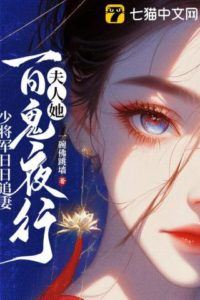
Shen Zhen, the daughter of the disgraced Marquis of Yunyang, faces ruin when her father is imprisoned for dereliction of duty related to a canal collapse. With the Shen family’s assets seized and a crushing debt owed to the Jin family money shop, Shen Zhen’s social standing evaporates. Relatives who once flocked to her door now avoid her, and her aunt, Shen Lan, reveals that the only way to settle the debt is to offer Shen Zhen as a gift to King Teng, a powerful and ruthless nobleman who harbors a grudge against her father. Refusing this fate, Shen Zhen attempts to escape Chang’an with her younger brother, Shen Hong, under the cover of a staged fire.

Lu Yan, the heir apparent to the Duke of Zhenguo Mansion and a junior magistrate at Jingzhao Prefecture, has long suffered from a mysterious illness. Following a chance encounter with Shen Zhen at her incense shop, Baixiang Pavilion, he begins experiencing vivid, recurring dreams of a past life in which he died young, poisoned by a Western Region toxin, after taking an arrow meant for a woman who bore a beauty mark identical to Shen Zhen’s. These fragmented memories haunt him, causing physical pain and confusion that contrast sharply with his usual detached and authoritative demeanor.

When Lu Yan intercepts Shen Zhen’s escape at the city gate, he recognizes the white sachet embroidered with her name as the same item he held in his dying dream. Rather than turning her over to the authorities, he takes her to his private residence, Chengyuan, and confronts her with the evidence of her forged documents and arson. He leverages the threat of execution and exile to coerce her into submission, revealing his knowledge of her desperate plan to flee.

Shen Zhen’s situation becomes increasingly precarious as King Teng’s men close in and her aunt manipulates her brother to force compliance. Lu Yan, driven by his strange obsession and the inexplicable pull of his past-life memories, intervenes repeatedly. He protects her from public harassment and debt collectors, yet his methods are coercive and ambiguous, blurring the line between justice and possession. As he investigates the source of his dreams, he uncovers hints that his current illness may be linked to the same poison that killed his past-life self, and that Shen Zhen’s presence is both the cause and the only potential cure.

The story unfolds as a tense negotiation between two people bound by fate and survival. Shen Zhen must navigate the predatory advances of King Teng and her complicit aunt while relying on the unpredictable protection of Lu Yan. Meanwhile, Lu Yan battles his own deteriorating health and the growing certainty that his past life and present circumstances are inextricably linked. Their dynamic shifts from captor and captive to reluctant allies as they face external threats from political rivals and internal struggles with memory and identity.

As the Jin family’s deadline approaches, the pressure mounts for Shen Zhen to choose between sacrificing herself to King Teng or remaining under Lu Yan’s control. Lu Yan, haunted by visions of a shared past and a fatal connection, becomes determined to unravel the mystery of his illness and the woman who triggers it. The narrative centers on their escalating entanglement, where every interaction is charged with the weight of unremembered history and the immediate threat of destruction.

The core conflict revolves around Shen Zhen’s fight for autonomy against a society that views her as a commodity, and Lu Yan’s quest for truth against a mysterious, potentially fatal destiny. Their paths converge in the dimly lit corridors of power and private dwellings, where alliances are formed out of necessity rather than trust. As secrets from the past begin to surface, both characters must confront the possibility that their current suffering is the echo of a life already lived, and that breaking the cycle requires navigating a web of political intrigue, familial betrayal, and supernatural fate.

Lu Yan’s investigation into the incense shop and the poison leads him deeper into the underbelly of Chang’an’s elite, while Shen Zhen is forced to play a dangerous game of deception against her relatives and powerful enemies. The story tracks their movement from isolated desperation to a intertwined struggle for survival, where the lines between rescue and imprisonment become indistinguishable.

Latest Release
DateGroupRelease
2026-09-26knoxt c208
2026-09-26knoxt c207
2026-09-26knoxt c206
2026-09-26knoxt c205
2026-09-26knoxt c204
2026-09-26knoxt c203
2026-09-26knoxt c202
2026-09-26knoxt c201
2026-09-26knoxt c200
2026-09-26knoxt c199
2026-09-26knoxt c198
2026-09-26knoxt c197

Community Reviews

Rating(4.1 / 5.0, 384votes)
5 stars
149(39%)
4 stars
126(33%)
3 stars
108(28%)
2 stars
1(0%)
1 stars
0(0%)

Popular reviews

... Read More
What a devastating character reveal. Shen Zhen lets slip 'I have experienced this too' to Song Lingerer and suddenly the entire power dynamic between her and Lu Yan shifts on its axis. She's been performing—performing as a humble painter, performing as his compliant companion, performing ignorance of his darker history. But that moment when she shows Song Lingerer the red marks on her collar? That's not just empathy. That's a woman who has survived what Song Lingerer is surviving, and she chose to say it out loud in front of the man who made those marks. And Lu Yan—he was listening. The text says he 'couldn't listen anymore' and touched his earlobe with that sneer. Think about what he heard: she compared him to the men who assaulted Song Lingerer. Not directly, but the comparison was there, hanging in the air like smoke. And yet earlier in the chapter, he's the one who kissed those same marks into being. He knows she remembers. He knows she's aware. The tension isn't romantic tension anymore—it's something much more dangerous, something where both characters are holding weapons neither has fully drawn. Shen Zhen's hair bun is doing incredible character work here. The narrator notes it was 'clearly the bun of a girl who had yet to leave the boudoir'—she's pretending to be someone young, someone inexperienced, while simultaneously revealing she's experienced everything Song Lingerer has. The duality is surgical. She's both the mask and the face beneath it, and Lu Yan sees all of it when she finally steps out of that threshold with that smile that wasn't a smile.
... Read More
I am still not over the scene where Lu Yan realizes Shen Zhen thinks she's just his mistress. 'He was not surprised that she thought like that. Sui Yu was right, he did bully her a lot.' THIS LINE. I needed to sit down after reading this because it hit me like a truck. Think about what we know about Lu Yan—he's this powerful, cunning man who knows exactly how to play people, even when drunk. He used her sympathy deliberately. 'This was the cunning man who, even when drunk, did not forget to plunder the little girl's sympathy.' The author doesn't even try to defend him here. But then he hears 'Madam' and something shifts. Not a sudden redemption arc or whatever, but this quiet moment where he actually sees her through someone else's eyes for the first time. And Shen Zhen—god, Shen Zhen. She's lying to protect Yang Zong. 'Please don't punish him, My Lord.' After everything that just happened between them, she's still thinking about other people's feelings. She doesn't even realize she just heard herself called 'Madam.' Or maybe she does and she's choosing to play dumb. Either way, it breaks my heart a little because we KNOW she wants more. She just doesn't know how to ask. The dynamic between them is so painful because they clearly want the same thing but can't seem to say it out loud. He calls her 'Zhenzhen' over and over like a prayer, and she pulls his collar and tells him to blow out the lights like she's trying to hide from what they're becoming. I'm emotionally compromised.
... Read More
The dialogue in these chapters is a masterclass in controlled delivery. Let me walk through why it works so damn well. First, the Empress Xu and Li Di scene. Watch how she speaks: "Bring him to see me." Not a request. Not even a command phrased politely. Just information about what will happen next. She doesn't say "I want to meet him" or "Please arrange an audience." She states reality and everyone in the room adjusts accordingly. This is someone who has never experienced the luxury of asking. And Li Di—"What does the Empress want me to do?" Such a simple question. But notice what he doesn't say. He doesn't say "How can I help you?" He doesn't say "What is your wish?" He says what she wants him to do. He's already accepting the frame that he exists to be used. That's not submission—that's strategy. He's telling her he understands the game. Then the corridor scene. "Lord Lu's sachet looks very special. I wonder which shop you bought it from?" This is Su Heng at his most dangerous. He's asking about a shop while interrogating a man's entire life. The politeness is the weapon. The casual tone is the blade. Lu Yan's reply—"My sister gave it to me"—is equally brilliant in its economy. He doesn't explain which sister. He doesn't express regret. He doesn't try to deflect or elaborate. Three words that contain an entire defensive strategy. The silence after that line is where the real dialogue happens. And the wine scene at the end. "I haven't drunk since I got married." Said with a smile. The most devastating confession in the book, delivered like a toast. Sui Yu has turned his joy into a measured quantity. His marriage hasn't just changed his life—it's changed his capacity for pleasure. And he reports this fact casually, the way a man might note the weather. This author understands that the most powerful dialogue isn't what characters say—it's what they choose to make audible.
... Read More
The driftwood metaphor is EVERYWHERE and I can't stop thinking about it. A person falling into the deep sea instinctively grabbing onto whatever floats—that's exactly how Shen Zhen describes her relationship with Lu Yan, or at least how Shen Shu sees it. But the deeper question the text keeps asking is: what happens when you reach shore? Do you let go? The whole dynamic between personal desire and family loyalty runs through every scene like a current. Shen Zhen's greatest fear isn't that Lu Yan will hurt her—it's that choosing him means betraying her family, hence the guilt when her sister asks if she likes him. "She shouldn't like him and she knew it." Why shouldn't she? Because the Lu family and the Shen family exist in different worlds, and love across that divide carries consequences. Then there's the Empress Dowager situation—unconscious, injured, the Xu family stepping in—which shows how political alliances and family obligations are constantly reshuffling the board. Even the veil Shen Zhen wears when going to the restaurant is symbolic: she has to hide her identity to exist in a space she's not supposed to occupy. And the lotus patterns on the hot spring stones—each one different, all beautiful, all part of something larger. The text seems to be asking whether love can survive when it's built on power imbalances, family secrets, and strategic calculations, or whether it's just another form of dependency disguised as devotion.
... Read More
This text is layered with symbolism and I keep finding new connections every time I reread. Let me just sit with this for a second. The plain white sachet with Zhen embroidered on it—white means mourning, right? Death. And it's something he's CLUTCHING as he dies. Not a weapon, not a document of state, but a piece of fabric with one name stitched into it. That's the entire theme of this story condensed into one object: love as the only thing that matters at the end. And the incense—hallucinogenic, intoxicating, bringing visions of things he can't understand. It represents the boundary between rational and irrational, between evidence and fate. Lu Yan spent his whole life on the evidence side, and the incense literally pulls him across. That Taoist priest's red thread comment? That's the theme screaming at us: fate exists whether he believes in it or not. His resistance IS the conflict. The arrow wound—taking pain for someone else—connects to sacrifice, to love expressed through suffering. And the letter he couldn't bring himself to read before dying? That's fear of closure. Fear that if he knows what she wrote, he won't be able to let go. The recurring imagery of cold (snow at the end, the chill running down his spine) versus heat (her skin temperature, the incense, his racing heart) is so deliberate. This story is about a man who measures everything in evidence and data, being forced to confront something that cannot be measured. The sachet is proof that his rational world is insufficient. That moment when he sees his own silver-haired, aged self on the bed—that's the physical manifestation of time running out, of consequences he can't logic his way out of. Everything circles back to that one embroidered character. She's everywhere, even when she's not in the scene.
... Read More
What does everyone stand to lose in this chapter? Honestly everything. Shen Zhen's life—she's being smuggled out because staying means death. The evidence for the case against Zhao Chong—if those boats went up with it all, months of work gone. Lu Yan himself, still somewhere in Yangzhou with doubling guard numbers and suspicious imperial reinforcements. And Fuman's position in the household, which is its own kind of survival. The suspension in that final moment when the gates close and they're isolated but the news about Lu Yan hasn't come back yet? Chef's kiss. You're left hanging and terrified. Even the refugees line carries weight—it's not just background decoration, it's the human cost of whatever political storm is brewing. Zhao Chong isn't some cartoon villain, he's a man with private soldiers and excellent weapons who has doubled his guard because he's afraid. That makes him dangerous in a way that feels real.
See all reviews

Custom lists

See all custom Lists