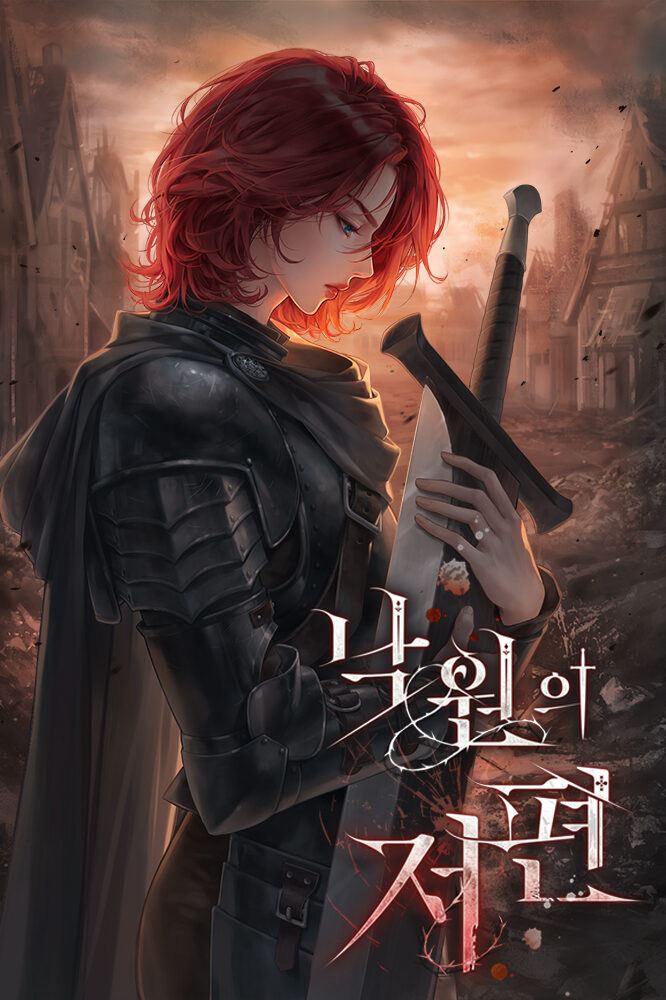
I'm going to be honest—I'm not okay after reading this. My chest hurts.
The central emotional thread of this story is simple: a broken thing learns to love, and then loves something more than itself, and then loses everything.
Let me start with Hans and Marta. These two lost their children to plague. They lost their pregnant daughter. They were living on guilt and gratitude, barely holding on. And then they find a scarred, dying woman on their beach. The herbalist tells them to let her die. Hans looks at her and says 'How could I leave her to die? If their daughter had survived the plague, this woman would be the same age as their daughter would have been.'
That's it. That's the entire motivation. Not duty. Not religion. Not heroism. Just: she could have been my child. And in that moment, they choose love over self-preservation.
The montage of Lesta becoming part of the family is where I fell apart. 'Grandma, does it hurt? That red mark on your back?' 'No, it doesn't hurt, Grandma.' 'If it does, don't hide it, all right? Promise me you'll tell us.' 'Yes, Grandpa.' 'Lesta, let's arm-wrestle today. This time, I'll really win!' 'What are you wagering, Bram?' 'Hmm... my life, maybe?'
These are the voices in her head at the end, when she's standing in a burning house watching her family die. The author weaponizes warmth. Every tender memory is a knife to the heart because we know, we KNEW, that these moments were real and they're gone forever.
Lesta's grief is described in a way that's almost physical: 'It was as though a stone filled her chest and was bristling with a thousand thorns that tore through her heart and lungs with every breath she took.' She's a being who can withstand fire and sea beasts and swords—but she cannot withstand losing the people who gave her a name.
And yet—here's where the emotion gets complicated—she doesn't break. She doesn't scream or wail. She 'gathered their ashes into her arms' and then 'strode forward.' The grief is there, deep and thorned, but it's been transformed into something else. Purpose. Vengeance. But even as she vows 'I'll kill every last one of you,' there's a haunting tenderness in her final words: 'I'll come back someday, Grandpa, Grandma... and you too, Bram.'
She believes they're waiting for her. She believes the house held together for her. She believes in something beyond the ashes. And that belief—that fragile, impossible belief—is the most emotionally powerful thing in the entire book.
The switch to the imperial banquet is jarring, and I think intentionally so. Eldrian and Estella's political chess game, the whispers about Dominic Blackwood and the Great Being scale—it's all cold calculation. No warmth. No family. No name. The story is setting up a contrast: Lesta, who was built as a weapon but learned to love, versus a world of nobles who are weaponized by power but have never known kindness.
I need to know what happens next. Not for the revenge plot—though that's compelling—but because I need to know if Lesta will find her way back to something like the love she found in Ernel. Or if the thorns in her heart will never stop growing.