Beyond Paradise - Reviews

Beyond Paradise
+Add to Custom List
Sort
Add review
... Read More
Here's what got me: the math doesn't add up. And that's the point. It normally takes three elite knights plus a squad of soldiers to take down ONE Prongest without casualties. That's the established rule. That's what the world demands. But twelve mercenaries from the Ides are facing five Prongests and WINNING. No casualties. The odds were already impossible on paper, and then Lesta goes and cleaves through a carapace that even sword aura can't dent in a single strike. The tension between 'this shouldn't be happening' and 'but look how beautifully it IS happening' is what makes this scene work. Eldrian's internal math is the narrator's way of telling us: something extraordinary is happening and I'm trying to process it through logic and it's failing. 'Impossible.' 'A dry laugh escaped him.' That's not just surprise, that's a worldview cracking. The rules he thought governed this world just got rewritten in front of his eyes. But the real stakes aren't just about surviving this fight—they're about what comes after. The labyrinth beneath the ocean. The master of that labyrinth. If they can defeat it, the monster attacks stop. That's not just a plot point, that's hope. Hope is more dangerous than any Prongest because it makes people vulnerable. Lesta knows this. That's why she stands so still at the end, not celebrating, not relieved, just staring at the sea like something precious is hidden beyond it. She's already thinking about the next battle.
... Read More
Okay so Lesta is honestly one of the most tragic characters I've ever encountered. Let me break this down because my heart is still recovering. This woman—creature, entity, whatever—was literally BORN as a weapon. 'You were born to protect Blackwood's paradise.' That line alone shattered me. She had no childhood, no identity, no agency. Just a blood-red fang tattoo on her lower back marking her as property of the Evil God. She was kept in absolute darkness until these two sweet elderly people, Hans and Marta, pulled her from the ocean like she was some kind of miracle. And what happens next is the most beautiful thing: she learns to be human. Not through grand education or training, but through small moments. Arm-wrestling with Grandpa Hans. Being thanked by name instead of treated as a tool. The villagers calling her 'Lesta'—a name they'd once saved for their dead granddaughter. That detail alone made me sob. Her relationship with the village is the emotional core of the entire story. These people who'd already lost everything gave her everything. And she, who'd never known kindness, gave them her protection in return—hunting sea beasts, fixing their walls, all with that radiant smile. She wasn't pretending. She genuinely couldn't comprehend malice because she'd never experienced it. Then Blackwood arrives. Rexor Blayne—a former colleague from her dark past—recognizes her 'inhuman speed' before recognizing HER. Even after everything, the only thing that connects her to her old life is violence. When he says 'I thought you only knew how to answer orders,' that's when it truly hits you: the world had forgotten she could even speak. The death of her found family is where everything breaks. She doesn't just lose Hans, Marta, and Bram—she loses the first people who showed her love. Watching her gather their ashes while her own skin burns... I couldn't breathe. 'For the first time since her birth, Lesta experienced sorrow.' This woman who could tank fire without flinching finally felt pain, and it was grief. Absolute, crushing grief. But here's what makes her character arc so compelling: she doesn't become cruel. Even as she vows to kill every Blackwood, there's something sacred in her final moments with Hans and Marta. She thanks them. She promises to return. She lets the house collapse behind her because 'the villagers had been holding it up until now, just long enough to ensure her safety.' That belief—that they protected her even in death—is the most heartbreaking detail in the entire book. And now the story introduces Eldrian Sunray and Dominic Blackwood at a imperial banquet? The parallel is glaring. Two powerful houses, two heirs, and somehow Lesta—the discarded weapon—is the most human person in the entire narrative. I need to know what happens next because this woman has every right to burn the world down, but I also desperately hope she finds something worth living for again.
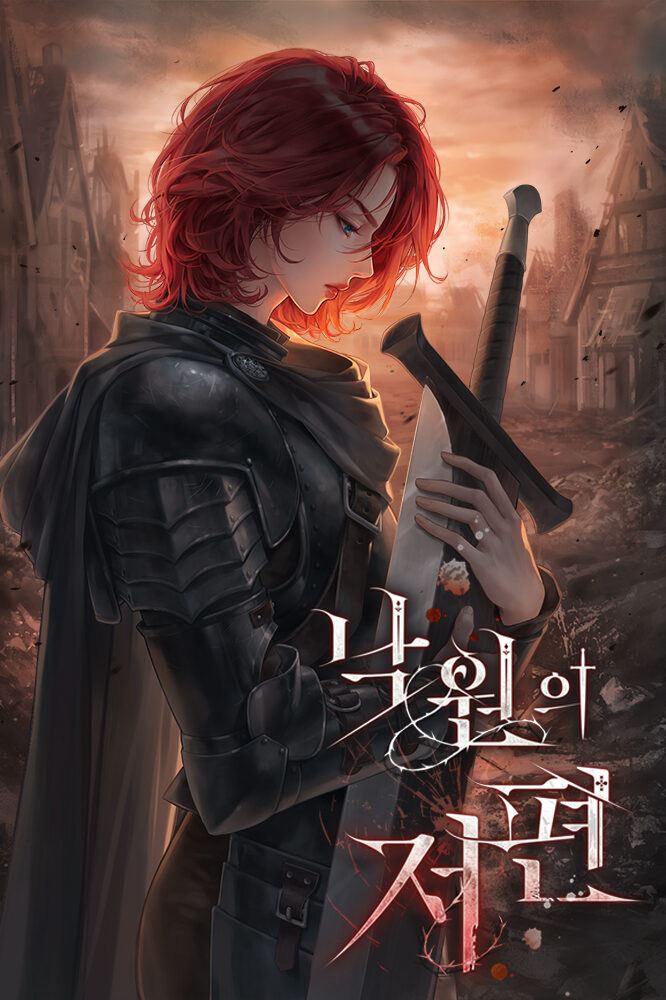
... Read More
Okay so Eldrian goes to meet the Mercenary King Lesta, right? And you would think this is gonna be some slick negotiation scene where he wins her over with money or promises. But nope. She shuts him down completely. I love that. Like, the whole setup makes it feel like she's this key ally waiting to be recruited—she's got the Ides mercenary corps, she's powerful, she's mysterious—and then she just... refuses? Cold? For a second I thought the author was trolling me. Is she gonna join later? Is she secretly a Blackwood fan? The Dominic doll on her desk has me SO confused. Here's what stuck with me: when Eldrian says, "Lesta, you like Dominic too, don't you?" and her face literally darkens. She doesn't deny it outright. She just says, "Me? Why would you think that?" Which is either gaslighting or she's actually fangirling and hates being found out. Either way, this character is NOT what she seems. And then the ending—those drums. Duuung. Duuung. A crimson-haired woman with a massive black sword riding through the night. Luna the wolf bristles. Eldrian jumps on her back and they go after her. What is happening?? This batch went from political maneuvering to straight-up mystery thriller in like three paragraphs. I came here for nobles scheming and I'm staying for the unknown woman with the ruby hair. The plot is moving fast and I have ZERO idea who's on which side.
... Read More
The dialogue in this section is doing serious heavy lifting and I need to applaud it. Toma's voice is immediate and distinct: "Boss! Don't do that! Use the tongs!" and "Honestly, why do you treat your body like it's disposable?" You don't need a tag to know it's him. He's loud, caring in a gruff way, and completely unfiltered. Classic best-friend energy that grounds the whole cast. Leonel is where it gets interesting. His dialogue is deceptively smooth. "Have a seat. Make yourself comfortable." — polite on the surface, but the way he follows it with "Drink. There's no poison in it." while slowly sipping his OWN tea? That's psychological warfare dressed as hospitality. And then the quiet devastation of "What did you do behind that silver mask?" said almost gently, like he's asking about the weather. His voice is layered—pleasant, probing, and somehow both at the same time. Eldrian's lines are sparse but weighted. "I intended to sentence them all to hard labor—send them off to Chidlere." Then later: "The Mercenary King will stand by my side." Short, deliberate, each word chosen with the precision of someone who's learned that language is power. His final line—"Take care of your body, Lesta."—is so understated it almost misses you, but it lands like a punch because of everything that came before it. And Lesta herself! Her voice is clipped, honest to a fault: "Yes." "No." "I have nothing to discuss with you." When she says "But I also know that won't be enough to destroy Blackwood," there's this quiet shift—from the blunt Mercenary King to someone who's been thinking several moves ahead. The author lets her voice change depending on who she's talking to, which is masterful character work disguised as dialogue.
... Read More
I need to talk about Eldrian and Lesta because THIS is where the relationship dynamics are getting dangerously interesting. Eldrian thinks he knows her. He has theories—she's not Dominic, but she could be a decoy, a replacement, someone using the mask as a prop. He's smart enough to notice the fighting style doesn't match. But then he's ALSO suspicious enough to wonder if THAT was part of the disguise too. This man is stuck between wanting to trust her and needing to control the situation. Classic noble energy. But here's what really got me—Eldrian WANTS to take her hand. He feels this pull, this dangerous longing, after watching her fight Prongest. His heart drops and burns. He wants to fight beside her. And yet he can't. Not because he doesn't feel it, but because he genuinely cannot trust her. He's holding back not from lack of attraction but from suspicion. That's actually refreshingly honest for a romance subplot. Meanwhile Lesta is playing a completely different game. She hints at the truth—that Blackwood created her—but doesn't give everything. She knows he won't believe her. And when he doesn't, she's not devastated. She's... fine. She already has a plan. Sunray is her strongest card but not her only one. She's prepared for him to walk away. That level of emotional detachment is chilling. She's a woman who has been hollowed out and refilled with one purpose: destroy Blackwood. Everyone else is secondary. Even the people she cares about—Toma, eating those sweet potatoes, the Idnale and Redebro guilds kneeling to her—none of it changes her core drive. And yet. She smiles. She thanks people. She rescues strangers from labyrinths bleeding. There's something genuine underneath the calculated exterior, even if she herself might not fully understand it anymore.
... Read More
"I remember every sin I've committed, one by one. Once I've accomplished my goal, I will embrace my crimes and die." I had to stop reading after that line. Just… stop. Because it's not dramatic. It's not performative. She says it almost flatly, and that's what makes it absolutely shatter you. This is the core of everything. Lesta was seven years old when she was caught infiltrating a barbarian camp, tortured, and then she slaughteredeveryone in revenge. That moment—brutal, formative—created the woman who now sits across from Leonel and agrees to be gentler with her blade, not because she believes in redemption, but because she believes in atonement. And then there's the Ernel memory. Springtime. The little boat on glittering water. Hans teaching her, Marta laughing, Bram pruning branches. These aren't just nostalgic flashbacks—they're the emotional proof that Lesta is capable of warmth, of tenderness, of existing in a world that isn't built on violence. The fact that she clings to these memories while preparing to die someday tells you everything about what she's fighting for: not glory, not power, but the right to look at the people she loves without shame. Eldrian's kindness is dangerous for her. "She was weak when faced with kindness." That line undid me. Someone who has spent her life steeling herself against betrayal has no defense against someone who simply… cares without conditions. And that's why "Take care of your body, Lesta" hits different. It's not a command. It's a plea wrapped in duty. I'm not ready for what happens when she can't protect herself from this kind of warmth anymore.
... Read More
Okay so I just finished this section and I'm literally shaking. The way this plot unfolds—Eldrian confronting Lesta about the silver mask, thinking it's Dominic—then she drops the MOST horrific revelation and just... casually? Like she's telling him the weather. "Over a hundred pregnant women. Children chosen by eye color. Killed the rest. Raised through relentless torture." I had to stop reading for a second. The Blackwoods didn't just make a fake Dominic. They bred a weapon. A hundred babies, one survivor—a girl—and that girl IS Lesta. That is some next-level villainy right there. And what I love about how this plot is structured is that Eldrian doesn't just accept it. He doesn't believe her. And honestly? Fair. Who would? Even the reader might think this is some elaborate lie to manipulate him. The story isn't treating us like fools—it's making us sit in that same uncertainty. Is she telling the truth? Is she using him? Is she going to turn on him once she gets everything she wants? The baron's story about the labyrinth is basically the counter-narrative to all of this darkness. Here's a woman who walks into a red-zone labyrinth ALONE, rescues hundreds of people over two days, comes back half-dead, and still asks if anyone wants to help her take down the boss. That's not a monster. Or... is it? Maybe she's too kind to be trusted. Maybe that's the real trap. The plot keeps pulling the rug from under you and I am HERE for it.
... Read More
There are so many symbols in this text that I need to process. Let me start with the most devastating one. The name 'Lesta.' Hans and Marta chose it from the name they'd prepared for their unborn granddaughter—who died in the plague. They didn't just give her a label; they gave her a future that was stolen from them. A name meant for a child who would grow up, who would live, who would have a life. By naming her Lesta, they were saying: you belong here. You are part of our story now. You are not a weapon. You are a person. And her response—'She repeated her name over and over again, smiling with innocent delight—as if she had never had a name before'—tells us everything about what she was before. No identity. No ownership except by whoever held power over her. No self. Just function. Then there's the tattoo. The blood-red fangs on her lower back, described as 'a mark of the Evil God—a brand burned into those who bore his gift of power, marking a soul destined to be claimed as his toy one day.' This is the permanent mark of her true nature, the opposite of the name. Where Lesta represents love and belonging, the fang mark represents ownership and damnation. She spent her life trying to forget 'what was written on the back'—literally and figuratively. Fire is another massive symbol. The village burns. Lesta walks through flames without flinching—because she's endured worse. But the fire that destroys her home also burns her skin, and for the first time, she feels pain that isn't physical. The fire consumes everything, but her memories of Hans, Marta, and Bram remain untouched. 'She was born to protect Blackwood's paradise' versus 'hers had been consumed by flames.' The paradise she was made to protect was never hers. The paradise she found and lost—that was real. The sea is also significant. She washes up from it—discarded, broken. She returns to it—alive, changed. Water as both death and rebirth. The herbalist says 'It doesn't look like she'll survive' but she does, because the sea gave her up instead of keeping her. And the house itself—that final image of Lesta walking away as 'the house behind her collapsed, as though it had been waiting for her to leave' is pure symbolism. The village held on for her. Her found family sustained her, even in death. And now she must move forward alone. What's fascinating is how the text contrasts these symbols against the imperial world introduced at the end. Eldrian's silver hair gleaming under chandeliers, the marquis's daughter in fine clothing, the Great Being scale as a trophy of power—these are symbols of the world that created Lesta's suffering. The question the story seems to be asking is: can something born from darkness and branding learn to believe in light, or will it always return to the fire? 'I really never meant to take revenge,' she thinks. But the marks on her body and the ashes in her arms tell a different story.
... Read More
'Take better care of yourself.' That line. That's it. That's the whole chapter right there. I literally sat on my couch and stared at my phone for a second after reading that. Everything leading up to it—the poisoned wound bubbling, him catching her wrist before she could wipe it, that look in his eyes that reminded Lesta of her grandparents' faces whenever she came home covered in blood—they built this whole architecture of care without either of them saying the actual words. And then he just uses four crystal vials of Helros because 'stay still' like he's not spending a fortune and like she's worth that kind of waste. But here's what killed me: Lesta felt something when she saw that expression. Not romance, not yet, but recognition. She knows what that look means because it comes from people who love her. The fact that she let him pour the medicine on her instead of pulling away, the way she said 'Thank you for worrying, Lord Eldrian' like she was testing whether she could say it without breaking—that was her letting someone in. Just a crack. But that's everything when you're a person who fights alone. And then she smiles at him afterward with that teasing curve of her lips and the reader is just sitting there like... oh no you two are going to be the death of me. The tension between 'he's falling for a pretty face' and 'she's the person who killed House Blackwood's real hero' is going to explode. I can feel it.
... Read More
I need to talk about Lesta's voice because WOW. She has such a distinct way of speaking that I could pick her out of any crowd. "For starters, I'd like to know why you came to see me. Be honest. No flourishes." That line. That's not a character asking a question—that's a character setting TERMS. She immediately establishes that SHE is in control of this conversation, and Eldrian (a noble, a duke) has to answer to HER. The power flip is delicious. And then: "If I ask for a hundred, will you give me a hundred?" "Yes." "And if Blackwood later comes along and offers two hundred?" "…" "Then those of us who are only in it for the money would turn on our heels and leave without a word. Are you OK with that?" She just dismantled his entire alliance proposal in three sentences. No anger, no theatrics. Just cold logic wrapped in a conversational tone. I swear she sounds like she's ordering tea, not destroying a political negotiation. Meanwhile, Eldrian's internal monologue is so different—much more wavering, questioning himself, talking to a wolf. When he says to Luna, "Yeah, what would you know? You just want to sleep, don't you?" and Luna huffs at him—he's trying to maintain composure but he's clearly stressed. The dialogue contrasts perfectly: Lesta is razor-calm and Eldrian is human and flustered. Nestor's dialogue is even shorter. He basically communicates exclusively through shrugs. Two words max per line. I love it. He's the living embodiment of "I don't care" and also probably the most dangerous person in the room.
... Read More
The structure of these chapters is doing something really clever that I didn't expect. You start with action—Prongests on a beach, spears crackling, Lesta flying through the air with her massive black blade—and you're locked in, heart rate up, expecting this to stay in combat mode the whole way through. But then the battle ends and instead of cutting away, the author keeps the camera on Lesta. Dawn breaks. She stands there. The poison burns her skin. Nestor hands her a towel. Eldrian dismounts. The pace slows from 'KWAANG—! Sssaaaaa—!' to a quiet conversation about medicine and healing. That's not a drag, that's relief, and relief only works when the tension was real. The pacing trick is that the emotional beats hit harder because they come right after the physical danger. When Eldrian says 'Take better care of yourself,' we're still riding the adrenaline from the Prongest fight. The shift from 'monsters trying to melt our skin' to 'please let me help you heal' is jarring in the best way. It makes the tenderness feel earned. And then just when you think the chapter is winding down with that quiet moment by the sea, Eldrian asks about Dominic Blackwood. The conversation pivots from romance to conspiracy, from personal stakes to political stakes, and suddenly you're locked back in. The chapter ends with 'Is it you?' hanging in the air like a blade. That's not a cliffhanger, that's a landmine.
... Read More
This batch opens at a whisper and ends with a sprint. Chapters 20-24 are basically one long conversation. Eldrian meets Lesta, they talk, she refuses, he leaves. It could have been boring—but the author keeps injecting tiny tensions that prevent it from sagging. The doll reveal. The accidental slip from "Lesta" to "L—" The question about Dominic fans. Each beat adds friction without escalating loudly. Then Chapters 25-27: Eldrian walks back with Luna (reflective, slower pace), gets interrupted by Leonel's arrival (emotional peak, relief), they analyze Lesta together (intellectual processing), and then—DRUMS. Duuung. Duuung. A complete tonal shift into action. The pacing choice to put the mysterious crimson-haired woman's arrival right after the Lesta discussion is genius. It suggests: you thought the tension was resolved? Nope. New variable. New player. The drums are a narrative siren—wake up, something is happening. I went from a political drama into a mystery-action hybrid in the span of three chapters and I didn't see it coming at all. The author controlled my attention perfectly by varying the energy level instead of just keeping everything at the same volume.

Leave a comment

You must be logged in to leave comments. or
