Beyond Paradise - Reviews

Beyond Paradise
+Add to Custom List
Sort
Add review
... Read More
OK so I need to talk about Leonel's dialogue because this man is a menace and I'm here for it. "Greed makes people foolish." / "I'm shocked you think I'm that foolish too." This exchange is absolutely perfect. Two lines, no description, and it establishes everything: Lesta's suspicion, Leonel's confidence, the power dynamic shifting between them every three seconds. And then the Nestor moment. Leonel calls him "Nestol" — deliberately misnaming him after a ridiculous beast that just floats around a lake — and Nestor actually FLinches. Just slightly, a wrinkle on his nose, but Lesta notices. Of course she notices. And Leonel SMILES at that. He's not just annoying; he's testing everyone around him, poking to see where the cracks are. "You should've brought Nestol. Isn't he your right hand?" Leonel asks Lesta right before they enter the labyrinth. On the surface it's concern. Underneath it's a probe. Is Nestor her weakness? Her blind spot? The author writes this exchange without any narration about Leonel's intent — we only learn it from the context. That's masterful dialogue writing. Lesta's voice is equally sharp. "Dressed like that?" "We're not going on a pleasure trip." "You'll die." "We'll see." Four exchanges, four bars of tension. She keeps shortening her sentences the more exasperated she gets, and Leonel keeps answering with the calm of someone who's three moves ahead. The narrative voice itself is restrained — almost clinical in its descriptions — which makes the character voices pop even more. The author trusts the dialogue to carry emotional weight without padding it with internal monologue. I respect that enormously.
... Read More
So many symbols in this batch it's almost suffocating. The Dominic doll. This small object on Lesta's desk is doing SO much work. Is it a genuine fan item? Is it a totem of something darker? The fact that Eldrian notices it only AFTER their conversation is already tense suggests the author wants us to read it as a loaded object—something that means different things to different people. To Eldrian it signals either admiration or opposition. To Lesta it's probably just... hers. She doesn't even defend it. Just says "Ah. Oh, I see now." Like, yes, I have this thing and you're making it into a plot point. Whatever. The cold tea. Lesta sitting alone for hours staring at a teacup that's gone cold. That's not just dramatic staging—that's her processing something. She wanted to accept his offer. Nestor literally tells her so. But she held back because "things gained too easily are easily discarded." That's a theme this story keeps coming back to: value through difficulty, trust through time. The mercenaries understand this instinctively; the nobles are still learning it. And then there's the whole class dynamic. Lesta being a commoner who tells a duke, "It's better to keep some distance." And Eldrian insisting that being addressed by name is a privilege she should earn. The social hierarchy is being negotiated word by word in every exchange. Neither of them fully understands the other's world, and that gap IS the tension.
... Read More
Okay, I NEED to talk about Leonel Sunray first because WOW. The second son? Who IS this man?? The moment Lesta walks into that reception room, the author drops this description—dark gold hair, tiger-bright eyes, elongated canines—and I was immediately thrown. Not in a good way, honestly. She describes his presence as "sweet—sticky, almost cloying, like caramel that clings to the skin." That's such a perfect way to write unease. You don't have to say "he was creepy" when the imagery does all the work. But here's what made me actually sit up and pay attention: Leonel knows about the Silver Mask. He brings it up casually, like it's just another topic of conversation over tea. And then—he strokes her cheek. His palms are slightly cool, and he holds her hand "very kindly," like a patient guardian leading a child. Is this genuine compassion? Is this manipulation? Or both? The parallel to Grandpa Hans that Lesta makes hit me hard. Same gentleness, same patience, but the source is completely different. Hans taught her what it means to be human after a lifetime of obedience; Leonel is doing something that feels eerily similar but comes from a place I can't quite name yet. That contrast—two men guiding her toward humanity from opposite directions—is the kind of layered character writing that makes you obsess over a book. And Eldrian? His reaction when he walks in and sees Leonel sitting beside Lesta—"Why are you sitting there?" That tiny line tells us SO much. There's already tension between these two brothers. There's already something protective (or possessive?) about how Eldrian looks at Lesta. I'm not saying it's romantic—yet—but the dynamics are simmering. I just want to know what Leonel is really after.
... Read More
I need to talk about the dialogue in this book because it's deceptively simple and I think that's by design. The villagers of Ernel speak in the simplest possible language, and it's gorgeous. 'I hope we don't run into sea beasts today.' 'May the catch be good.' 'I wish the apple trees we planted last year bear plenty of fruit.' That's it. No drama, no complexity, no hidden agendas. These are people whose biggest worry is whether their fishing trip will be safe. The dialogue reflects their world: small, contained, honest. Lesta's voice is different—and that's the point. When she first arrives, she can't speak at all. She can't answer her name or her age. The only dialogue she produces is repeating 'Lesta. Lesta.' with 'innocent delight.' After integrating into the village, she learns to speak, but her words remain simple: 'Is there anything I can help with?' 'It's all right. Just call me again if you need help next time.' She doesn't have the vocabulary for complex emotions because she's never experienced them. Her dialogue is the dialogue of a child learning to navigate the world. The moment that truly showcases the author's mastery of dialogue is the confrontation with Rexor Blayne. It's razor-sharp, layered with history that the reader pieces together: 'You... you can talk? I thought you only knew how to answer orders.' 'You, on the other hand, don't seem to know how to answer at all.' Two lines. That's all it takes to establish that Lesta was once a silent weapon and Rexor was complicit in that silencing. The power dynamic flips in real time. She's the one holding the sword now; he's the one who can't speak his way out of it. And Rexor's attempt to bargain—telling her about Joubert Welter's mercy, about how Lesta is 'living proof that Blackwood's luck has run out'—reveals everything about his character. He's calculating, desperate, and ultimately pointless. 'Rexor never begged for forgiveness and Lesta never offered mercy. Rexor's skull crumpled in her grasp.' The internal monologue is also exceptional. Lesta's thoughts are where the real voice lives: 'I really never meant to take revenge.' 'She had forgotten what was written on the back: endless darkness and a blood-red curse.' These passages are poetic without being pretentious. They carry the emotional weight that dialogue alone cannot. The shift to the imperial banquet introduces a completely different register. Eldrian and Estella's exchange is layered with political subtext and social maneuvering: 'If you act friendly with me right now, people will think that the Marquis's daughter, who was rejected as a crown princess candidate, is trying to seduce the Sunray heir.' 'Please. Why would House Bellamore need to seduce Sunray? If it were the famous Blackwood, then maybe.' This is dialogue as warfare—polite on the surface, dangerous underneath. The author is showing us that the imperial world operates on completely different rules than Ernel. Words are weapons here, not just expressions of feeling. What strikes me most is how the author uses silence as dialogue. Lesta's muteness when she first arrives. Rexor's silence when she asks who reported Joubert. The unanswered questions that hang in the air. In a story about a woman who was never allowed to speak, silence becomes the most powerful form of expression.
... Read More
I need to talk about Nestor because nobody else will. This guy doesn't get a single line of internal monologue, doesn't even get to be the POV for his own feelings, and yet he carries more emotional weight than half the characters who do. Think about it: he's immune to poison. He could have led the charge, stayed dry while Lesta took the toxic fog headfirst. But he didn't. He fought beside her, not in front of her, not behind her—beside. When Lesta tells Eldrian 'Nestor helped, too' with that faint smile, she's acknowledging something he never asked her to acknowledge. They have this entire history of trust written in the spaces between their words. And then there's the shrug. The man gave a familiar shrug when Eldrian looked at him after Lesta's wound healed instantly. The shrug that could mean three completely different things at once. Is it 'You've fallen for her too'? Is it 'Give it up, she's mine'? Is it 'Even a duke's son isn't immune'? Or all of the above? We don't know. We'll probably never know. But that shrug told us everything about what Nestor has endured in silence while watching someone he cares about fall for someone else's confusion. Lesta herself is fascinating in this dynamic. She won't tell Eldrian the truth because she hasn't decided if she trusts him. But she also doesn't lie outright—she just walks along the cliff top in silence while he draws his own conclusions. That's not manipulation, that's self-preservation. She's been betrayed before, probably by people exactly like House Sunray who wanted to use her and discard her when her vengeance served its purpose. The relationship between these three is built on unspoken understandings that would shatter if anyone spoke them aloud.
... Read More
Can we just take a moment for the Sunray estate's atmosphere? Because the author writes environment like it's a character in itself, and I'm obsessed. Lesta walks down a "long, ornate corridor" that smells of lavender sachets hidden behind curtains. Corvan the butler offers her one to take when she leaves. That tiny detail—her reaction—says everything: "An honored guest…" She had never been treated like this before. The words make her feel uneasy. A noble household's politeness is foreign terrain for someone who grew up in mercenary camps and labyrinth darkness. Then there's the reception room scene. Cooled tea being replaced by a maid. The silence between Lesta and Leonel thick enough to cut. The contrast between Eldrian's warm memories of Ernel—the little boat on glittering sea, mornings collecting shells with Marta, afternoons learning to prune branches from Bram—and the cold political machinery of the Sunray estate. These aren't decorative details; they're emotional anchors that root the fantasy world in sensory reality. And the fire scene at the beginning! Toma yelling at Lesta for reaching toward the flames bare-handed, her quiet observation that she didn't bring tongs, her knowing he'll eat her sweet potato anyway. It's such a small, domestic moment, but it immediately tells you everything about her found family. Rough camaraderie versus noble refinement—they're two worlds Lesta straddles, and neither fully belongs to her yet. The world feels ALIVE. You can smell the lavender, feel the heat of the fire, sense the invisible threads of pressure in Leonel's presence. This isn't backdrop; it's atmosphere as emotional architecture.
... Read More
"As Dominic brushed back his hair with effortless grace, he locked eyes with Eldrian across the hall. Eldrian stared back, narrowing his eyes and adopting an impenetrable expression." I have read this passage five times already and I cannot process it. FIVE TIMES. Because on the surface this is just two noblemen making eye contact at a formal gathering. But the subtext is so LOUD it is practically screaming. Eldrian has been watching Dominic since that battlefield four years ago. He has remembered the exact moment their eyes met—the crimson aura, the fearless charge, the way Dominic looked at him like he was the only person in a swarm of monsters. And now here they are again, across a hall full of lords and foreign royalty, and Dominic removes his mask like it is the most natural thing in the world, and the FIRST person he searches for, the FIRST person he LOCKS EYES WITH, is Eldrian. And Eldrian's reaction? He goes impenetrable. He hides behind a cold mask of his own, just like Dominic wore one for years. It is almost poetic, honestly. Two people who protect themselves behind layers—one with silver metal, one with emotional armor—and they finally see each other fully and neither of them says a single word. Meanwhile Estella is just standing there going "Wow, he's gorgeous" and Eldrian replies with this cold smile saying "Yes. He is." Like he is admitting something painful, not just commenting on someone's looks. And then he WALKS AWAY mid-ceremony. Just leaves. Because he cannot handle being in the same room anymore. And Dominic's relationship with Luciel? The public romance that everyone fawns over? It reads so much like a performance now. A carefully maintained image. Is he actually in love with her, or is this another layer of the mask? Because something about the way the narrative treats it makes me wonder if the real story is just beginning.
... Read More
Okay, let me talk about how this author controls pacing because it's genuinely masterful and I'm still recovering. The first seven chapters operate like a slow-burn tragedy. We open with the fishing village of Ernel—quiet, isolated, idyllic. The prose moves at the pace of ocean waves. Hans and Marta find Lesta. The herbalist examines her. She wakes up. She integrates into the village. She protects them from sea beasts. They grow to love her. It's all gentle, almost meditative. And I mean that as the highest compliment. But here's the thing: the author knows exactly what they're doing. Every peaceful moment is threaded with foreshadowing. The herbalist warns 'let her die. Getting involved might only cause trouble.' The villagers 'had lived their whole lives in this small, untouched seaside community' and 'had no idea that beyond their quiet shores, there were people who would betray, exploit and destroy.' The reader senses doom from page one, but the characters don't. That dramatic irony is exquisite torture. Lesta's supernatural strength—lifting what even Bram, the burliest carpenter, couldn't move, felling trees with a single strike—is introduced casually, almost playfully. But it's clearly foreshadowing what she's capable of. The author is building a weapon and letting us watch it being disarmed, one act of kindness at a time. Then, without warning, the tone shifts. 'Until the day Blackwood's knights stormed the village and killed everyone.' One sentence. That's all it takes. The entire peaceful world collapses in a single line break. No battle scene. No heroic last stand. Just: they're dead. This is where the pacing becomes surgical. Lesta returns to find the village burning. She moves through the ruins with 'inhuman speed.' The massacre of the knights is described in swift, almost clinical strokes—five knights die before Rexor even realizes what's happening. The violence is fast because grief doesn't give you time to hesitate. But then the author forces you to STOP. Right after the bloodshed, Lesta enters Hans and Marta's burning house. The prose slows to a crawl. She watches them die. She gathers their ashes. She experiences sorrow for the first time. This extended, immersive scene of mourning is where the emotional weight lands. The author deliberately juxtaposes the speed of violence with the slowness of grief, and the contrast is devastating. The final chapter switches to an imperial banquet—completely different setting, different tone, different characters. Eldrian Sunray's entrance, the whispers of the crowd, the political tension with House Blackwood. This isn't just a scene change; it's a structural pivot. The story is expanding from a personal tragedy to an epic scope. The Great Being scale, the imperial politics, the rival heirs—all of this suggests that Lesta's revenge won't be simple, and that the forces that destroyed Ernel are part of something much larger. The pacing here is like a heartbeat: slow and steady, then suddenly arrested, then racing, then stopping again. It's the rhythm of someone experiencing trauma—dissociation, then memory, then numbness, then the dawning realization of what's been lost. And honestly? It made me put the book down several times just to process what I'd read.
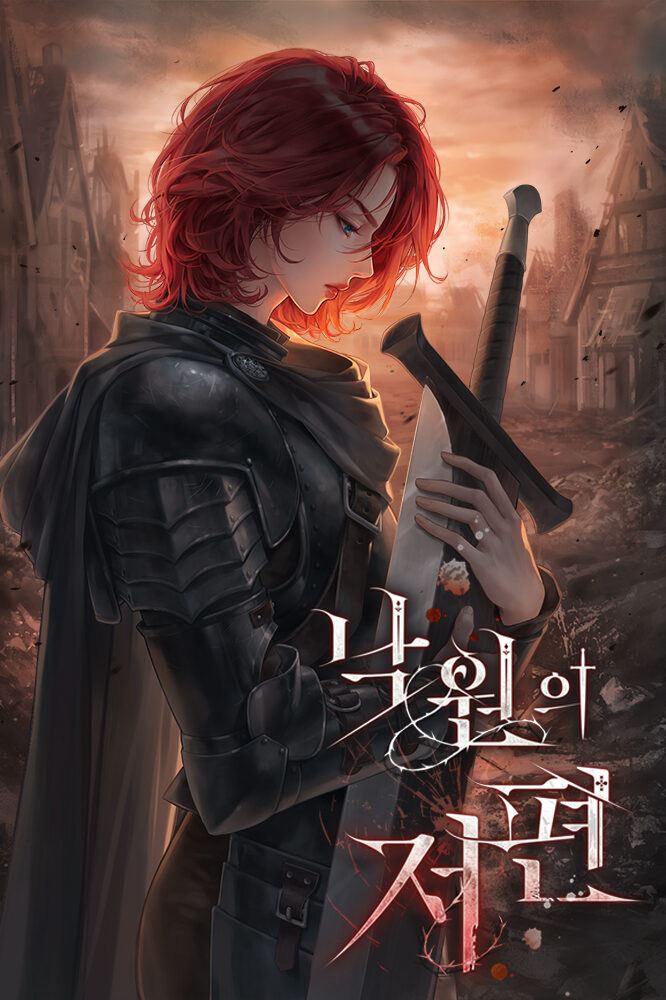
... Read More
I need to talk about how good the dialogue is here because some authors write conversations that sound like people reading press releases and this is ABSOLUTELY NOT THAT. Take the exchange between Amaranth and Leonel. It is SPONTANEOUS and FUNNY and feels like actual siblings. Leonel complaining that she calls him by his name instead of "Brother"—that is such a specific, petty sibling dynamic that you just know comes from real observation. And then he whispers to Amaranth that Dominic likes men, and Eldrian just calmly says "I can hear you, Leon. And you too, Ara—stop fussing." This man is surrounded by chaos and he does not flinch. His voice is so distinctly CALM and measured that you immediately know who he is just from how he speaks. The rumors swirling around the banquet hall also have such distinct voices. Estella leaning in conspiratorially with her theories about Dominic's scars vanishing, Eldrian dryly observing, the way information moves through a noble court like water through cracks—it all feels authentic. And the letters! The correspondence between Eldrian and Lesta is minimalist perfection. His first letter is elaborate and diplomatic, hers is blunt and dismissive. His reply is two words. This is dialogue as character revelation at its finest. You learn everything about both people without a single narrator intruding. The narrative voice itself is also doing incredible work—wry, observant, sometimes ironic, never over-explaining. It trusts the reader. Lines like "A hero had no need to apologize, yet he did so humbly and no one could dislike him for it" carry this perfect balance of narration and judgment. The author has a voice and I am HERE for it.
... Read More
So Lesta gets this letter about being summoned to the Blackwood estate and instead of panicking or scheming, she just absently runs her fingers over a silver mask doll on her desk. That detail sat with me. Right there. Before Leonel even shows up. It's like the author is dropping a visual metaphor right on the page and expecting you to notice. The subplot threading through here is the Duke of Blackwood sending someone to meet Lesta. She writes a note to Nestor without hesitation — she already knows what she's going to do. That's the kind of agency that makes her compelling. She's not being dragged along; she's reading the board and making her move before anyone else finishes their sentence. Then Leonel crashes in. I love that he arrives unprompted, carrying his own tray of tea like he's been rehearsing this moment. He says he's coming along to the labyrinth because 'according to the law, the owner of the territory... had the right of first entry.' Translation: he's using legal maneuvering to insert himself into her operation. And Lesta can't stop him. The real tension isn't just monsters underwater — it's the political landmine walking beside her in a formal suit. The chapter ends with a gorgeous temporal inversion — they dive into the labyrinth and instantaneously shift from freezing darkness to scorching heat on sand. That's a solid structural pivot. The story just opened a new room and I want to know what's inside. Also the brief cutaway to Eldrian's naval battle was a nice breadcrumb. Five large ships, seven medium ones, flaming arrows, sword energy — the world just got bigger. My one complaint: some transitions felt abrupt. But then again, the story is moving fast enough that I'm not complaining too loudly.
... Read More
Let me talk about the stakes in this story because they hit different. On the surface, it's a revenge plot. Lesta's village gets destroyed, she slaughters the knights, vows vengeance against House Blackwood. Simple, right? Wrong. The genius of this story is how it makes you understand exactly what's being lost before it takes it away. The fishing village of Ernel isn't just a setting—it's a character. A perfect, naive, untouched paradise where the biggest concerns are 'I hope we don't run into sea beasts today' and 'May the catch be good.' These people don't know about empires, about power struggles, about the dark world beyond their shores. They're simple. They're kind. And they're completely defenseless. The contrast between the opening chapters and the massacre is brutal. We spend over half the text falling in love with this village and these characters. Lesta building barriers, swimming out to fight sea beasts alone, smiling through her work. Hans and Marta treating her like family. Bram trying to arm-wrestle her. The herbalist warning 'there isn't much I can do' and then staying anyway. Every single moment of warmth makes the eventual destruction feel like a physical blow. And the attack itself—'Until the day Blackwood's knights stormed the village and killed everyone'—happens while Lesta is literally OUT at sea hunting beasts. She comes back to find 'the sky was black with smoke and the air was thick with the stench of blood and ash.' In a single instant, her entire world shifts from peace to hell. No warning. No buildup to the attack itself. Just the aftermath, raw and devastating. The personal stake with Rexor Blayne is also incredible. He was ON her ship when she was thrown into the sea. He TOLD on Joubert Welter, who had the mercy to spare Lesta's face and fingers despite the Duke's orders. Rexor's betrayal is what led directly to the current situation. When he says 'You can talk? I thought you only knew how to answer orders' and she replies 'You, on the other hand, don't seem to know how to answer at all'—that dialogue crackles with years of unspoken history and betrayal. But the HIGHEST stakes aren't just about revenge. They're about Lesta's soul. The mark on her back—the Evil God's brand, 'marking a soul destined to be claimed as his toy one day'—suggests that even if she survives Blackwood, there's something far worse waiting. 'They were the ones who had made her world beautiful. She had forgotten what was written on the back: endless darkness and a blood-red curse.' So the conflict is layered: external (Blackwood vs. Lesta), personal (Rexor's betrayal), and existential (the Evil God's claim on her soul). The village's destruction isn't just a plot device—it's the moment Lesta chooses between the darkness she was born into and the light she briefly found. And when she stands in the burning house, gathering ashes, she's making that choice for the first time. The switch to the imperial banquet with Eldrian and Dominic feels like the calm before another storm. Two great houses, imperial politics, and a Great Being scale that 'had never happened before in the history of the Lunaris Empire.' Something massive is coming, and I have a terrible feeling Lesta is at the center of it all.
... Read More
Let's talk plot momentum because this section is sneaky smart about how it builds tension without throwing a single sword fight at you. On the surface, Lesta goes to the Sunray estate for a political conversation. She wants to moderate the punishment of nobles involved in the slave trade. Simple, right? But the author layers it: first you meet Leonel and get this unsettling personal encounter, THEN Eldrian arrives and the real strategic discussion begins. The scene shifts from intimate discomfort to macro-level political chess in one smooth transition. The Blackwood information drop is where this all crystallizes. Lesta reveals that Blackwood owns thirty labyrinths and they're disappearing—one to four years after their lord dies. Dominic stopped hunting. The math means the dominant force among labyrinms could shift before year's end. This isn't just worldbuilding trivia; it's a ticking bomb. And Lesta's excitement when she says "I'm very curious to see how Blackwood behaves when they're anxious"—that's the face of someone who has been planning this for years and is finally watching the trap close. What I love is how the political and personal threads are braided together. The slave trade trial is the immediate plot. The labyrinth war is the looming one. And Lesta's own reckoning with her past as the Silver Mask runs underneath both. Three conflicts, same timeline, and the author never lets you forget it. I kept thinking: whoever Blackwood is, they're about to get absolutely wrecked by a woman who remembers every sin she's ever committed and has a dozen plans to burn their empire down.

Leave a comment

You must be logged in to leave comments. or
