Be Good, Put Out the Cigarette - Reviews

Be Good, Put Out the Cigarette
+Add to Custom List
Sort
Add review
... Read More
Okay, I need to talk about the ending of this whole sequence because holy shit. Doctor Ji literally runs all the way from the hospital to break up the fight, and the narrative takes the time to describe the DISINFECCtant smell on him clashing with Bo Xinghang's cigarette smoke. That's not just a sensory detail — that's the entire relationship crystallized in two words. Two worlds. Two lives that have absolutely no business touching, and yet here they are, one man engulfing the other in an embrace. And Bo Xinghang's internal response? "Uncomfortable, he shifted slightly without looking up, feeling restless inside." He doesn't pull away. He shifts. He feels restless. He doesn't deny it. Then right after, when Ji Wenzhen says "Don't be afraid" in front of everyone, and Bo Xinghang mutters "Afraid, my ass" into his shoulder — that is the most Bo Xinghang thing I have ever read. Of course he'd deny being scared while burying his face in someone's chest. The man is a walking contradiction, and I am HERE for it. But what really undid me was what came AFTER. The narrative drops us straight into the rooftop memory — him learning to smoke alone on June 29th, the day his father died. He says nothing to anyone. His WeChat goes silent. He just disappears into his grief while the whole world celebrates. And then we cut back to the embrace, and he thinks: "Yes. He and Doctor Ji belonged to entirely different worlds." I am literally screaming. He's standing in someone's arms, being held, being comforted, and his first instinct is to remind himself they shouldn't be this close. Like he's been programming himself to expect abandonment since he was a kid. The homeroom teacher notices Ji Wenzhen's dark circles and asks if he's alright, and Ji Wenzhen just says "I'm fine" with a hoarse voice. This man has been working late nights for nearly two weeks, probably worried himself sick over his brother, and he won't even admit he's tired. Who are we fooling — they're both falling apart and neither will say it out loud. Also the bit where Ji Wenzhen's eyes go cold the second he's done comforting Bo Xinghang? Like, the switch from warm big brother to icy doctor in half a second? That man has range.
... Read More
The dialogue in this section is deceptively sparse, which makes every line land harder. "What are you doing?" — pointless question, and Bo Xinghang knows it immediately: "As soon as he said it, he felt as if his IQ had been infected by Xu Yi." That self-awareness in the narration is so sharp. He's caught himself performing the same empty ritual his family has always used. His mother's dialogue is a masterclass in evasion. She doesn't ask how he is. She doesn't comment on the three years. She says "Put your bag down and wash up for dinner" as if time hasn't fractured. Her voice is all performance, all deflection, until the moment she needs something and drops the act entirely: "I'll tell you, I'll tell you." But the real dialogue masterpiece is what Bo Xinghang doesn't say. He doesn't explain why the shirt matters. He doesn't justify his rage. He just asks, twice: "Where's the shirt? Give it back to me." And when she says she threw it out, the narration tells us "every drop of blood in his body surged to the surface." No dialogue needed. The subtext is the text. And then at the very end, collapsed on Doctor Ji's sofa, he says: "Doctor Ji... it hurts so much." Four words. The entire novel could be summarized in those four. Not "I'm angry" or "I'm sad" or "she threw away my shirt." Just pain, raw and unmediated, offered to the one person who won't throw it away.
... Read More
I need to talk about the earring. This one detail — Bo Xinghang fiddling with his silver stud — carries more emotional data than half the dialogue in any romance novel I've read. It's a physical tell, a nervous habit, and it appears at the precise moment he's trying to decide whether to smoke near Doctor Ji. The answer is already written in his body before his mind catches up: he won't smoke because Doctor Ji doesn't like it. Even when Doctor Ji isn't there. Even when it's been established that Doctor Ji is avoiding him. This is a man whose love language is self-erasure. He modifies his behavior around someone who has literally run away from him. And Doctor Ji? Look at the text carefully. He doesn't come down to explain. He doesn't knock and wait. He pulls a gift from his pocket at midnight and says "Happy birthday, Xiao Xing" with a smile. Not an apology. Not a justification. The gift itself is the apology — and also, perhaps, the refusal to admit there's anything wrong worth apologizing for. The relationship between them is defined by what they don't say. Bo Xinghang presses his hand into his pocket after finishing a cigarette, feeling guilty even when alone. Doctor Ji remembers frozen food instructions, bedtime warnings, homework reminders — all the domestic rituals of care — but cannot bring himself to say why he left. Two people orbiting each other, pulled together by habits and routines that persist beyond the relationship that created them. "I'll treat you to a meal next time I get the chance." This line from Bo Xinghang to Xiao Meng breaks me slightly. He's so accustomed to deferring, to promising future moments he may not get to keep, that even gratitude is framed as a debt to be paid later.
... Read More
The structure of this chapter is doing some serious heavy lifting. You start with Bo Xinghang alone in bed, typing and deleting, which immediately establishes both his vulnerability and the comedic timing—you can practically hear him sighing in frustration. Then the message comes through, and you get this rapid-fire WeChat exchange that moves at the speed of actual messaging. Boom, boom, boom. Then a clean break into the next morning with that alarm clock jarring transition. The noise motif is brilliant—first the clattering bowls waking him up, then Doctor Ji deliberately making more noise when he doesn't get up. It's almost cartoonish in its precision. But then the pacing shifts again into this slow-burn breakfast scene where every sentence becomes a countdown. Eight minutes. Seven minutes and twenty-five seconds. Twenty-four seconds. The author is using temporal pressure to turn what could be a mundane scene into something increasingly tense and funny. Each time Ji Wenzhen reports the time, Bo Xinghang's patience erodes a little more, and you can feel the reader's own anxiety mounting alongside his. The chapter ends not with a cliffhanger exactly, but with a moment of suspended decision—Bo Xinghang starting to explain the whole bar situation, trailing off right as understanding dawns. It's a perfect pivot point that demands the next chapter.
... Read More
What strikes me about the pacing here is how deliberately the author shifts gears. The first third of the chapter moves fast—maybe too fast for its own good. You have the exam, the confrontation, the expulsion, the walk down the stairs, the arrival at the bar, the phone conversation with Meng-jie, the gossip about the group booking the place. All of this happens in quick succession, almost like a montage. The prose doesn't linger. Sentences are short. Actions follow each other rapidly. I found myself reading ahead, eager to see what happens next. This is the “setup” phase: establish the characters, the conflict, the world, and get moving. But then—stop. Right when Bo Xinghang goes to smoke behind the storage room, the entire rhythm changes. The sentences get longer. The descriptions expand. You have the click of the lighter, the white smoke, the way the cigarette glow flickers in his eyes. Time stretches. And I mean that literally—the author makes you feel the minutes passing as Bo Xinghang zones out. This is where the pacing earns its keep. The slowdown isn't lazy writing; it's intentional. The quiet moment before the collision. And then the man appears. The encounter is paced in extreme slow motion. First shoes, then pants, then the full figure. The man speaks into his phone. He notices Bo Xinghang. He ends the call. He asks the question. Each beat gets its own paragraph. The tension builds not through action but through stillness—two people locked in a silent stare across a dirty parking lot. The chapter ends mid-sentence with “After taki”—and I swear the author did that on purpose. That cutoff is a masterclass in cliffhanger construction. You don't get resolution. You get interruption. You get the moment where everything could go either way, frozen in time. When the next chapter starts, I'll be waiting for that single word to continue.
... Read More
Okay so the scene where Bo Xinghang walks out of the break room wearing Doctor Ji's clothes—I literally stopped scrolling. The way the author describes it is so visual, you can literally see the shot like it's a movie. The northern wind carrying a slight chill, sunlight streaming through the office window, that collarbone peeking out from the oversized shirt neckline, shadows emphasizing his slender figure. And then Doctor Ji looking away, deliberately choosing not to look further? That's such a good detail because it tells us everything about his self-control and the intensity of his feelings without saying it outright. "Despite the cool breeze, Doctor Ji felt an inexplicable heat rise within him." This line is doing so much work in one sentence. The contrast between the domestic sweetness inside and the tension waiting behind that hospital room door is brilliant. One minute you're feeling all warm and fuzzy watching them share lunch, Doctor Ji rubbing Bo Xinghang's stomach after he overate—okay that's peak soft boyfriend energy and I am HERE for it. The next minute the atmosphere shifts completely when they walk into the hospital corridor, that quiet lunchtime emptiness creating this eerie calm before the confrontation. The author really knows how to control the temperature of a scene. I also love the visual parallel between Bo Xinghang's expression when he faces Nan Ming—described as eerily similar to Doctor Ji's coldness but with aggression added. Like he inherited the look but weaponized it. That image stayed with me for hours.
... Read More
I literally stopped reading and just stared at my screen when Bo Xinghang asked Doctor Ji "Do I look handsome?" The way Ji Wenzhen basically tried to short-circuit his own brain — repeating some mantra, pinching the bridge of his nose, veins popping out like it was a physical wound — this is peak repressed tension writing and I am HERE for it. The age gap dynamic is handled so carefully too. Ji Wenzhen is 26, Bo Xinghang is under 18, and you can literally FEEL him holding back. Not because he doesn't want to react, but because he knows he shouldn't. And yet — the way his gaze lingers, the way he catches himself after that cold "Mm" response — it's like he's fighting a war inside his own chest. The text literally says "the kid was still young, not even eighteen yet. As a 26-year-old adult, he couldn't stoop so low." And I'm over here dying because we ALL know he WANTS to. Then later when he softens and explains the meaning of Bo Xinghang's name — "a reed can sail" — that's when it really hits you. This man is trying SO HARD to be appropriate, to be a mentor figure, to be anything BUT what he actually feels. And Bo Xinghang? He's completely oblivious but also somehow sensing everything. His heart races, he looks away guiltily, he calls Doctor Ji out for being too advanced. The push-and-pull is exquisite. But my absolute favorite character moment? When Bo Xinghang asks "Are you disappointed?" after Doctor Ji reveals he looked at his test papers (all zeros, by the way — the boy is a walking disaster) and Ji Wenzhen responds with just one word: "better." Not perfect. Not great. Just better. That single word changed everything for Bo Xinghang. He swears he's never cared about his grades this much. That's love language, folks.
... Read More
Okay, I need to process this scene. I've read it three times already and each time hits differently. The setup is devastating in its simplicity. Bo Xinghang is alone in a stairwell, crouched by a fire hydrant, smoking, amber eyes hollowed out by darkness. And Doctor Ji finds him. Not with words. Not with a question. He just... kneels. One knee on the hospital floor, reaching out like this is the most natural thing he's ever done. Then he pulls him into an embrace — firm, warm, the kind of hug that says I see you and you're not invisible to me. "Why are you here?" Bo Xinghang asks. Not "what are you doing" but "why are you here" — as if Doctor Ji showing up is somehow unexpected, as if he doesn't deserve to be there. And Doctor Ji's response is just… the kiss. Forceful, irresistible, then incredibly gentle. Like he needed to make sure Bo Xinghang understood what was happening before softening into tenderness. The physicality of it all — the numb legs, the shy denial, the way Bo Xinghang buries his face in Doctor Ji's neck like he's hiding from the world and from his own feelings simultaneously. And then Nurse Zhang. Oh god, Nurse Zhang. "Sister-in-law?!" — the sheer panic on Bo Xinghang's face, the way he jerks backward, the way Doctor Ji just calmly pinches the back of his neck and says "Don't move" like being caught in a public embrace is the least of their concerns. The woman who blushed when she saw them — that detail. She looked at Doctor Ji in his white coat, his austere coolness, his long lashes, and she blushed. She saw something. Everyone sees something except the two of them, apparently. "You were that engrossed?" Doctor Ji teases, and Bo Xinghang tries to deny it and fails spectacularly. That moment right there — that's the one. That's the moment where everything shifts. Because Doctor Ji isn't just comforting him. He's... pleased. Delighted, even. There's a warmth in his voice that has nothing to do with duty. I'm not okay. I need to lie down.
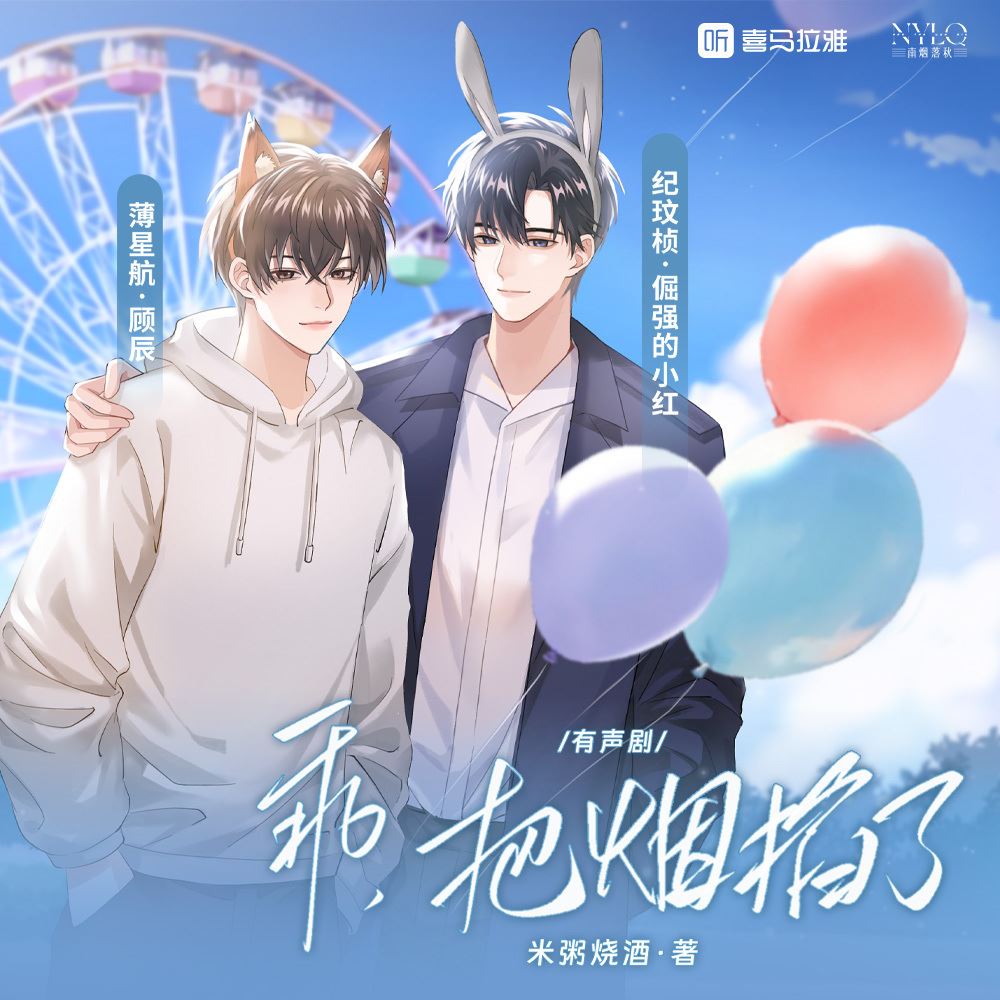
... Read More
There's something deeply cinematic about the car scene. Bo Xinghang spots “a familiar black car parked nearby” and runs straight to the passenger seat with a grin. No hesitation, no awkwardness—just pure, unfiltered comfort. The contrast between the sterile exam hall and the private space of that car is perfect. Outside, it's all rules and clocks; inside, it's just them. Then the home scene. Doctor Ji has already prepared dinner before he even picked Bo Xinghang up. That's worldbuilding through routine. We don't need exposition about their living situation—we see it in the heated dishes, in the way Bo Xinghang's backpack gets set down, in the casual pinch of cheek. The kitchen feels lived-in, intimate. The chicken leg sizzles with oil, filling the room with “a rich aroma.” You can smell it. That's rare. Most authors don't bother with food smells unless it's a feast scene, but here the domestic specificity does heavy lifting. This isn't a generic apartment—it's *their* apartment. And the school setting? The homeroom teacher's shift from stern to celebratory paints the whole environment. Provincial Experimental High School isn't just a name—it's a place where “sworn enemy” No. 8 High School exists, where rankings matter, where chants erupt over a report card. The teacher's “exasperated expression” melting into laughter tells us everything about the school culture: strict but passionate, competitive but united. What I love is how the scenes mirror each other. The exam hall is all silence and ticking clocks; the home kitchen is all sizzle and quiet conversation. The school assembly is noise and unity; the car ride is privacy and grin. The world feels layered, not just functional. Every location serves the emotional arc. Even the black car becomes a character—a mobile sanctuary between two worlds.
... Read More
Okay so here's the thing about this ending. The entire final stretch pivots around the college entrance exam. And normally I'd be the first to complain about deus ex machina academic plot devices, but the author somehow makes it feel organic instead of forced. The exam isn't just a ticking clock—it's a legitimate coming-of-age milestone that mirrors what Bo Xinghang is going through internally. He's been thrown into chaos, nearly died, and is now being forced to face a future he never planned. The exam represents structure, normalcy, a thread back to the life he thought he had. What surprised me was how the author wove the exam timeline into the emotional arc without making it feel like padding. The morning-of scene with Ji Wenzhen packing the pencil case—that's pure characterization through action, not exposition. Bo Xinghang jokingly calling him a "Snail Maiden" had me actually say hello to nobody in my room. And then the final image of Ji Wenzhen waiting at the school gate with the summer breeze… it's basically a full circle moment. They started somewhere uncertain, and now they're standing at an exit, together. Did I want more? Yes, always. But the structure is tight. Every scene pulls double duty—advancing plot AND deepening character. That's skillful storytelling, even if the ending felt slightly abrupt with the "END OF MAIN STORY" marker. Feels like the author knew exactly when to stop.
... Read More
The pacing in this section is really effective. It opens with tension—the English teacher going off on Bo Xinghang, the principal sweating through this conversation—and then it releases that tension quickly when he gets the agreement to bring his brother tomorrow. But immediately you know there's a new problem: he has no brother and now needs to recruit a complete stranger. The transition from the school setting to the bar feels natural, like a breath of fresh air after that stuffy office scene. Then the WeChat sequences—first with White Rabbit, then with Doctor Ji themselves—build this slow, steady tension. Each message exchange is a mini-cliffhanger. Will he get a response? What will the response be? The author controls the reader's engagement perfectly here because every vibration of that phone matters. Even small details like Bo Xinghang mixing Sprite with ice because he's been drinking a lot lately—these little character beats ground the pacing in something real. The chapter ends on that moment of Doctor Ji's phone buzzing, leaving us wanting the reply.
... Read More
Okay first: "Bo as in mint, Xing as in star, and Hang like Hang-ge." This kid invents his own nickname mid-explanation and then commits to it with zero shame. Genius character work through phonetics. Then Ji Wenzhen's reaction — that pause, that slight smile, asking him to write the character himself. The dance of pens and paper becomes foreplay. "Is Hang-ge's 'Hang' handsome?" "It was very childlike." Two voices colliding: one all sharp edges and defensive humor, the other smooth and measured but with these tiny fractures where warmth leaks through. Their dialogue isn't exchange; it's mutual probing wrapped in clinical terminology. "Snap out of it." Three words that contain an ocean of… what? Concern? Control? Something else? And Bo Xinghang's internal monologue afterwards — that furious, flustered refusal to engage with adult emotional vocabulary — perfectly contrasting Ji Wenzhen's disciplined restraint. Even the gossip-worthy lines land differently coming from each. "Are you… um, gay?" delivered with awkward teenage boldness. "Mm." Just that. One syllable that rearranges the entire power dynamic. Ji Wenzhen never performs emotion; he contains it. Bo Xinghang can't contain anything. Their voices are two different instruments playing the same song but in entirely different keys.

Leave a comment

You must be logged in to leave comments. or
