Be Good, Put Out the Cigarette - Reviews

Be Good, Put Out the Cigarette
+Add to Custom List
Sort
Add review
... Read More
I need to talk about the physicality of emotion in this text because holy shit does it work. Bo Xinghang doesn't just remember trauma; his body remembers it. The text says he had to suppress his nausea when mentioning his dad. Not sadness, not anger - nausea. That's the kind of trauma response that bypasses language entirely. And then later, when he's reliving that moment of discovery, the prose shifts into sensory overload: the smell of the messy home, the visual of clothes strewn across the sofa, the white carpet with sticky smudges, the shards of glass everywhere. But the worst part isn't the chaos - it's the silence. His father speaks only once, hoarsely: "Take it out on me. Leave Nan Ming out of this!" And then his mother's laughter, deranged, unhinged. The emotional whiplash of going from happy kid coming home after exams to witnessing the collapse of his entire world in one door-opening moment. But here's what actually broke me - the nickname. When Doctor Ji says 'Xiao Xing,' Bo Xinghang's heartbeat quickens. Not from fear this time. From something tender and terrifying. That forgotten part of himself, the part that had a family and was called that name, resurfaces. The emotional arc here moves from avoidance to exposure, from trauma response to connection. Bo Xinghang willingly reveals his scars to Doctor Ji when he's never told anyone before. Even Xu Yi got jokes and deflections. But with Doctor Ji, he says "I thought I'd never bring it up until I met you." That line lands because it's not dramatic - it's matter-of-fact. The most powerful emotional moments aren't the ones with shouting or crying; they're the quiet confessions that change everything between two people.
... Read More
Okay, so there's this one moment that just HITS me every time. When Bo Xinghang gets carried into the study and sees all that medical equipment—his panic, his realization—and Doctor Ji just... calmly pulls out a blanket and some supplies like this is totally normal? I'm dead. The contrast between the sterile, clinical space and what actually happens there is so deliciously layered. It's not just a bedroom scene; it's HIM taking over his domain, his books, his materials, and using them as backdrop for something so intimate. And then later, when Bo Xinghang is desperately applying concealer to hide the marks while trying to put on a composed face for meeting his parents? The imagery of this cold-faced guy frantically covering up evidence of the night before is almost funny, but also kind of devastating in its specificity. The inn itself—three rooms, remote, enough for them to have those two days alone—is such a perfect pressure-cooker setting. It's claustrophobic in the best way. Author literally tells us sthouse had only a few rooms but in such a remote place that was enough—that one line does so much heavy lifting. It isolates them, strips away distractions, forces proximity. I love how the setting doesn't just exist; it participates.
... Read More
So this whole pretending-to-be-brother storyline has been simmering since that bar incident, and honestly? The execution here is delicious. You've got Bo Xinghang, who everyone thinks is some hardened regular, typing and deleting messages for ten minutes like he's writing a thesis just to ask a favor. That's not the act of a street-smart guy who bullies people at school—that's someone genuinely nervous about crossing a line with Ji Wenzhen. And then the reveal about Provincial Experimental High School? Chef's kiss. The kid's not a dropout at all. He's actually excelling academically while maintaining this tough exterior. The irony is thick enough to cut with a knife. I love how the plot keeps peeling back layers—first we think he's just some rebellious kid working part-time, then we learn he's a high school senior at one of the province's most competitive schools. Meanwhile, Ji Wenzhen is processing all of this internally while outwardly remaining this calm, unreadable figure. The fake brother request hangs over everything like a ticking clock. Will he go through with it? And what happens when Bo Xinghang's real world collides with the false narrative they've constructed? The tension is building in the best way, and I am absolutely here for it.
... Read More
This chapter is fundamentally about identity and what we carry forward. The English test isn't just about academic struggle - it's symbolic of Bo Xinghang's entire approach to life. He avoids the right answer three times, deliberately or not. Is this self-sabotage? Fear of success? Or just the result of someone who never had anyone invested enough in his future to hold his hand through failure? Doctor Ji represents something new - investment without expectation. The Qingming Festival timing is significant. It's a day for remembering the dead, but Bo Xinghang is remembering the living - specifically his father's actions that destroyed their family. The trauma symbolized through that doorway moment represents the impossibility of returning to innocence. Once you see what you saw, you can't unsee it. The 'sticky smudges' on the white carpet are deliberately vague - the author won't even let us fully witness what happened, forcing us to experience Bo Xinghang's incomplete, fragmented memory. But the deepest symbol is the nickname. 'Xiao Xing' connects to a version of himself that existed before trauma, before he had to perform masculinity and coolness. When Doctor Ji unconsciously uses it, he's accessing that lost self. The rebellion theme runs throughout - Bo Xinghang's rebellion against studying mirrors his father's rebellion against social norms, but Doctor Ji reframes rebellion as something different: choosing to be vulnerable, choosing to try, choosing to trust. The test answers don't matter as much as the willingness to sit still and attempt them. That's the real lesson hiding in plain sight.
... Read More
Okay so let me just say this whole chapter is a masterclass in misdirection and payoff, and I am here for it. The setup starts deceptively sweet—post-exam celebration, friends gath- wait no, something is off right from the voice messages. Three messages from three different people? That is NOT normal friend-group behavior. Bo Xinghang picks up on it immediately, and so do we as readers. The tension builds slowly through the BBQ scene, everyone is happy, Xu Yi is touching and vulnerable, and then BOOM—Doctor Ji shows up and claims him. But the real plot twist isn't even the romantic reveal. It's theXu Yi situation. He calls Bo Xinghang to the grove, they share a cigarette, and you can practically feel him working up the courage to ask the question. 'Are you and him... serious?' And Bo Xinghang just... confirms it. No drama, no beating around the bush. 'Would I joke about something like this?' The way the author structures this is brilliant because Xu Yi's arc in these chapters goes from best friend to someone who has to process his feelings and ultimately wish him well. That final line—'Then I wish you the best'—is quietly devastating. The author doesn't melodramatize it. Just a small nod and those three words. And then the chapter cuts off at 'Originally, there hadn't been' which I am NOT ready for. Also the class unity subplot? The vote for Savage BBQ? That felt earned and genuine, not forced sentimentality. The story knows when to be big and when to be small, and that balance is why it works.
... Read More
His voice was so captivating. 'You can act spoiled with me, make unreasonable demands, and vent your little frustrations. I want to hear everything. I want to hear you say you miss me, to see you hold me and say you don't want me to leave.' I read this paragraph four times. FOUR TIMES. This is not just good writing, this is the author understanding exactly what this character would sound like when he finally lets his guard down. Ji Wenzhen is NOT a talkative person. He's described as aloof, abstinent, composed. So when he DOES open his mouth and pour out his true feelings, it hits like a physical blow because it's so rare and so deliberate. The dialogue between them is perfect because it's mostly SUBTEXT. 'Where's your phone?' 'It's in the living room.' 'Oh? And then?' 'And then what?' — three exchanges that are actually about everything else. The way they talk around their feelings instead of through them is SO真实. These are people who have learned that direct emotional expression is dangerous. And the colleague's WeChat messages are genuinely funny and feel like ACTUAL text messages. The dashes, the rapid-fire short responses, the gradual panic when Ji Wenzhen doesn't reply — this is how real people communicate when they're overthinking. 'If it's a friend, you could go to a karaoke bar, play games, or do whatever.' Meanwhile Ji Wenzhen is staring at Bo Xinghang in the sunlight completely forgetting he's even reading the messages. The narrative voice itself is also doing something special here. It's close third person that slips between both characters' inner thoughts fluidly — we're in Ji Wenzhen's head feeling his heartache, then we're in Bo Xinghang's head experiencing his drunken memory, then back to Ji Wenzhen's poetic observation of light on skin. It never feels jarring. The author just... knows how to move between heads without announcement.
... Read More
Doctor Ji's dialogue is basically three sentences in this entire chapter and yet you KNOW him. 'Don't move.' 'Ge's here for you.' 'Sleep.' Three lines. Three perfectly calibrated commands that reveal everything about who this man is. He doesn't explain himself, doesn't over-talk, doesn't perform emotion. He just... acts. And that's the whole joke and the whole beauty of this character. Compare that to the homeroom teacher, who gets a full paragraph of frustration and bureaucratic anger. 'Alright, but you're approaching the college entrance exams. Take care of your health.' The teacher tries to be caring but it comes out administrative, like he's checking a box. Meanwhile Doctor Ji says nothing about the surgery success until Bo Xinghang wakes up and sees the message. The contrast in how these men express care is screaming. Bo Xinghang's dialogue is almost non-existent too, which is fascinating. His voice is mostly internal monologue and silence. When he does speak—'I'll put on the pants myself!'—it's defensive, flustered, human. The narrative voice balances both of them perfectly: clinical when describing Doctor Ji, restless and sensory when inside Bo Xinghang's head.
... Read More
The dialogue in this passage is doing everything at once—characterization, humor, romantic tension, power plays—and it works because every line sounds like exactly the person saying it. Ji Wenzhen's messages are crisp, controlled, with this dry wit that cuts through everything: 'I've been waiting for ten minutes while you were typing,' 'Were you writing me an essay?' That's not insecurity—that's someone completely comfortable enough in their own skin to tease someone else mercilessly. And Bo Xinghang's response? 'How did you know I was typing if you weren't watching the chat? Are you up to no good??' That escalation from confused to defensive to accusatory in three messages is so authentically adolescent, so perfectly captures this kid who would rather fight than admit he was caught being vulnerable. Then there's the physical confrontation: 'Doctor Ji, I'm going to fuck your uncle!'—which is apparently the most creative insult a eighteen-year-old can muster at 2 AM, and honestly? It's kind of impressive. Their in-person dialogue has a different rhythm entirely. Ji Wenzhen speaks in measured statements, counting down time like a metronome, while Bo Xinghang fires off defensive retorts that somehow always spiral back to him revealing more about himself than he intended. The contrast between written and spoken voice is masterful.
... Read More
Okay so I need to talk about how this chapter does something that most novels completely fail at — it makes an almost non-existent plot event feel like the most important moment in the story. There's literally no big action scene, no revelation, no dramatic confrontation. Just two guys about to go on a first date and one of them is sad his partner has to leave for a business trip. But the plot mechanics underneath are doing SO much work. The shirt moment is the key. Bo Xinghang grabs the shirt, says he'll wash it later, then immediately takes it back when Ji Wenzhen says that won't do. On the surface it's just a weird little behavioral detail. But it's actually the entire emotional architecture of their relationship compressed into one gesture — he's hoarding something that still smells like Ji Wenzhen, which means he's already dreading the separation before it even happens. And then the reveal that his phone was on the couch the whole time? That's not just cute, that's devastating because it shows how distracted his heart is. The flashback to the bar scene with Xu Yi is also a masterclass in economical plotting. One drunk memory, inserted at the exact moment of emotional vulnerability, and suddenly we understand why Bo Xinghang can't just ask for what he wants normally. He spent years thinking he needed to impress someone who discarded him, and now Ji Wenzhen is offering him something entirely different — unconditional permission to be needy. The structural parallel between those two scenes is what makes this chapter hit so hard. And the ending with the colleague giving dating advice? It's hilarious AND it reinforces how isolated Ji Wenzhen is in his emotional world. He literally has to ask a coworker how to date because he has zero framework for it. The plot is barely moving forward in a traditional sense but everything is MOVING.
... Read More
This passage is a masterclass in how to build romantic tension without a single explicit declaration. The plot moves on three tracks simultaneously: the immediate crisis (Bo Xinghang's injury), the interpersonal drama (Doctor Ji's jealousy over the sports rep), and the looming background pressure (the exam in sixty days). What's impressive is how seamlessly they interweave. The injury triggers the jealousy, which triggers the awkward fridge excuse, which triggers the kiss, which transitions into the study session, which reveals the dark circles, which ends with a moment of quiet intimacy. Every beat leads to the next without feeling forced. The pacing is deliberate—Doctor Ji arrives early, waits, sees the wound, processes, deflects, then eventually lets himself feel it. The sports rep subplot is introduced casually through Bo Xinghang mentioning Bai Muyang, but it carries enough weight to make Doctor Ji 'place his slender fingers on Bo Xinghang's neck' and bite his lip. That's a reaction disproportionate to the trigger, which is exactly how real jealousy works. The midnight study scene acts as a cooling-off period, a shift from high drama to domestic normalcy that makes the emotional moments land harder precisely because they're not announced with fanfare. And ending on an incomplete sentence—'Doctor Ji's voic'—is either a transcription error or a deliberate choice to leave the moment hanging, which honestly fits the tone perfectly.
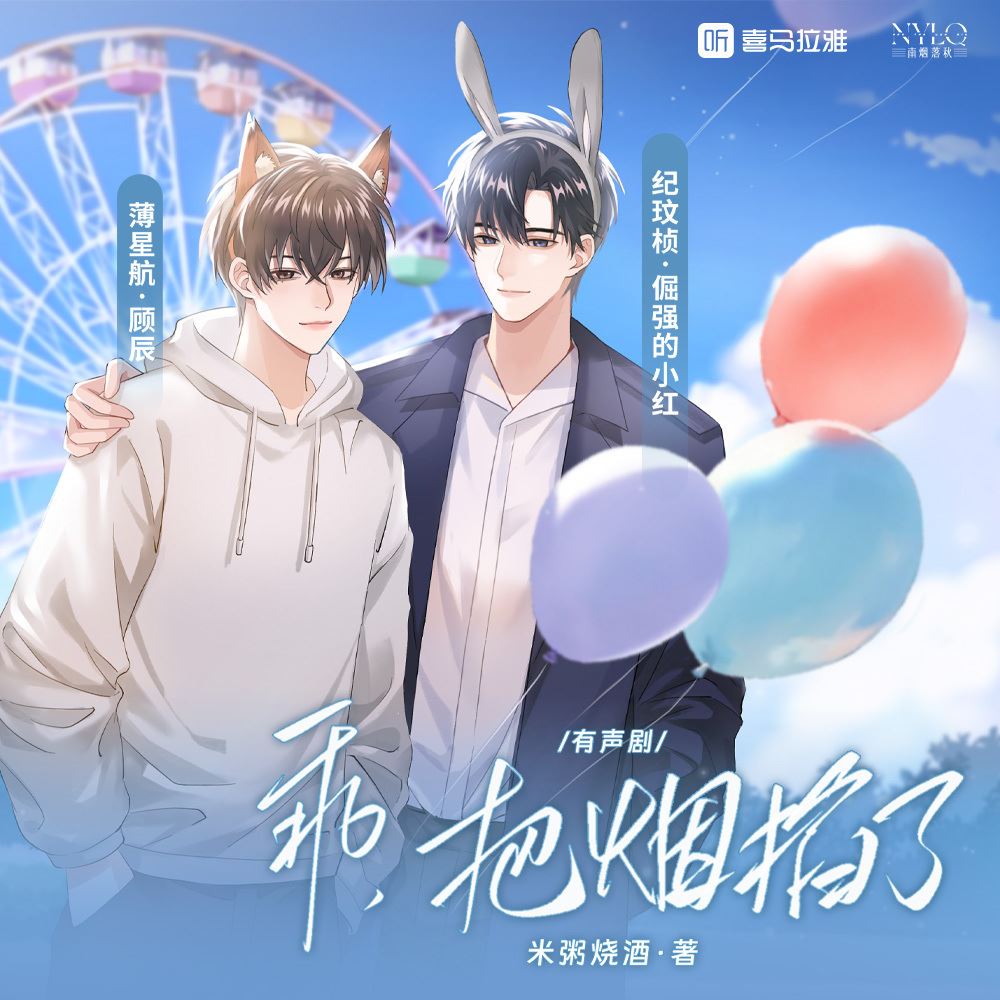
... Read More
Okay can we just talk about how Doctor Ji handles his emotions because this man is a whole project. The text literally says he would 'disdainfully snort and walk away' from anyone else but here he is, bent down helping Bo Xinghang with his shoe laces with one hand because the other is injured. That is some next-level softness disguised as efficiency. He adjusts his coat wrinkles afterwards like nothing happened—maintaining the elegant facade while internally absolutely unraveling. And the Samoyed dog comparison?! I literally laughed out loud. This man shows up two hours early to pick someone up from school, checks his phone constantly, heart skips a beat when he sees the gauze, and then tries to play it cool like 'maybe something in the fridge went bad.' Bro. The fridge has nothing to do with your jealousy. The fact that Bo Xinghang notices the dark circles under Doctor Ji's eyes and reaches out to touch them gently—while Doctor Ji was dozing waiting up for him—this is the kind of mutual care that doesn't need grand declarations. It's in the staying up late, the rebandaging, the silence that isn't empty. Also side note: Doctor Ji biting his own lip 'as if in punishment' when Bo Xinghang mentions the sports rep again?? I need a minute.
... Read More
Okay so let me just talk about Ji Wenzhen for a second because THIS MAN is holding onto his sanity by a thread and I am OBSESSED with how the author writes him. Here's this guy, 26, a doctor, apparently known for being a gentleman his whole life, and the text literally says 'His 26 years of being a gentleman ended at that moment.' He swears. He throws away ALL his manners because a drunk boy he can't stop thinking about kisses him in public. And his internal monologue?? 'He had even started to imagine kissing the young man passionately, right there in front of everyone at this noisy barbecue restaurant.' LIKE SIR. YOU WERE ALREADY IMAGINING IT. YOU WERE NOT AS CLEAN AS YOU THOUGHT YOU WERE. But then the most devastating part—right after he gives in and lets himself have that moment—the text goes: 'The 8-year age difference was like an insurmountable chasm. Although the other side of the chasm felt like a spring breeze, the gap was so deep that even a light step would lead to a fall into the abyss.' And I'm sitting here like… that is the most poetic way to say 'I want you but I can't have you' I have EVER read. A spring breeze on the other side of an abyss. That's not just attraction, that's longing with consequences attached. And then Bo Xinghang—this kid who can't even remember what he did after five beers—wakes up at Ji Wenzhen's place like it's normal. Like he's done this before. 'This house, where he had stayed countless times before.' COUNTLESS TIMES. And Ji Wenzhen leaves him breakfast with a handwritten note. 'Eat your food without fuss as soon as you get up. If it gets cold, heat it in the microwave. Don't eat it cold.' This man is caring for a drunk teenager who showed up at his door and the teenager is THINKING 'if you keep doing this, I'll suspect that you like me.' I need both of them to just communicate instead of orbiting each other like gravitational bodies about to collide.

Leave a comment

You must be logged in to leave comments. or
