Be Good, Put Out the Cigarette - Reviews

Be Good, Put Out the Cigarette
+Add to Custom List
Sort
Add review
... Read More
I need everyone to understand that the chin bump scene is the most aggressively casual romantic moment I have ever encountered and I am HERE FOR IT. Let me set the scene for you: It's 1 AM. Doctor Ji has just emerged from hours of surgery, water still dripping from his hair into his collar, looking like a Renaissance painting of exhaustion. He leans in, gets right in Bo Xinghang's personal space, and asks 'Come home with me?' in this voice that the author describes as having 'a hint of coaxing.' Not commanding. Not pushing. Coaxing. And Bo Xinghang jerks his head up and SMASHES his forehead into Ji's CHIN. This is the most painfully human thing that could happen. Two people standing close enough to feel each other's breath, and instead of some cinematic moment, one of them accidentally headbutts the other. Ji grunts in pain. Bo Xinghang is probably internally screaming. But then Ji REPEATS the question and Bo Xinghang says 'Okay.' Not 'okay' as in 'sure whatever.' Not 'okay' as in 'I guess.' Just 'okay.' As in, he meant it. As in, he wasn't going to say no. The fact that Bo Xinghang's face gets warm, his eyebrows turn red, and he swallows instinctively—this is a person who has never had to think about what to do in a moment like this, and somehow his body knows exactly what to do even if his mouth is too slow to catch up. Meanwhile Ji is standing there, still sore from the chin collision, still exhausted, but he made this offer anyway. That's the kind of courage that doesn't announce itself with speeches. That's the kind of moment that makes you reread a paragraph three times to process what just happened.
... Read More
I have to address the pacing of these final chapters because they're doing something really interesting structurally. We go from what feels like a climactic injury/recovery moment directly into exam prep, then the exam itself, then a tender goodbye. No epic final battle. No dramatic revelation. Just… life continuing. And honestly? That's brave writing. Most authors would have bolted in more conflict here. More drama. But this author trusts the reader to find meaning in the mundane. The pencil-case-waving scene. The homework checks. The lunch break at a clean restaurant. These tiny domestic details carry enormous emotional weight because we've been through everything else with these characters. The exam itself functions as both a structural device and a pacing valve—it gives the narrative a clear timeline with built-in tension (will he pass? will he be okay?) while also serving as a natural ending point. It's clever because the stakes feel real without needing melodrama. One small critique: the transition from the intimate recovery scenes to the classroom environment felt slightly rushed. We barely get to feel Bo Xinghang's return to normalcy before he's suddenly taking exams. But then again, this is an ending, not a middle, and endings are supposed to compress time. The author knew when to stop. The pacing feels like a exhale after holding your breath for 190 chapters. That's the right feeling for a finale.
... Read More
'You never were.' Four words. That's it. That's all it takes to completely dismantle Xu Yi's joke about being his 'most beloved' and establish everything about their dynamic in one go. Bo Xinghang's voice in these chapters is absolutely perfect—he's dry, he's direct, he doesn't suffer fools, but there's clearly warmth underneath all that bluntness. The dialogue throughout this batch reads so naturally. Xu Yi's frantic energy coming through in the voice messages, the chaotic background noise Bo Xinghang can't quite make out—that's such a specific, lived-in detail. And then at the BBQ: 'Hang-ge, don't forget me.' The way Xu Yi stammers through his drunken confession about Bo Xinghang going to Beicheng, the awkward push-away, the rapid sobering when Doctor Ji appears—it all feels like actual humans talking, not characters serving the plot. The author's narrative voice also has this wonderful tone that shifts seamlessly between warm nostalgia and sharp humor. When Bo Xinghang says 'I'm warning you, don't suddenly hug me again. Doctor Ji already saw you hugging me earlier. Keep your distance'—the casual cruelty mixed with genuine care is chef's kiss. And Xu Yi's response 'Hang-ge! Am I not your most beloved anymore?!' made me literally laugh out loud. These two have chemistry that transcends the romantic subplot and creates something genuinely special on the page.
... Read More
The pacing here is almost reckless in the best way. You go from Bo Xinghang squatting in a stairwell having what is basically a panic attack—smoking, head throbbing, mind overwhelmed—to sleeping peacefully with someone holding him, and then WAKING UP TO 13 MISSED CALLS from his teacher. Of COURSE the author drops that bomb right after we've settled into this warm, calm scene. I literally gasped out loud. The transition from the emotional climax (the kiss in the dark office) to the domestic tenderness (getting dressed, lying down together) is handled so smoothly you barely notice the shift. But then the teacher calls and suddenly we're back in 'real life' pressure. And Bo Xinghang can't even pay attention during the conversation because he's still wrapped up in Doctor Ji's scent and mood. The pacing mirrors his mental state—calm on the surface, but everything still slightly off-kilter. And that ending! The chapter cuts off right as he's remembering that moment of being found. 'Suddenly, he didn't fee...' I'm still processing this. The author knows exactly when to pull the rug out.
... Read More
There's this incredible symbolism running through the scent imagery that I can't stop thinking about. Bo Xinghang carries tobacco on his clothes—from smoking in the stairwell when he was falling apart. Doctor Ji carries this subtle cologne, something clean and deliberate. When Bo Xinghang wakes up wearing Doctor Ji's clothes, the cologne overwhelms the cigarette smoke. It's like the author is showing us transformation through smell alone. And the cologne isn't just 'nice smell'—it's described as something Doctor Ji specifically chooses, something he sprays on his clothes. This is a man who takes care of himself, who maintains control even in chaos. Bo Xinghang, who smokes to numb himself, who lets his body go unkempt during crises... he's being enveloped by structure and calm without realizing it. The white t-shirt is another symbol worth noting. It's loose, borrowed, belonging to someone else but now worn by him. He wakes up in it, surrounded by that scent, and his mood actually calms. The shirt becomes this tangible representation of Doctor Ji's presence even when he's gone. It's not romantic in a cheesy way—it's practical, domestic, deeply intimate in a way that says more than any grand gesture could.
... Read More
I need to talk about how the pacing in this section is doing ME. Because it starts so casually and then just... pivots hard. We open with domestic normalcy. Dishwashing. A boy curled on a sofa. Casual conversation that immediately becomes serious. The author doesn't rush this - they let the awkwardness breathe. Bo Xinghang rehearsing what to say, going blank, fumbling it. That pause where they just look at each other in silence? That's one of those moments where the author has TRUST in the reader to sit with discomfort. So many writers would fill that silence with dialogue. This one doesn't. They just let it hang. Then the next day transition - clean, simple, no fuss. We're at the parent-teacher meeting and the pacing picks up with the parent chatter. This is brilliant scene-setting through dialogue alone - we learn everything about the pressure-cooker environment without a single exposition dump. The parents complaining about their kids not studying, scores not being shared, the universal panic of Chinese educational culture. It's funny and terrifying at the same time. The peeping scene with Xu Yi is pure comedic relief. The first-come-first-served policy joke. The voice from behind that sounds "oddly pleasant." These are tiny beats that give you room to breathe before the big moment hits. And then Doctor Ji says "I'm here for Bo Xinghang's parent-teacher meeting." The entire pacing of that reveal is perfect - Xu Yi's confusion, the explanation, the dawning realization. It's almost comedic in its own way, which makes the emotional impact HITTER when Bo Xinghang actually sees him through the window. The office scene at the end is where the pacing slows right back down. All the parents leave, the students go back to self-study, and we're left with just Doctor Ji and the teacher looking at those zeros. The headache moment. The question "Have Bo Xinghang's grades always been like this?" That's the emotional bomb detonating quietly. What I love is how the author oscillates between high energy (the peeping, the girls running over) and absolute stillness (the sofa scene, the office conversation). It creates this rhythm that feels like breathing.
... Read More
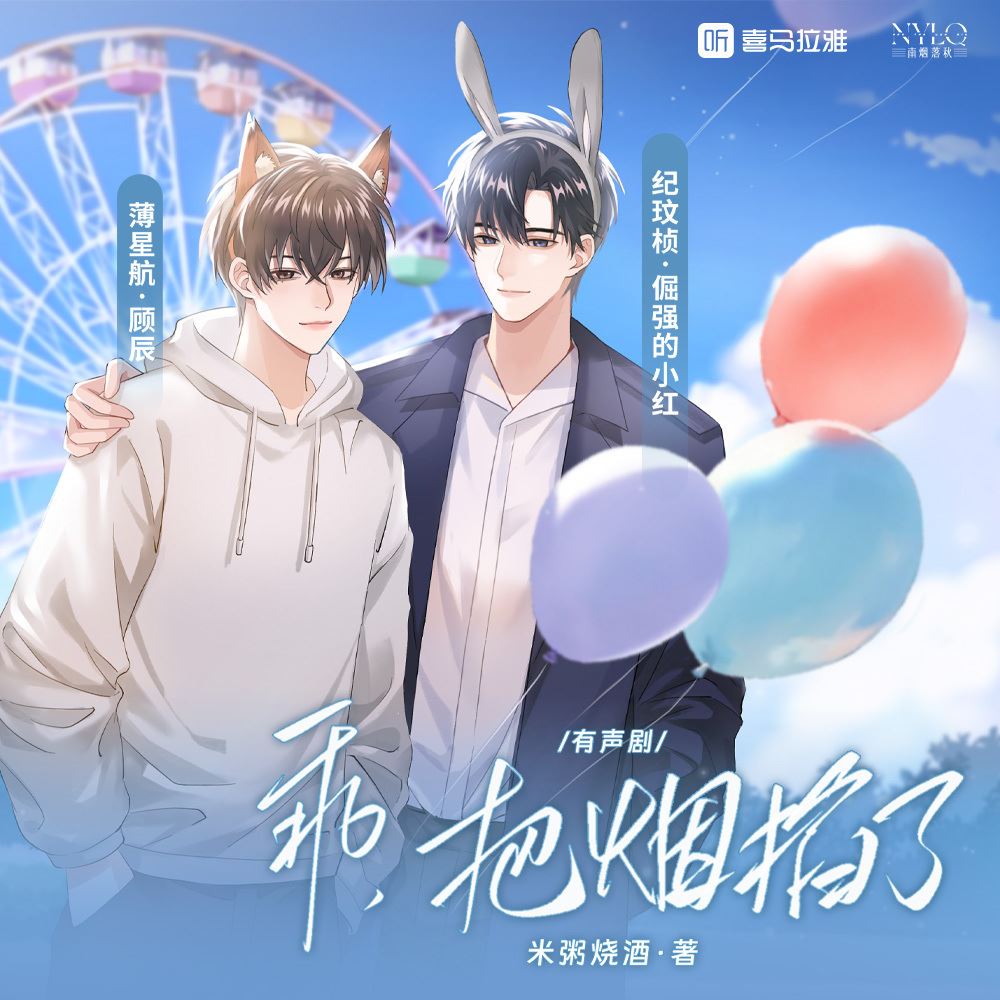
OK so let's talk about the fight, because this is where everything in Bo Xinghang's life COLLIDES. The setup is brutal in its simplicity: a boy hears gossip about Bo Xinghang's family, runs into him in the corridor, and decides to stir up trouble. But this isn't a random school bully encounter. The reader KNOWS what's in that gossip because we saw the forum post: "BXH's dad is gay, fell in love with a disabled man, and still married BXH's mom, resulting in such a wuss." These boys aren't just teasing. They're weaponizing his father's suicide, his father's sexuality, his family structure — all of it — as ammunition. And Bo Xinghang's reaction isn't just anger. It's something more primal. "Despite being slim, Bo Xinghang fought with unusual ferocity." Unusual. The text specifically flags this. People have seen him before — the forum labeled him a bully — but nobody had actually SEEN him fight. So what does that mean? Has he been holding back this entire time? Or is this the first time someone pushed him past the point of no return? "He lifted his knee and thrust it hard into the other person's abdomen." This isn't a schoolyard scuffle. This is violence with intent. And when the guy hits the ground, "Bo Xinghang gave him no chance to recover. With his eyes now completely red, he approached and lifted his foot—" He was going to KEEP going. The stakes here aren't suspension or detention — they're criminal charges, or expulsion, or both. And if that happened, who would be left for Ji Wenzhen? Because that's the real stakes, isn't it? Bo Xinghang has nobody. His mother is gone, his father is dead, and his only family is a doctor who hasn't slept in two weeks. If Bo Xinghang gets expelled or arrested or hurt, Ji Wenzhen loses his brother too. The entire precarious structure of their relationship hangs on this one moment. And then Ji Wenzhen appears. "Before he could turn around, he was embraced by a familiar scent." The embrace stops the violence, but it also exposes them. "Seeing them together, no one would believe they were brothers; they'd assume they had just fought." That line is devastating. Their relationship is so illegible to the world that protection looks like aggression. Affection looks like assault. And Bo Xinghang knows this — "Bo Xinghang had always been like this, always on his own" — which is exactly why the embrace is both salvation and torment. The homeroom teacher's panic, the sweating, the urgent phone call — the entire school system is mobilizing around this conflict, but none of them understand what's actually happening. Only Doctor Ji knows. Only Doctor Ji sees past the red eyes. And Bo Xinghang? He just sinks into the embrace and thinks about a rooftop he hasn't been able to escape since he was fifteen.
... Read More
Let me talk about the conflict and stakes in this sequence because the author is playing some serious games with information withholding and I am HERE FOR IT. First layer of conflict: Bo Xinghang has apparently done something that “caused panic among many students” and is “detrimental to their studies at this critical stage.” Do you know what that is? NO. The author refuses to tell us. We get context—we get the principal wanting him to apologize on stage—we get the homeroom teacher saying he tried to downplay the situation but the principal is unusually persistent—but we never learn what Bo Xinghang actually did. This is brilliant suspense construction because every time we think we're getting closer to understanding the stakes, the author pulls back. Instead of explaining the incident, we get Ji Wenzhen's text messages. I'm switching shifts. I'll accompany you to the office today. Wait. I'm running late. I'll be there soon. The stakes here shift from the school drama layer to something more personal, more intimate. What is “the office” referring to? Ji's hospital office? Bo Xinghang's school office? Both? The ambiguity is deliberate. Second layer: the principal wants Bo Xinghang to publicly apologize. This is social conflict, institutional pressure, the weight of authority demanding submission. But Bo Xinghang's response is fascinating—he feebly lifts his eyelids, gives a faint smile, says “Sure, it's nothing. What grievances could I possibly have?” This is not submission. This is performance. He's playing along while clearly harboring something underneath. And then the phone vibrates. Doctor Ji's message arrives at exactly the wrong moment—just as the principal has “finally forgotten about needing testimony.” The timing is too coincidental. “Doctor Ji conveniently managed to free up his schedule.” Then Ji's words “completely dashed his hopes.” Why? Because Ji says he's running late. Because the student's moment of potential rescue is delayed. The stakes escalate from institutional conflict to interpersonal tension. Who is Bo Xinghang trying to impress? Who is he trying to prove something to? We don't know, and the author won't tell us. Third layer: the physical confrontation across the crowd. Bo Xinghang walks onto the stage, senses something, looks toward the entrance, and their eyes meet. The author gives us this moment of visual connection—two people locking eyes across four thousand students. But they're too far apart to hear. So Bo Xinghang speaks again, impatiently repeating himself, and Ji finally reads his lips: “I want to pull off something big.” PULL OFF SOMETHING BIG. This is the stakes revelation. Whatever conflict Bo Xinghang is facing—whatever incident caused the panic, whatever he needs to apologize for—he's not backing down. He's planning something. He's going to do something dramatic, and he wants Ji there to witness it. And then the pouting, the cute act, “I'm begging you,” and Ji giving in. The external conflict (the principal, the apology, the institution) collides with the internal conflict (what does Bo Xinghang want to prove? Who is he doing this for? What happened?) and the resolution comes not through explanation but through connection. Ji shows up. That's it. That's the stake. That's the answer. The author makes us care about outcomes by refusing to explain the problem clearly, forcing us to invest emotionally in the relationship between these two characters rather than in the plot mechanics. I'm obsessed.
... Read More
I cannot stop laughing at this dialogue exchange. It is pure gold. "Lend me a light, and I'll tell you." "I don't smoke." "Huh? Is there anyone who doesn't smoke these days? Are you even human?" Okay first of all — the voice here is so distinct between the two characters. Bo Xinghang is all swagger and deflection even when he's physically broken. He's lying on the bathroom floor, can barely stand, and his first instinct is to make a joke. "Are we that close?" when Ji Wenzhen asks if his head hurts. He can't just admit weakness. The dialogue carries so much character. And then Ji Wenzhen's response — he literally takes the cigarette from Bo Xinghang's mouth. No words needed. That's such a powerful moment told through action and dialogue combined. The author doesn't over-explain it. It just happens and it's electric. Also the side characters have totally different voices. The loud man at the hospital: "A miracle worker, a living Buddha!" — he's shouting it like he's at a market, completely oblivious. And then Qian Qian, this tiny eight-year-old with phoenix eyes who delivers: "So old, yet still lacking manners." Her voice has this sharp edge, this childish tone but adult-level disdain. And the man just... folds. "...My fault." The dialogue in this batch is doing SO much work. It's not just moving the story forward, it's building worlds, revealing class differences, power dynamics, and character relationships. The author clearly knows their characters inside out.
... Read More
The sensory details in this batch are *immaculate*. Let me just start with the restaurant itself—a small joint run by an old man from the northeast, six or seven tables, generous portions, low prices, kind owner throwing in extra dishes. In maybe three paragraphs, the author built a place that feels completely real and lived-in. I can smell the BBQ grease, hear the clatter of dishes, feel the cramped warmth of a place where everybody knows everybody. And the fact that Xu Yi organized a VOTE to decide where to eat? That's the kind of specific, quirky worldbuilding detail that makes you believe these kids actually exist. Then there's the night scene at the school gate. 'Under the moonlight and streetlights, the two young men hugged amidst the crowd, their slurred words carrying the purest friendship and conveying the most sincere feelings.' I literally got chills reading that. The contrast between the crowded public setting and the intimate vulnerability of that moment—Xu Yi holding back, trying to express something through the hug—this is cinematic writing. The grove scene is equally vivid. Shadows obscuring Xu Yi's expression, the sound of approaching footsteps, the click of a lighter, the ash falling. The author knows exactly which details to include and which to leave out, creating atmosphere through suggestion rather than overdescription. And that final image of the empty classroom—desks and chairs, scribbles on walls, the ghost of a year that's about to become memory. Perfection.
... Read More
This might sound like a small detail but I can't stop thinking about it. Ji grabs Xinghang's wrist, the joints are thin and white, and the grip leaves red marks. He holds on for a few seconds then releases, afraid of hurting him. Those red marks are basically the thesis statement of their entire relationship written in one sentence. Xinghang's body is seemingly fragile—he looks like someone who couldn't hurt a fly—but it's exactly that fragility that makes Ji hold back. And Xinghang, who fights people ruthlessly, who handles bars and crowds with ease, who stands up to Doctor Ji when nobody else would... he's the one who gets held back, gently, deliberately. The marks are temporary but the meaning isn't. Ji could crush that wrist if he wanted to. He chooses not to. That's not weakness, that's choice, and choice is so much more meaningful than restraint forced by circumstances. Later, Xinghang holds Ji's hand instead of supporting his weight, and the grip reverses—they're equal now. Both giving, both receiving. The red marks fade but the handshake stays. And then we get the Qingming Festival and the ear piercing, which feels like another kind of mark—permanent this time, chosen by Xinghang himself. Not someone else pressing into him, but him marking his own body. There's something deeply symbolic about that progression.
... Read More
The stakes in this chapter aren't established through exposition. They're shown through what characters refuse to fight for. Take the exam scene. This is the first mock exam of final year—the kind of test that determines university placement, future prospects, parental approval. The stakes should be enormous. And yet Bo Xinghang “had drunk too much the previous night” and slept through it. He didn't study. He didn't care. The teacher is furious because the system demands performance. Bo Xinghang is indifferent because he's already decided the system doesn't apply to him. That disconnect—between institutional stakes and personal apathy—is the first conflict, and it's never resolved. It just sits there, unresolved, making you wonder why he doesn't care. But the real conflict arrives with the man in the suit. And it's not a dramatic confrontation. It's smaller, quieter, and infinitely more dangerous. This man is clearly not from Bo Xinghang's world. His tailored suit, his calm authority, his phone conversation about a pickup that never arrives—he belongs to a different economy, a different lifestyle. And he notices Bo Xinghang. Not as a threat, not as a nuisance, but as something worth looking at. The conflict here isn't about who wins an argument. It's about what happens when two people from opposite sides of a social line make eye contact and neither looks away. What do they stand to lose? Bo Xinghang stands to lose his anonymity. He's comfortable being invisible—or at least, as invisible as a rebellious student can be. The man in the suit stands to lose his composure. He's used to controlling situations, but Bo Xinghang's refusal to answer the question about the bar's location is a small act of defiance that the man can't override. He asks. He waits. He gets a lie. And he accepts it with a nod and a “Mm, thanks.” That acceptance is more unsettling than anger would have been. The stakes aren't about exams or jobs or money. They're about recognition. When the man sees Bo Xinghang, the boy stops being background noise in someone else's story. He becomes visible. And visibility is dangerous for someone who's spent his life refusing to be seen. The chapter ends on a question that seems trivial—“Kid, is this June Bar?”—but it's the most loaded question in the book. Because the answer doesn't matter. What matters is that the man asked. What matters is that Bo Xinghang lied. What matters is that both of them understood the game being played.

Leave a comment

You must be logged in to leave comments. or
