Be Good, Put Out the Cigarette - Reviews

Be Good, Put Out the Cigarette
+Add to Custom List
Sort
Add review
... Read More
Nighttime belonged to the night market. The endless street was packed with people. The vendors' shouts, the murmur of pedestrians, the crisp clinking of beer bottles, and the sizzle of meat on the grill all mingled together, creating a strangely comforting ambiance. I need to talk about this scene. It's not just backdrop; it's practically a character itself. The author drops us right into the sensory overload: sounds, smells, lights. And then we see Ji Wenzhen, standing at the entrance, unsure. His impeccable upbringing has never exposed him to a night market. He's out of his depth, but he stays because Bo Xinghang is there. Meanwhile, Bo Xinghang is bursting with excitement—he's busy with work most nights but hasn't been to the night market in a long time, and now he's like a kid in a candy store. The setting mirrors his emotional state: chaotic, vibrant, alive. It's also where the past comes knocking. Zhang Jian appears in this noisy space, shouting over the sizzle and clinks. The colorful lights make Bo Xinghang's furious expression clearer. Everything here is heightened. I love how the author uses environment to amplify tension. The night market is overwhelming, just like Bo Xinghang's feelings. But it's also familiar to him; it's his comfort zone. And Ji, despite his discomfort, enters it anyway. That's a small but powerful gesture of affection. The scene also contrasts with the flashback: the lone room where Bo Xinghang smokes, coughing, tears in his eyes. Then vs. now: alone in a dim room vs. surrounded by people but with someone holding his hand. The environment shifts from isolation to connection. And the details—the waitress's enthusiastic “Welcome!”, the scorching hot palm on Ji's wrist, the coolness when Bo Xinghang releases him. All of it serves the story. The noise provides cover for their private moment; the crowd allows Zhang Jian to be dramatic without drawing too much attention; the flashing lights create a cinematic quality. This setting doesn't just host the action; it shapes it. I could sit here all day describing the sizzle of meat and the clinking bottles. It's just so alive.
... Read More
Okay so here's the thing—this whole sequence from the stairwell moment through the hospital visit and back to the office is doing a LOT of heavy lifting for the plot. Bo Xinghang's breakdown isn't just random drama; it's the culmination of everything we've seen him carrying alone for years. And Doctor Ji showing up right when he needed him? That's not coincidence writing, that's character writing. The author has been building toward this moment where Bo Xinghang finally lets someone in, and the payoff is quiet but massive. What really got me was the structure around Grandpa Ji's surgery. You have Bo Xinghang waiting, powerless, seeing Nan Ming through glass, feeling that desperate need he can't name until he sees Doctor Ji. Then the surgery succeeds, and instead of a big celebratory scene, you get them in a dim office with heartbeats louder than any dialogue. That's a bold choice. The plot doesn't need fireworks here—it needs that stillness. Bo Xinghang's inability to articulate everything he feels ('He wanted to ask about his grandmother's surgery... but all those emotions condensed into a single kiss') tells us more than any dialogue could. This story trusts its readers enough to leave space.
... Read More
"You were wrong." Ji Wenzhen cupped his chin, pulling him closer. "If you smoke again, I'll kiss you." "…" I NEED PEOPLE to understand what makes this dialogue so GOOD. It starts as a SCOLD — Doctor Ji catching him smoking, the disciplinary energy is there. Then the punchline hits and it COMPLETELY subverts the power dynamic. It's not a threat, it's a TEMPTATION. And Bo's response — literally just silence, then wrapping his arms around Ji's neck and kissing him — shows that he understood the offer immediately. Xu Yi's voice is also perfectly distinct. "Hang-ge, could you two not flaunt your love right in front of me?!" — he's dramatic, he's loud, he's the comic relief who also happens to be genuinely observant. And then later: "Hang-ge! The exam results are out!" — pure survival instinct after being told to hurry up. This man has learned. The customer interaction is also gold: "Can I add you on WeChat?" "I don't have WeChat." Dude. NO ONE. Just... smooth rejection. And then Xu Yi immediately calling him out: "You can come up with such a weak excuse and still say it out loud." Bo's response: "If it works, that's all that matters." This is a man who has clearly dealt with THIS MANY confessions and has developed OPERATIONAL efficiency. The dialogue between Bo and Ji Wenzhen about the law school dream is quieter but no less powerful — just two people who TRUST each other enough to share goals without judgment.
... Read More
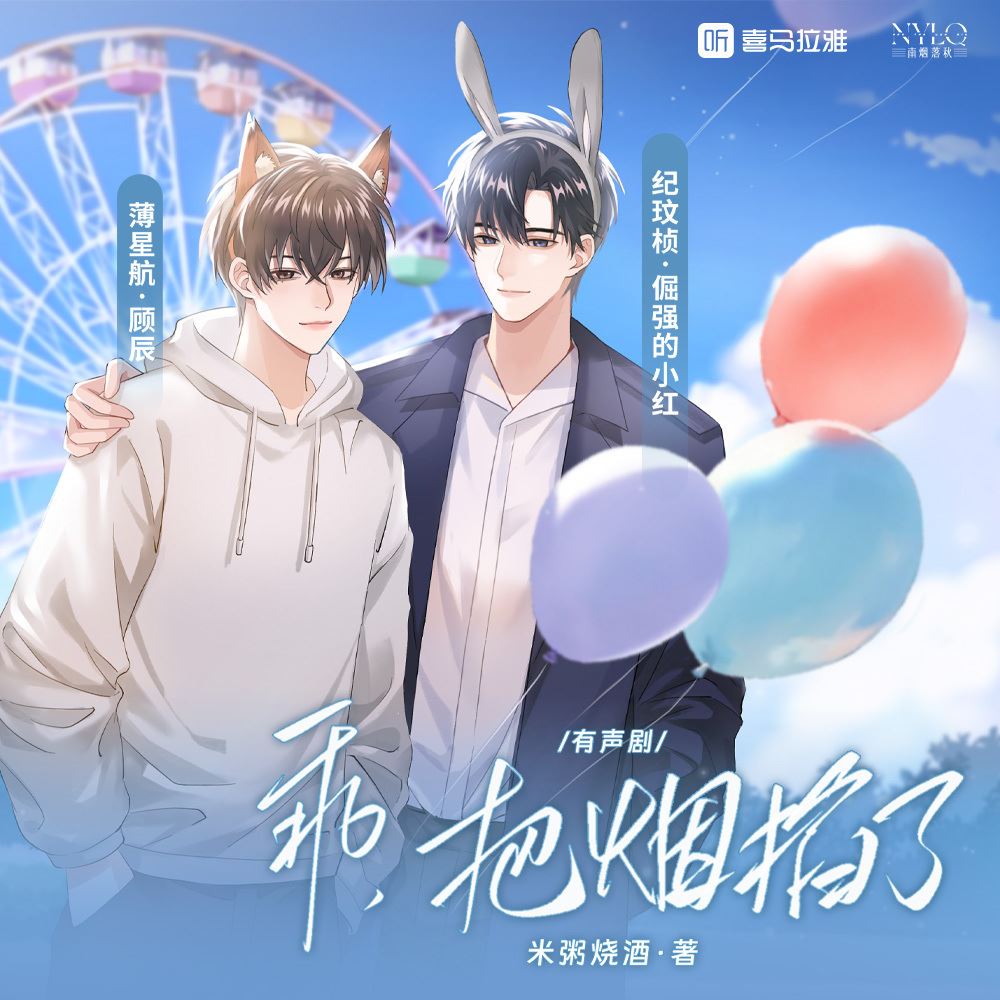
"Actually, I—" And then *pop*. Just like that, the balloon of romantic tension deflates. Bo Xinghang is about to say something—maybe clear the air, maybe confess—and Zhang Jian shows up with his buzz cut and weird energy to wreck the whole mood. I love this plot move. It's so realistic how life interrupts our carefully constructed moments. But here's the thing: this interruption isn't just a cheap device. It's the catalyst that forces Bo Xinghang to confront everything he's been avoiding. The flashback to his middle school graduation, the smoking, the diary entry—all of it spills out in one brutal paragraph. And then back to the present, where Ji Wenzhen flicks his forehead and *snap*, he's grounded again. The hug that follows? Perfect narrative payoff. After all that hesitation, all that internal turmoil, Bo Xinghang finally acts. The plot here is a masterclass in using external conflict to ignite internal resolution. Zhang Jian represents the past that Bo Xinghang thought he'd buried, but he's not the same kid anymore. He's standing next to Doctor Ji, and when Zhang Jian mentions his dad, Bo Xinghang doesn't crumble—he just wants quiet. He protects Ji, pulls him away. The tension builds from awkward small talk to explosive confrontation to tender release. And the pacing? Flawless. I read this part twice because the emotional shift happens so smoothly. One moment he's spiraling into memory, the next he's hugging Ji like his life depends on it. That's good plotting. It doesn't rely on dramatic events; it relies on character decisions. And Bo Xinghang's decision to hug Ji is the climax of this entire arc. It's small, quiet, and utterly devastating. What really struck me is how the author weaves two timelines so seamlessly. The night market scene is present-tense anxiety, while the flashback is past-tense trauma, and they mirror each other: both involve BXH feeling trapped, both involve smoking as a coping mechanism, both involve isolation. But now BXH isn't alone; he has Ji. The narrative arc completes itself in that hug. Bo Xinghang goes from “I don't know what I'm feeling” to “I truly like Doctor Ji.” It's a complete emotional journey packed into one chapter. I'm obsessed with how plot serves character here. Every event is designed to reveal something about BXH's heart. Even Zhang Jian's appearance isn't just about backstory; it's about showing how far BXH has come. He used to hide, to smoke alone, to write filthy diary entries. Now he stands his ground, tells Zhang Jian to shut up, and physically reaches for comfort. That's growth. That's plot doing its job.
... Read More
Okay I have to address the dialogue in this section because it is genuinely one of the funniest and most sharp things I've read in a while. The English teacher's lines are immaculate. Every single one. “It's not that he can't do anything about you; he's just given up on you!” I laughed out loud. That is a diss so clean it should be framed. And then “Fighting outside of school isn't a big deal?! As a teacher, you can't cover for the students.” She says this while having already forwarded the forum post to the principal. The hypocrisy is beautiful. Meanwhile, the homeroom teacher's voice is this exhausted, wheezing counterpoint—“Harmony brings wealth, harmony brings wealth!” he yells while running down the corridor, and then five seconds later he's bent over gasping for air. The author writes his dialogue like he's performing it, which is exactly the point. These two teachers are comedic foils designed to highlight how broken the system is. And then Bo Xinghang's internal monologue cuts through everything: “Do you think we want to argue?” and “What did I do to you?” These are the lines that ground the scene. He's not participating. He's observing. His silence is the loudest dialogue in the room. The author's voice here is perfectly calibrated—deadpan narration punctuated by bursts of almost theatrical confrontation, with Bo Xinghang's sardonic inner voice acting as the pressure release valve. Nobody speaks truth except the person nobody listens to.
... Read More
The stakes in these chapters operate on three levels and they're all climbing simultaneously. Internal conflict: Xinghang vs his own hatred. He spent years carrying this anger toward his father's suicide, and he's actively working to release it. The cigarette craving, the flash of irritation when his mother calls, the moment he almost says something cruel—these are the cracks in his healing. The conflict isn't whether he'll succeed (he clearly is succeeding), it's whether the past will keep finding ways to reach him. And it does. Every time. External conflict: The mother. She's not a villain in the traditional sense, but she's absolutely an antagonist. Her voice is 'tainted by the raspiness of countless cigarettes and endless shouting.' She brings up Nan Ming not out of concern but as a weapon—'How pathetic… Serves him right.' She's trying to pull Xinghang back into the old family drama, and her final question 'Don't you hate him?' is a direct attack on everything Xinghang has worked to become. Relational stakes: The exam is looming, the separation is approaching, and Xinghang is simultaneously trying to maintain his studies, protect his relationship with Doctor Ji, and process a childhood trauma that keeps resurfacing. He wants to spend time with Doctor Ji. He knows he needs to study. He proposes waiting for Doctor Ji after work—a compromise that Doctor Ji seems reluctant to accept. What happens when these pressures collide? Xinghang says 'Let it go' to his mother. But can he really let go when the people around him keep pulling at the threads?
... Read More
"A reed can sail." Those four words — and the entire theme of the passage collapses into this single, beautiful metaphor. Throughout these chapters, I kept noticing how water imagery appears everywhere. Not explicitly, but in the emotional currents between characters. Ji Wenzhen describing Bo Xinghang's potential as a reed navigating challenges, the idea that "everything is just a ripple on the sea" — this is about finding your footing when the world feels overwhelming. Bo Xinghang is adrift (zero grades, rebellion, confusion about his feelings) and Doctor Ji is trying to be the shore he can sail toward. The practice exams themselves are symbolic too. They represent everything Bo Xinghang is failing at — academic expectations, societal pressure, the weight of someone else's hopes. But Ji Wenzhen buying them isn't about punishment. It's about investment. It's saying "I see potential in you, I believe you can do better, and I'm willing to put in the work with you." The buzz cut is another loaded symbol. Bo Xinghang undergoes a physical transformation that makes him look "fierce and wild" on the outside, but internally he's become this gentle, drooping-eyed puppy. The exterior doesn't match the interior — and that's exactly who he is. Rebellious on the surface, vulnerable underneath, desperate to be seen but terrified of what happens if he's actually seen. And the age boundary — that's the central theme, isn't it? Everything about this relationship is built on the tension between desire and restraint, between what feels right and what IS right. The reed can sail, yes — but it needs the right conditions, the right timing. Not now. That's what Ji Wenzhen keeps telling himself. And the tragedy is that we know, as readers, that "not now" might become "too late."
... Read More
That moment when Ji Wenzhen says 'Be good, go to school'—I literally stopped reading and just stared at the screen. Because it wasn't just words. It was tone, it was intention, it was the softest surrender either of them has offered. Bo Xinghang's internal reaction says it all: 'He had never been coaxed like this before. It felt like throwing punches at a soft pillow—completely ineffective and without any real impact.' Think about that metaphor. This kid who presents himself as a school bully, who swears freely, who yells across walls at midnight—he has no defense against genuine tenderness. And Ji Wenzhen, who has presumably built walls of his own, just lets one slip without even realizing what he's doing. The breakfast scene is so domestic it almost hurts. Porridge, toast, eggs—simple, thoughtful, the kind of care that doesn't come with grand declarations but speaks louder than any dramatic confession ever could. And Bo Xinghang eating it, commenting on how good it is while simultaneously trying to maintain this tough-guy persona? It's adorable and heartbreaking in equal measure. He bargains with Ji Wenzhen, makes this ridiculous condition about coming to the office, not because he actually needs help but because he wants an excuse to spend more time with this person who just quietly showed he cares. These emotional beats are landing so well.
... Read More
Can we please talk about the MOST understated emotional moment in this entire chapter? Bo Xinghang is out front smoking, probably stressed or just existing in that space between his bad day and whatever he's dealing with internally. Then his phone buzzes. Meng-jie texts him: Grandma's health is improving, she might be discharged soon, come visit before 9 PM. And that's it. Three messages. No dramatic music, no narrator telling us how much this means. Just: 'Reading the message, his mood, which had been somewhat low, lifted a little. Bo Xinghang relaxed his shoulders, and a smile unconsciously appeared at the corners of his mouth.' I literally felt this. That sudden softening. The way his entire body language shifts from tense to relaxed, from defensive to open. This man who then proceeds to go inside and basically pick a fight with a handsome doctor over wine — his armor cracked for exactly five seconds when he thought about his grandma. It's remarkable how the author uses this tiny moment to deepen Bo Xinghang without a single paragraph of explanation. We don't need to know why his grandma matters so much, or what his family situation looks like. The text says 'smile unconsciously appeared' and that's enough. It's the kind of emotional beat that hits harder than any dramatic confession because it's real — family love isn't always loud, sometimes it's just a WeChat message about hospital discharge timelines. And then immediately after? He goes back to being provocative and chaotic. That contrast says everything about who this character is — someone who holds onto softness privately and wears defiance publicly.
... Read More
Okay so I need to talk about this moment where Doctor Ji literally takes the cigarette out of Bo Xinghang's mouth. Like—what kind of social contract just got rewritten right there? The text says "Bo Xinghang was about to flare up at having his cigarette taken for the second time" and honestly that's the funniest understatement I've read all year. This isn't even the first time! There's history here, folks. And then the way the plot pivots from this weirdly intimate car ride to complete medical emergency chaos is chef's kiss. One minute they're just two guys in a warmed-up car, the next Nurse Zhang is sprinting around screaming about a car accident victim. The pacing here is actually really smart—the hospital staff stares at Bo Xinghang wearing Doctor Ji's coat, creating this awkward visual that makes everyone assume something, which then triggers the whole "Sister-in-law" misunderstanding that drives the rest of the scene. What I loved is how the plot doesn't just throw the accident in randomly. Remember earlier when Doctor Ji noticed Bo Xinghang was "pale from the cold" and gave him the coat? That same concern becomes ironic later when we learn the patient was hit because of icy roads and bad visibility. The cold weather that brought these two together also caused the emergency. I did not see that coming when I first read it. Also the structure of Doctor Ji doing back-to-back surgeries while Bo Xinghang waits in his office is perfect dramatic irony—we're watching two parallel timelines that haven't crossed yet but clearly will. The chapter ends with Doctor Ji finally finishing, placing that "blood-stained clamp on the tray" and saying "We're done." And all the staff breathing relief. Meanwhile Bo Xinghang is just... waiting. Still in the white coat. Still probably cold again. I need the next chapter immediately.
... Read More
The atmosphere in these chapters is doing SO MUCH heavy lifting. Let me start with the hospital. Night breeze fiercer than the morning's—"blowing into the room like shaved ice with double the ice." The simile is brutal but so accurate. That cold sharpness, the kind that makes you feel everything, all at once. And yet it's "not unbearable." Just like their history: turbulent waves that ultimately ended as quietly and unremarkably as they began. The author doesn't need a single dramatic declaration when the environment itself can tell you everything. Then the rainstorm hits—two days straight, knocking over trees and bicycles, and suddenly we're transported from the sterile white calm of a hospital to a boy sprawled on a sofa eating snacks Doctor Ji bought. The contrast is everything. The domestic warmth inside versus the violent weather outside creates this intimate bubble that feels sacred. But the real masterpiece is the strawberry scene. I can SEE this. The phone ringing—third ring, because of COURSE he was too comfortable to notice. Doctor Ji emerging from the kitchen with a fruit platter. The strawberry popping into Bo Xinghang's mouth. The way Doctor Ji's Adam's apple bobs. The tilt of their heads at slightly different heights creating the PERFECT posture for a kiss. The juice exploding between them. Xu Yi's voice crackling in the background like a ghost from another world. And the ending—Xu Yi walking in, seeing Doctor Ji reading on the couch, the unease he couldn't name now crystallizing into something almost visible. The author builds tension not through action but through atmosphere. The rain. The quiet apartment. The book Doctor Ji is reading like he hasn't just emotionally destroyed someone on the phone. The visual of it all is so cinematic I can't stop seeing it in my head.
... Read More
"Even if someone walked by, they wouldn't be able to see clearly, only catching glimpses of two exposed hands under the faint light, long fingers intertwined tightly." I am NOT okay with this description. This single sentence. THAT. IS. ALL. The author completely strips away everything unnecessary and just gives us those two hands. Not faces, not bodies, just LONG FINGERS INTERTWINED TIGHTLY under faint light. That is incredibly intimate without being explicit. It's like the whole world disappears and we're left with this tiny, private moment between two people. And before that — "He pressed the young man against the tree, leaning in and shrouding them both in darkness." The word choice here is everything. "Shrouding" — it feels almost reverent, like darkness is protective, not threatening. These two have earned this moment of closeness after whatever happened that made Bo reach for a cigarette in the first place. Then the school improvements detail at the very beginning — "they did place a trash can there" — such a small, almost throwaway line that makes the whole setting feel REAL. This isn't some generic backdrop; someone actually cares about these overlooked spaces. It grounds the romantic intensity in something mundane and tangible. The acceptance letter scene too — the luxurious package, the deep red letter, the school emblem surrounded by gifts. All these sensory details make Bo's achievement feel EARNED and VISUAL. I could literally picture it.

Leave a comment

You must be logged in to leave comments. or
