Assault Colossus of the Nemesis Warfront - Reviews

Assault Colossus of the Nemesis Warfront
+Add to Custom List
Sort
Add review
... Read More
The dialogue in these chapters is genuinely sharp and I want to appreciate how distinct the voices are because sometimes in translated lit you lose that and it just all sounds the same. Kou's voice is perfect for this character — he talks to himself constantly, muttering under his breath while operating. 'Sorry about this, buddy' to the robot he's using as a shield. 'I'm gonna die before I get the chance to cut it down!' when he hears the railgun specs. His internal monologue uses gaming metaphors naturally — 'Nightmare mode' — which tells us everything we need to know about who he is without a single bio paragraph. Master's voice is funnier than it has any right to be. The exposition dumps are handled with this increasingly impatient cadence that makes Master feel like a character rather than a textbook. 'See. I told you. Just remember these basics then.' That little 'see' is doing SO much work there. It's condescending but fond, like a tutor who's been doing this for centuries and just wants the student to keep up. And then the 'Nyaaaaa!' moment. I cannot overstate how perfectly that lands. Master spends the entire preceding conversation being this competent, slightly arrogant combat advisor and one compliment shatters the whole facade. The shift from clinical AI to flustered creature in two words is comedic gold. Even the narration has a distinctive voice — understated, occasionally wry ('The pair couldn't help but wryly laugh'), never overwrought. It lets the moments breathe instead of drowning them in adjectives.
... Read More
I need to just say it: the relationship between Kou and Master is genuinely one of the most well-done companion dynamics I've read in a long time. It doesn't feel forced or manufactured. Every beat between them lands because it's built on genuine mutual care, not narrative obligation. The scene that got me is when Master reveals the destination—the sealed arsenal factory. And you can practically hear the hesitation in Master's voice when they say, "I actually planned to entrust you with the task once I'm gone." That line. That's not just world-building, that's a character admitting vulnerability. Master has been carrying this secret mission alone, and now they're choosing to share it with Kou instead of pushing them away. And Kou's response? "I and Unit 5 will go wherever you wish to go, Master." No hesitation. No negotiating. Just pure loyalty. It's not blind devotion—it's earned. Throughout their time together, Master has literally kept Kou alive, taught them about this world, and treated them like a person instead of a tool. Of course Kou isn't going to abandon that. But what I love most is how the power dynamic works. Master IS the knowledgeable guide, but Kou isn't just a sidekick receiving wisdom. When Master calls themselves a "Familiar" and explains their nature, Kou pushes back with genuine curiosity and skepticism. The "What were you all doing, Japanese!!!" moment? Perfect. It shows he's present, engaged, and willing to call out absurdity. That keeps him from being flat. Also, the unit itself—Unit 5—functions almost as a third member of this trio. It's described as a vehicle first, but the way Kou refers to it and operates it suggests a deeper bond forming. I'm genuinely invested in how this little family of misfits evolves.
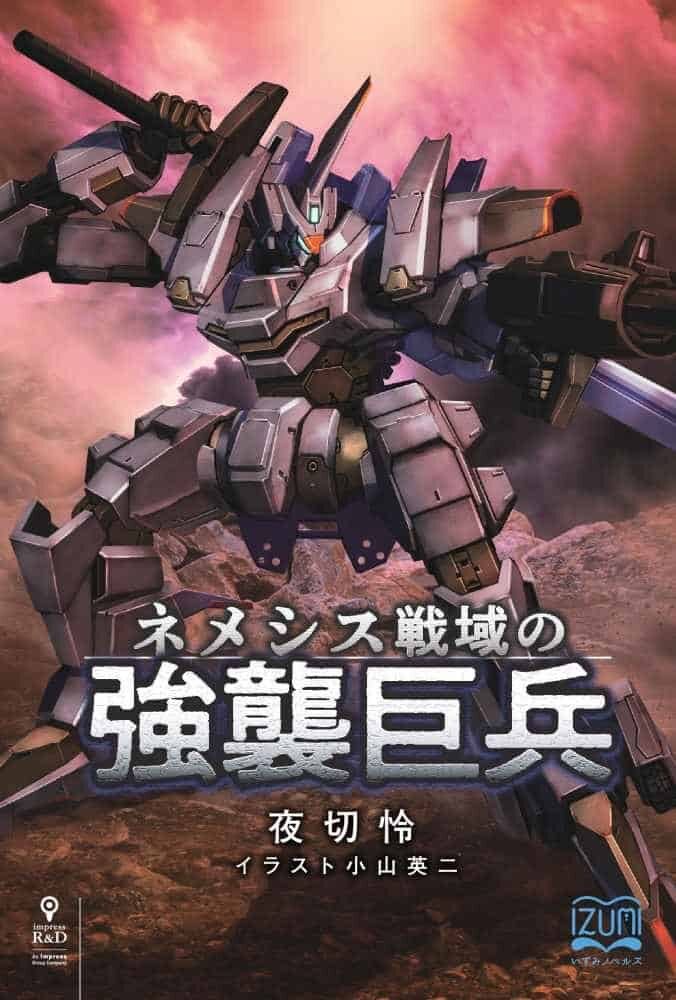
... Read More
"That should be a given. Unit 5 is also managing your emotional and psychological state right now. That's all I'm going to say on the matter." I keep coming back to this line because it tells you EVERYTHING about how Kou and Master operate together. Master isn't just a navigational AI or some cold machine interface — it's actively shielding Kou from the psychological weight of what he's witnessing. Corpses everywhere, destroyed Silhouettes lining the streets, scenes that would give anyone nightmares. And Master quietly absorbs that load so Kou can keep fighting. There's also the quiet trust between them. Kou makes decisions fast — he volunteers to go ahead alone into the frontline while Metal Iris is resupplying, he says 'I only have a sword as a weapon anyway' like it's no big deal. But he never questions Master's judgment. When Master says the urban environment is perfect for his fighting style, Kou just... believes it. That's a relationship built on mutual reliability, not dramatic declarations. And then there's Jenny. She took over the Underground Force after her dead lover died. Twenty-five years old, leading people who trust her implicitly. That backstory detail lands so much harder than it should — it explains why she's willing to sacrifice her unit to buy civilian evacuation time. She understands loss. She understands commanding people into situations where they might not come back.
... Read More
Let me just say this: I read chapters 47 through 54 in one sitting and I am not proud of it. The pacing in this section is ruthless in the best way. It opens with a skirmish—Ant Workers, quick fights, establishing the threat level—then immediately introduces the child in distress. That's your hook. You're now invested in something bigger than just winning the battle; you need that kid to be okay. Then comes the dialogue beat with Master about Familiars being used as cannon fodder. This is where the book could have slowed down for exposition, but instead it uses the conversation to raise the stakes emotionally while Kou is actively moving toward the Enyo. Two birds, one stone. The arrival of Jenny feels like a turn in the third act of a movie. She's introduced mid-battle, already established as competent, and immediately offers to coordinate. The tactical discussion about how to take down the Enyo serves double duty—it advances the plot AND deepens our understanding of the enemy. No wasted words. Kou's solo strike on the Enyo is the peak moment, and it comes after exactly the right amount of buildup. You can feel the tension coiling. Then the POV shift to the Sniper Girl—this is the book's masterstroke. It gives us a breath after the climax while simultaneously raising new questions. Who is she? What happens next? And that final line, cutting off right as she fires... I opened the next chapter immediately. The only minor complaint: the transition between the Kou/Jenny sequence and the sniper scene could've been slightly smoother, but honestly, the urgency of the narrative justifies the hard cut. This author knows how to keep blood pumping.
... Read More
I keep coming back to one image from this whole section and I can't shake it. It's not the Enyo falling. It's not the three-stage barrage lighting up the sky. It's Kou thinking "Kou was hit by the fact that he really was in the future once more" while discussing in-wheel motors and WWII vehicles. This theme of displacement — of being a transferee in a world that wasn't built for you — runs through everything. The German engineer who built half-tracks as a hobby because it's what he knows. The Japanese people who find half-tracks more approachable than modern vehicles. Kou himself, a swordsman in a world of mechs and missiles, constantly feeling like he doesn't quite belong to the tactics around him. "There was a half-track armored vehicle fanatic among the past transferees, you see." A hobby. That's how you rebuild a civilization — not through grand destiny or chosen-one prophecies, but because some guy in a different era really loved old vehicles and decided to mass-produce them. The future isn't shaped by heroes. It's shaped by enthusiasts. And then there's the Familiars. Talking animals. In a war against gods and mechanical horrors, what gives Kou courage isn't his great sword or Unit 5's power. It's a sheepdog telling him not to push too hard. There's something deeply symbolic there — the oldest bonds, the simplest comforts, are what sustain people through the most extraordinary circumstances. "It really felt like a testament to how animals were a man's best friend." This line hits differently when you consider Kou isn't even from this world. His "best friend" happens to be a mechanical warrior girl in a robot suit, and his support network includes talking dogs. But the emotional truth is universal: we survive through connection. Through people (and animals, and machines) who refuse to let us face things alone. The Enyo is a goddess of destruction. But the real victory here isn't killing a god. It's Kou realizing he has a team behind him. That's the story this book is actually telling, and I'm not crying, you're crying.

Leave a comment

You must be logged in to leave comments. or
