Assault Colossus of the Nemesis Warfront - Reviews

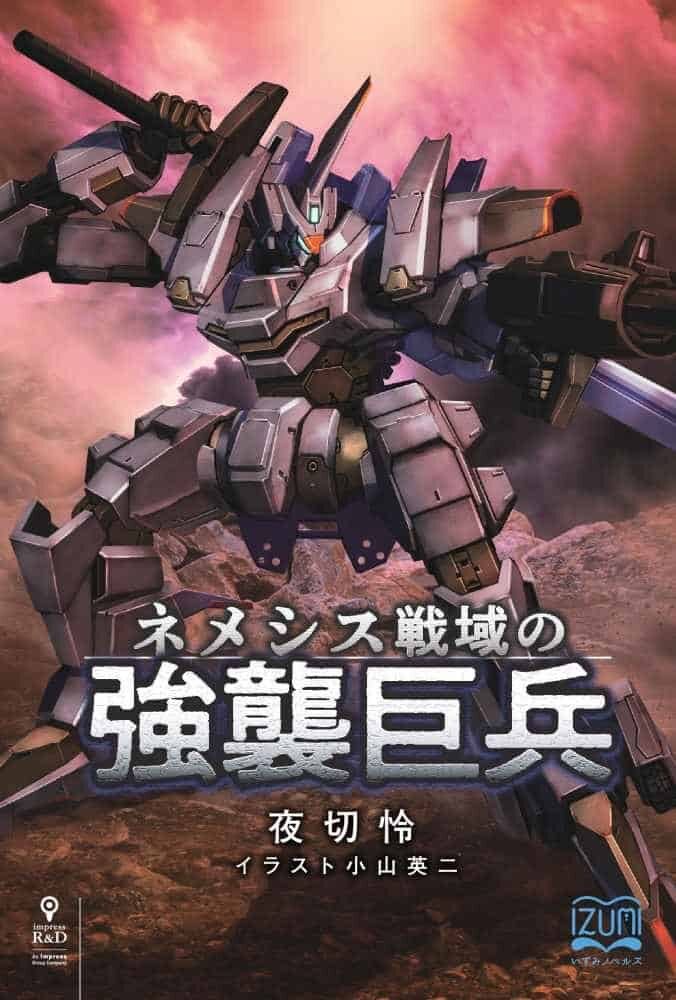
Assault Colossus of the Nemesis Warfront
+Add to Custom List
Sort
Add review
... Read More
I need to talk about the Unit 5 reveal because this is some clever plotting. The story drops this information that there's an exception among the Silhouettes—something that went out of control without a pilot—and then has Kou literally walk toward it like he was always supposed to find it. The master-crafted coincidence angle is there but the book winks at it by having Master say 'this one really might have some sort of fate with you' right after revealing the unit's name is Lanius, which is a shrike—a bird of prey. And Kou, whose name is Mozuya Kou, just accepts it. The plot moves fast here. We go from 'pick any machine and survive' to 'you've been chosen by a legendary broken robot' in the span of a few pages, and somehow it doesn't feel unearned because the story gives us all these smaller beats along the way. The registration scene where the machine bypasses every security measure, the Fennel OS adapting to Kou's 21st-century brain, the revelation that his kendo practice will boost his combat performance. Each piece clicks into place like the plot is building a puzzle and Kou is the missing piece. The pacing is razor-sharp—Master even says they need to hurry with choosing the loadout because time is running out. Every chapter seems to end with either a revelation or a ticking clock, and I couldn't put it down.
... Read More
I need to talk about the emotional beats because this thing hit harder than I expected. Let me start with Kou getting thrown out of that plane. The moment Yoshikawa pushes him, you can feel the betrayal. It's not dramatic or over-the-top—it's cold and quiet. Kou just stands there outside on his backside watching the plane leave, and inside, Yoshikawa is SCREAMING. "Ah! Mozuya is outside! Please stop this thing right now!" The hypocrisy is disgusting. This guy betrayed him and then immediately plays the victim and the hero? I wanted to punch through the page. But the real emotional gut punch comes later when Kou says something that genuinely made me soft. Master is a machine, an AI housed in a cat's body, and Master is running on fumes—"I have already gone beyond my expected operation limit. I am about to welcome my last days. I am also just a machine." And Kou replies: "Even machines have souls, Master." That line. That absolute THAT LINE. Kou has this deeply ingrained empathy that he's had since childhood—he treats inanimate objects as if they have lives. And here he is, saying it to a robot cat that just saved his life. It's beautiful and heartbreaking because Master IS going to deactivate soon, and Kou knows it on some level. Also the cat scene where Master wakes Kou up by hitting his cheek and stuffing its paw in his nose? That's somehow adorable in this apocalyptic setting. The contrast between a talking cat being all casual about saving humans and the whole world being destroyed is both funny and kind of sad. I found myself caring about a digital consciousness in a cat model. There's no romance here yet but the bonding between Kou and Master feels like it's going somewhere. Master says "Now I know why she decided to save you" referring to some female figure—already setting up another emotional thread. I'm emotionally invested in a factory worker and his dying robot cat and I'm not even mad about it.
... Read More
I am not usually someone who reads fast but this thing grabbed me by the throat and didn't let go. Let me break down why the pacing works so well. Chapter 1 starts IN MEDIA RES with an alarm ringing at a factory. No buildup, no establishing shots—just chaos. Emergency evacuation, people running, and then the plane scene. Within the first few pages we get betrayal, abandonment, a murder machine appearing, a mysterious voice telling Kou to run, and a talking cat. That's a lot of information to process and the author handles it without ever feeling rushed or cluttered. Each beat gets exactly the space it needs. The transition from the outdoor devastation to the underground facility is smooth. The cat leads him through tunnels and staircases, and this descent feels almost metaphorical—going from the surface world into something deeper, more mysterious. The pacing here slows just slightly to let the wonder sink in before Master drops the 20,000-year-future bomb on him. What I love most is how the author controls tension. There's a constant undercurrent of danger—the Keres could appear at any moment—but the survival mode is balanced with exposition dumps that feel natural because Master is literally teaching Kou to live. The junkyard scene with all the different Silhouette models is where I almost skimmed, honestly, but it works because it's worldbuilding that directly ties to the conflict. Kou needs a mech to fight, and now we're seeing the options. The chapter ends on a question—not a cliffhanger per se, but a pivot point. Kou has to choose which Silhouette to pilot. It's a structural beat that transitions from survival to action setup. And the fact that Master is dying adds a ticking clock without being heavy-handed about it. Some parts do rush—like how quickly Kou accepts all of this—but it's forgivable because the emotional moments land hard enough that I don't care about logical gaps. The pacing is aggressive but purposeful. Every chapter feels like it's moving toward something.
... Read More
The exposition dump here is actually incredible because it starts with something visually striking—a red dwarf star called Nemesis hanging in the sky instead of our sun—and everything cascades from that single image. I kept picturing this alien landscape under an unfamiliar crimson light, and then the ground beneath it turns out to be a planet that used to orbit in the Oort Cloud, dragged inward and terraformed by godlike computers. The level of ambition in this worldbuilding is almost comical, in the best way. The naming of the three planets—Europa, Lupier, Ashia—is such a deliberate choice. We're on Ashia, the girl from the dream shares her name, and the whole mythology around it feels intentional, almost mythic. Ancient European cultural influence shaping a world built twenty thousand years in the future by supercomputers? That's the kind of detail that makes you want to sit with it and think about what it means. Why would transcendent AIs choose those particular names? What does it say about how humanity defines itself even at the edge of extinction? And then the environmental collapse hits. The wars between the three planets, the destruction of their environments, the Sophia pulling humanity back into quantum stasis like putting books back on a shelf. "Humanity was again on the verge of extinction"—the word "again" does so much heavy lifting there. This isn't the first time. Humanity has been here before, died before, been saved before, and repeated the cycle. The image of frozen people stored away by machines who can see far enough ahead to know exactly when to wake them up—that's haunting. Not because it's tragic, but because it's cold. Calculated. The Sophia don't mourn; they preserve. And that contrast between the warmth of human emotion (Kou wanting to return to Earth, people wanting to reclaim their dead homeworld) and the sheer scale of what these computers can do is where the atmosphere of this book really lives.
... Read More
Okay so let me just say — the pacing here is absolutely brutal and I love it. We open with Kou finally getting Unit 5 moving after being buried under scrap, and within pages we go from assembly tutorial to fighting a MID-BOSS class Keres. Master literally says the word and I nearly spit out my tea. 'Mid-boss'?? Dude just woke up in a junkyard and already the universe is like no, we skipped tutorial, enter boss arena immediately. What's really clever about the plot structure here is how the author uses the tech exposition not just as worldbuilding but as actual ticking-clock tension. The railgun charges for roughly a minute. That's it. That's the window. Every piece of information Master feeds Kou — about the evasion speed, the armor limits, the reload cycle — is basically a countdown clock disguised as a tutorial. I love when authors do that. The transition from 'practice swinging a sword at a wreck' to 'oh shit that skull on the ground might have been a person who lived last week' is also a masterclass in tonal whiplash. One paragraph you're customizing combat stances, the next you're staring at someone's remains and deciding what this fight MEANS. That pivot from mechanical to moral is where the real plot engine kicks in. And the ending — 'The waki-gamae stance. The stance in...' — cuts off right as Kou remembers a technique. Classic. I'm already screaming at my screen.
... Read More
Can we just PAUSE for a second and appreciate the absolute CHAOS of this worldbuilding because my mind is blown every time. The half-track scene. It starts innocently enough — Kou notices some vehicles with normal front wheels and caterpillar treads on the back, asks what they are, and Master drops this entire lecture about WWII, transferees, hobby engineers, and how in-wheel motors made regular cars obsolete. This is worldbuilding through PURE CONVERSATION and it works so well I barely notice I'm getting a history lesson mid-battle. Think about what this tells us: people from OUR era got transported to a future, one of them was a German engineer who mass-produced half-tracks because it's his HOBBY, and now they're popular with Japanese people who aren't used to driving weapons of war. The world has moved on to in-wheel motors but also has talking animal familiars and giant mecha battles and high-dimensional projection armor. NOTHING about this setting is boring and I love that. "So they have good reputations huh." "Of course. That's only if you have the【Development Engineer (Bricoleur)】qualification though." The casual way this tech tree drops into dialogue is masterful. We're getting a whole alternate history of vehicle development through Kou just asking "why the heck are they using such old-fashioned stuff now?" The barrage scene itself is incredibly vivid — three stages of coordinated firing, missiles then howitzers then mortars, timing adjusted so all shells land simultaneously, the Recon unit marking the target, the dog and cat familiars making impeccable timing adjustments. It reads like a military manual but with soul. The fact that they had to thin out the Worker-types first so the anti-air lasers wouldn't intercept everything? That's tactical worldbuilding at its finest — every element of this combat system has logical consequences. And the contrast between the cold mechanics of the barrage and the warmth of the Familiars chatting with Kou? That's the tonal signature of this whole series. The future is weird, contradictory, and somehow deeply human. Or deeply... whatever Kou is. But you get it.
... Read More
The dialogue in this section is remarkably grounded for a sci-fi mecha story. Almost everyone speaks like someone who's been in enough fights to stop performing for the camera. Take the tank crew: "So we'll have to buy enough time until the evacuation is complete huh. Talk about a tall order, man." That's not exposition. That's two guys who know they're outmatched, making a joke because what else do you do? Then immediately after: "We're playing a so-called 'impossible game' here. But it's true that we're the only ones who can buy enough time for the civvies right now." Bittersweet, not heroic. Jenny's dialogue is all command shorthand — "Roger," "Contact the command vehicle," "Have the vanguard retreat." No filler. She doesn't monologue about her feelings; she gives orders and takes responsibility. When she sighs about the other mercenary teams refusing to cooperate, that's one of the few moments we see her frustration, and it's delivered in a single beat. Kou's voice is notably carefree — "One sword is more than enough" — but it's not arrogance. It's the specific kind of confidence that comes from someone who actually knows what they're doing. And Master's lines are always technical but never sterile. Even when explaining the A-Carbuncle, it frames it conversationally: "That material was the original that was used as a reference to produce A-Spinels, which are basically inferior copies." Every character has a distinguishable register. I could tell who was speaking without checking the names.
... Read More
The way this book describes the urban warfare setting is genuinely cinematic. I'm talking about Unit 5 hopping across rooftops, using high-rise buildings as shortcuts because the high-dimensional projection makes the structures tough enough to handle it. The Enyo plowing through reinforced buildings like they're nothing. The narrow lines of sight between cramped city structures that the sniper has to navigate. "It really deserves the nickname City Destroyer. It's just plowing through every structure in its way, even if they were reinforced with Whis." That single line does so much worldbuilding. We learn what the enemy is capable of, what defenses exist, and that even those defenses aren't enough—all in one sentence. The visual of the sniper Silhouette deploying its massive railgun is something I could literally draw from memory. Nearly double the height of the unit itself, collapsible barrel extending to 15 meters, bipod planted, the whole thing lowering into a prone position. The detail about the ammunition being specifically manufactured for this weapon type instead of standardized tells me so much about the state of their technology and logistics. And the contrast between Unit 5's brutal simplicity—a great sword, no fancy thrusters, no missiles—and Jenny's "modern completed" Commander unit with variable vector thrusters, dual assault rifles, and a high-frequency vibration blade... it's not just cool design, it's a statement about different philosophies of warfare. Kou calls himself an "uncivilized primitive" and honestly? Kind of proud of it. The enemy design is also worth mentioning—the ant colony hierarchy (Queen/Worker/Soldier), compound eye sensors, the tail weapon. It makes the battlefield feel alien and dangerous in a way that generic monster designs never do.
... Read More
I need a moment. Just give me a moment. Because I did NOT see that hit me the way it did. Up until that point, this whole sequence reads like a mecha action setpiece and I'm here for it — the tutorial, the weapon selection, the training montage, all of it. I'm casually reading, maybe getting a little hyped. And then the narrative just... drops a skull in my lap. Some dried dark-red puddle. Some bones. 'Some pieces of flesh still stubbornly clung onto it.' And then the narrator tells us this was probably a Japanese person who died the same day Kou arrived in this world. Killed by the autocannon that now targets Kou himself. 'It was extremely trivial to kill people with the autocannon that possesses enough power to destroy armored vehicles.' Trivial. That word killed me. This thing doesn't even register human lives as worth aiming carefully at. And Kou's reaction isn't some heroic speech or even real anger. It's quieter than that. He remembers his sword practice — the glass window, the discipline, the self-imposed perfection — and then he looks at this dead stranger and makes a promise. 'He was still going to take revenge for the injustice the unknown person suffered. It was a promise.' He doesn't even know who this person was. But he carries them into battle with him. That's not protagonist energy, that's something heavier and more honest. I genuinely got chills reading that.
... Read More
Okay so I have to talk about Kou because this kid is genuinely one of my favorites now and I need to process that. The moment that wrecked me was when Barry's guys are praising him and Robert's like "He's amazing. D'ya think he'd want to join us?" and Kou's just sitting there thinking "Yes, I suppose tactics like that don't suit you" and then internally agreeing with himself that he's not good at cooperating with others. BRO. The man literally just coordinated perfectly with Jenny and took down a goddess-tier enemy and he's over here saying "nah I'm bad at teamwork." That's not humility, that's Kou being Kou. And honestly it makes me love him more. But then — then the half-track guys show up and save his hide with cover fire and he yells "Thanks, guys! You saved my hide!" and the sheepdog Familiar responds and then the cat and the fox chime in and somehow THIS is what does him in. Not the epic mech battles. Not the killer combo moves. It's a bunch of talking animal companions telling him not to overdo it. He gets mollified by cute dog and cat and fox faces mid-battle. I am not okay. "It really felt like a testament to how animals were a man's best friend." And I'm just sitting here like — yes. Yes it is. In a world full of giant mechs and Telkhines and gods of destruction, the thing that grounds Kou isn't his swordsmanship or Unit 5's power. It's a sheepdog telling him to take care of himself. The bond he forms with these people and animals feels earned, not forced. That's rare in this genre. And Blue! She gets hit, she retreats for repairs, she comes BACK. "Guess you just managed to pay me back for my earlier save with this huh." Her deadpan response? "I don't think I've already managed to repay my debt with just this." That's not banter, that's devotion disguised as snark. These two have something real. So yeah. Kou's journey from lone wolf to someone who's surrounded by people who literally cannot let him die alone — that's the emotional core of this whole section. And I'm here for it.
... Read More
Let me just list the disadvantages and see if you can spot a single advantage for the defenders: - Enemy has 30 Commander-types, 200+ Worker/Soldier-types, and 30 elite Telkhines including one Enyo siege engine - The Enyo can one-shot a 50-ton armored tank - Mercenary allies are sitting out the fight - Their ammo is nearly depleted - The enemy's objective is the A-Carbuncle power core — if they get it, the entire dome's structural integrity collapses - The defenders are fighting in a city where buildings are their only cover - Civilian evacuation isn't finished And yet the story never tips into hopelessness. How? Because every scene shows the defenders exploiting ONE narrow advantage and using it ruthlessly. The tank crew uses terrain (sloped ground for ridge bombardment). Kou uses urban obstacles to force engagements on his terms. Metal Iris uses the city's Whis-supplied buildings as fortifications. The conflict works because the author keeps raising the temperature without removing the characters' agency. Nobody's surrendering. Nobody's panicking. They're all making calculated losses — pulling back, burning ammo, accepting that they can't win the fight, only the time. "We did the best we could." That's the line that defines the entire arc. Not a victory. Not a defeat. Just the honest assessment of people who knew the math was against them and chose to fight it anyway.
... Read More
I need to talk about this dream sequence because it completely wrecked me in the best way. A silver-haired girl appears, asks Kou if he names his car and talks to it—and when he admits he does, she literally jumps up and down like a kid who just found someone who finally gets it. She's so excited about shared worldview, about connection, and Kou—this guy who just admitted he's not great with people, who'd rather tinker with machines alone—still finds himself saying yes to her. Still promising to take care of machines, still agreeing to find her someday. "Someday, please save me." — No, wait, "please do find me, okay?" She's asking for something so simple and it lands like a hammer. And the way she phrases it, almost like she's testing whether he'll say yes, and then his response—"I'm not sure how hard 'really, really hard' is gonna be, but I'll do my best"—that's not hero dialogue. That's just... a regular person being honest. And somehow that makes it more powerful than any grand vow ever could. Then Master's reaction when Kou mentions meeting Ashia directly: those round Russian Blue eyes getting even rounder. The cat's voice dropping to something almost reverent. "I learned about you arriving from her, but to think a human can actually meet with her directly." Suddenly you realize this girl in the dream isn't just some random vision—she's connected to something bigger, and Master clearly knows far more than she's letting on. That tiny detail made the whole interaction feel heavier, more significant, like we were seeing just the surface of something much deeper. I kept waiting for a payoff that the story hasn't given me yet, and honestly that anticipation is doing things to my stomach.

Leave a comment

You must be logged in to leave comments. or