Arrogant Regret - Reviews

Arrogant Regret
+Add to Custom List
Sort
Add review
... Read More
The dialogue in this passage is deceptively simple on the surface but devastating in its precision. Let me start with Kalian because he's the one who stands out most. His lines are brief, controlled, and each one lands like a calculated strike. 'You're showing me quite an interesting sight even before marriage, Miss Ambrose.' That's not just dialogue—that's positioning. He's framing the entire encounter as entertainment for him, as if her humiliation is a performance he's attending. And then the brutal follow-up: 'With such a beautiful face... just how many men have you bewitched?' The ellipsis there does SO much work. It's the pause of someone savoring the moment, relishing his advantage. His language is polished, aristocratic, every word chosen. He never raises his voice. He never needs to. Compare that to the accuser's dialogue—hot, repetitive, tangled. 'You said you loved me! I even broke off my engagement because of you!' The man's speech is messy, emotional, almost comedic in its desperation. And Kalian? Completely ice. That contrast between the two male voices surrounding Stella is masterful writing. Even the servant's lines matter—hesitant, divided attention ('ah—'), which subtly reinforces that everyone around Stella is reacting to her crisis except the one person who actually matters. The narrative voice itself deserves mention too. It stays deeply inside Stella's head, filtering everything through her anxiety and confusion, which makes the dialogue hit harder because we're experiencing it raw and unfiltered.
... Read More
This book opens with weather, and I mean that literally. The sky is dark, humid, threatening rain — and it never lets up. Every scene feels saturated, whether it's the smoky barracks or the shabby house or the streets full of murmuring people. The worldbuilding is atmospheric rather than expository. We learn about the class system, the succession, the fallen House Ambrose — not through info-dumps but through the physical environment. The uneven stone streets. The shabby house that can be surveyed with a single glance. The tea tin at the back of the cupboard that doesn't hold enough. These details do more work than paragraphs of exposition ever could. There's a scene — well, an almost-scene — where Stella holds a single lily to her nose and breathes in. Just one moment of sensory pleasure before she has to make a decision that could ruin whatever fragile stability she has left. The author lets us linger there. The lily fragrance is described like a small mercy, and it breaks my heart because we know it won't last. The contrast between spaces is what makes the world feel lived-in: - The barracks: acrid cigar smoke, low laughter, military boots crushing newspapers - The street: murmuring crowds, fluttering papers, the weight of public grief - The house: quiet, small, lilies on the table, parents sleeping - The memory of the royal palace: unreachable, golden, somewhere beyond bridges and mountains And the weather — always the weather. That dark sky from page one follows you through the whole chapter. Even when Stella smiles at her father, the air feels heavy. The world isn't just a backdrop; it's a pressure system pressing down on everyone's shoulders.
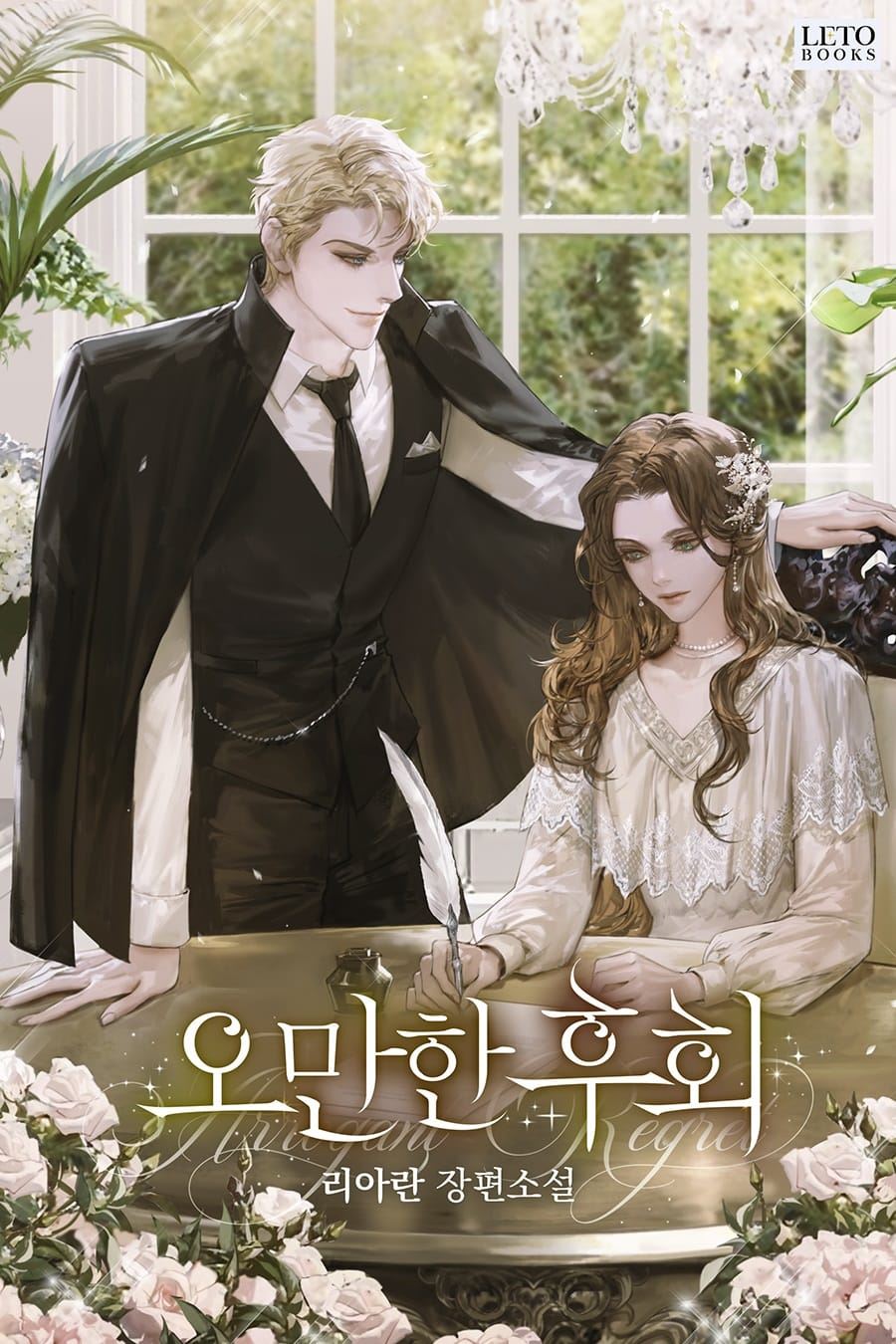
... Read More
This section starts almost domestic and cozy — Stella learning household rules, getting scolded like a new wife should be, a little comedy of errors around the robe — and I was just nodding along thinking this is a nice character-building chapter, nothing groundbreaking, and THEN Kalian walks in and the whole room shifts. The author does something really masterful here: the power dynamic flips three times in roughly the same scene. First Karen has all the power as the experienced housekeeper schooling the naive mistress. Then Stella calls her out and suddenly Karen is on the defensive. Then Kalian appears and resets the board entirely, establishing that neither of these women operates without his authorization. But the pacing doesn't stop there. After Karen is dispatched, the scene goes quiet — almost tender, with the robe incident and the naming exchange — and I was letting my guard down again, thinking this is the soft moment, the moment where they finally connect — and then the tavern. One line. 'I once saw someone who looked quite similar to you at a tavern.' Just one line and the entire mood drops below zero. The author doesn't build to this, they drop it like a guillotine. And then replacing Karen with Mrs. Poff, sending her to the Grove mansion — is that punishment? Rehabilitation? A setup for future conflict? The chapter ends on a question, not an answer, and I immediately opened the next one.
... Read More
There are so many symbolic threads woven through these chapters that I can't stop thinking about. The mirror scene hits hardest — Stella looks at herself and sees someone pale and haggard, but then she laughs and says she feels like she can live. That mirror is representing her sense of self, and for the first time in this whole ordeal, she's claiming agency over her own narrative. She's not the victim of circumstance anymore; she's the author of her own survival. The wedding night robe is also deeply symbolic. Silk, thin, ribbons that come undone too easily — it's designed to be seductive but it's also fragile. Stella can barely keep it closed. It represents how exposed she is, how vulnerable her position is, but also how beautiful and valuable she's become in the eyes of the world even if she doesn't feel it internally. And the unfinished contract — the one missing the children clause — is basically the thesis statement of the whole story. Everything in this marriage is provisional, temporary, negotiated. But Stella notices what's missing and demands it be filled in. That blank space at the bottom of the page? That's the future she's fighting for. Even Egbert's cigar and alcohol at the social club contrast with Kalian's ice-watered drinks — one is leisurely indulgence, the other is desperate numbing. Two different responses to the same uncomfortable truth.
... Read More
The stakes in these chapters are ABSOLUTE and I need to talk about why this isn't just 'she's getting married to a mean duke' — it's so much worse than that. EXTERNAL CONFLICT: Stella vs. Society. Every guest at that wedding is a threat. The murmuring, the mockery, the piercing stares — she's walking into a lion's den wearing a dress everyone agrees is vulgar. The Grand Madam won't defend her. House Ambrose has no dowry, meaning she enters with zero power. She has no training in estate management — 'all she had learned so far was how to survive on the streets.' This woman is being dropped into the highest level of aristocratic society with no armor and everyone wants her head. INTERNAL CONFLICT: Stella vs. Herself. She still has feelings for Kalian. She knows she shouldn't. She's actively trying to kill them — 'hardening her heart,' determining she can 'completely abandon her feelings of love for this man.' But then his hand is warm and her composure wavers. The conflict isn't whether she loves him — it's whether she can survive not loving him while being married to him. FAMILY CONFLICT: The Ambroses vs. Stella. This is the deepest cut. Her father, her mother, Mary, Sanderson — they ALL benefit from her marriage to a Duke. They put her on that altar knowing exactly what she's walking into. Sanderson is the exception (obviously), but even he's part of the family that has lived off her labor. When he tells her 'don't come back,' he's asking her to choose between her family and her survival — the same impossible choice she's been making her whole life. KALIAN'S CONFLICT: He's fighting something too. The envelope he couldn't deliver. The memories of moonlight and fairies that surface when he shouldn't care. The way he watches her during the ceremony — 'his eyes narrowed briefly, but it was soon buried.' He's at war with his own prejudices and whatever this pull is that he refuses to name. His conflict is that he married a woman he despises and his body is betraying him — holding her hand when his mind wants distance. THE STAKES: If Stella fails at House Rochester, she loses everything — her family loses their patron, she loses her only protection, and she returns to the street with nothing. If she succeeds, she becomes Duchess but loses herself completely. There is no winning. That's what makes this so tense — every scene is a potential point of no return. And the wedding itself? That's the moment all these conflicts COLLIDE. She signs. She becomes his wife. The stakes just went from 'what if' to 'what now.'

Leave a comment

You must be logged in to leave comments. or
