Arrogant Regret - Reviews

Arrogant Regret
+Add to Custom List
Sort
Add review
... Read More
I need to talk about Duke Kalian's scene with the King because the dialogue subtext is absolutely razor-sharp. When the King says "She's someone you'll live with for the rest of your life. No matter what happens, please believe in Miss Ambrose," this sounds tender on the surface — like a fatherly piece of advice. But Kalian's internal reaction reveals everything: he hears it as condescension, as if he's a child throwing a tantrum. The gap between what the King means and what Kalian perceives tells you everything about their relationship. And then there's Baizel, the uncle who weaponizes kindness. "You come first for us." Say that to someone and watch them fall. He follows it immediately with the threat disguised as practicality — without this marriage, no doctor, no education, no mansion. Every loving phrase is sandwiched between conditions. Stella's dialogue is almost entirely internal or defeated. Her spoken words are minimal: "Father, please," "I'll marry Duke Rochester." But her internal voice — the one questioning, bargaining, imagining scenarios where things went wrong — that's where the real characterization lives. She's a person whose outer voice is being silenced piece by piece. The most striking exchange is probably between Kalian and the King about the rumors. The King calls them "groundless rumors spread by those who bore malice toward her" with such conviction that even Kalian — who clearly doesn't believe him — can't easily dismiss it. The author uses this to show that truth in this world isn't about facts; it's about who has the authority to define them.
... Read More
The stakes in this section are layered in the most painful way. On the surface, there's the immediate physical conflict—a man grabbing Stella on the street, accusing her, potentially violent. But the real stakes are social and psychological. Stella has worked for months to secure this marriage, to lift her family out of poverty, to give her children a safe home. Every single thing she's gambled on is threatened by ONE encounter with one angry man who claims she destroyed his life. Think about what she stands to lose. The mansion. The children's safety. Her mother's fragile health—literally tears up just learning about the king's 'mercy.' Her own position as a respectable woman engaged to a duke. All of it hangs by a thread, and that thread is her past. The internal conflict is even more intense. Stella is caught between two overwhelming impulses: run and hide, or explain and beg. She can't do both because explaining requires admitting she had a past she's been trying to bury. The public nature of this confrontation amplifies everything. It's not a private accusation—it's on the street, in front of witnesses, with the crowd judging her before anything is proven. And then Kalian appears, and the stakes shift again. He's not just a rescuer; he's the judge. His opinion determines whether this scandal gets managed or exploded. The genius of the passage is that it makes you understand exactly what's at stake for Stella in a way that goes far beyond 'will she get married?' It's 'will she survive her own story being told by other people?'
... Read More
This chapter is basically a thesis statement on how patriarchal economics converts human beings into currency, and I'm not even being dramatic. The mountain with the salt mine is the perfect symbol for everything wrong with this world. Salt — essential, valuable, something people will kill for. The family's wealth was tied to the land, and when they lost it, they lost their identity. So what do they do? They monetize the one thing they have left: Stella. The salt mine represents extracted value, and Stella is being extracted the same way. Both are resources to be mined until depleted. Then there's the remdri grass subplot, which is honestly one of the most brilliant thematic details in the passage. Stella chose the expensive medicine because she thought it was better, only to learn it was potentially harmful. The cheap alternative was actually superior. This mirrors her entire situation: she's being told this marriage is a downgrade, a compromise, something "less than" — but in a world where the alternatives are starvation and illness, the supposedly inferior option is the only one that keeps you alive. The system is designed to make exploitation look like charity. The portrait of Stella that the King shows Kalian is another loaded symbol. She's depicted differently — gorgeous dress, jewelry, confident smile — than the woman he actually knows. The state wants to rewrite her identity before she even enters the marriage. Her body becomes a text that everyone writes on: her family, the King, society, and soon, a husband who already hates her. "First love" — the phrase itself becomes ironic when Dukren reveals Stella asked him to help achieve it. The purest romantic concept is dragged into the marketplace.
... Read More
Okay so this whole scene where Stella gets called out for saying thank you to her servants is actually doing SO much narrative heavy lifting and I need to unpack it because on the surface it's just "nouveau riche wife learns basic etiquette" but underneath it's the entire power dynamic of this story being rewritten in real time. Mrs. Karen uses it as a weapon — deliberately, with hints and loaded glances — and Stella catches it and calls her out on it openly. That's not just a subplot moment, that's Stella proving she can survive in this house without completely folding. Then Kalian swoops in and flips the script with that razor-sharp "etiquette toward superiors appear in children's etiquette books?" line. He's not just defending his wife, he's establishing who holds authority here. But what really got me was the tavern reveal. Kalian casually mentions seeing someone who looked like Stella drunk at a tavern and gave coins out of pity. Was he testing her? Confirming his suspicions? Either way, Stella's reaction — frozen hands, trembling voice, refusing to meet his eyes — tells us everything. She lied about her past and now he knows. Or thinks he knows. That lie will come back to bite someone, I just know it.
... Read More
Let me just say this: the stakes in this story are INSANE and the author keeps them escalating without me even noticing. On the surface, Stella's conflict is simple—she's trying to stop loving a man who hates her. Pretty standard romance territory, right? But then you layer on: - A marriage contract that's actually a weapon - A kingdom's politics being played out through this union - A greedy uncle trying to steal money from the duke - A mountain that everyone thinks has value but doesn't - The KING watching everything, waiting to pounce - And Dukren, who married her to the duke for his own base desires And through ALL of this, Stella is just... trying to buy a blanket for her mother. The tension is maintained perfectly because we (the readers) know things Stella doesn't. We KNOW Kalian is manipulating her. We KNOW the contract is designed to confuse the king. We KNOW House Ambrose is being set up to fall. But Stella is over there having a sweet moment where Kalian strokes her cheek and tells her to buy everything she wants. The line that haunts me most is the ending of this section: "The only difference between him and Dukren was that Dukren..." The text cuts off there. But the implication is clear—Kalian is using Stella just like Dukren did, just with more polish and patience. And the stakes aren't just emotional anymore. If this falls apart, her family loses everything. The duke's enemies will come after her. And she'll be left with nothing but a broken heart and a family that's now target number one. I'm sweating just thinking about it.
... Read More
The dialogue in this book has a hunger to it. Not just literal hunger — though that's there too — but the kind of verbal economy you get when every word has to earn its place. Stella's voice is the clearest example. She doesn't waste words. Her conversations with her siblings are practical, slightly exasperated, deeply affectionate underneath. When Sanderson blurts out about the Duke coming to town, her reaction isn't romantic — it's a flicker of surprise followed by immediate concern about what this means for her family's survival. The subtext is always louder than the text. Kalian's dialogue is colder but equally precise. His exchange with his uncle Dukren is basically a sword fight with tea cups: "Since my two cousins died in vain, I thought you must be suffering greatly... But since uncle's complexion is brighter than mine, how fortunate is this?" He's not asking a question. He's measuring his uncle's happiness against his own grief and finding it wanting. That's not conversation — that's reconnaissance. The narrator's voice is equally distinctive. It's close third-person, slipping into Stella's head for her私 thoughts but pulling back just as quickly. The occasional use of ellipses creates a breathless quality, like someone who can't quite finish their sentence because there's always something more pressing to attend to. What strikes me most is how the author gives each character a different relationship with silence. Stella uses it to survive. Kalian uses it to calculate. Dukren uses it to hide. Even the children's dialogue — short, urgent, occasionally wrong — feels specific and true. No one in this book is performing for the reader. Everyone is performing for whoever's in the room, and the gaps between what they say and what they mean are where the story actually lives.
... Read More
The way this section moves is honestly wild. You go from Stella's internal monologue about Grand Madam — this quiet, almost gentle moment — and then the door opens and suddenly it's Kalian, wet hair, loose robe, moonlight, and the wedding night is HERE. No warning. The author just YANKS you into it and you're not ready. Then the divorce contract scene — which should be cold and bureaucratic — gets derailed by her asking about children and him kissing her like a man possessed. And then he LEAVES. Just walks out. And the next paragraph starts with 'The bluish sunlight heralding dawn.' BAM. Morning. We didn't get the intimate scene, we got the aftermath, and honestly that was so much more powerful. Then it cuts to Egbert at the social club, totally different energy, and we learn through his dialogue that KALIAN LEFT HIS WEDDING NIGHT to show up at a bar. The structure here is doing SO much work — we're getting information about the wedding night indirectly through someone else's reaction, which is way more interesting than if we'd just watched it happen. And then Mrs. Karen appears like a storm cloud and the chapter ends on that tense breakfast scene with her deliberately excluding Stella. Every beat is pushing forward. Nothing lingers too long, nothing drags. The author knows exactly when to cut away and when to zoom in.
... Read More
"Your Grace." So she had no choice but to ask. To find the path she should take, or at least the direction. "Why are you being so kind to me?" "Well, because you're my wife." And then the narration cuts to his INNER MONOLOGUE: "That woman needs to fall for me a little more." I am actually not okay. This scene destroyed me. Stella is asking a vulnerable, honest question—she's trying to understand what she's supposed to feel, what direction to go in—and he gives her a warm, almost tender answer while internally calculating how to manipulate her into falling harder. The worst part is I can't even blame Stella for being confused. She experienced this beautiful morning where Mrs. Poff smiled at her, where she got to walk around a city without worrying about money, where Kalian showed up casually on the street and let her buy anything she wanted. Of COURSE she's falling for him. He crafted every single moment to make her fall. But here's what actually broke my heart—Stella's entire shopping trip. She goes to buy things for herself and the FIRST thing she thinks of is: "New clothes for Mary and Sanderson. Candles. A soft blanket for Mother. A thick indoor robe for Father." She doesn't even know how to WANT things for herself anymore. Poverty has rewired her brain so completely that even surrounded by luxury, her heart only has space for her family. That's not just sad—that's devastating. And Kalian notices this. He sees it. And he uses it to get closer to her.
... Read More
One hat cost as much as Stella's monthly living expenses when she lived in the street house. Just one hat. I keep coming back to this scene. The author sets it up beautifully—Stella enters a luxury store expecting maybe to look, and immediately gets overwhelmed. The clerk is ridiculously kind, lays out dozens of options, and Stella's internal monologue is just pure panic. She has all this money and freedom and doesn't know what to do with either. But the most cinematic moment is when she's standing on the street, lost, and Kalian appears behind her. The brown carriage, the bowing coachman, the casual way he just... materializes. Like he was watching her the whole time. "What are you doing here, Madam?" His voice from behind—I can picture this scene exactly. The way Stella flinches. The soft afternoon light. The contrast between her simple dress and his expensive carriage. And then the mansion atmosphere shift! Mrs. Poff telling Stella "the atmosphere of the mansion is led by the lady of the house. And now the lady of House Rochester is you, Madam." This is such a quiet but important moment—the world is literally rearranging itself around her. She's not just visiting a new place anymore. She belongs here now, whether she wants to or not. The sensory details throughout these chapters are really strong. The soft sofa in the hat shop, the various hats with incomprehensible details (feathers from distant continents, lace with 100 needles), the warmth of Kalian's hand on her cheek. The author knows how to make luxury feel tangible without being boring about it.
... Read More
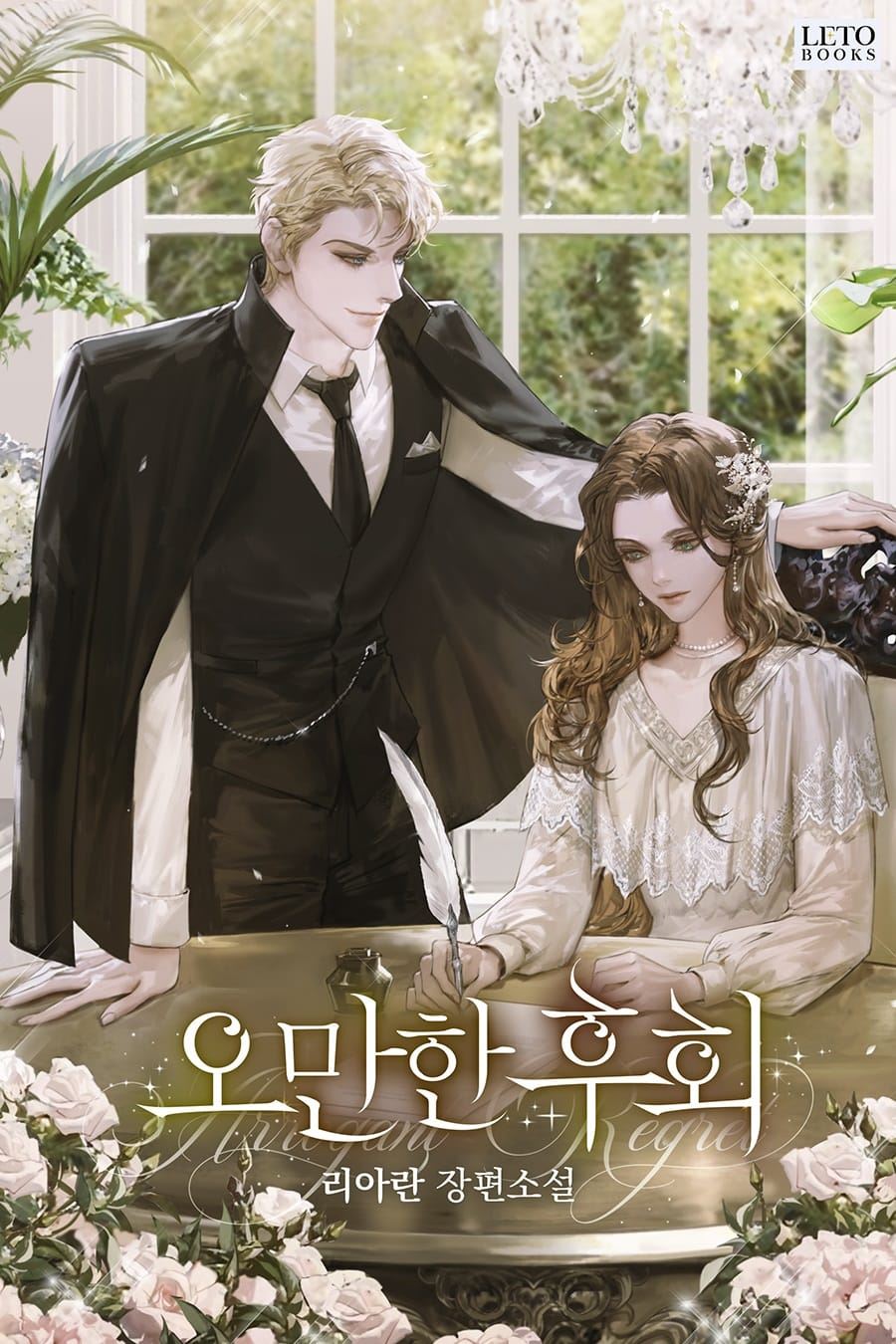
I am not okay. I am genuinely not okay. Let me just sit with this for a moment. Sanderson runs into the bridal room and his first words are 'Sister, let's run away!' Not 'are you okay?' Not 'congratulations.' He sees his sister about to marry a man who despises her, surrounded by people gossiping about her, and his instinct is to try to rescue her. A CHILD. And then he says: 'Only you suffer in our house. Our whole family has been living by depending only on you!' And Stella — Stella, who has spent her entire life carrying everyone — just laughs. She laughs because the absurdity of a small boy telling her to run away and somehow handle the consequences is genuinely funny. But she's also lying to him. 'Sister is really okay' is directed at Sanderson AND at herself. The tears. Oh god the tears. Sanderson crying and telling her 'If you ever escape from here and become free... don't come back.' That's not a plea for her to stay. That's a child who loves his sister enough to want her to leave the family that uses her. 'I didn't want to just be a burden like this. I wanted to somehow be helpful to you…' Stella never knew. She never knew that her little brother had been watching her collapse from exhaustion, had been wanting to share the burden, had been stepping up to shine shoes and sell newspapers not for snacks but because he couldn't stand watching her suffer alone. And then her father. Her FATHER. Holding her hand, crying, saying the Duke will protect her and she'll live in luxury. And Stella's internal monologue: 'I wanted to marry someone who would love me even if I only earned fifty coins a year.' No one asked her what she wanted. Not once. The wedding ceremony itself — Stella 'hardening her heart,' listening to the officiant's promises of cherishing and following while feeling absolutely nothing. The man she loved is being handed to her on a silver platter by her own family who see her as a commodity to be traded for security. And yet — 'Looking at the handsome man who received her hand from her father, Stella smiled.' Not a sad smile. A determined one. She made her choice. She chose survival. She chose to abandon her feelings for him completely. That resolve, that terrifying calm — it broke me more than any dramatic confession ever could. She's not marrying for love. She's marrying because she has no other option. And somehow that's more heartbreaking than any tragic romance.
... Read More
Okay, so the inciting incident here is BRILLIANT because it hits on two levels. On the surface, there's a literal fire at the Pemlington summer villa that kills two princes — classic royalty drama setup. But the real fire is the one burning through Stella's life. The author is playing with parallel destruction here, and it's sharp. The plot structure is tight. We open with public news (the newspaper boy shouting) and immediately pivot to Stella's private worry — not about the tragedy, but about her shop closing during mourning. That's character-establishing in one move. We learn she's poor, responsible, and already thinking about tomorrow's bread before she even processes the loss of nobility she once belonged to. Then there's the subthread with Kalian in the barracks — two whole new characters introduced simultaneously through dialogue and attitude. The fact that he's related to the dead princes by blood but treats the news like an inconvenience rather than grief tells you everything about his position in the succession. Second in line. That changes the political geometry instantly. What I loved most is how the plot connects through irony. Stella wants to sell flowers at a memorial for the very people her family once served. She hopes to glimpse the Duke — the man she's loved for ten years — at that same memorial. And the rumor mill (through the barracks guys) is already whispering about "the famous Miss Stella Ambrose" before we even know who she is. The story keeps feeding you information through the wrong channels, which makes it feel alive. The pacing is restless in a good way. Every section ends on a question or a turning point — she's going to the memorial or she isn't, Kalian is heading to see his uncle, and nobody is safe from the consequences of what just happened. This isn't just a romance setup. It's a political earthquake told through a girl who can barely afford lilies.
... Read More
Let me just paint the picture this author gave us because it's STUNNING. The wedding venue: fresh flowers costing 'several years' living expenses for commoners,' tablecloths from distant countries, silver teacups, gold plates, ivory utensils. It's so excessively luxurious that it circles back to being almost grotesque. And every single guest notices. One person says the silver cups are 'dulling all the fragrance and taste of this precious tea.' Another complains about the flower arrangements — 'Miss Ambrose seems to believe that the biggest flowers are the most beautiful.' A third: 'Look at that vase. To think she'd bring a vase studded with such large gems into a church that should be sacred and modest.' This is not a wedding. This is a hostile takeover of a sacred space by someone who doesn't understand what she's entering. And then — cut to the bridal waiting room. Pure white dress. Stella gripping her bouquet so tightly her knuckles must be white. The contrast between the overwhelming opulence outside and her quiet panic inside is chef's kiss. The moonlight scene afterward — Stella sitting on the bed, blinking blankly while receiving moonlight. After the spectacle, the noise, the thousands of eyes on her — she's just... sitting. In the dark. With the moon. That image haunts me. Kalian's carriage ride home — the window opens, a child's laughter floats in, he sees a little girl playing, remembers a forest party from his childhood, a girl standing quietly with moonlight behind her. 'The white dress with lace and ribbons, the brown hair swaying in the wind, the light green eyes that slowly looked at him when he made a sound.' For a moment, the story lets us see who he used to be — someone who believed in fairies, who could be surprised by beauty. Then the child's laughter fades, he closes the window 'without regret,' and we're back to the cold duke. The Rochester mansion itself — we never see inside, but the Terrace chair, the newspaper on the table, Wilter bringing fruit and tea — it's all meticulously proper, controlled, sterile. A manor built for a woman who will never truly belong there. And that final image: the wedding ceremony, the two signing the marriage certificate side by side, his hand warm around hers the entire time. Warm. Despite everything. Despite the gloves, the distance, the contempt — his hand was warm.

Leave a comment

You must be logged in to leave comments. or