After being forced to marry an ugly husband (BL) - Reviews

After being forced to marry an ugly husband (BL)
+Add to Custom List
Sort
Add review
... Read More
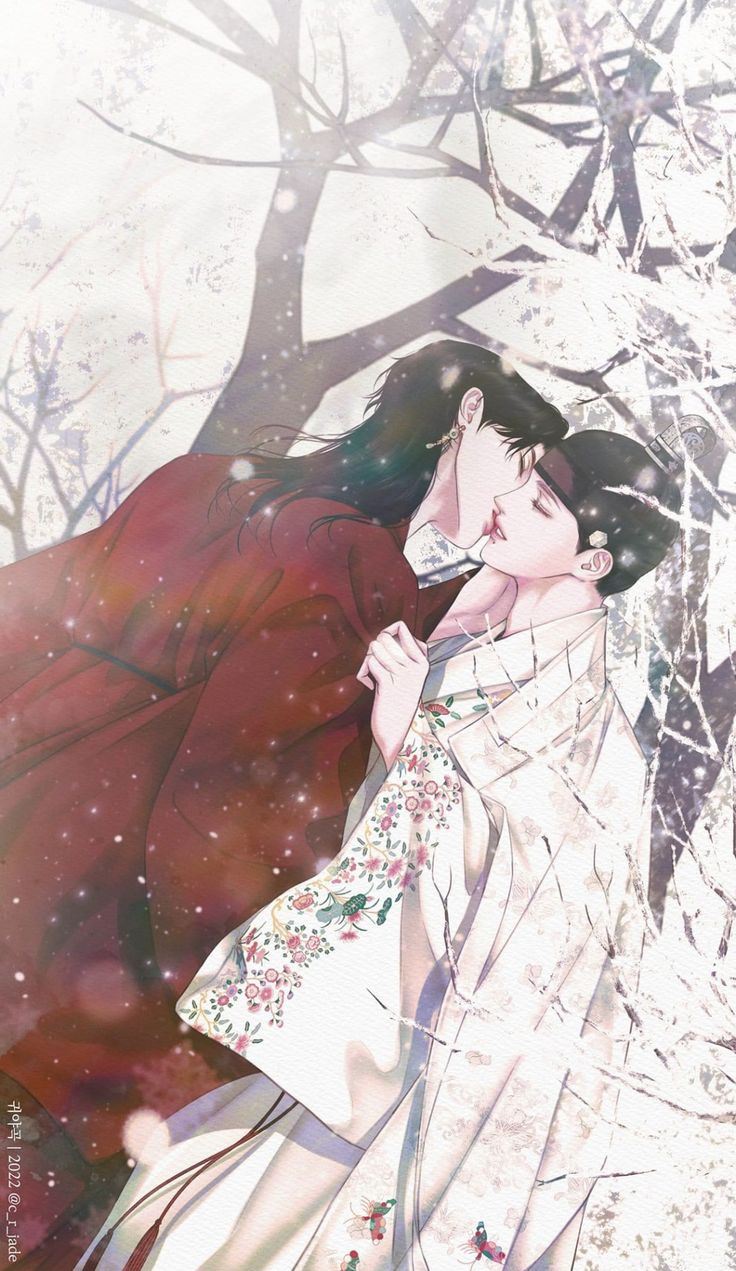
Okay so the kiss scene between Qingyan and Qiu Henian — let me just say it. I read that passage three times and each time I felt something shift. Qingyan's lips are sore, his tongue aches, and he just... waits. Patiently. Like he's not sure what comes next, like he doesn't dare to push. And then Qiu Henian, who's been carrying so much pressure (the poisoning, the medicine, the insomnia), just adjusts Qingyan's clothes and says "Let's sleep." Not another kiss. Not even a confession. Just pulling him close, arms around him, and falling asleep against his chest. That restraint is what killed me. If Qiu Henian had immediately gone for round two, it would've felt cheap. But instead, exhaustion and medication and genuine care win out. He holds Qingyan because he's tired, because he wants the closeness without the performance. And Qingyan? He just hugs back. No dramatic lines. No "I love you." Just "calming the restlessness in his body" and falling asleep against that chest. Then the spoiler at the end — Qingyan panting heavily, trembling in those same arms. The contrast between the two moments is everything. One is quiet tenderness, the other is passion barely contained. Both are real. Both feel earned. And then there's Liu Xiang's whole arc, which is basically the dark mirror of this. Qingyan gets chosen, cherished, held gently. Liu Xiang gets used, lied to, thrown out like trash by a man who promised him the world and gave him nothing. The parallel makes both relationships hit harder. I can't stop thinking about Liu Xiang crying and begging his mother, and how Qiu Henian would never — would literally never — do that to Qingyan. The CP between Qingyan and Qiu Henian feels like oxygen. Finally.
... Read More
Okay so let me just say - the reveal of the pregnancy red mark is one of those moments where everything clicks into place. Qingyan enters this world already knowing he replaced someone, but he never expected HIS body to have adapted too. The author plays with this nicely: the red mark only appears when emotionally moved, not with temperature changes, which is such a small detail but it tells us SO much about how this world works. And then Qiu Henian revealing he has ALWAYS known? That hit different. The plot structure here is interesting because it operates on two tracks simultaneously. On one level you have the intimate personal revelation - Qingyan coming to terms with being a ge'er, which is genuinely shocking and vulnerable. On another level you have the mystery thread about Li Xizhen and Qin Liangchuan, which feels like it's been building since way back. The way Third Brother Feng connects both threads is clever writing - he was there at the lantern festival, he was there at Liu Cai's wedding, he has this photographic memory. It makes sense that HE would be the one to bridge these two storylines. I also want to talk about the pacing. The chapter starts with this deeply personal, almost clinical moment - Qiu Henian explaining the biology of the red mark. Then it shifts to Qingyan alone on the bed processing everything. Then suddenly they're out in town, buying groceries, living normal life. That contrast between internal crisis and external normalcy is effective storytelling. The mundane details - pork ribs, bananas, Wangfa Restaurant - ground the extraordinary situation. And then BOOM, the wealthy household summons them, and we're back in mystery mode. The spoiler at the end about Qingyan deciding he doesn't want to risk pregnancy again? That's a fascinating character choice. It shows agency, fear, and maybe even a bit of rebellion against the world's assumptions about what his body is for. I'm curious how that decision will affect his relationship with Qiu Henian going forward.
... Read More
"This is another speck of dust seen by others. But even if I read all the books in the world, it might still be just a handful of dirt in the palm of this world." I have been turning this quote over in my head since I read it. Qiu Henian says this casually during a lazy morning reading session, but it's loaded with meaning. On the surface it's just philosophy - he's explaining why he likes books, how limited human understanding is. But this is a character who has traveled through time, who is living someone else's life, who knows more about the world than he lets on. When he talks about dust and dirt and palms, is he talking about books? About fate? About the impossibility of fully knowing another person's journey? And then there's the cat. Xiao Mao becomes Xiao Lihua becomes Ah Miao. Naming something is an act of claiming it, of bringing it into your world. Qingyan naming the cat is him solidifying his place here. He's not just a visitor anymore - he's the owner, the caregiver, the one who decides what the creature is called. The wristband is interesting too - black, hidden under the pillow, something Qingyan has to actively grasp. Is it just a sensory object for their intimacy, or is it symbolic of something Qiu Henian carries? A tether? A restriction? The text doesn't clarify, which feels deliberate. The burnt porridge as metaphor for imperfect but sufficient happiness? Maybe I'm overthinking that last one. But the reincarnation question hanging in the air between them? That's definitely thematic landmine territory and I'm sitting here waiting for the explosion.
... Read More
"Throughout the year, there were few times as enjoyable as this." I said that line out loud. I literally said it. This entire section is just so devastatingly soft it made me feel things I wasn't prepared for after whatever intense plot stuff led here. The morning scene where Qingyan is singing and dancing with the kitten like a happy little maniac while Qiu Henian watches from the doorway? That's peak domestic bliss content and I am HERE for it. The way he can't understand the song but still knows Qingyan is in a good mood - that's intimacy at its most fundamental level. You don't need to understand the words to know someone is happy when they're with you. And then the reincarnation conversation hits right after all that sweetness and I was NOT emotionally prepared. Qingyan doesn't ask about time travel directly because of the era - he codes it as reincarnation. That detail alone tells me everything about how much he's had to adapt his inner world to fit around this person and this time period. He's carrying something huge inside him and he's choosing his moments to share it. Qiu Henian's response is so thoughtful - comparing books to dust, saying he hasn't seen reincarnation but thinks it's possible. He's leaving the door open without pressuring Qingyan to explain. The CP energy in this text is off the charts. It's not just in the steamy scenes (though those are written with genuine care and chemistry) but in the quiet moments too. Reading together under a lamp. Sharing breakfast. The way they move around each other like they've done this a thousand times before.
... Read More
Let's talk about structure because this author is playing 4D chess with pacing and I am here for it. Chapter 317-318 give us this incredibly quiet, almost domestic sequence. Doctor visit. Medicine adjustment. A kiss that ends with sleeping. It's calm. It's tender. It lulls you into thinking this is a gentle romance chapter and you can just float along. Then BOOM. Liu's ox cart. Swollen eyes. Everything changes in three paragraphs. The transition from Qingyan's soft moment to the Liu family's dysfunction isn't jarring — it's surgical. The author places Liu's cart right outside the pharmacy door like fate itself parked it there. Qingyan offers a polite walk in the sunshine. Liu's daughter-in-law can't even meet his eyes. The contrast between these two households in the same physical space is devastating. And then the spoiler tease at the end — just two sentences, "the two kissed for a while, Qingyan panting heavily, tightly hugged by the man's arms, and his body shook all at once" — and suddenly the chapter cracks open like an egg. You're left hanging between the温柔 of the day and the violence of what comes next. The Liu Xiang backstory is told in rapid-fire exposition, almost like gossip being passed around. It compresses weeks or months into a few paragraphs, which actually mirrors how village rumor works — things spread fast and you hear the highlights without the context. Then it drops back to the present with Liu Fa showing up at Qiu Henian's door, and the timeline snaps back into real-time urgency. The pacing isn't linear. It braids. Romance thread, thriller thread, tragedy thread — all weaving together until you can't tell which one will pull the knot tight first.
... Read More
Everything in this passage revolves around objects and what they represent, and I keep coming back to three specific ones. The new lock: purchased with the last of their saved money, installed to protect what's left after everything was stolen. It's a symbol of paranoia and survival—the realization that the world is hostile and trust is a luxury you can't afford. The jade bracelet: Shen Min's mother gave it to him on his wedding day, a token of love and lineage, and he sells it for three taels of silver. It's the commodification of dignity—he liquidates his past to survive his present. But the most powerful object is the drawer. That wooden drawer under the bed becomes this vortex of desperation. First Shen Min hides money there as a shroud fund—preparing for his own death. Then Wang Heyao discovers it and returns to it six consecutive days, each visit peeling away another layer of his humanity. The drawer is both a womb and a grave for Shen Min's hope, and a feeding trough for Wang Heyao's corruption. And finally, the calligraphy papers—Shen Min's attempt to learn, to write, to become someone who isn't just a victim. Qiu Henian burns them without hesitation. Is that protection? Erasure? A merciful end to a record of suffering? I keep turning this over in my head. None of these objects are accidental. They're the architecture of survival in a world where people have nothing except what they can hide, steal, sell, or destroy.
... Read More
Everyone in this story is standing on the edge of something and pretending they're fine. Aunt Li collapsed from emotional trauma. Her husband is somewhere with no memory of his family and possibly a new concubine he chose over his wife. His daughter Qin Lan is trying to negotiate a solution that satisfies everyone because she refuses to let her mother carry the pain alone. Meanwhile Qingyan is systematically building a business, saving every coin, preparing for a version of the future where he won't just be supporting himself. The stakes here aren't life-or-death in the traditional sense—they're quieter and somehow scarier. Because when Qin Liangchuan returns, nothing will be the same, and everyone who's been holding the fort together will have to decide whether to forgive, flee, or fight. And what's terrifying is that there's no obvious villain. The concubine isn't evil. Qin Liangchuan didn't choose her out of malice. The system just... exists. And the people in it are trying to survive it with sugar buns and coal and steady hands.
... Read More
There's a reason this well scene has been living in my head rent-free. It's not just a plot device - it's layered with meaning that the author barely signals but clearly intends. The well itself: a vertical descent into darkness, a place of near-death and transformation. Shen Min goes in alive and comes out... changed. The author is very careful about this. Wang Heyao literally can't tell if "that creature from last night" is the real Shen Min. The smile with sharp white teeth isn't human - or at least, it's not THE human Shen Min that Heyao knew before. Then there's the copper coins. Fifty or sixty of them - his entire life savings - sent as a gift to someone ELSE'S wedding. "Hoping not to bring bad luck to the joyous occasion." This man nearly died, lost all his fingernails, survived nine days in some unnamed trauma, and his concern is that his survival might spoil someone else's happiness. The symbolism is almost too on-the-nose, except the author never draws attention to it. It just sits there, heavy and aching. And the nails. The fact that his FINGERNAILS are gone - that he clawed at a slippery stone trying to hold on to life - feels deliberately chosen. Fingernails are something we take for granted, something small and seemingly unimportant. Losing them completely suggests a complete stripping away of what protects us, what lets us grip the world. Who emerges from that well is whoever the author wants them to be. And we're all just watching from the edge.
... Read More
I've been thinking about the imagery in these chapters and there's this relentless thread of cold and darkness that I can't shake. Qingyan comes outside ready to enjoy a beautiful day, opens the door, and immediately says 'It's so cold' — and then we learn the actual threat is also there, standing by the river in薄薄 clothing like he doesn't feel it either. The cold is both literal and symbolic, right? This place is unforgiving, the world wants to freeze you, and yet the only warmth comes from human connection. Then there's the darkness motif — Qiu Henian literally extinguishes the candle so Qingyan doesn't have to face his scarred face while crying. Darkness becomes mercy here, not something frightening. And the bruises on Qingyan's waist, visible to Aunt Li — that's the physical evidence of a life he's trying to escape, literally marked on his body. The book-within-the-book structure is also fascinating: Qingyan reads a story about someone else's tragedy and realizes the plot might be catching up to him. The medicine that was meant for another person ends up affecting him. Nothing stays in its original place. Everything bleeds across boundaries — past and present, fiction and reality, fate and free will. The former owner's karma isn't just his own anymore. It belongs to Qingyan now too.
... Read More
Can we just take a moment for Aunt Li's dialogue because honestly she carries these chapters? She says things like 'This child seems to have a heavy heart!' and 'You two are already husband and wife. Your lives are tied together. What can't you talk about?' and she basically serves as the emotional translator for two people who clearly cannot communicate to save their lives. But what I love most is how the author gives each character such a distinct voice. Qingyan's stuttering — 'I... I suddenly don't want to go out' — feels so real, like someone whose fear is physically blocking his words. Qiu Henian's lines are always short, almost clipped: 'Hmm.' 'If you don't want to go out, then don't.' Even when he's concerned, he can't wrap his mouth around it. And then there's the narration itself, which has this weirdly intimate quality. Like when it describes Qingyan's internal spiral about fate and the book's predetermined plot — that voice feels modern, almost meta, like the narrator is letting us in on a secret. Meanwhile the older characters speak in a more grounded, earthy register. It's a deliberate contrast and it works beautifully.
... Read More
Okay so I need to talk about how this chapter is structured because honestly the pacing is doing some really interesting things. On the surface, this is a domestic scene—Qingyan wakes up, makes breakfast, goes to the shop, finds out about the medicine. But underneath that thin veneer of normalcy, everything is falling apart. The plot here doesn't rely on big events or dramatic reveals; it's all in the gaps. The gap between what Qingyan remembers and what he pretends to remember. The gap between what Qiu Henian wants to do and what he's capable of doing. "I haven't forgotten. I just pretend I have." That line hit me like a truck. The entire narrative engine of this story seems to be built on what characters refuse to say directly, and this chapter is the apex of that. Qingyan confronting Qiu Henian about the medicine isn't a plot twist—it's the inevitable collision of two people who have been circling each other for months finally running out of room to dodge. And then the dinner scene. You'd think after that heavy confrontation they'd be at odds, right? Instead they're just... eating. Passing fish belly back and forth. Reading before bed. Asking about silver. That's where the real plot work happens—not in the confession, but in the mundane aftermath. The author is building a story about two people trying to construct normalcy on top of something that nearly destroyed them. How much longer can that hold?
... Read More
Okay so let me just say this - the sequence where Shen Min jumps into that well and then wakes up half an hour later is one of the most quietly devastating plot turns I've read in a long time. The author doesn't even announce it as a major turning point. It just happens, and then we spend the rest of the chapter watching everyone react to the aftermath. The brilliance is in what stays OFF-page - we never actually SEE the well scene. We only hear about it through Shen Min's own recounting, and even then he tells it so calmly, so matter-of-factly, like he's describing the weather. "As soon as I jumped into the well, I regretted it." That's it. That's the entire description of what was presumably a deeply traumatic near-death experience. And then he casually drops that he scraped his fingers raw trying to hold onto a slippery stone. The author makes us DO the work of feeling whatever happened down there. And then the red paper scene? Fifty or sixty copper coins - ALL his savings - sent as a congratulatory gift for Liu's wife. He survived nine days. Nine days! And his first thought is making sure he doesn't bring bad luck to someone else's happy occasion. That is such a devastating character beat disguised as a plot detail. The structure here is masterful - the author gives you all these pieces and trusts you to connect them.

Leave a comment

You must be logged in to leave comments. or
