After being forced to marry an ugly husband (BL) - Reviews

After being forced to marry an ugly husband (BL)
+Add to Custom List
Sort
Add review
... Read More
A pair of eyes. That's all we get from Qingyan's nightmare, but it echoes everything. Eyes that see. Eyes that watch. Eyes that remember what Qingyan cannot. And then fire—flames that cause "almost suffocating pain." Fire destroys but also purifies, and in many traditions it's associated with transformation. What is being transformed here? What is being burned away? The pig head is such a strange symbol to sit with. Dug from snowdrifts—preserved, hidden, waiting. Then split in half, cooked, shared among family and friends. It's communal. It's celebratory. But it's also something that was buried, something that had to be retrieved from cold storage to become part of the feast. Isn't that what Qingyan is? Something preserved, something retrieved, something being consumed by people who claim to love him? And the money. Fifty taels for materials, fifty hidden in a drawer. The savings becoming "somewhat substantial." Then the spoiler: "Men shouldn't carry money in their pockets." What is the money representing? Independence? Danger? The corruption of purity? Qingyan hiding part of their earnings while openly using the rest—they're living a divided life, and the division is financial as well as emotional. The bare foot. Qingyan's feet are described as "delicate and fair, clearly not accustomed to much walking." He's been protected. Cared for. But also confined. Pushed in carts, carried when needed. The foot that Qiu Henian touches with his rough thumb—the contrast between roughness and tenderness, between hands that build and hands that伤害. What does it mean to be held by someone whose touch can both comfort and wound?
... Read More
Every conflict in this passage is layered and I love it. On the surface: two brothers reuniting on a street. But underneath — Qingyan is a transmigrator occupying someone else's body dealing with that person's broken relationships, and Yu Qingxi doesn't know he's talking to someone new. The stakes aren't just 'will they get along' — they're 'what happens when your deception becomes unsustainable.' Yu Qingxi revealing that the father lied about the marriage arrangement raises the stakes enormously. If Qingyan continues living as the original owner, he's inheriting this entangled romantic history whether he wants to or not. The quiet moment of calculation before — 125 taels of silver, a decent living assured — makes this intrusion feel even more violation-like. They had achieved stability and now the past is walking toward them across the street. And Qiu Henian's silence during this whole confrontation, just standing at the front of the cart with his brow furrowed — he's the external stakeholder who could be dragged into something he didn't sign up for. The suspense isn't whether they'll meet again, it's how long Qingyan can maintain this identity before everything falls apart.
... Read More
Here's the thing about this book — the stakes are SO small and I am emotionally destroyed by them. Qingyan's conflict isn't life or death. It's: did my husband notice I was flirting with him and why did he stop and now I'm too embarrassed to look at him and also I made a noise that I can't take back. That's it. That's the whole battle. And yet I was on the edge of my seat during that standoff at the door. When Qiu Henian tried to step around Qingyan and Qingyan just... moved to block him again? I was rooting for him like he was fighting a dragon. The internal conflict is so vividly rendered that the external world literally doesn't matter. But the external stakes aren't zero either. They're out in the mountains, setting traps, with wild animals potentially hibernation-breaking, an axe at the waist, deep snow, darkness falling fast. The author never lets us forget they're in a real, dangerous environment. Qingyan breathing heavily in the cold, the water bottle passed between them — these small details keep the survival stakes present even during the quietest moments. And that's where the real tension lives: in the space between "we might die out here" and "I'm too shy to talk to my husband about last night." What makes it work is that both types of stakes feed each other. The physical exertion of the mountain climb gives Qingyan an excuse to be quiet. The comfortable routine of setting traps together gives them a shared activity where talking isn't necessary. The author understands that in long-term relationships, conflict doesn't always need words — sometimes it needs shared silence and a dog named Erxi who wags his tail like a windmill. The resolution doesn't come from a dramatic confession but from a simple, practical suggestion about bringing the dog inside. That's the real stakes of this book: can these two people navigate the tiny, mundane, devastating moments of being human together?
... Read More
I keep coming back to the calligraphy because I think it's the central metaphor of this whole arc and nobody's talking about it enough. Qingyan started this journey not knowing how to write, and now look at him—he's not just copying characters, he's improving, and more importantly, he's feeling 'grounded.' That word matters. The calligraphy isn't just a skill he's learning; it's his anchor. It's proof that he's becoming someone new, someone with agency. And the way Qiu Henian deliberately chooses characters that start simple and gradually increase in difficulty? That's mentorship, that's care, that's investment in Qingyan's growth. But then there's the soy milk. Wang Heyao brings it as a gift, and it ends up spilled on the ground. White liquid scattering everywhere. What does that represent? The broken ties with his past, the shattered illusion that Wang Heyao might change, the messy reality that some relationships can't be cleaned up and put back in their jars. And Qingyan's response to all of that chaos? He goes back inside and writes characters on blank paper, securing the edges with a paperweight. Holding his new self in place. The broken hinge on the courtyard door 'drooping like a dislocated shoulder'—that's the family system itself, damaged but still functional, still swinging. I think what this story is really about beneath the surface is the question of what we inherit and what we build. Wang Heyao represents everything Qingyan had to escape. The calligraphy is what he's building instead. And every character he learns is a choice to become someone different from the world that tried to define him.
... Read More
Okay I need to talk about this meal scene because my heart is literally breaking for Qin Lan. Like, she's running around being all hyper and chasing Nannan around, and you can feel how much she loves her dad - she's trying so hard to keep this family moment perfect. And then Aunt Li stands up... girl please drink more water lol but we all know she's been holding this in. The way Qingyan just watches and feels 'something was amiss' - I was screaming internally like 'JUST SAY IT ALREADY.' The tension between everyone at that table was so thick you could cut it with a knife. Qin Liangchuan being all polite and serving food like everything's normal while his wife is about to drop a bomb... ugh. And Qin Lan literally saying 'quit your job and come back!' made me want to hug her through the screen. That daughter energy - she would literally give up everything for her family. But you know what hurts? Aunt Li's smile when she says 'a woman who has been with him for so long' - she's not fighting for him, she's acknowledging reality. That's the real gut punch. Also the mother-daughter moments with Lanzi and Nannan eating chicken legs together? Perfect contrast to all the drama. Just normal family love in the middle of emotional chaos.
... Read More
The dialogue in this batch is doing so much work without anyone realizing it. Liu Cai's daughter-in-law opens with this torrent of complaint—she doesn't ask questions, she just *unloads*. The way she describes Zhang Juzi's theft is raw and uninterrupted, which immediately tells you who she is: direct, fed up, no filter. And then the contrast with Qingyan, who barely speaks in the hospital scene. He observes, he asks one clinical question about whether the child resembles anyone, and when he gets a detailed answer about the goat milk feeding, he just files it away. His voice is measured, careful, almost clinical—but that's the point. He's a doctor. Qiu Henian is another voice entirely. Minimal. "Parents themselves are more thoughtful." That's it. Three sentences in the entire chapter from him before the kitten scene, and each one is weighted. He's not performing emotion; he's stating facts. The fact that his most emotionally revealing line comes at the very end—"if we have a child, they should look like you"—without any setup or fanfare, proves how effective his voice is. Understatement as character. Aunt Li is the observer, the one who comments on things rather than acting. Her sighing and judging is almost comic relief but also genuinely grounded. The dialogue throughout never feels staged or expository. Everyone sounds like someone you'd actually meet in a village. The author isn't trying to be clever with wordplay; the humor comes from authenticity—like when Qingyan's only response to the handsome comment is to blush and look down. No witty retort, just human reaction. That's good dialogue writing.
... Read More
I am not ready for how much emotional damage Chapter 45 caused me. On the surface it's about Qingyan eating too much chilled papaya and getting stomach cramps. But underneath it's about vulnerability and letting someone see you at your worst. Remember how the text says Qingyan used to suffer quietly on his own? But then he cried twice in front of other people and now he doesn't care about that pride anymore? That's not weakness—that's trust. He's learned he can fall apart and someone will find him. When Qiu Henian goes looking for him and finds him leaning against the wall, tears streaming down his face, quietly crying—that scene just wrecked me. Qingyan's buttocks are rubbed raw, he's in actual physical pain, and he's still crying silently like he's apologizing for existing. And Qiu Henian just... finds him. Worried. Caring. Present. The text doesn't even say what Qiu Henian does after that. It just ends with Qingyan no longer caring about that bit of pride. And I'm sitting here like—brothers, this is love. This is the kind of love where someone sees you at your absolute lowest, physically suffering, and they don't look away. Also the way Qingyan calls out Henian first, gets ignored, then calls out Husband and the man has to stop the cart and come taste the ice? That's not just cute, that's a whole emotional journey about attention and affection and the little rituals of two people building a life together.
... Read More
The women's conversation on the mountain is hands down one of the funniest scenes in recent chapters and I need to unpack why it works so well. First, the setup: young wives gossiping about their husbands' bedroom habits. Very natural. Very human. One says her husband "can't wait to eat when he gets home. He grabs me and heads straight to the bed, as if he's been starved for ten days and half a month!" Another chimes in: "Men at this age are all like that. As long as they have free time, they think about that kind of thing every day." Then they turn to Chen Yu. "Mr. Zhang is a scholar, usually so refined and courteous. Does he act like this at home too?" Chen Yu's response: "Isn't it the same? As soon as he enters the house, he throws off his robe and presses me down, unwilling to let go." Everyone laughs. Qingyan blushes. And the narration hits us with: "Qingyan kept his head down, his cheeks blushing faintly to his ears. 'I think about it every night,' Qiu Henian's expression when he said those words echoed in Qingyan's mind, making him blush and his heart beat faster even now." What I love about this dialogue is the contrast. The other wives are casually discussing their sex lives like it's weather — completely normal, no shame. Chen Yu is blunt and slightly exasperated but also clearly fond. And Qingyan? He's sitting there dying inside because the memory of Qiu Henian's face saying "I think about it every night" is playing on loop in his head. The voices are distinct too. The young wives sound like actual village women — direct, teasing, comfortable with bawdy humor. Chen Yu sounds impatient but matter-of-fact. Qingyan's internal monologue is distinctly nervous and romantic, which contrasts beautifully with the external casualness of everyone else. And Qiu Henian's line "I think about it every night" — I literally screamed. This man, who is described as reserved, who rarely shows emotion, who has facial scars that seem to make him guarded — he said THAT. And Qingyan is over here reconstructing the memory of it like it's a sacred text. The dialogue in this passage does triple duty: it's funny, it's character-revealing, and it's emotionally devastating in the best way. The author understands that the funniest scenes often contain the most truth, and the most embarrassing moments for characters are often the most romantic for readers. I am a wreck.
... Read More
Okay, I need to talk about Li Shun because this one moment wrecked me. By late afternoon everyone is crashing. The big sturdy man is yawning, the child is sleepy, Qingyan is still shouting but clearly tiring himself out. And then there's Li Shun—“only the man with half a scarred face still stood behind the stall, with a steady temperament, standing tall like a pine tree.” That image. That is everything. Half his face is scarred, he's the quiet one, and the narrator explicitly says the peddler initially thought Qingyan and Li Shun didn't match—but “now it seemed not so incompatible.” This is how you show depth without exposition. Li Shun doesn't need to speak. His presence is the anchor. And look at the group dynamics too—Qingyan makes decisions and everyone defers to him naturally. He's not bossy about it, it's just trust. Aunt Li is there, Qiuniang and her family are there, Wang Sanyao brought his kid along. This isn't a squad assembled for a mission; it's a found family building something together. The way Niansheng and Wang Sanyao carefully hang the lanterns, Aunt Li and Qiuniang meticulously arrange the cloth—everyone has a role, everyone cares. And the sugar cake moment? Li Shun is the one who offers it to the peddler. He's the one grinning with white teeth saying “Brother, have a piece of cake.” This is a man who doesn't need to prove anything, whose kindness is automatic and uncalculated. That's the kind of character writing that sticks with you.
... Read More
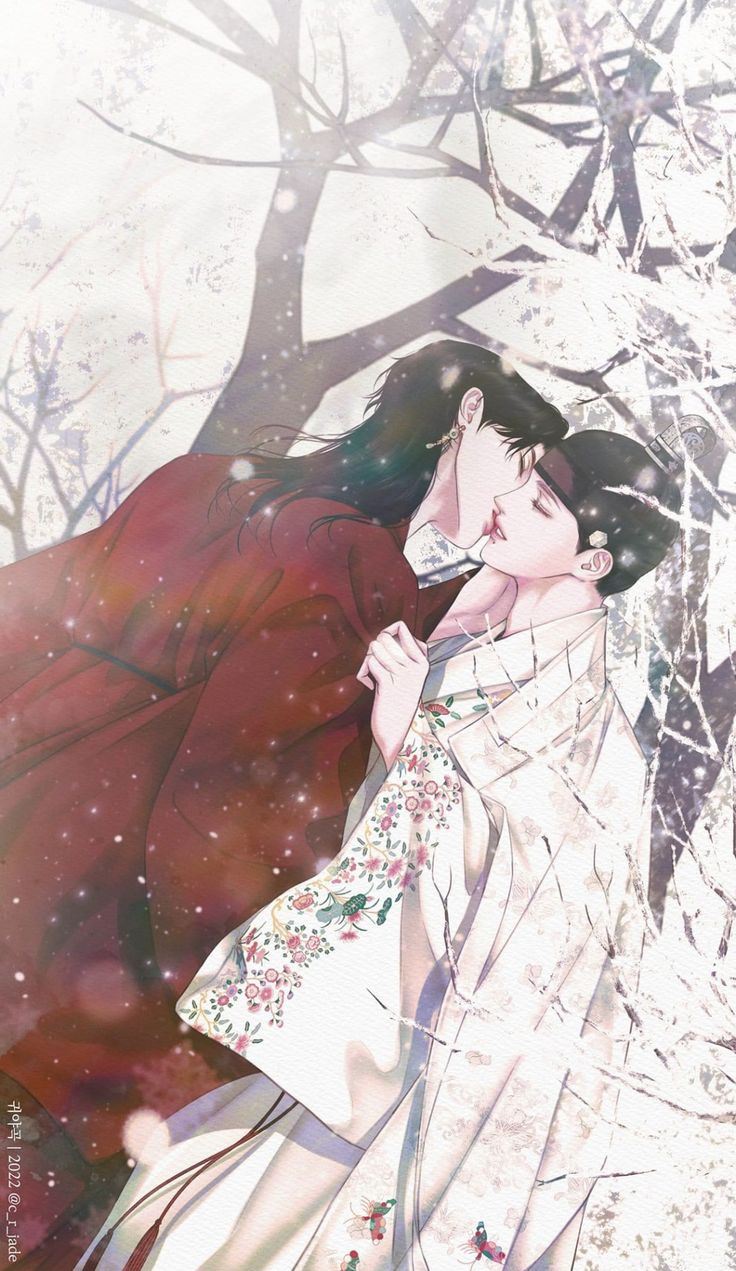
I need to talk about the opening image because I think it's the key to everything in this chapter, if not the whole arc. Qingyan dreams of mushroom picking. Mushrooms cover the hills, endless in number, and he's so tired he wants to give up. Think about that. Mushrooms—they grow in dark, damp places. They emerge from decay. And they're endless. Qingyan is exhausted by something that is both beautiful and overwhelming, something that keeps coming no matter how much you pick. Is this a dream about his past? About the endless tasks and obligations that define his life? Or is it more literal—about survival, about gathering enough to feed yourself when the world keeps producing more work than you can handle? I keep coming back to the word "endless." That's the feeling this chapter gives me. Endless small tasks, endless social obligations, endless quiet suffering. Then there's the pickled vegetables. Qingyan realizes that Aunt Li's pickling method might be from the northwest—where Qiu Henian might be from. Food as memory, as connection to a past you can't quite access. Qiu Henian has no memories, but his body remembers flavors. His taste buds carry knowledge his mind doesn't. That's such a poignant detail, and I don't think the author put it in by accident. But the real symbol, the one that haunts me, is Shen Min. He is literally the son of the man who caused all this trouble. His name is written on his face—"Shen Min"—as if he can't escape his identity as Wang Heyao's offspring. He sits among people preparing for a joyful wedding, wearing patched clothes, unable to speak, unable to accept kindness. The inheritance of guilt is the theme here, and Shen Min embodies it. The empty bed in Liu Cai's new house is also significant. It's painted vermilion, freshly made, waiting for the bride's bedding. It's a symbol of potential, of futures being built. And Shen Min can't approach it. He's stuck in the past, carrying someone else's sins, watching other people build lives he feels he has no right to participate in. And Qingyan—what's his relationship to all this? He's the one who took the land, who runs the shop that "isn't his." He benefits from Wang Heyao's destruction, and Shen Min knows it. But Qingyan doesn't see himself as an enemy. He offers invitation, connection, normalcy. The tragedy is that Shen Min can't receive it.
... Read More
Let me just lay out the conflicts because they're stacked so high in this passage it's surprising anyone can breathe. External conflict: Madam Wang vs. Shen Min. This is the most obvious one - she's verbally destroying him in front of the village head, calling him useless, ungrateful, wicked, saying they should never have taken his betrothal gifts. The stakes here are social and emotional survival in a tight-knit rural community where reputation is everything. But then SHE runs away first when he smiles. Even she can't handle the consequences of her own cruelty when it's reflected back at her. Internal conflict: Wang Heyao. He's torn between his mother and his husband, between duty and something he can't name. The text says he looked at Shen Min with "an indescribable look, as if he were facing some wild spirit." He doesn't know who to trust anymore. The person he married versus the creature from last night who chewed and swallowed bloody flesh - which one is real? This uncertainty IS the conflict. Survival conflict: Shen Min vs. the well itself. Nine days. A slippery stone. Broken fingers. The fact that he tells us about the stone with such casual detachment is either profound bravery or profound damage. And then there's the unspoken conflict between Qingyan and whoever/whatever Shen Min has become. Qingyan is clearly devoted, physically caring for him, emotionally invested - but he also sees the change. The whisper about not doing "foolish things again" carries weight. Has this happened before? The stakes throughout this entire passage could be summed up as: how much can one person lose before they stop being recognizable, to themselves and to everyone else?
... Read More
Let's be honest—these chapters are tense even though nobody is raising their voice. The stakes might seem small on paper (a street stall, some balm and knitted goods), but the anxiety is real because you understand what failure looks like for these people. They're not wealthy. Wang Sanyao was sent home because his employers are “quite stingy” and wouldn't pay for half a month. Qingyan's group is operating on fumes and hope. And the narrative makes you feel the pressure through the peddler's eyes—he keeps checking his watch, he knows the busy hours are coming, and he's almost certain his neighbors will fold. The author builds dread by showing you how wrong the experienced person is about the market. Every hour that passes without a sale, the tension creeps up. Li Shun changing his sitting posture. The big man yawning. Only Li Shun remains steady. You're screaming internally at this point—JUST MAKE A SALE, PLEASE. And then the woman comes back. Not alone—with three or four friends. The release of that tension is so well-earned because the author spent twelve pages making you believe they were going to fail. This is classic misdirection: the reader identifies with the peddler's skepticism for most of the chapter, so when the tide turns, it hits harder. The stakes aren't life and death, but they're real enough to matter. And the author knows it.

Leave a comment

You must be logged in to leave comments. or
